What is Norval Morrisseau known for?
Short answer
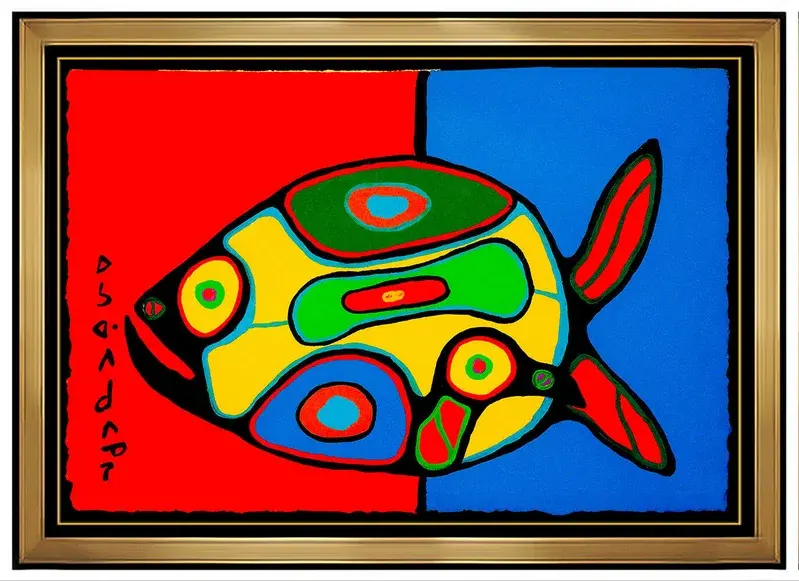
Norval Morrisseau was a pioneering Anishinaabe artist known as the founder of the Woodland School of art. He revolutionized Indigenous Canadian expression by blending traditional oral narratives with vibrant, modern aesthetics. His iconic "X-ray" style, characterized by bold black outlines and brilliant colors, bridged the gap between ancestral spiritualism and contemporary fine art.
On this page
Who was Norval Morrisseau?
Norval Morrisseau, also known as Copper Thunderbird, was born in 1931 in the Sand Point Ojibway First Nation in Ontario. As a self-taught artist, he spent his early years learning traditional legends from his grandfather, which became the primary subject matter for his creative output. He famously defied the prevailing social norms of the mid-20th century, which sought to suppress Indigenous cultural practices, by bringing these sacred stories into the public gallery space.
His career gained significant momentum in 1962 following a landmark exhibition at the Pollock Gallery in Toronto. This event marked the first time an Indigenous artist was showcased in a major commercial gallery on their own terms rather than as an ethnographic curiosity. Morrisseau’s ability to translate complex spiritual concepts into visual narratives challenged the Canadian art establishment and paved the way for future generations of Indigenous creators to reclaim their visual heritage.
What is the Woodland School of art?
The Woodland School, often referred to as Legend Painting, is the artistic movement Morrisseau founded in the 1960s. This style is deeply rooted in the iconography of the Anishinaabe people, specifically focusing on the interconnectedness of all living things. The aesthetic is defined by several key visual elements that distinguish it from other forms of North American Indigenous art:
- Bold, heavy black outlines that define the figures and separate color fields.
- A "split-style" or "X-ray" technique that reveals the internal organs or spirit energy of animals and humans.
- Use of vibrant, often non-naturalistic colors to represent spiritual power or "manitou."
- The depiction of figures in states of transformation, emphasizing the fluidity between human, animal, and spirit realms.
This movement became a powerful vehicle for cultural survival. By documenting myths, legends, and personal visions, Morrisseau ensured that the oral traditions of the Anishinaabe were preserved in a medium that could reach a global audience. The style quickly gained traction, influencing many other artists who adopted its visual language to express their own unique cultural identities.
How to identify an authentic Morrisseau painting
When examining works attributed to Morrisseau, collectors and enthusiasts should look for specific markers of his evolving technique. Because he was a prolific artist who often painted on unconventional surfaces like birch bark, cardboard, or masonite, the medium alone is not a reliable indicator of authenticity. Instead, focus on the deliberate nature of his line work and the specific symbolic vocabulary he developed over his lifetime.
- Inspect the signature: Morrisseau frequently signed his work in Cree syllabics, often including his spirit name, Copper Thunderbird.
- Examine the brushwork: Authentic pieces typically feature confident, fluid lines that maintain a consistent thickness, reflecting his steady hand.
- Verify provenance: Due to a proliferation of forgeries in the art market, always request documentation from established galleries or estate representatives.
- Analyze the composition: Look for the characteristic "X-ray" internal structures that define his most famous period of output.
Common mistakes when evaluating his work include assuming that all Indigenous art from the region belongs to the Woodland School. Additionally, buyers often overlook the importance of the artist's spiritual intent, which was always central to his process. Never purchase a piece without verifying its history through the Morrisseau estate or reputable auction houses specializing in Canadian Indigenous art.
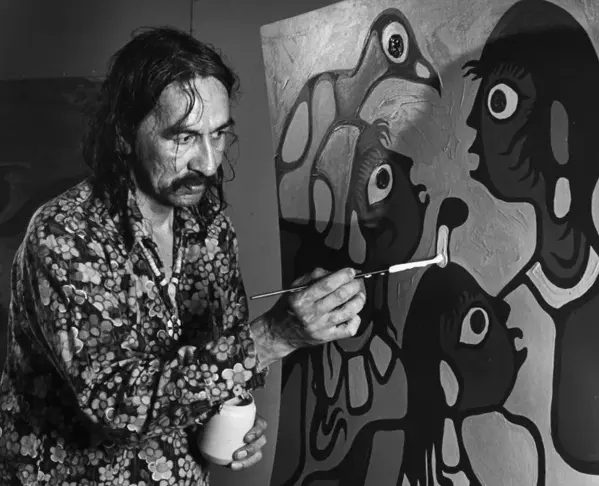
Why was his artistic style so controversial?
Morrisseau’s work was initially met with skepticism by both the art world and his own community. Traditionalists sometimes criticized him for revealing sacred knowledge that was intended to remain within the confines of private ceremonies. He navigated this tension by asserting that his visions were a necessary evolution of his culture, intended to educate the public and ensure the survival of his people’s history in a rapidly changing world.
The art establishment was similarly challenged by his refusal to conform to European standards of "fine art." He did not seek formal training, nor did he adhere to the muted color palettes favored by his contemporaries. By forcing the art world to engage with his bold, spiritual, and deeply personal vision, he effectively dismantled the barriers that kept Indigenous art relegated to museums of natural history. His legacy is one of defiance and cultural pride, proving that Indigenous art is a dynamic, living practice.
How to appreciate his lasting legacy
Today, Norval Morrisseau is celebrated as a visionary who fundamentally changed the landscape of Canadian art. His influence extends far beyond the canvas, as he inspired a movement that empowered countless Indigenous artists to explore their own heritage through contemporary mediums. To appreciate his work, one should view his paintings not merely as decorative objects, but as visual prayers and historical documents that bridge the past and the present.
Visiting major institutions like the National Gallery of Canada provides the best opportunity to see his large-scale works in person. When viewing these pieces, consider the historical context of his struggle and the profound resilience required to maintain his vision throughout his life. By engaging with his art, viewers participate in a larger dialogue about reconciliation, the importance of oral history, and the enduring power of Indigenous creative expression in the modern world.
Key facts
- Norval Morrisseau (1931–2007) was an Anishinaabe artist known as the grandfather of contemporary Indigenous art in Canada.
- He founded the Woodland School of Art, characterized by bold black outlines and vibrant, X-ray style depictions of interior anatomy.
- His work often explores the intersection of traditional Ojibwe oral history and his own personal spiritual visions.
- In 1978, he became a member of the Order of Canada, the first Indigenous artist to receive such a high national honor.
- Morrisseau’s paintings frequently feature "spirit lines," which represent the flow of energy between humans, animals, and the spirit world.
- When purchasing his work, always verify provenance through the Norval Morrisseau Heritage Society to avoid the market's high volume of forgeries.
The bottom line
Norval Morrisseau remains a pivotal figure in Canadian art history for his role in bridging traditional Anishinaabe spirituality with contemporary aesthetics. By formalizing the Woodland School of Art, he empowered Indigenous artists to assert their cultural identity on a global stage. His legacy is defined by his vibrant, X-ray style paintings, which continue to challenge viewers to perceive the spiritual interconnectedness of all living beings.
People also ask
What is the Woodland School of Art?
It is an artistic movement Morrisseau pioneered that blends traditional Anishinaabe iconography with modern painting techniques. It is defined by flat, two-dimensional figures and vivid colors.
Why are there so many fake Morrisseau paintings?
Because his work became highly valuable, a sophisticated forgery ring produced thousands of imitation paintings in the 1990s and 2000s. Collectors should demand documentation from reputable galleries or the official heritage society.
Did Morrisseau have formal art training?
No, he was largely self-taught, drawing inspiration from his grandfather’s stories and the birch bark scrolls of the Midewiwin society. His lack of formal schooling allowed him to develop a unique, uninhibited visual language.
What do the X-ray style paintings represent?
The technique of showing the organs and skeletons of animals and people represents the interconnectedness of all living things. It reveals the spiritual essence hidden beneath the physical surface.
How did Morrisseau influence other Indigenous artists?
He paved the way for a generation of artists to reclaim their cultural heritage through visual arts. His success challenged the Canadian art establishment to recognize Indigenous work as fine art rather than mere artifacts.
What was the significance of his 1962 exhibition in Toronto?
This show at the Pollock Gallery was the first time an Indigenous artist was presented in a contemporary commercial gallery setting. It effectively broke the barrier between Indigenous cultural production and the mainstream Canadian art market.
This answer was created with the help of AI research tools and reference sources. Spotted an error? Let us know — we correct mistakes quickly. See our editorial policy.