How do you draw a flamingo?
Short answer
Drawing a flamingo requires capturing its distinct S-shaped neck and long, spindly legs. Begin by sketching two oval shapes for the body and head, connected by a graceful, elongated curve. Use light pencil strokes to establish these proportions before adding the beak, wings, and characteristic bent-knee joints to complete the form.
On this page
How to sketch flamingo anatomy for beginners
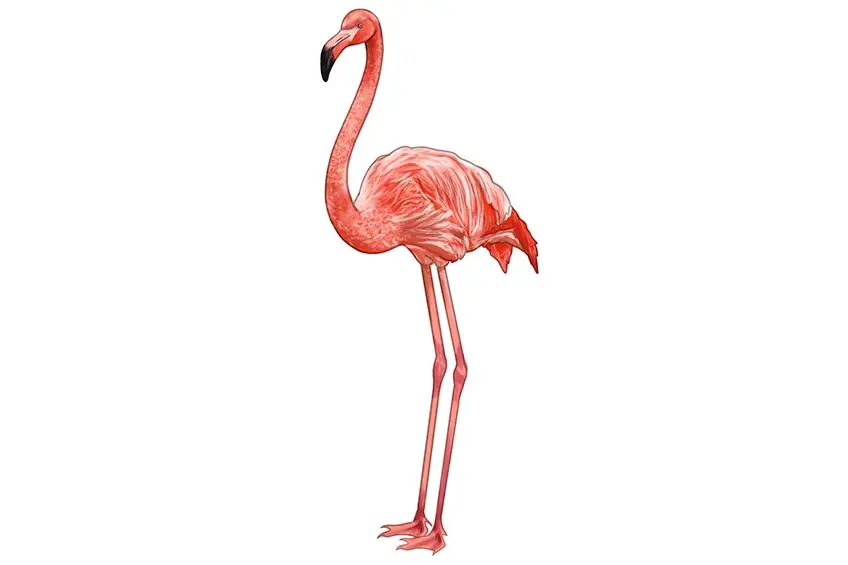
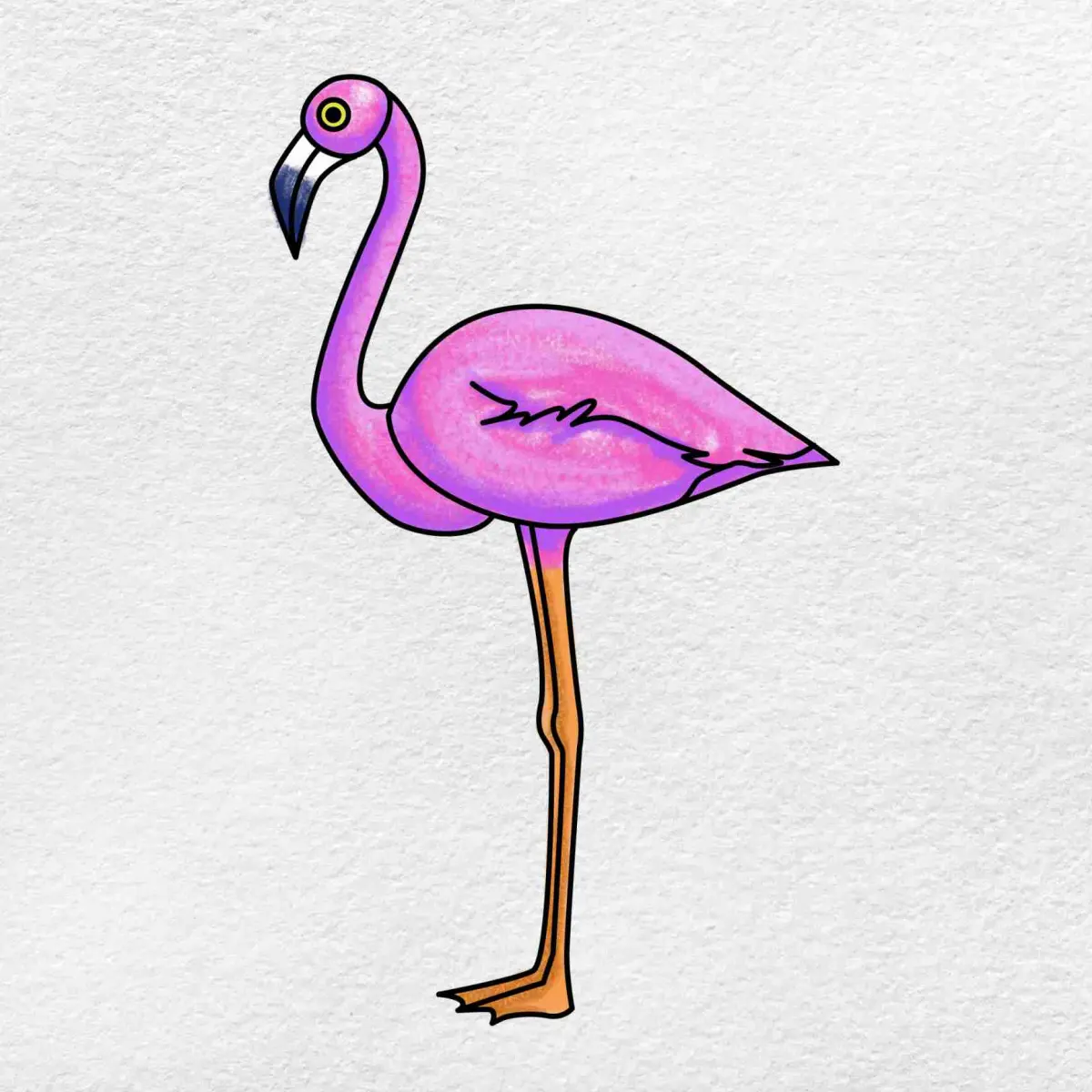
To draw a flamingo accurately, you must first understand the bird's unique skeletal structure. The most prominent feature is the long, flexible neck that forms a dramatic "S" curve. Start by drawing a small circle for the head and a larger, rounded oval for the main body. Connect these two shapes with a fluid line that dips downward and then arches back up toward the head. This foundational shape provides the necessary balance for the rest of the drawing.
Once you have the frame, focus on the legs, which are disproportionately long compared to the torso. A common point of confusion is the flamingo's "knee," which is actually the ankle joint located halfway up the leg. The true knee is hidden near the body under the feathers. When sketching the legs, use simple, thin lines to map out the stance, ensuring you include the characteristic backward-bending joint.
- Draw a small circle for the head.
- Sketch a large, egg-shaped oval for the body.
- Connect them with a sweeping "S" curve.
- Add two long, thin lines for the legs, noting the joint placement.
Best drawing techniques for flamingo feathers
Flamingos are famous for their vibrant plumage, which ranges from pale pink to deep crimson. When rendering feathers, avoid drawing individual lines for every single plume, as this can make the bird look cluttered or stiff. Instead, use soft, overlapping "U" shapes or scalloped lines to suggest texture along the wings and back. Focus your detail on the primary flight feathers, which are often darker and more defined than the soft down on the chest.
Shading is essential to give the bird a sense of volume and depth. Use cross-hatching or smooth transitions to darken the areas beneath the wings and along the underside of the neck. By keeping the top of the back and the head lighter, you create a natural highlight that makes the drawing appear three-dimensional. Remember to leave the eye area clean and sharp, as the contrast between the dark eye and the lighter face is a key focal point.
Why flamingo beaks are difficult to draw
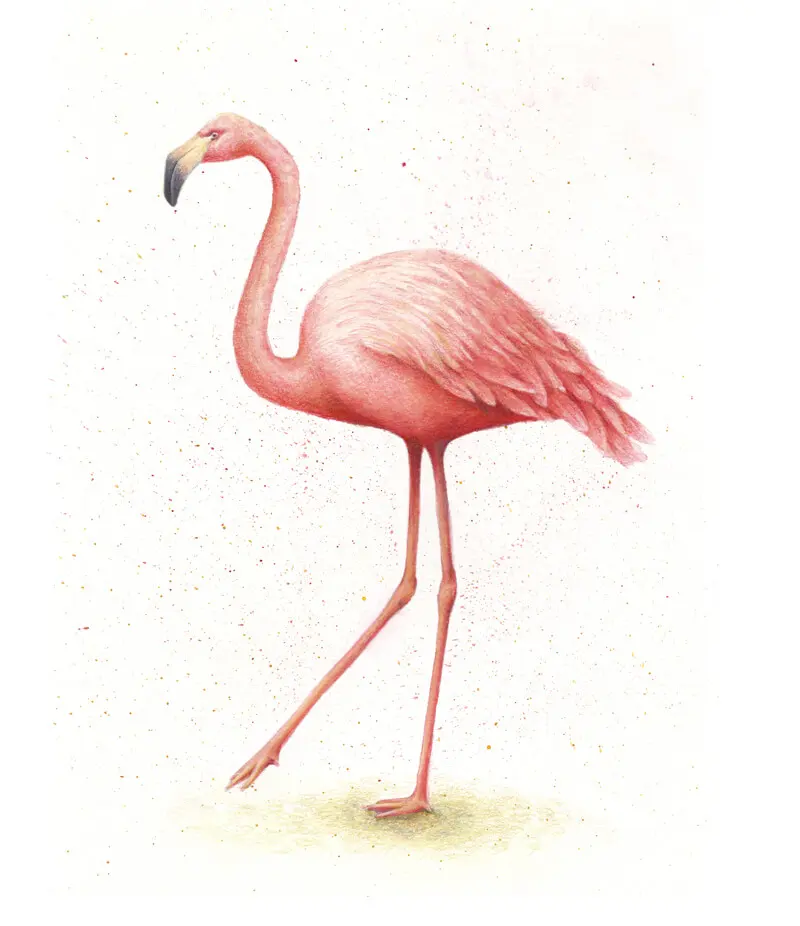
The flamingo beak is a marvel of evolutionary engineering, featuring a distinct downward bend and a specialized filter-feeding structure. Many beginners struggle with the shape because they treat it like a standard bird beak. In reality, the upper mandible is smaller than the lower one, which is the opposite of most avian species. When drawing the profile, start with a triangular shape that curves sharply downward at the tip, creating a hook-like appearance.
The transition between the head and the beak should be smooth rather than abrupt. Use a dark, heavy line for the tip of the bill, as this area is typically black in most species. The base of the beak, closer to the eyes, is usually lighter and more delicate. Practice drawing the beak separately on a scrap piece of paper to master the curve before adding it to your main sketch. Accurate beak placement is vital for capturing the bird's inquisitive expression.
Common mistakes when drawing flamingos
One of the most frequent errors is making the neck too thick or rigid. A flamingo's neck is incredibly slender and flexible, so avoid drawing it like a thick tube. If the neck looks too heavy, the entire bird will appear grounded and unnatural. Similarly, ensure the legs are not drawn perfectly straight; they should always show a slight angle at the ankle to reflect the bird’s natural, relaxed posture.
Another issue is ignoring the bird's center of gravity. Because flamingos spend much of their time standing on one leg, the body should be positioned directly over the supporting limb. If the body is too far to the left or right of the standing leg, the drawing will look like the bird is falling over. Always check your alignment by drawing a vertical line from the center of the body down to the foot.
- Making the neck too thick or stiff.
- Drawing the legs perfectly straight without an ankle joint.
- Placing the body off-center, causing a lack of balance.
- Neglecting the unique structure of the beak.
How to add color to a flamingo drawing
Coloring a flamingo is an exercise in layering and light. Use a base layer of soft, pale pink to cover the entire body, then gradually build up intensity with darker shades of coral, salmon, or magenta. Focus the most saturated colors on the wings and the tips of the tail feathers. Since flamingos derive their color from their diet of brine shrimp and algae, you can use subtle orange or yellow undertones to create a more realistic, organic appearance.
When working with colored pencils or markers, use short, directional strokes that follow the contour of the body. This technique mimics the way feathers grow, guiding the viewer's eye along the bird's form. Finally, add a touch of white or light blue to the brightest highlights to make the plumage look glossy and healthy. By carefully managing these color transitions, you can transform a simple line drawing into a vibrant, lifelike representation of this iconic bird.
Key facts
- Flamingos are defined by their distinct "S" shaped neck, which is the most important feature to capture.
- Start your sketch by drawing a small circle for the head and a larger, oval-shaped body positioned at a downward angle.
- Connect the head and body with a long, curved line that mimics the letter "S" to establish the neck’s posture.
- The legs of a flamingo are disproportionately long; draw them as two thin, slightly bent lines extending from the bottom of the oval.
- When drawing the beak, remember it has a unique downward hook, which is essential for the bird's filter-feeding anatomy.
- Avoid making the body too round; flamingos have a streamlined, compact torso that sits high on their spindly legs.
The bottom line
Drawing a flamingo is an exercise in capturing fluid, elegant curves rather than rigid shapes. By prioritizing the iconic "S" curve of the neck and the dramatic downward hook of the beak, you create a recognizable silhouette. Remember to keep the body compact and the legs exceptionally long. With these proportions established, your illustration will successfully convey the grace and unique anatomy of this fascinating bird.
People also ask
Why do flamingos stand on one leg?
Scientists believe this behavior helps the birds conserve body heat and reduce muscle fatigue while standing in water for long periods. It is a signature pose that makes them instantly recognizable in drawings.
What is the best way to draw flamingo feathers?
Instead of drawing individual feathers, use soft, overlapping "U" shapes or light, wavy lines to suggest texture. Focus on the wings, which are often tucked against the body when the bird is standing.
Should I use pink for my drawing?
Flamingos derive their vibrant pink or orange color from the carotenoid pigments in their diet of brine shrimp and algae. Using a gradient of soft pinks and corals will make your drawing look more realistic.
How do I make the beak look accurate?
The flamingo beak is bent downward at a sharp angle, with the base being lighter and the tip being black. Ensure the top portion of the beak is thicker than the bottom to reflect their specialized feeding structure.
What is the most common mistake when drawing a flamingo?
Many beginners make the neck too short or too straight. Always emphasize the dramatic curve of the neck to give the drawing the characteristic elegance of the species.
How do I draw the joints in the legs?
The "knee" of a flamingo is actually an ankle joint that bends backward. Place this joint about halfway down the leg line to ensure the proportions look natural and anatomically correct.
This answer was created with the help of AI research tools and reference sources. Spotted an error? Let us know — we correct mistakes quickly. See our editorial policy.