How do you draw a cat sleeping?
Short answer
Drawing a sleeping cat requires observing the animal's natural tendency to curl into a compact, oval-like shape. Focus on simplifying the feline form into basic geometric volumes, such as an egg or a bean, before adding details like ears and fur. Prioritize capturing the rhythmic, relaxed flow of the cat's spine.
On this page
How to simplify the cat's shape
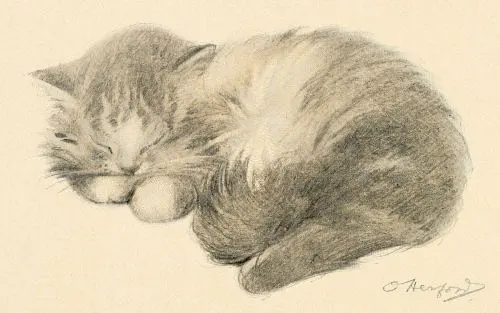
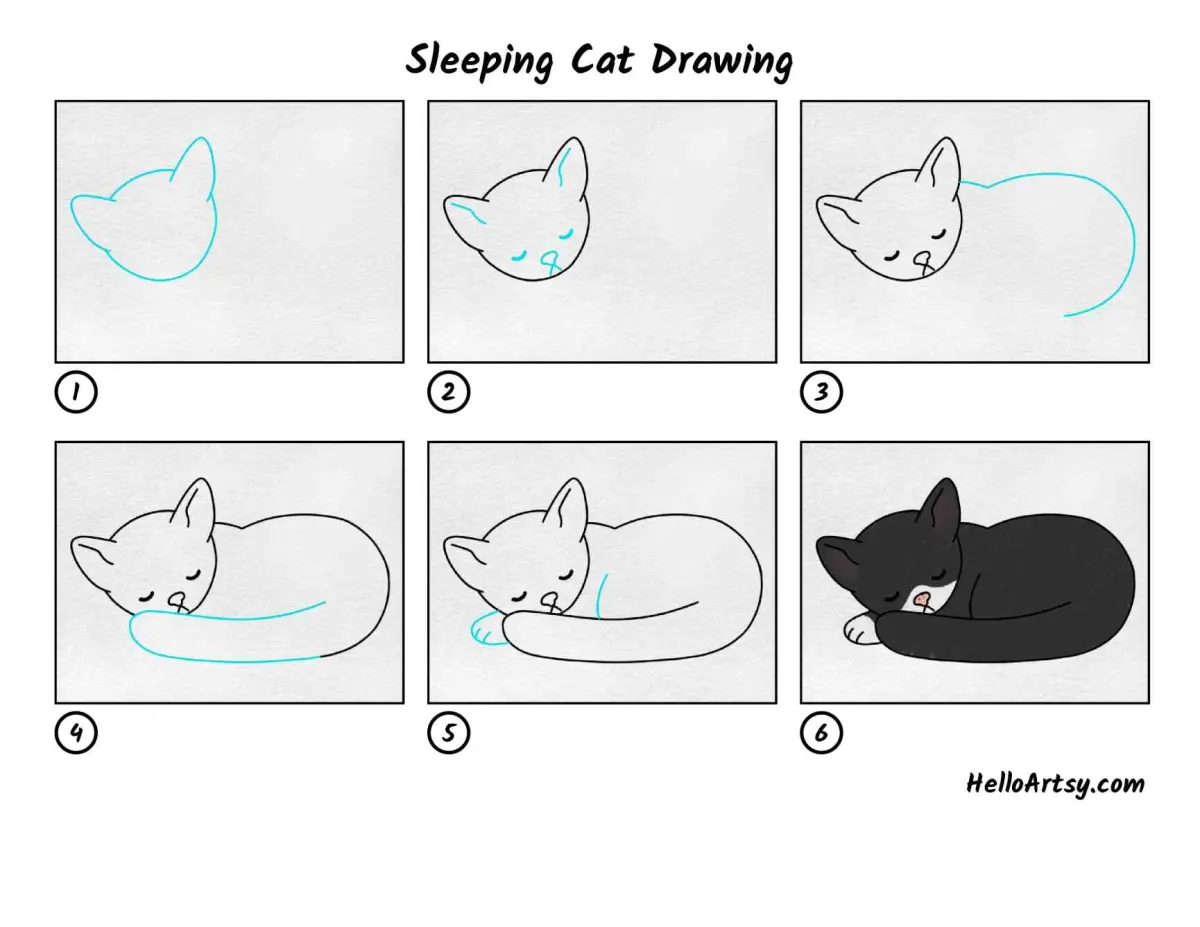
When drawing a sleeping cat, the most effective approach is to ignore individual hairs and focus on the overall silhouette. A cat at rest typically forms a compressed oval or a kidney-bean shape. Start by lightly sketching a large, rounded mass that represents the body and a smaller, slightly flattened circle for the head tucked against the chest. By reducing the complex anatomy of a feline to these basic building blocks, you ensure the proportions remain accurate before you commit to permanent lines.
Using light, gestural marks allows you to adjust the volume of the cat’s sleeping posture. Remember that a sleeping cat often hides its extremities, meaning you rarely need to draw all four legs. Focus on the curve of the back, which is the longest continuous line on the animal’s body. This line dictates the flow of the entire drawing and establishes the sense of weight and relaxation.
- Sketch a large, horizontal oval for the torso.
- Place a smaller, overlapping circle near one end for the head.
- Draw a gentle, sweeping curve connecting the head to the base of the tail.
- Refine the overlapping masses to create a cohesive, organic shape.
Best tools for beginners
For those new to sketching animals, graphite pencils ranging from HB to 2B are ideal. HB pencils are perfect for initial light sketches, as they can be easily erased without damaging the paper surface. A 2B pencil provides a slightly darker, softer lead that is excellent for adding depth to the shaded areas where the cat’s body touches the floor. Using high-quality, smooth-surfaced drawing paper will help you achieve clean, fluid lines without the resistance of toothy textures.
Avoid using pens or markers until you are confident with your initial sketches. Beginners often struggle with the permanence of ink, which can lead to frustration when trying to capture the subtle curves of a sleeping pet. A kneaded eraser is an essential tool, as it allows you to lift graphite gently to create highlights or soften dark edges. By keeping your kit simple, you can focus entirely on observing the subject rather than managing complex equipment.
- Graphite pencils (HB, 2B, 4B)
- Kneaded eraser for lifting highlights
- Smooth-surface sketchbook or drawing paper
- Pencil sharpener to maintain fine points
Why the head position matters
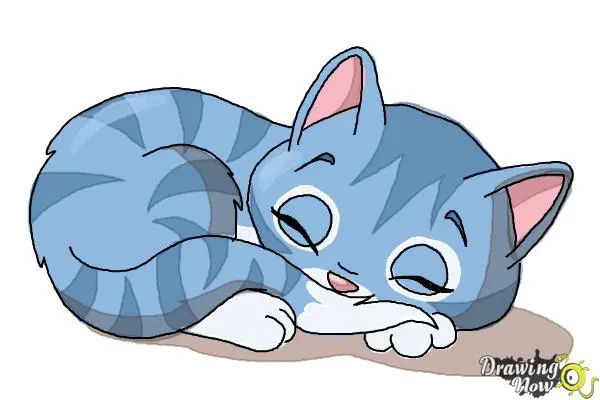
The position of the head is the primary indicator of how deeply a cat is sleeping. When a cat is curled tightly, the head is often tucked under the chin or pressed against the front paws, creating a rounded, compact form. If the head is resting flat on the surface, the neck appears elongated and the spine takes on a flatter, more relaxed curve. Observing these subtle anatomical shifts helps the viewer understand the cat's level of comfort and physical state.
Pay close attention to where the neck meets the shoulder blades. Even in sleep, a cat’s anatomy is defined by the skeletal structure beneath the fur. If you draw the head too far away from the body, the cat will appear disconnected or stiff. Ensure the head overlaps the body slightly to create a sense of three-dimensional depth. This overlap is a critical visual cue that anchors the head to the rest of the feline’s form.
Common mistakes when drawing fur
A frequent error is attempting to draw every individual hair, which often results in a cluttered and stiff-looking drawing. Instead, focus on the direction of the fur growth and the overall texture of the coat. Use long, sweeping strokes to indicate the flow of the fur, especially along the cat's back and flanks. Only add fine detail around the ears, face, and tail, as these areas provide the most character and visual interest to the viewer.
Another common mistake is neglecting the shadows created by the fur. Fur is not a flat color; it has volume that catches light differently depending on the angle. Use your pencil to create soft, blended shadows where the fur bunches up or folds over itself. By varying the pressure of your pencil, you can suggest the softness of the coat without needing to render every single strand. This technique creates a realistic, tactile quality that makes the cat appear truly soft and alive.
How to add realistic texture and shading
The final stage of your drawing involves building up values to create a sense of volume. Start by identifying the light source and shading the areas of the cat that are furthest from that light. For a sleeping cat, the underside of the body and the areas tucked beneath the head are usually the darkest. Use a blending stump or a soft tissue to smooth out your pencil marks, creating a gentle transition between light and shadow that mimics the softness of fur.
Pay attention to the edges of your drawing, as soft edges are more realistic than harsh, dark outlines. A sleeping cat has soft, rounded contours, so avoid using heavy, dark lines that make the animal look like a cartoon. Instead, let the shading define the edges of the form. By carefully building up layers of graphite, you can create a lifelike representation that captures the peaceful, quiet essence of a cat in deep slumber.
Key facts
- A sleeping cat is essentially a series of overlapping ovals and circles rather than sharp angles.
- Start by drawing a large, soft oval for the body and a smaller, slightly flattened circle for the head tucked against it.
- Focus on the "negative space" created by the curve of the back and the tuck of the paws to define the silhouette.
- Keep lines light and fluid; avoid rigid, straight lines, as feline anatomy is composed of soft curves and flexible joints.
- Use the "tuck" method by drawing the front paws folded tightly under the chest to simplify complex limb anatomy.
- Observe the tail position, which often wraps around the body in a gentle "C" shape to complete the circular composition.
The bottom line
Drawing a sleeping cat is an exercise in simplifying complex anatomy into soft, interconnected geometric shapes. By focusing on the overall silhouette and the gentle curves of the spine and tucked limbs, you can capture the essence of feline relaxation. Prioritize fluid, rounded lines over rigid details, and remember that the most convincing drawings rely on the subtle weight and volume of the cat's resting form.
People also ask
How do I make the cat look relaxed instead of stiff?
Focus on the "melted" look by ensuring the body lines sag slightly toward the surface the cat is resting on. Avoid sharp corners at the joints and use soft, rounded edges to mimic the weight of a sleeping animal.
Should I draw the individual hairs on a sleeping cat?
Avoid drawing every hair, as this often makes the drawing look cluttered and stiff. Instead, use light, directional hatching or short, soft strokes only at the edges to suggest texture and fur density.
How do I draw the ears on a curled-up cat?
When a cat is curled up, the ears are often flattened or turned slightly away from the viewer. Draw them as small, soft triangles that blend into the curve of the head rather than standing upright.
What is the best way to capture the cat's face while it sleeps?
Most of the face will be hidden, so focus on the curve of the closed eye and the slight bump of the nose. Keep the features minimal to emphasize the peaceful, shut-down state of the animal.
Why does my cat drawing look like a lump rather than a feline?
You are likely missing the "anchor points" of the anatomy, such as the shoulder blade or the curve of the haunches. Even in a ball, these skeletal structures create subtle bumps that prevent the cat from looking like a featureless blob.
What pencil grade is best for sketching a sleeping cat?
Use an HB or 2B pencil to keep your initial structural lines light and erasable. These grades allow for soft, grey lines that can be easily darkened or blended later to create shadows and depth.
This answer was created with the help of AI research tools and reference sources. Spotted an error? Let us know — we correct mistakes quickly. See our editorial policy.