Why is The Two Fridas so famous?
Short answer
The Two Fridas is famous for its profound psychological depth and its raw, visual exploration of Frida Kahlo’s fractured identity following her divorce from Diego Rivera. Painted in 1939, it remains an iconic masterpiece of Surrealist-influenced self-portraiture, symbolizing the emotional duality, cultural heritage, and physical suffering that defined Kahlo’s legendary artistic legacy.
On this page
Why is The Two Fridas so famous?
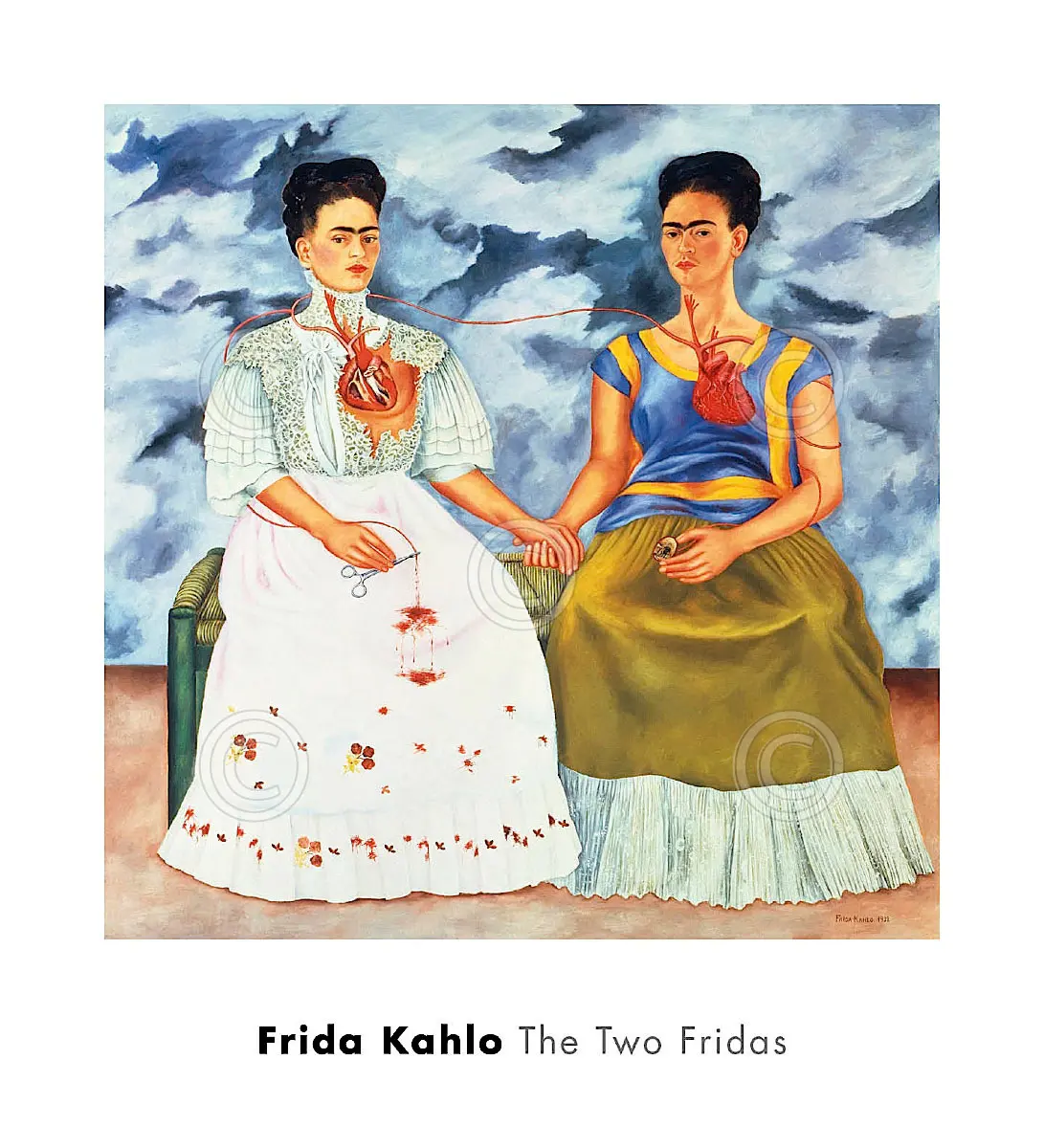
The painting is widely considered Kahlo’s most significant work because it masterfully captures the internal turmoil of her 1939 divorce from muralist Diego Rivera. By depicting two versions of herself seated side-by-side, Kahlo externalizes the conflict between her traditional Mexican heritage and her modern, European-influenced identity. This visual representation of a split self resonates deeply with viewers, offering a universal look at heartbreak and the search for wholeness.
Beyond the personal narrative, the painting serves as a cornerstone of 20th-century art history due to its unique blend of traditional portraiture and symbolic surrealism. While Kahlo famously rejected the label of a Surrealist, insisting she painted her own reality rather than dreams, the work’s haunting imagery—such as the exposed, interconnected hearts—has solidified its place in the global artistic canon. It remains a primary reference point for discussions regarding gender, identity, and the intersection of personal trauma with creative expression.
What do the symbols in The Two Fridas mean?
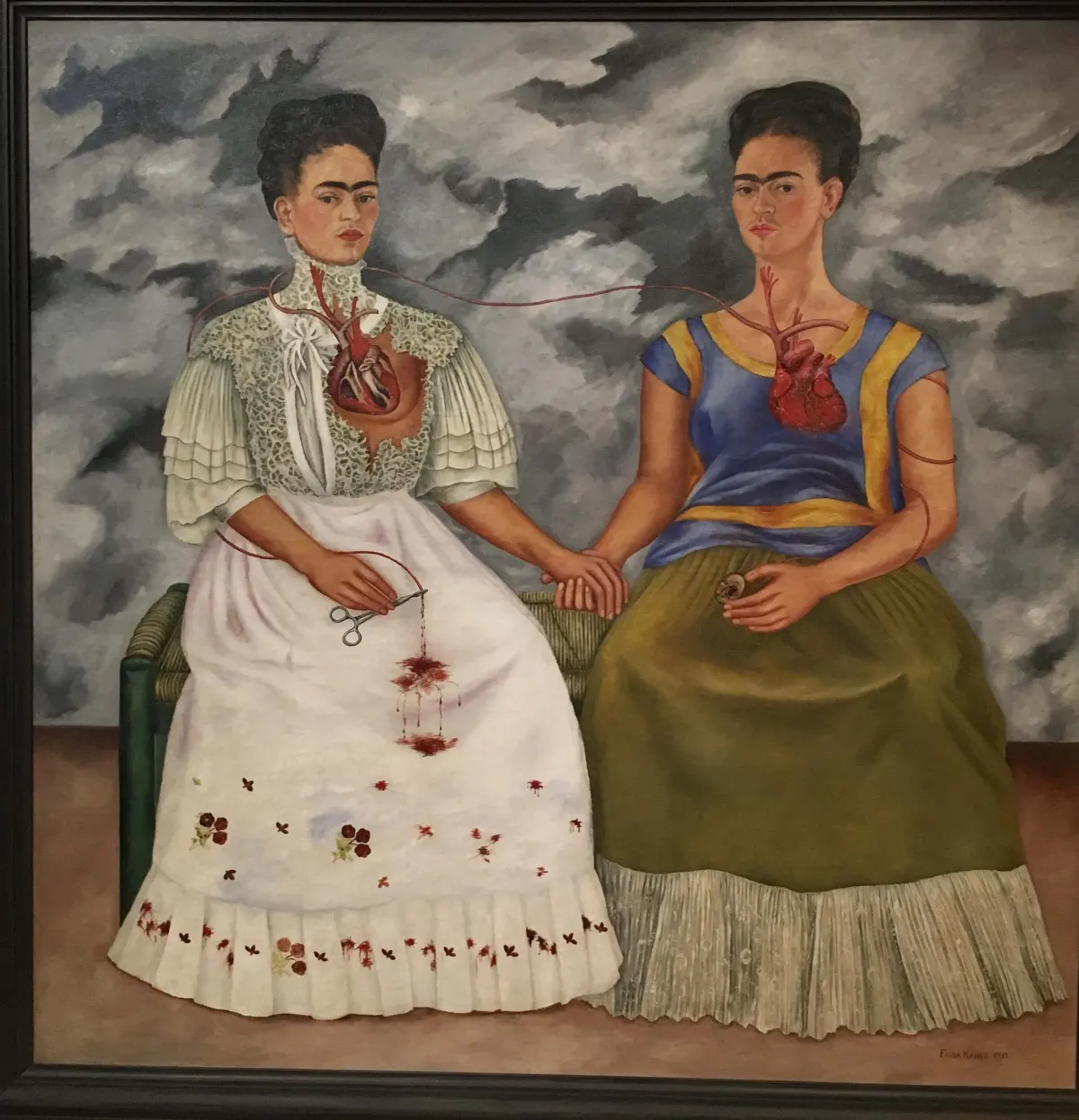
The painting is rich with anatomical and cultural symbols that provide a roadmap to Kahlo’s psyche. The two figures are connected by a single, thin vein that travels from their exposed hearts to their hands, suggesting a physical and emotional dependency that survives even in separation. The "Tehuana" Frida on the left represents the version of herself that Rivera loved, while the modern, independent Frida on the right reflects her own evolving identity.
Several key elements carry specific weight in the composition:
- The exposed hearts: Represent vulnerability, pain, and the physical toll of her emotional heartbreak.
- The surgical forceps: Held by the Tehuana Frida, these symbolize her attempt to stop the blood flow, reflecting her medical history and desire to control her suffering.
- The stormy background: The dark, turbulent sky mirrors the internal chaos and isolation Kahlo felt during this period of her life.
- The miniature portrait: The small locket held by the Tehuana Frida contains a picture of a young Diego Rivera, marking him as the central figure of her obsession.

How to analyze a Frida Kahlo painting
Analyzing a complex piece like The Two Fridas requires looking past the surface to understand the artist's personal history. To begin your own evaluation, consider the following steps:
- Research the artist's biography: Understanding the specific life events occurring when the painting was created, such as the 1939 divorce, is essential for context.
- Identify the color palette: Notice how Kahlo uses bold, contrasting colors to separate the two figures, highlighting their distinct cultural associations.
- Examine the gaze: Look at how the figures interact with the viewer versus how they interact with each other; their expressions often reveal hidden layers of defiance or resignation.
- Contextualize the setting: Consider how the environment, such as the landscape or the sky, acts as a reflection of the subject's internal emotional state.
By following these steps, you can move beyond a superficial viewing and engage with the emotional architecture of the work. Avoid the common mistake of viewing the painting as merely a portrait; instead, treat it as a visual diary entry that demands a narrative understanding of the artist's life.
Common mistakes when interpreting Kahlo’s work
A frequent error when studying The Two Fridas is assuming that the painting is purely autobiographical without considering its broader political and cultural implications. While the work is deeply personal, it also functions as a commentary on the "Mexicanidad" movement, which sought to reclaim indigenous Mexican identity in the face of colonial influence. Ignoring the cultural significance of the Tehuana dress leads to an incomplete understanding of why Kahlo chose to present herself in that specific attire.
Another mistake is over-relying on the "Surrealist" label to explain the painting's oddities. When you characterize the work as simply "dreamlike," you diminish the calculated, deliberate nature of Kahlo’s symbolism. She was a highly intentional artist who used specific motifs to communicate complex ideas about pain, gender, and nationhood. To truly appreciate the work, you must respect her own insistence that she was painting her reality, not her fantasies. This distinction is vital for anyone seeking to understand the intellectual rigor behind her seemingly spontaneous emotional displays.
Where can you see The Two Fridas today?
The painting is currently housed in the Museo de Arte Moderno in Mexico City, where it serves as a centerpiece of the national collection. Because the work is fragile and historically significant, it is rarely loaned out, making a trip to Mexico City the primary way to experience the piece in person. Seeing the painting in its original context allows viewers to appreciate the scale of the canvas, which measures approximately 68 by 68 inches, and observe the fine details of the brushwork that are often lost in digital reproductions.
If you are planning a visit, keep these practical tips in mind:
- Check the museum schedule: Ensure the gallery is not undergoing renovations before booking your travel.
- Study the companion pieces: The museum often displays other works from the same era, which provide necessary context for the evolution of Kahlo’s style.
- Respect photography rules: Many museums restrict flash photography to preserve the integrity of the paint, so be prepared to view the work without capturing images.
- Engage with the curators: If available, attend guided tours to gain insights into the conservation efforts that keep this masterpiece in such excellent condition for future generations to study and admire.
Key facts
- Completed in 1939, The Two Fridas is a large-scale oil painting measuring approximately 68 by 68 inches.
- The work depicts two versions of Frida Kahlo sitting side-by-side, representing her dual European and Mexican heritage.
- The painting was created immediately following her divorce from muralist Diego Rivera, symbolizing her profound emotional isolation.
- A visible, exposed heart connects the two figures, with blood dripping onto a white dress, highlighting her physical and psychological pain.
- It is housed in the Museo de Arte Moderno in Mexico City and remains one of the most recognizable examples of Surrealist-influenced self-portraiture.
- When viewing the painting, look for the small portrait of Rivera held by the "Mexican" Frida to understand her lingering attachment to her former husband.
The bottom line
The Two Fridas remains famous because it serves as a powerful, visceral exploration of identity, heartbreak, and cultural duality. By externalizing her internal pain through bold symbolism, Kahlo transformed personal trauma into a universal statement on the human condition. The painting’s technical mastery and emotional transparency continue to resonate with viewers, cementing its status as a definitive icon of 20th-century art and feminist expression.
People also ask
What do the two different costumes in the painting represent?
The figure on the left wears a white Victorian-style wedding dress, representing Kahlo’s European ancestry. The figure on the right wears a traditional Tehuana dress, symbolizing her pride in her Mexican heritage and her connection to Rivera.
Is The Two Fridas considered a Surrealist painting?
While Kahlo is often grouped with Surrealists, she famously rejected the label, stating she painted her own reality rather than dreams. The painting uses symbolic, dream-like imagery to convey internal emotional states rather than subconscious fantasies.
Why are the hearts in the painting depicted as exposed?
The exposed, anatomical hearts represent the vulnerability and heartbreak Kahlo felt after her divorce. By connecting them with a single vein, she illustrates that her two identities are permanently linked through shared suffering.
How did Diego Rivera feel about this painting?
Rivera reportedly admired the work, calling it a masterpiece. He recognized the technical skill involved and the raw emotional honesty that defined Kahlo's unique artistic style.
What is the significance of the stormy sky in the background?
The dark, turbulent sky reflects the artist's inner turmoil and the unstable political and personal climate of her life in 1939. It serves as a stark contrast to the stillness of the two figures.
Can I see this painting in person today?
Yes, the painting is part of the permanent collection at the Museo de Arte Moderno in Mexico City. It is frequently displayed as a centerpiece of the museum's rotating exhibitions on modern Mexican art.
This answer was created with the help of AI research tools and reference sources. Spotted an error? Let us know — we correct mistakes quickly. See our editorial policy.