How do you photograph sunsets?
Short answer
Photographing sunsets requires choosing a location with an unobstructed horizon, using a tripod for stability, and shooting in manual mode to control exposure. By underexposing slightly, you preserve the vibrant colors in the sky. Timing is critical, as the best light often appears fifteen minutes before and after the actual sunset.
On this page
How to choose the right gear for sunset photography
You do not need expensive equipment to capture a beautiful sunset, but a few specific tools will significantly improve your results. A sturdy tripod is the most important piece of gear because it allows you to use slower shutter speeds without worrying about camera shake. This is essential as the light fades and your camera needs more time to capture the scene.
A wide-angle lens is generally preferred for landscapes, as it captures the vastness of the horizon and the drama of the clouds. However, a telephoto lens can also be effective if you want to compress the scene and make the sun appear larger in the frame. Regardless of your lens choice, consider these essential accessories:
- A remote shutter release or the self-timer function to prevent vibrations when pressing the button.
- A circular polarizing filter to reduce glare on water surfaces and deepen the blue tones in the sky.
- A microfiber cloth to keep your front lens element free of dust and fingerprints.
Best camera settings for vibrant sunsets
Achieving the perfect exposure during a sunset can be tricky because the contrast between the bright sky and the dark foreground is often extreme. To manage this, shoot in RAW format, which retains more data and allows for greater flexibility during editing. Set your ISO as low as possible, typically ISO 100, to ensure the highest image quality and avoid digital noise.
For the aperture and shutter speed, manual mode gives you the most control over the final look. Use a narrow aperture, such as f/11 or f/16, to keep the entire scene in sharp focus from the foreground to the horizon. Follow these steps to dial in your exposure:
- Set your camera to manual (M) mode and select your desired aperture.
- Adjust your shutter speed until the light meter shows a slight underexposure.
- Check your histogram to ensure you are not clipping the highlights, which would result in pure, featureless white patches.
Why timing is critical for sunset photography
Many beginners make the mistake of packing their gear as soon as the sun dips below the horizon, but the best light often occurs afterward. This period, known as the golden hour, begins about an hour before sunset and provides soft, warm light that flatters landscapes. The magic continues into the blue hour, which occurs just after the sun has set and the sky takes on deep, saturated shades of blue and purple.
Weather conditions play a massive role in the outcome of your images. A completely clear sky can be boring, while a sky with a moderate amount of clouds often yields the most spectacular results. Clouds act as a canvas, catching the light and reflecting vibrant oranges, reds, and pinks long after the sun is gone. Keep an eye on local weather forecasts to predict cloud cover, as high-altitude clouds like cirrus often produce the most intense color displays.
How to compose a compelling sunset shot
Composition is what separates a snapshot from a professional-looking photograph. Avoid placing the horizon line directly in the center of the frame, as this can make the image feel static. Instead, follow the rule of thirds: place the horizon on the bottom third line if the sky is dramatic, or on the top third line if the foreground holds more interest.
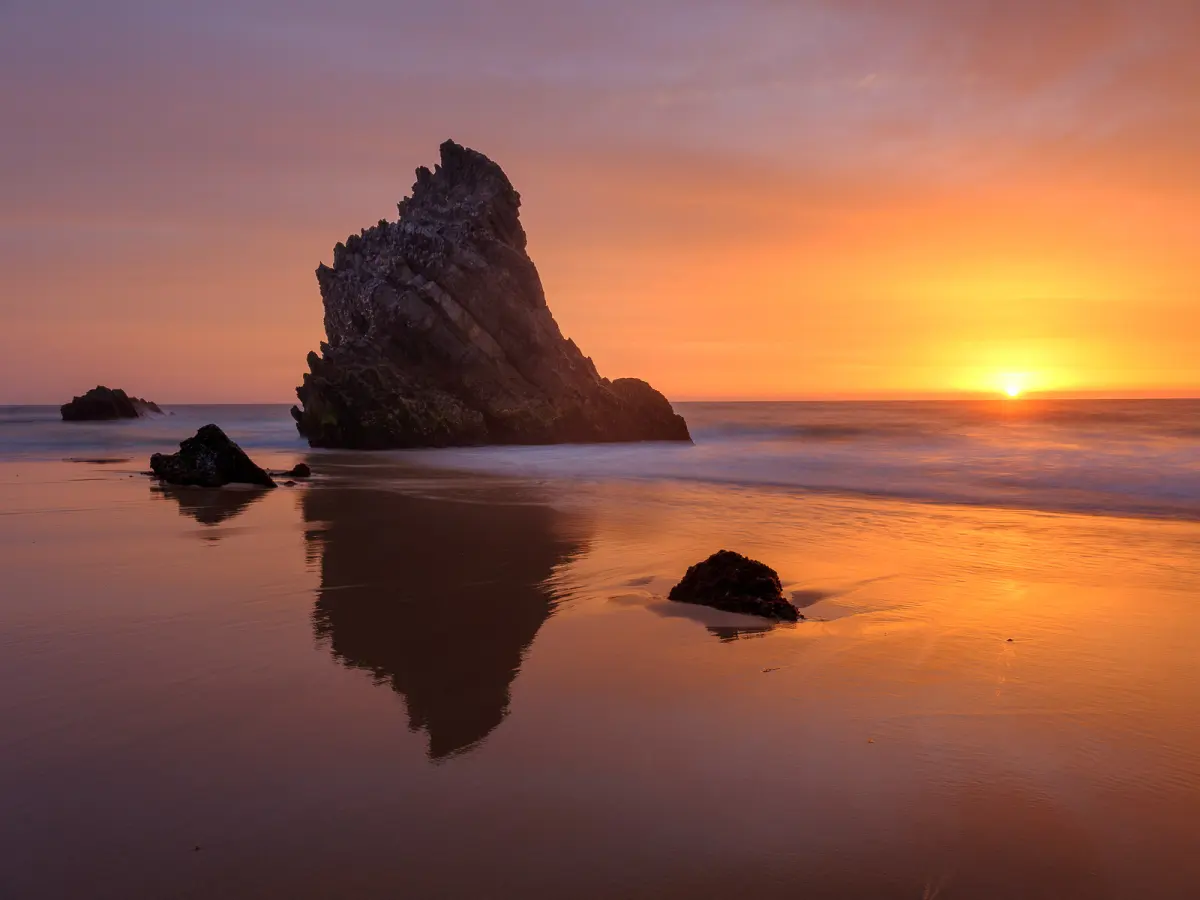
Look for elements that add depth and scale to your composition. Silhouettes of trees, buildings, or people can provide a sense of place and prevent the image from feeling empty. If you are shooting near water, use the reflection to double the impact of the sunset colors. Consider these compositional techniques:
- Use leading lines, such as a shoreline or a fence, to draw the viewer’s eye toward the setting sun.
- Incorporate a foreground subject, like a rock formation or a flower, to create a sense of three-dimensional space.
- Experiment with vertical orientation to emphasize the height of the sky or the depth of the landscape.
Common mistakes when photographing sunsets
One of the most frequent errors is relying on the camera’s automatic white balance, which often tries to neutralize the warm colors of the sunset. Instead, set your white balance to "Cloudy" or "Shade" to emphasize the golden and orange tones. Another common mistake is failing to focus properly in low light. If your camera struggles to find focus, switch to manual focus and use the live view screen to zoom in on a distant object to ensure it is tack-sharp.
Finally, do not neglect the foreground in your quest to capture the sky. A beautiful sky is impressive, but a photo with a dark, featureless foreground often lacks impact. If the foreground is too dark, consider using a graduated neutral density filter to balance the exposure between the bright sky and the dim earth. If you do not have a filter, you can take multiple exposures at different settings and combine them later to ensure both the sky and the ground are perfectly exposed.
Key facts
- Arrive at your location at least 30 minutes before the sun hits the horizon to capture the changing light.
- Use a tripod to maintain image sharpness, especially as light levels drop and shutter speeds decrease.
- Set your camera to a low ISO, such as 100 or 200, to minimize digital noise in your images.
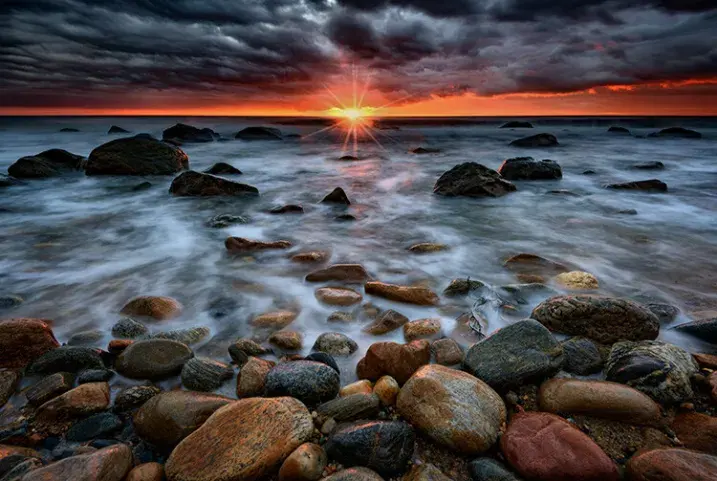
- Use a small aperture, like f/11 or f/16, to achieve a deep depth of field and potentially create a starburst effect.
- Underexpose your shots by one or two stops to preserve the rich colors in the sky and prevent highlights from blowing out.
- Focus on the foreground elements, such as rocks or trees, to provide scale and depth to your landscape composition.
The bottom line
Capturing a compelling sunset requires patience, preparation, and precise manual control. By arriving early, using a tripod, and managing your exposure to protect the sky's vivid colors, you can transform a simple scene into a professional photograph. Experiment with different focal lengths and foreground subjects to add depth, ensuring your final image reflects the true brilliance of the natural light as the day ends.
People also ask
Should I use auto mode for sunset photography?
Auto mode often fails during sunsets because the camera tries to brighten the dark foreground, which washes out the vibrant colors of the sky. Switch to manual or aperture priority mode to maintain control over your exposure settings.
What is the best white balance setting for sunsets?
Use the "Cloudy" or "Shade" white balance setting to warm up the scene and emphasize the golden and orange tones. If you shoot in RAW format, you can easily adjust the white balance during post-processing without losing quality.
How do I avoid silhouettes in my photos?
Silhouettes occur when the camera meters for the bright sky, leaving the foreground dark. To avoid this, use a graduated neutral density filter to balance the light or take multiple exposures to blend later.
Is it safe to look directly at the sun through my camera lens?
Never look directly at the sun through an optical viewfinder, as the concentrated light can cause permanent eye damage. Use your camera's LCD screen or electronic viewfinder to compose your shots safely.
Which lens is best for capturing sunsets?
A wide-angle lens is typically preferred for capturing the vastness of the horizon and sky. However, a telephoto lens can be used to compress the scene and make the sun appear larger in relation to the landscape.
Why do my sunset photos look blurry?
Blur is usually caused by camera shake during long exposures or missed focus. Always use a tripod and a remote shutter release or the camera's self-timer to ensure the camera remains perfectly still.
This answer was created with the help of AI research tools and reference sources. Spotted an error? Let us know — we correct mistakes quickly. See our editorial policy.