What are good warm-up exercises for drawing?
Short answer
Effective drawing warm-ups involve loosening your muscles and synchronizing your hand-eye coordination. These exercises, such as blind contour drawing, continuous line sketches, and repetitive mark-making, prime your brain for spatial reasoning. Dedicating five to ten minutes to these movements before a session prevents stiffness and builds the muscle memory necessary for fluid, confident lines.
On this page
Why warm-up exercises for drawing are important
Drawing is a physical activity that requires fine motor control, much like playing a musical instrument or participating in sports. When you sit down to draw, your hand and wrist muscles are often tight from daily activities like typing or using a phone. Warming up increases blood flow to these small muscle groups, which reduces tension and allows for a greater range of motion. This physical readiness translates directly into smoother, more deliberate linework.
Beyond the physical benefits, warm-ups serve as a psychological bridge between your daily routine and creative work. They help lower the barrier to entry by removing the pressure to produce a "perfect" final piece. By focusing on simple, repetitive motions, you quiet the internal critic and enter a state of flow. This transition is essential for artists of all skill levels, as it fosters a mindset of experimentation and reduces the anxiety associated with staring at a blank page.
How to warm up your hands and wrists
Before touching a pencil to paper, it is helpful to perform basic stretches to ensure your joints are loose. Start by gently rotating your wrists in circular motions, both clockwise and counter-clockwise, for thirty seconds. Then, extend your arm forward with your palm facing out and use your other hand to gently pull your fingers back toward your body. Hold this for ten seconds on each hand to stretch the forearm flexors and extensors.
Once your muscles feel supple, transition to light mark-making on a scrap piece of paper. The goal here is not to create an image, but to wake up your motor systems. Focus on varying the pressure of your pencil to understand how much force is required for different line weights. These preliminary movements ensure that your hand is an extension of your intent rather than a stiff, resistant tool.
Best drawing warm-up exercises for beginners
Beginners often struggle with rigid, "hairy" lines caused by a lack of confidence and stiff wrist movement. To overcome this, focus on exercises that prioritize speed and fluidity over accuracy. These drills help you learn to trust your hand and understand the spatial relationships on the page.
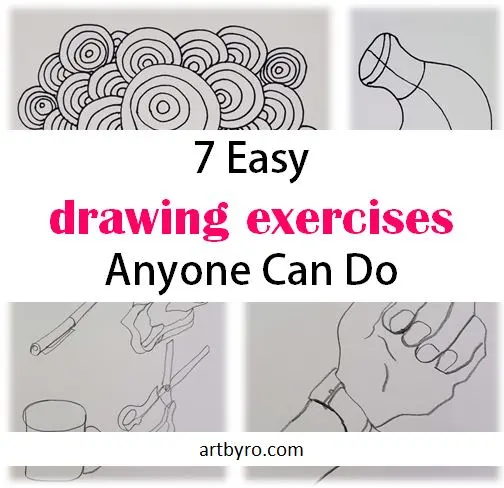
- Continuous Line Drawing: Select an object, such as a coffee mug or a piece of fruit, and draw it without lifting your pencil from the paper.
- Blind Contour Drawing: Look only at the object you are drawing and avoid looking at your paper entirely for five minutes.
- Mark-Making Grids: Fill a page with rows of circles, zig-zags, and parallel lines to practice consistent spacing and rhythmic motion.
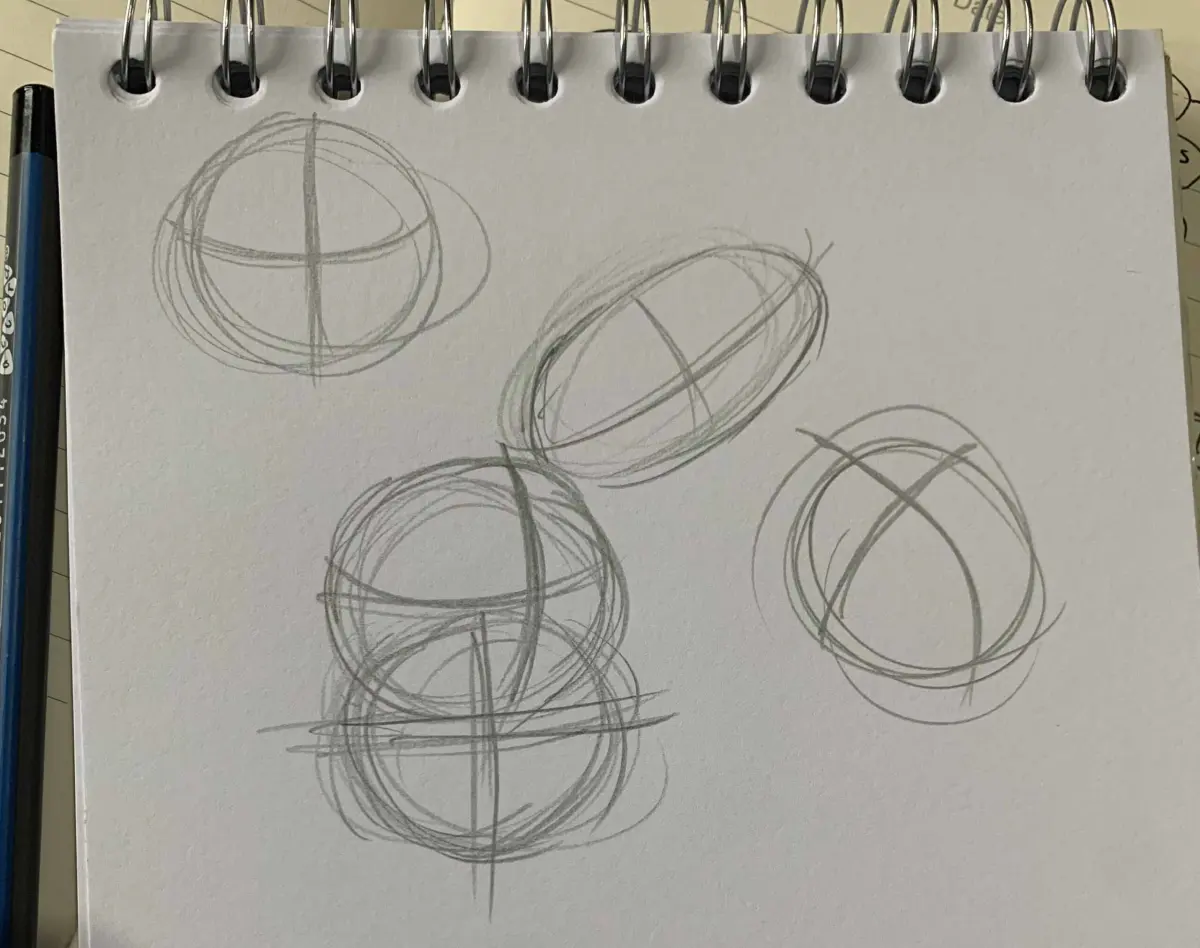
- Ellipse Drills: Draw overlapping circles of various sizes to improve your ability to create rounded, organic shapes.
These exercises force the brain to coordinate eye movement with hand pressure. By removing the need for a realistic outcome, you can focus entirely on the physical act of drawing. Repeating these simple patterns daily will significantly improve your hand-eye coordination and line quality over time.
Common mistakes when warming up for art
The most frequent mistake artists make is rushing the warm-up or skipping it entirely when they feel pressed for time. Treating the warm-up as a chore rather than an essential part of the process often leads to frustration during the main drawing session. Another common error is focusing too much on the aesthetic result of the warm-up sketches. If you find yourself erasing or critiquing your warm-up marks, you are defeating the purpose of the exercise.
- Using a pencil that is too hard, which may cause you to press down too heavily and strain your wrist.
- Drawing only from the wrist, which limits your range of motion and creates cramped, small-scale work.
- Ignoring your posture, which can lead to long-term discomfort and fatigue.
- Staying in a comfort zone by only practicing lines you are already good at, rather than challenging your range of motion.
To avoid these pitfalls, ensure you are drawing from your shoulder and elbow rather than just your wrist. This technique provides more stability and allows for longer, more graceful strokes. Keep your workspace ergonomic and maintain a relaxed, upright sitting position to prevent unnecessary strain.
How long does it take to warm up properly
A productive warm-up session typically lasts between five and fifteen minutes. For most artists, this duration is sufficient to loosen the muscles and clear the mind without exhausting the hand before the actual project begins. If you are preparing for a long session of intensive drawing, you might extend the warm-up to twenty minutes, incorporating more complex exercises like gesture drawing or rapid sketching. Consistency is far more important than duration; ten minutes of focused movement every day is more effective than an hour-long warm-up once a week.
As you progress, you may find that your warm-up routine evolves to suit your specific goals. You might shift from simple shapes to more complex anatomical studies or perspective drills. Regardless of the content, the objective remains the same: to synchronize your hand, eye, and mind. Once you feel a sense of ease and rhythm in your marks, you are ready to transition into your primary artwork with confidence and technical readiness.
Key facts
- Warm-ups improve hand-eye coordination by loosening stiff muscles and preparing the brain for spatial reasoning.
- Spend at least 5 to 10 minutes on exercises before starting a detailed drawing to prevent muscle fatigue.
- Use your shoulder and elbow rather than just your wrist to create smoother, more confident lines.
- Practice drawing continuous circles and figure-eights to improve fluid motion and line consistency.
- Keep a dedicated "sketchbook of shame" for warm-ups to remove the pressure of creating a perfect final product.
- Vary your line weight and pressure during exercises to build better control over your drawing media.
The bottom line
Drawing warm-ups are essential for building muscle memory and reducing performance anxiety. By dedicating a few minutes to fluid motions and simple geometric drills, you transition your brain into a creative state while physically preparing your hand for precision. Consistency is more important than complexity; focus on relaxed movement and intentional marks to improve your overall technical control and confidence before starting your primary artwork.
People also ask
Do I need special paper for warm-up exercises?
No, standard printer paper or a cheap newsprint pad is ideal for warm-ups. Using inexpensive materials reduces the fear of making mistakes and encourages more experimental, loose mark-making.
Should I use a pencil or a pen for these drills?
Using a pen or a fine-liner is often better because it prevents you from erasing. This forces you to commit to your marks and helps you learn to correct mistakes by drawing over them rather than removing them.
How do I know if my warm-up is effective?
You will notice your lines becoming more intentional and your hand feeling less tense after a few minutes. If you can draw a straight line or a perfect circle with more control than when you started, the warm-up has succeeded.
Can warm-ups help with drawing from observation?
Yes, "blind contour" drawing is a classic warm-up where you draw an object without looking at your paper. This exercise trains your eyes to track edges accurately and improves the connection between your vision and your hand.
Should I stretch my hands before drawing?
Gentle wrist and finger stretches are highly recommended to prevent repetitive strain injuries. Simple movements like rotating your wrists or gently pulling back your fingers can significantly improve comfort during long sessions.
Is it better to warm up with complex shapes or simple lines?
Start with simple lines and shapes to establish rhythm before moving to complex forms. Focusing on basic geometry like cubes, spheres, and cylinders helps prime your spatial awareness before you tackle more intricate subjects.
This answer was created with the help of AI research tools and reference sources. Spotted an error? Let us know — we correct mistakes quickly. See our editorial policy.