What art style did Frida Kahlo use?
Short answer
Frida Kahlo’s art style is best described as a unique fusion of Surrealism, Mexican folk art, and Symbolism. While often labeled a Surrealist, she rejected this categorization, insisting she painted her own reality rather than dreams. Her work is characterized by intense emotional honesty, autobiographical narratives, and vibrant, symbolic imagery rooted in Mexican identity.
On this page
What defines Frida Kahlo's art style?
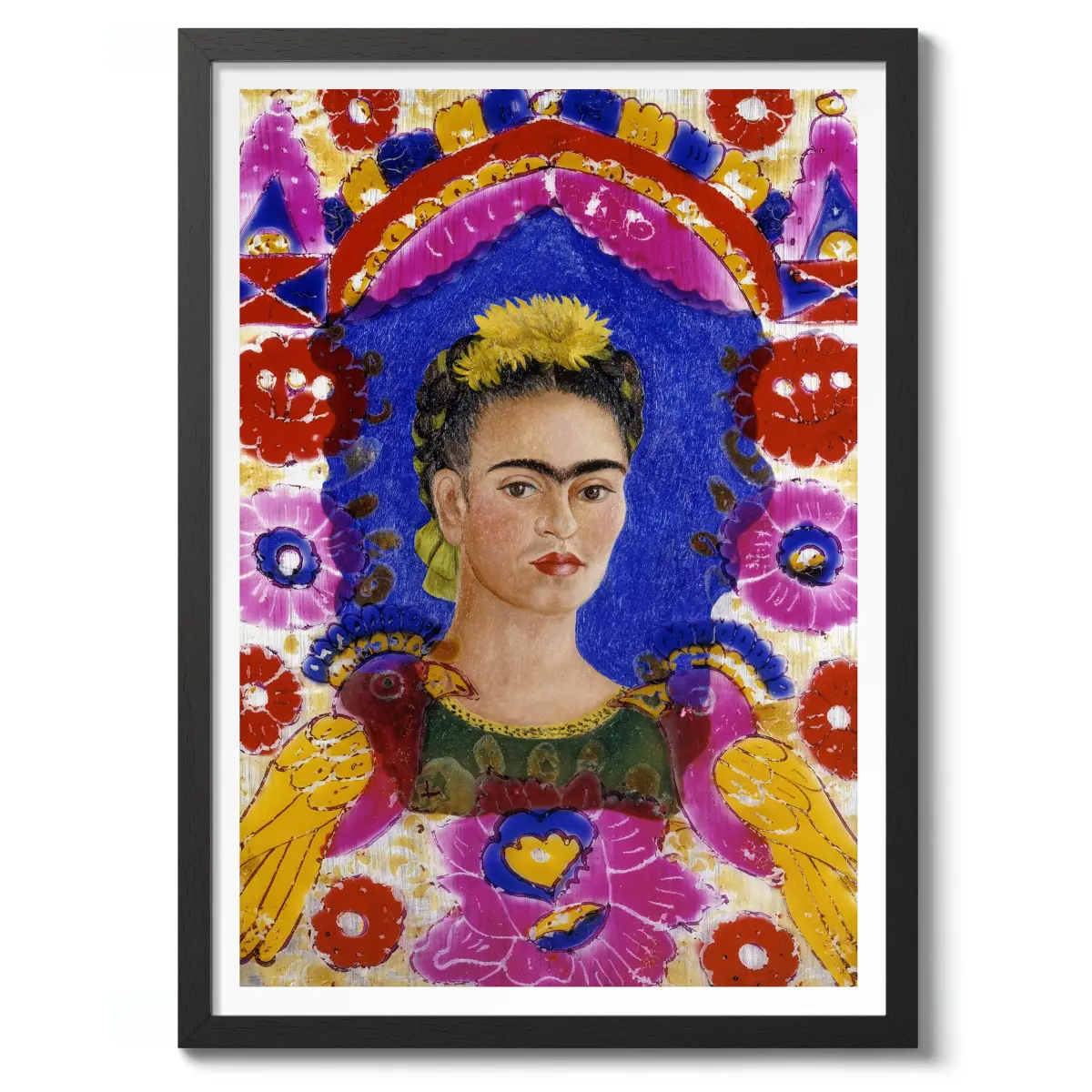
Kahlo’s aesthetic is primarily defined by mexicanidad, a cultural movement that emphasized indigenous Mexican heritage and traditions. She frequently utilized the flat, frontal perspective and vivid, saturated color palettes characteristic of retablos—small devotional paintings found in Mexican churches. By blending these folk traditions with Western academic techniques, she created a visual language that felt both ancient and modern. Her compositions are often claustrophobic and centered, forcing the viewer to confront the subject directly.
Her work is also deeply symbolic, utilizing personal iconography to communicate complex psychological states. She frequently incorporated elements such as monkeys, thorns, blood, and anatomical structures to represent her physical suffering and emotional isolation. Unlike the dreamlike, subconscious focus of European Surrealists, Kahlo’s imagery was grounded in her tangible experiences of pain, infertility, and political conviction. This grounding in reality distinguishes her from her contemporaries who sought to escape the physical world through their art.
How to identify Surrealist elements in her work
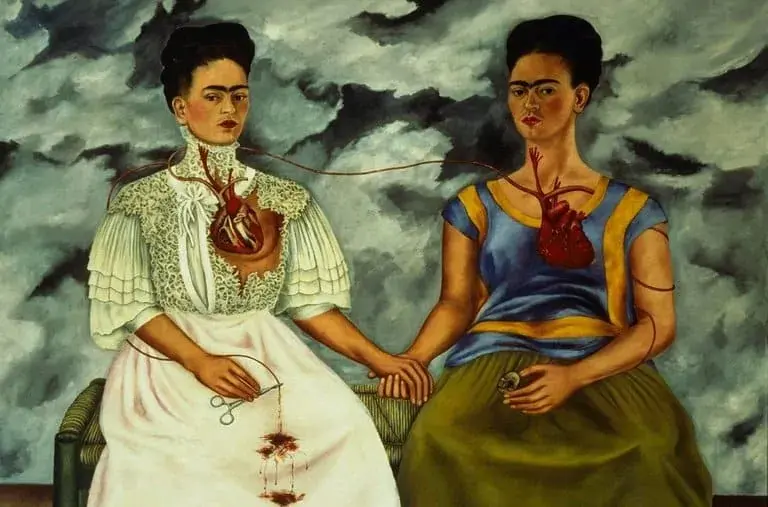
While Kahlo famously stated, "I never painted dreams, I painted my own reality," her work shares undeniable traits with Surrealism. This style is characterized by the juxtaposition of unrelated objects, the distortion of human anatomy, and the use of symbolic landscapes to convey internal truths. In paintings like The Two Fridas (1939), she uses the surreal device of exposing internal organs to externalize emotional trauma, a technique that aligns with the Surrealist interest in the psyche.
To identify these elements in her paintings, look for the following characteristics:
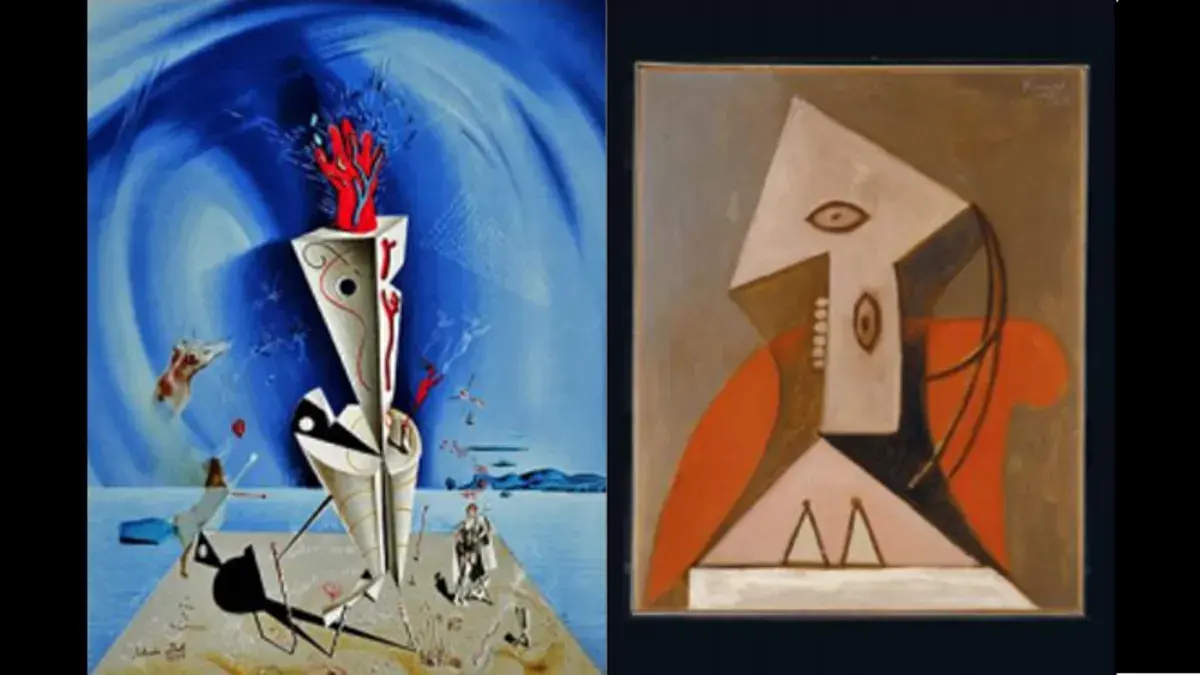
- Disembodied or floating objects that defy the laws of physics.
- The use of hybrid figures, such as humans merged with animals or plants.
- Symbolic landscapes that reflect the internal state of the subject rather than a physical location.
- Literal representations of metaphors, such as hearts connected by veins or scissors cutting through skin.
These elements serve to heighten the emotional impact of her work, transforming personal pain into universal symbols of human vulnerability and resilience.
Why she used Mexican folk art motifs
Kahlo’s commitment to Mexican folk art was a deliberate political and cultural statement. Following the Mexican Revolution, there was a national push to reclaim indigenous identity, and Kahlo embodied this through her choice of dress and artistic subjects. She often depicted herself in traditional Tehuana costumes, which served as a symbol of matriarchal strength and indigenous pride. By incorporating these motifs, she positioned herself as a guardian of Mexican culture against the encroaching influence of Western industrialization.
Her use of folk art also extended to her technical approach. She favored:
- Bright, unmixed colors that evoke the vibrancy of Mexican textiles and pottery.
- A lack of traditional perspective, which mirrors the style of 19th-century folk artists.
- The inclusion of flora and fauna native to Mexico, such as cacti, monkeys, and parrots.
- Decorative borders or ribbons that frame the subject, mimicking the style of traditional votive paintings.
This stylistic choice allowed her to bridge the gap between high art and the cultural history of her people.
Common mistakes when analyzing her paintings
A frequent error in analyzing Kahlo’s work is assuming that her paintings are purely autobiographical or therapeutic. While they are deeply personal, they are also highly constructed, deliberate pieces of art designed for public consumption. Viewing them solely as a diary of her suffering ignores the calculated technical skill and political awareness she brought to every canvas. She was a master of self-presentation, carefully curating her image to reflect specific facets of her identity, whether as a suffering wife, a militant communist, or a proud Mexican woman.
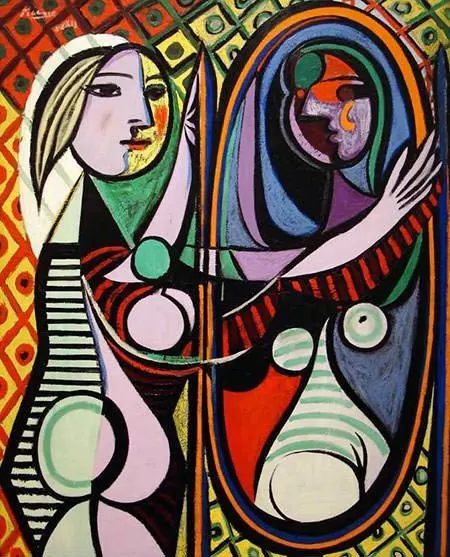
Another mistake is over-identifying her work with the Surrealist movement. By forcing her into the Surrealist box, critics often overlook the specific cultural context of her work. Her paintings are not meant to be interpreted through the lens of Freudian dream analysis but rather through the lens of Mexican history, Catholicism, and personal fortitude. Misinterpreting her work as "dreamy" diminishes the harsh, clinical reality she sought to document, particularly regarding her medical history and the physical limitations imposed by her spinal injuries.
Best ways to study her artistic technique
To understand Kahlo’s technique, one must look at her use of small-scale canvases and meticulous brushwork. She often worked on metal or masonite, which provided a smooth, rigid surface that allowed for fine detail and high-contrast color application. Her ability to render textures—from the softness of a ribbon to the sharp prick of a thorn—is a testament to her disciplined training. When studying her work, pay close attention to the eyes; she often painted them with a piercing, unwavering gaze that challenges the viewer to look away.
If you are interested in recreating her style or studying it in depth, consider these steps:
- Focus on the center: Place your subject directly in the middle of the frame to create a sense of iconic stillness.
- Use symbolic color: Choose colors that convey emotional meaning rather than naturalistic accuracy.
- Incorporate personal history: Think about the objects or animals that hold significant meaning in your own life and integrate them as metaphors.
- Maintain a flat aesthetic: Prioritize bold shapes and clear outlines over complex shadows or atmospheric perspective.
By focusing on these elements, you can better appreciate how Kahlo transformed her personal narrative into a powerful, enduring artistic legacy that continues to resonate with audiences worldwide.
Key facts
- Frida Kahlo is primarily associated with Surrealism, though she famously rejected the label, stating she painted her own reality rather than dreams.
- Her work is deeply rooted in Naïve art and Mexican folk art, characterized by vibrant colors and symbolic, flat perspectives.
- A central theme in her approximately 143 paintings is the exploration of her own identity, physical pain, and turbulent marriage to Diego Rivera.
- Kahlo frequently utilized "ex-voto" or "retablo" styles, which are small devotional paintings common in Mexican religious tradition.
- Many of her portraits feature a "double self" motif, reflecting her internal struggles and the duality of her European and Indigenous heritage.
- To identify her style, look for the integration of anatomical precision with surreal, dreamlike elements and lush, symbolic nature motifs.
The bottom line
Frida Kahlo’s art style defies simple categorization, blending the raw honesty of Mexican folk traditions with a deeply personal, symbolic visual language. By focusing on her own physical suffering and identity, she transformed the self-portrait into a profound medium for emotional expression. Her work remains a powerful testament to the resilience of the human spirit, proving that art can turn individual pain into universal beauty.
People also ask
Was Frida Kahlo a Surrealist painter?
While André Breton, the founder of Surrealism, labeled her a Surrealist, Kahlo disagreed. She maintained that her work was not based on dreams or the subconscious, but on the literal, often painful, reality of her personal life.
What techniques did Frida Kahlo use in her art?
Kahlo primarily used oil paints on small canvases, often metal sheets or Masonite boards. She employed precise, meticulous brushwork that contrasted with the raw, emotional subject matter of her physical suffering.
How did Mexican culture influence her style?
Her style was heavily influenced by "Mexicanidad," a movement celebrating indigenous identity. She incorporated traditional clothing, pre-Columbian artifacts, and Mexican flora and fauna to assert her national pride and cultural roots.
Why are there so many self-portraits in her work?
Kahlo spent long periods bedridden due to a bus accident in 1925, leaving her with only a mirror to study her own reflection. She famously noted that she painted herself because she was the subject she knew best.
What is the significance of the animals in her paintings?
Kahlo often included monkeys, parrots, and dogs as symbolic companions. These animals served as surrogates for the children she was unable to have and represented various aspects of her personality and emotional state.
How can I distinguish a Kahlo painting from other Surrealist works?
Kahlo’s work is distinguished by its autobiographical focus and lack of abstract, nonsensical imagery. Unlike European Surrealists who explored the abstract unconscious, Kahlo’s symbols are specific, grounded, and directly tied to her biography.
This answer was created with the help of AI research tools and reference sources. Spotted an error? Let us know — we correct mistakes quickly. See our editorial policy.