What art style did Salvador Dalí use?
Short answer
Salvador Dalí is primarily defined by Surrealism, an avant-garde movement exploring the unconscious mind. He utilized a meticulous, academic painting technique to render irrational, dreamlike imagery with photographic precision. Beyond Surrealism, Dalí’s career spanned various influences, including Impressionism, Cubism, and a later period of "Nuclear Mysticism" that integrated science and religious themes.
On this page
What is the Surrealist style of Salvador Dalí?
Surrealism was the defining movement of Dalí’s career, beginning in 1929 when he joined the Paris-based group led by André Breton. The style aimed to bridge the gap between dreams and reality, using art to unlock the subconscious. Dalí’s specific contribution was his "paranoiac-critical method," a process of self-induced hallucination that allowed him to perceive multiple images within a single form.
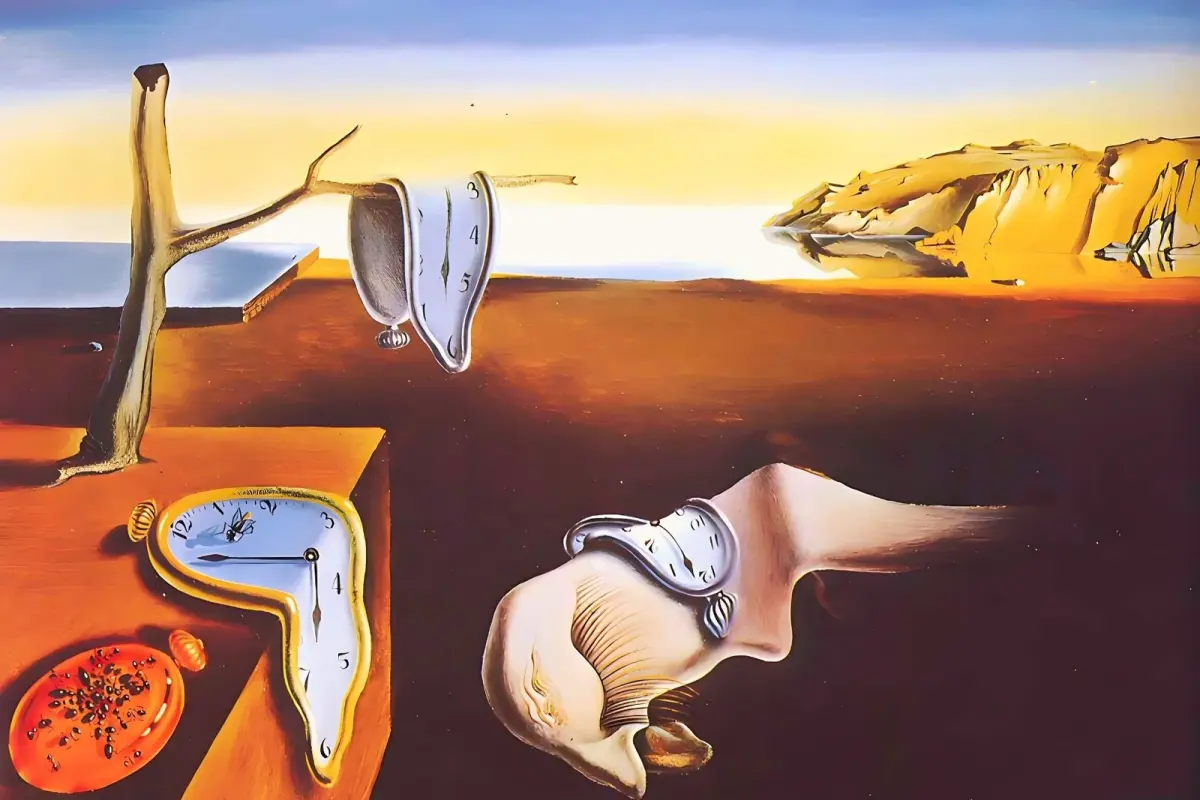
His technical approach relied on what he called "hand-painted dream photographs." While the subjects were bizarre, the execution was hyper-realistic. He used fine brushes and thin glazes to create smooth, glass-like surfaces that made impossible scenes appear tangible. This contrast between the mundane precision of his brushwork and the distorted, melting, or fragmented nature of his subjects remains the hallmark of his most famous works, such as The Persistence of Memory.
How did Dalí develop his artistic technique?
Dalí’s technical mastery was rooted in his formal academic training at the Real Academia de Bellas Artes de San Fernando in Madrid. Before adopting Surrealism, he experimented with various styles that influenced his later precision:
- Impressionism: Focused on light and color.
- Cubism: Introduced fragmented perspectives and geometric abstraction.
- Pointillism: Taught him the importance of color theory and optical blending.
- Renaissance Art: Influenced his use of perspective and anatomical accuracy.
By the time he embraced Surrealism, he had already mastered the Old Master techniques of the 17th century. He admired painters like Johannes Vermeer and Diego Velázquez, whose influence is evident in his dramatic lighting and deep, atmospheric backgrounds. He avoided the loose, expressive brushwork of his contemporaries, preferring a rigid, controlled application of paint that allowed for extreme detail, even in the smallest elements of his compositions.
What are the key elements of Dalí’s visual language?
Dalí’s work is populated by a recurring set of symbols that serve as a personal iconography. These elements were not random; they represented his anxieties, obsessions, and memories. To understand his style, one must recognize these common motifs:
- Melting watches: Representing the fluidity of time and the collapse of space.
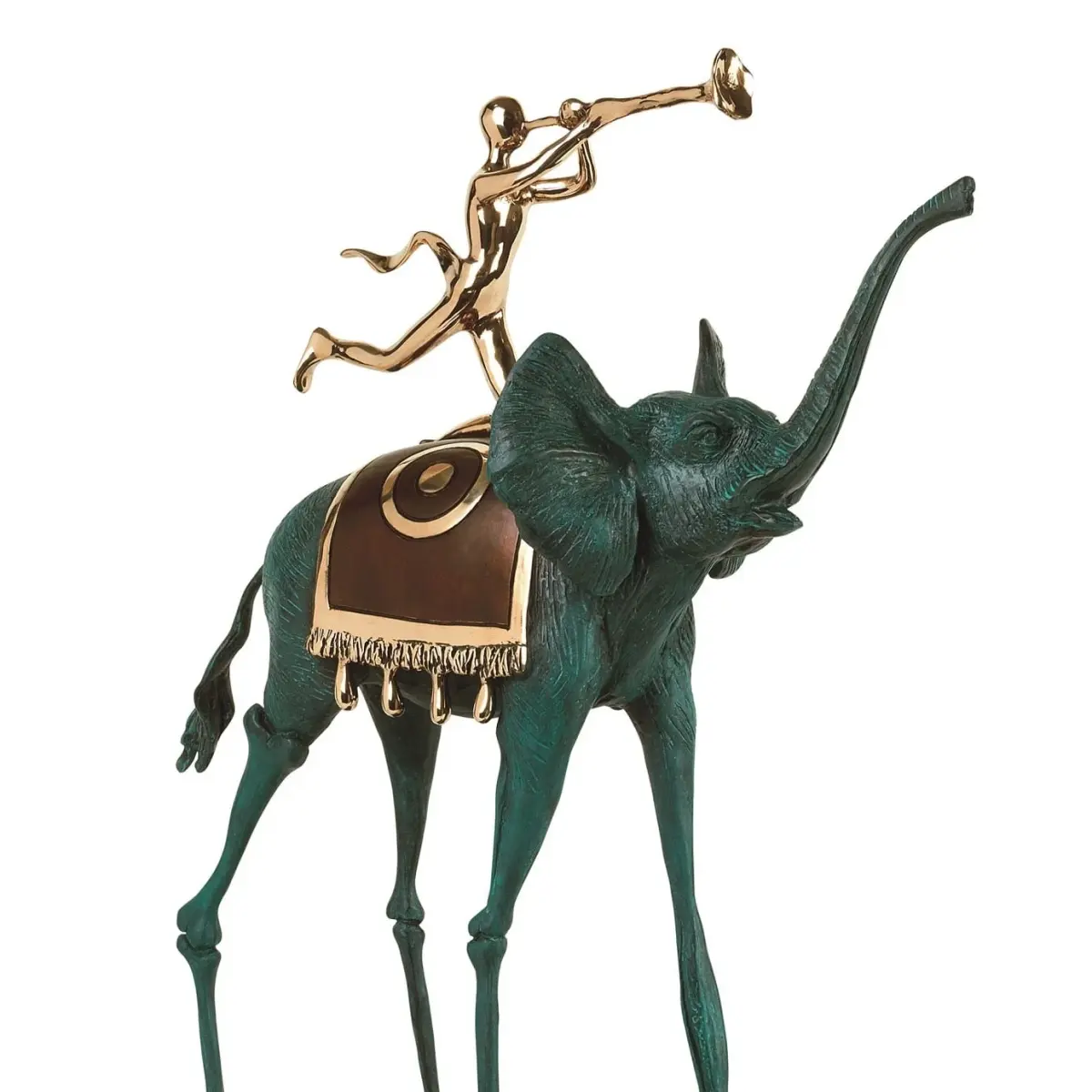
- Long-legged elephants: Symbolizing fragility and the weight of desire.
- Ants: Frequently used to represent decay, mortality, or sexual anxiety.
- Crutches: Used to support soft, limp structures, symbolizing the need for stability.
- Drawers: Representing the hidden, secret aspects of the human psyche.
These symbols were often placed in vast, desolate landscapes inspired by the rocky coast of Cadaqués, Catalonia. The juxtaposition of these recognizable objects in an alien setting creates a sense of "uncanny" tension. By anchoring his hallucinations in a familiar, realistic environment, Dalí forced the viewer to question the stability of their own reality.
How to identify a Dalí painting for beginners
Identifying a genuine Dalí requires looking for specific technical and thematic markers. While he experimented with many media, his oil paintings are the most recognizable. When examining a work, look for these indicators:
- High-contrast lighting: Often reminiscent of theatrical stage lighting.
- Extreme depth: He frequently used a low horizon line to make the sky appear vast and the foreground objects feel monumental.
- Meticulous detail: Look for textures that appear tactile, such as the soft skin of a figure or the hard surface of a rock.
- The "Dalí" signature: He often signed his work with a bold, flamboyant script, sometimes including the year or a dedication.
A common mistake is to assume that all Surrealist art is by Dalí. Many other artists, such as René Magritte or Max Ernst, worked within the movement but used vastly different techniques. Magritte, for example, focused on conceptual puzzles and flat, graphic compositions, whereas Dalí always prioritized the illusion of three-dimensional depth and photographic clarity.
Common mistakes when analyzing Dalí’s work
One common error is interpreting Dalí’s work solely through a biographical lens. While his paintings are deeply personal, they are also intellectual constructs designed to provoke the viewer. Another mistake is ignoring his later works, which shifted away from traditional Surrealism. In the 1940s and 50s, his "Nuclear Mysticism" period combined religious iconography with atomic physics. He began using more vibrant colors and complex, floating compositions that reflected his interest in the structure of matter and the divine.
When studying his art, avoid the trap of seeking a single, definitive meaning for every symbol. Dalí intentionally kept his imagery ambiguous, preferring that the viewer experience a visceral reaction rather than a logical explanation. He wanted his art to function like a dream, where the meaning remains elusive even after waking. By focusing on the technical brilliance and the emotional resonance of his imagery, you can better appreciate the complex, multifaceted legacy of one of history's most influential artists.
Key facts
- Salvador Dalí is primarily identified with Surrealism, a movement that sought to release the creative potential of the unconscious mind.
- He famously called his method the "paranoiac-critical method," which involved inducing a state of self-hallucination to access irrational imagery.
- His technique combined meticulous, academic realism with bizarre, dreamlike subject matter to create what he called "hand-painted dream photographs."
- Common symbols in his work include melting clocks, long-legged elephants, ants, and crutches, which often represent decay or psychological fragility.
- Dalí was heavily influenced by the psychoanalytic theories of Sigmund Freud, particularly the importance of dreams and repressed desires.
- To emulate his style, focus on rendering objects with high precision and sharp detail while placing them in illogical, vast, or desolate landscapes.
The bottom line
Salvador Dalí’s art is defined by his mastery of the Surrealist style, characterized by the precise, academic rendering of irrational and dream-inspired imagery. By utilizing his paranoiac-critical method, he blurred the lines between reality and hallucination. To appreciate his work, look for the tension between his meticulous technical skill and the unsettling, symbolic nature of his subjects, which continue to challenge our perception of logic.
People also ask
Was Salvador Dalí the founder of the Surrealist movement?
No, the Surrealist movement was founded by André Breton in 1924 with the publication of the Surrealist Manifesto. Dalí joined the group in 1929 and became its most famous visual representative before being expelled in 1934.
What is the significance of the melting clocks in "The Persistence of Memory"?
The melting clocks are widely interpreted as a rejection of the rigid, Newtonian concept of time. They suggest that time is fluid and subjective, especially within the context of dreams and the subconscious mind.
Did Dalí only paint in the Surrealist style?
While best known for Surrealism, Dalí experimented with many styles throughout his career. In his later years, he moved into a period he called "Nuclear Mysticism," which blended scientific imagery with classical religious themes.
How did Dalí achieve such realistic detail in his paintings?
Dalí was highly trained in classical techniques and admired Renaissance masters like Raphael and Vermeer. He used fine brushes and thin glazes to create smooth, polished surfaces that made his impossible subjects appear physically tangible.
What are common mistakes when trying to paint in a Surrealist style?
A common mistake is focusing too much on random chaos rather than sharp, realistic execution. Surrealism is most effective when the impossible is rendered with the same clarity and lighting as a real-life photograph.
How can one distinguish a Dalí painting from other Surrealist works?
Dalí’s work is distinguished by its extreme technical precision and distinctively barren, sun-drenched landscapes. Unlike the more abstract or automatic styles of artists like Joan Miró, Dalí’s paintings are almost always highly representational and narrative-driven.
This answer was created with the help of AI research tools and reference sources. Spotted an error? Let us know — we correct mistakes quickly. See our editorial policy.