What art style did Emily Carr use?
Short answer
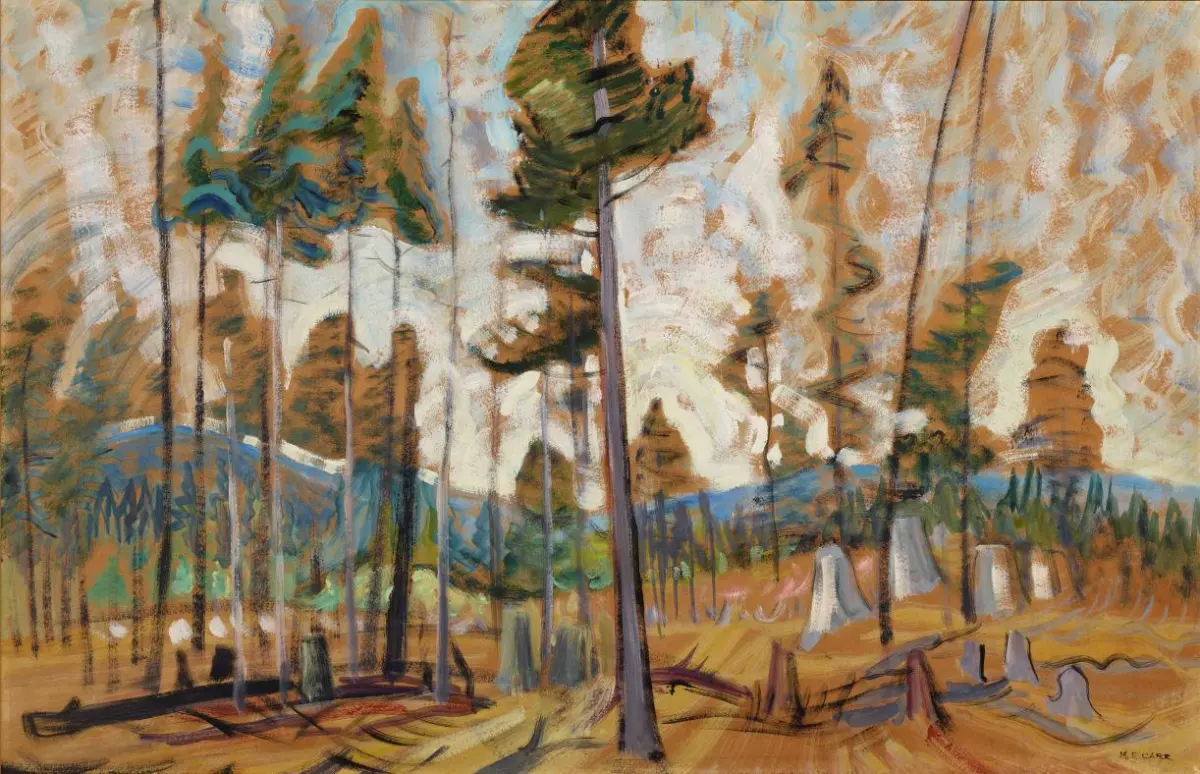
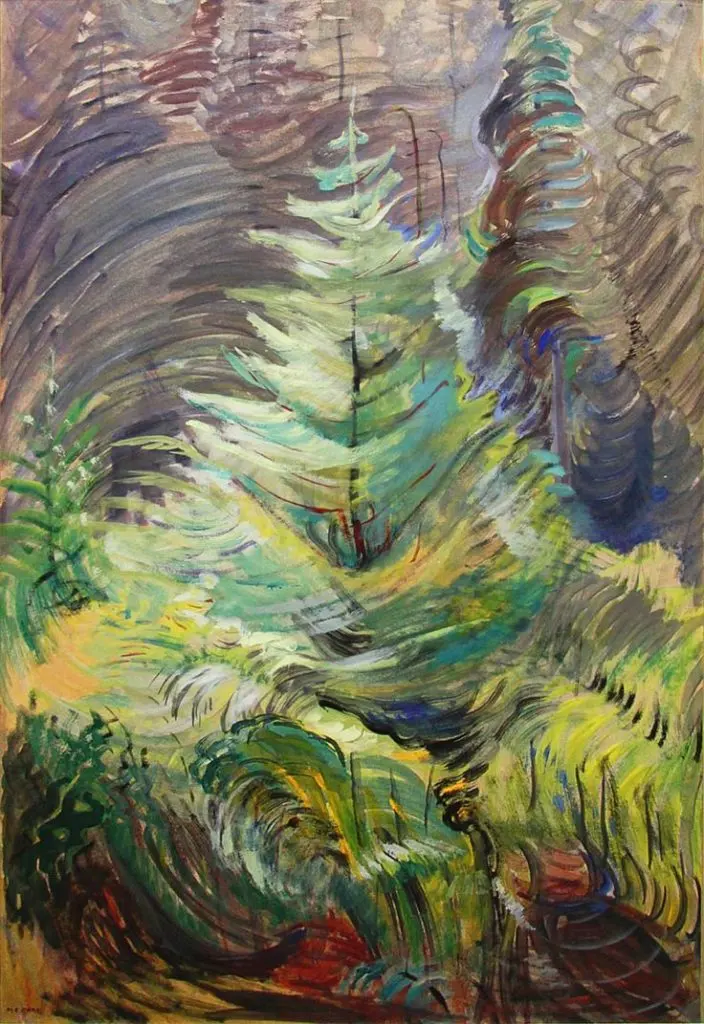
Emily Carr primarily utilized a Post-Impressionist and Expressionist style, characterized by bold, rhythmic brushwork and vibrant color palettes. Her work evolved from traditional descriptive landscapes to a highly stylized, spiritual interpretation of the British Columbia wilderness. She often employed heavy paint application and swirling forms to convey the living energy of nature.
On this page
How did Emily Carr develop her unique art style?
Emily Carr’s artistic journey began with traditional training in San Francisco and London, where she learned the conventions of late 19th-century realism. However, her true stylistic breakthrough occurred during a 1910 trip to Paris. There, she encountered the work of the Fauves and Post-Impressionists, who emphasized subjective experience over literal representation. This exposure encouraged her to abandon the muted, academic tones of her early career in favor of intense, saturated colors and simplified, sculptural forms.
Upon returning to Canada, Carr applied these European modernist techniques to the rugged landscape of British Columbia. She moved away from the static, photographic quality of her early watercolors and began to experiment with oil paints on large canvases. Her style became increasingly rhythmic, focusing on the structural patterns of forest growth rather than mere visual accuracy. This evolution was deeply influenced by her desire to capture the "spirit" of the landscape and the totemic art of Indigenous peoples.
What are the key characteristics of Carr’s painting style?
Carr’s mature style is defined by a distinct visual language that prioritizes movement and emotional resonance. She often used a palette of deep greens, earthy browns, and vibrant ochres to depict the dense, shadowed forests of the Pacific Northwest. Her brushwork is notoriously energetic, featuring long, sweeping strokes that mimic the growth patterns of trees and the undulating terrain.
To achieve this signature look, she utilized several specific techniques:
- Thick, impasto applications of oil paint to create physical texture.
- Swirling, circular brushstrokes to represent the movement of wind and foliage.
- Strong, dark outlines that define the silhouettes of totem poles and massive cedars.
- High-contrast lighting to create a sense of drama and depth within the woods.
- Abstracted, simplified shapes that reduce complex natural scenes into essential, powerful forms.
These elements combined to create a sense of "rhythm" that she believed was inherent in the natural world. By flattening the perspective and emphasizing the decorative quality of the forest, she moved closer to a symbolic representation of the wilderness.
How to identify an Emily Carr painting?
Identifying a work by Carr requires looking for her specific treatment of light and space. Unlike traditional landscape painters who focused on a distant horizon, Carr often brought the viewer directly into the forest, creating an intimate, claustrophobic, and overwhelming experience. Her compositions frequently feature a "cathedral" effect, where towering trees frame the sky, drawing the viewer’s eye upward.
When analyzing her pieces, look for these common thematic and visual markers:
- The presence of Indigenous totem poles, often depicted as weathered, monumental figures integrated into the landscape.
- An absence of human figures, which emphasizes the vastness and autonomy of the natural environment.
- The use of "sky holes," where patches of light break through the dense canopy of trees.
- A lack of fine detail; she preferred to capture the "mass" of a tree rather than the individual leaves.
- A signature that often includes her name written in a distinct, flowing script, sometimes accompanied by a year.
What are common mistakes when studying Carr’s work?
A frequent error is assuming Carr’s work is purely abstract. While her later paintings are highly stylized, they remain firmly rooted in the specific geography of British Columbia. She was a keen observer of her environment, and her abstractions were always based on real-world structures. Dismissing her work as "simple" or "naive" ignores the complex intellectual and spiritual labor she put into translating the forest into a visual medium.
Another mistake is failing to recognize the influence of her travels. Some viewers assume her style emerged in a vacuum, but it was a deliberate synthesis of international modernism and local subject matter. Additionally, students often overlook the importance of her transition from watercolor to oil. Her earlier watercolors are much more delicate and traditional, and mistaking these for her mature style can lead to a misunderstanding of her artistic progression. Always check the date of the work to understand which phase of her career is being represented.
Why did Carr choose these specific artistic methods?
Carr’s stylistic choices were driven by a profound spiritual connection to the land. She believed that the forest had a living, breathing essence that traditional, realistic painting could not capture. By using bold colors and rhythmic lines, she sought to make the viewer feel the weight and vitality of the trees. Her style was not just a visual preference but a deliberate attempt to communicate a sense of awe and reverence for the natural world.
Furthermore, her style served as a bridge between her heritage and the Indigenous cultures she documented. By adopting a more expressive, symbolic approach, she moved away from the role of a mere recorder of history and toward that of an interpreter of culture. Her work remains a testament to the power of modernist techniques to convey deep, personal, and cultural truths. Through her unique application of paint and form, she transformed the Canadian wilderness into a powerful, enduring symbol of the human spirit.
Key facts
- Emily Carr primarily utilized Post-Impressionism, characterized by bold colors and expressive brushwork to capture the essence of the Canadian landscape.
- She frequently used oil paint thinned with gasoline, a technique she called "oil on paper," which allowed for faster drying and a fluid, watercolor-like application.
- Her later work shifted toward abstraction, focusing on the rhythmic, swirling patterns of forest growth rather than precise botanical representation.
- Carr was deeply influenced by the Group of Seven, particularly Lawren Harris, who encouraged her to move beyond descriptive realism toward spiritual expression.
- When painting outdoors, she often used large, heavy brushes to apply paint in sweeping, energetic strokes that emphasized the movement of trees and clouds.
- A common mistake for students is over-blending colors; Carr’s technique relied on distinct, visible brushstrokes to maintain the vitality and raw energy of the subject matter.
The bottom line
Emily Carr’s artistic style evolved from traditional realism into a powerful, distinct form of Post-Impressionism. By blending the structural influence of Indigenous totem poles with the vibrant, expressive techniques of European modernism, she created a unique visual language for the Canadian wilderness. Her legacy remains defined by her ability to translate the raw, spiritual energy of nature into bold, rhythmic, and deeply evocative compositions.
People also ask
Did Emily Carr paint portraits or only landscapes?
While best known for her landscapes of British Columbia’s forests and Indigenous totem poles, Carr also painted portraits, self-portraits, and scenes of urban life. Her portraits often employed the same expressive, non-naturalistic color palettes found in her forest studies.
How did Indigenous art influence Emily Carr’s style?
Carr was profoundly inspired by the monumental totem poles and village structures of the Haida, Gitxsan, and Tsimshian peoples. She incorporated the stylized, structural forms of these carvings into her own work, though her interpretations were filtered through her personal modernist lens.
Why did Emily Carr use house paint in her work?
During the Great Depression, professional artist-grade supplies were expensive, so Carr experimented with inexpensive house paints. She found that these paints provided a vibrant, opaque quality that suited her bold, simplified compositions.
What was the "Fauvist" influence on her art?
During her time in France in 1910, Carr encountered Fauvism, a movement defined by wild, arbitrary use of color. This experience liberated her from traditional color palettes, leading her to use vivid greens, deep blues, and bright yellows to convey emotional intensity.
Did Emily Carr ever paint abstract art?
Yes, her late-career work became increasingly abstract, focusing on the "rhythm" of the forest rather than literal tree shapes. These paintings prioritize the energy and interconnectedness of nature over realistic detail.
Where can I see Emily Carr’s paintings today?
The Vancouver Art Gallery holds the largest collection of her work, alongside significant holdings at the Art Gallery of Ontario and the National Gallery of Canada. Many of these institutions offer online digital archives for remote viewing.
This answer was created with the help of AI research tools and reference sources. Spotted an error? Let us know — we correct mistakes quickly. See our editorial policy.