What is Emily Carr known for?
Short answer
Emily Carr was a renowned Canadian artist and writer celebrated for her modernist paintings of British Columbia’s landscapes and Indigenous totem poles. A central figure in Canadian art history, she captured the raw, spiritual power of the Pacific Northwest wilderness and authored several acclaimed books documenting her life and artistic struggles.
On this page
What is Emily Carr’s artistic style?
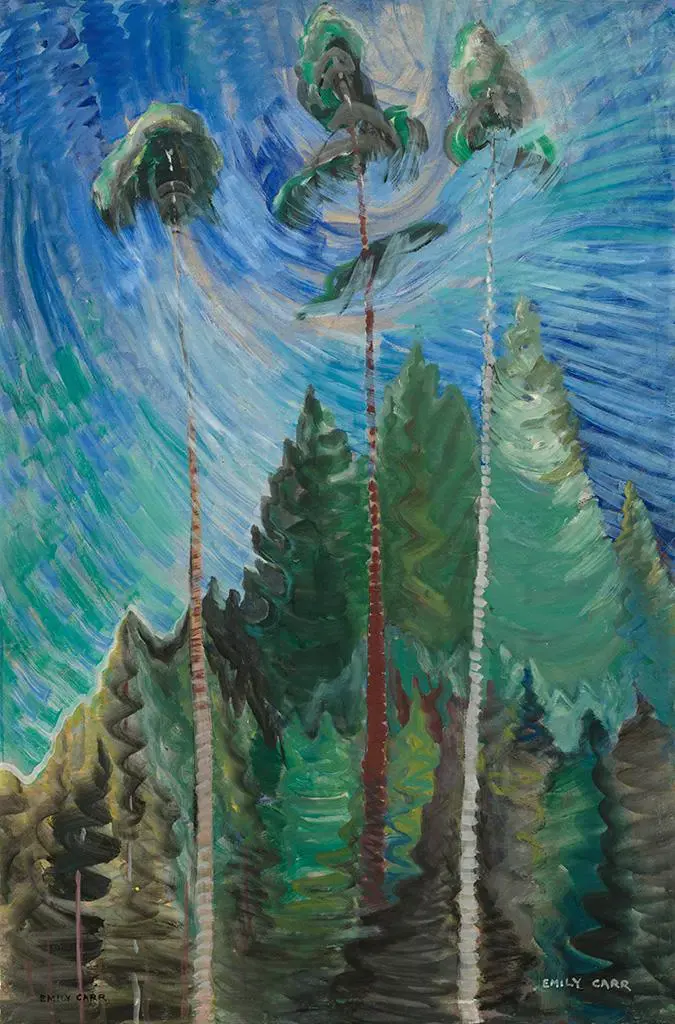
Emily Carr is primarily recognized for her bold, post-impressionist style that evolved throughout her career. Initially trained in traditional methods in San Francisco and London, she eventually moved toward a more expressive, rhythmic approach after encountering the Group of Seven in the 1920s. Her work often features swirling, dynamic brushstrokes and a deep, saturated color palette that emphasizes the monumental scale of the forest.
Her paintings frequently focus on the interplay between light and shadow within dense, ancient woodlands. She sought to capture the "spirit" of the landscape rather than merely replicating its physical appearance. Key elements of her signature style include:
- The use of thick, impasto paint application.
- A focus on verticality, highlighting the towering height of cedar and fir trees.
- A rejection of photographic realism in favor of emotional resonance.
- The integration of sky and foliage into unified, swirling patterns.
Why are her paintings of totem poles important?
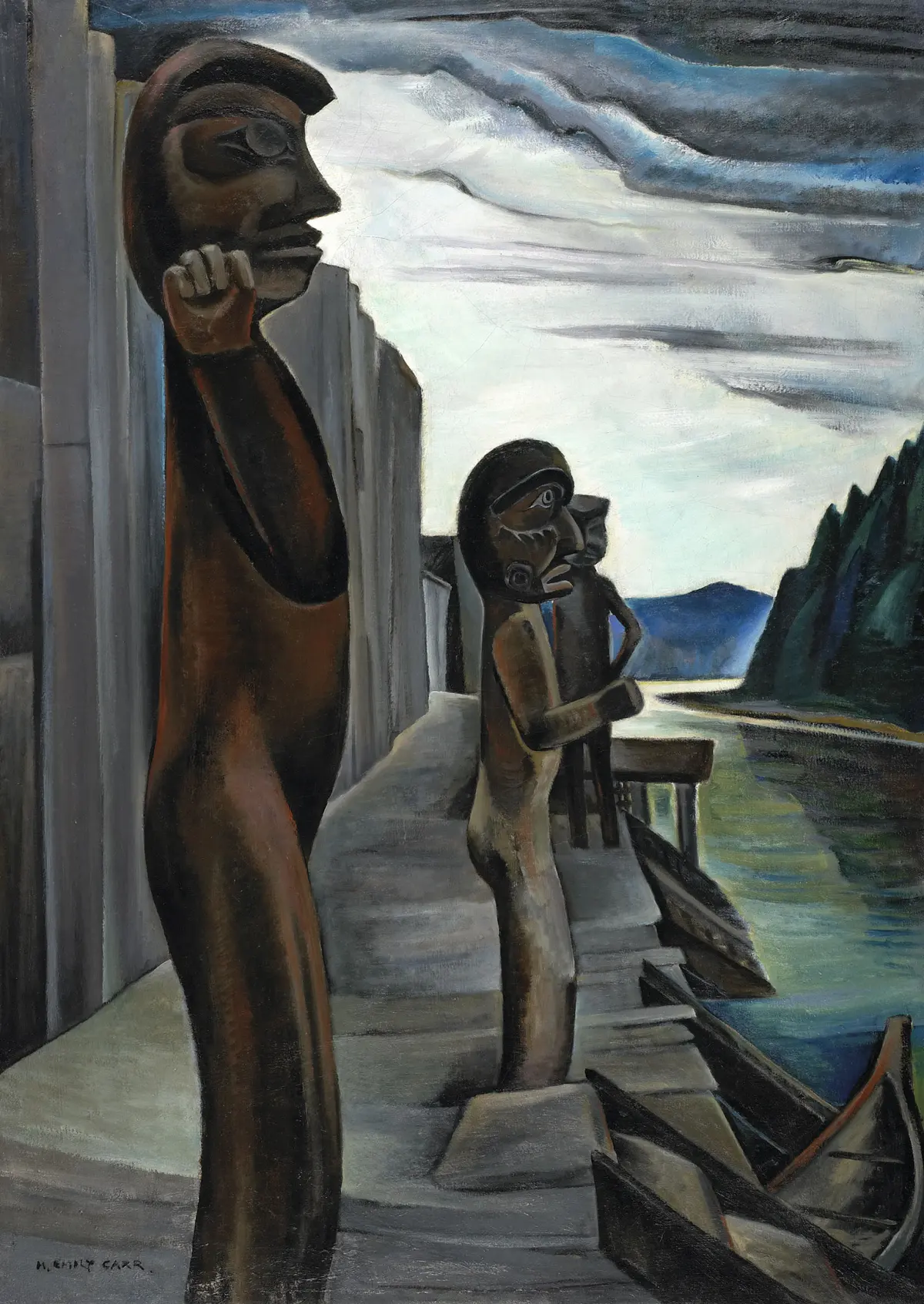
Early in her career, Carr traveled extensively through remote Indigenous villages along the coast of British Columbia and Alaska. She became deeply concerned that the cultural heritage represented by totem poles was disappearing due to colonial pressures. Her mission was to document these carvings through sketches and paintings before they decayed or were removed.
These works serve as both significant artistic achievements and vital historical records of First Nations art. While her approach was sometimes criticized for its colonial lens, she remains one of the few artists of her time to treat Indigenous subjects with sustained, serious attention. Her documentation efforts are highly valued by historians today for:
- Providing visual evidence of village sites that have since vanished.
- Preserving the iconography of specific Haida, Tsimshian, and Kwakwaka’wakw carvings.
- Bridging the gap between European modernist techniques and Indigenous artistic traditions.
- Raising public awareness about the cultural significance of these monumental structures.
How did she become a successful writer?
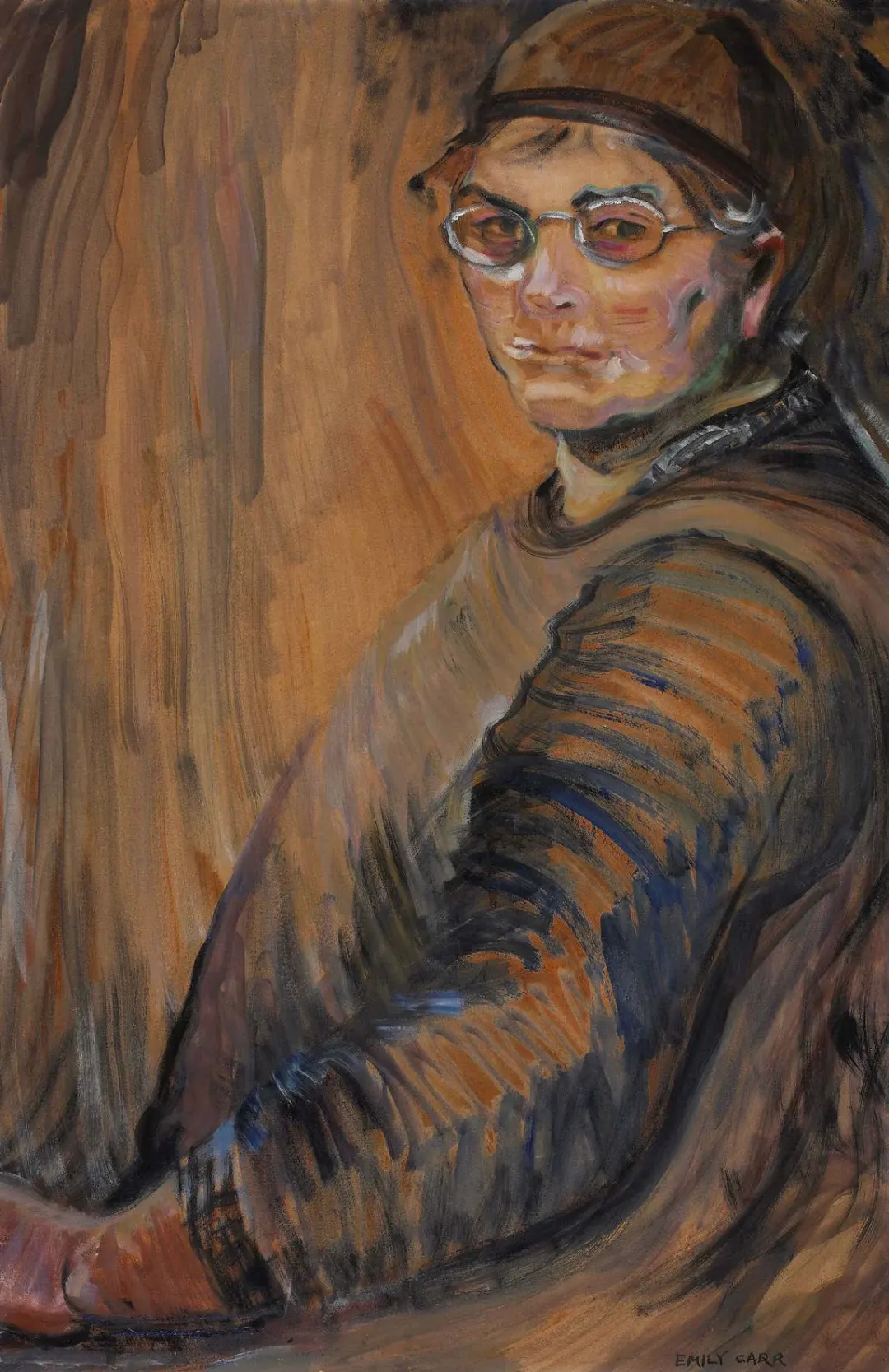
In her later years, when declining health made painting in the rugged wilderness difficult, Carr turned to writing. She published several books, most notably Klee Wyck, which won the Governor General’s Award in 1941. Her prose is characterized by the same honesty and vivid detail found in her canvases, offering a candid look at her life as a woman artist.
Her writing captures the isolation of living in the wilderness and the challenges of being an unconventional woman in the early 20th century. Readers often appreciate her books for their dry wit and poignant observations about nature. Her literary legacy includes:
- Klee Wyck, a collection of stories about her travels to Indigenous villages.
- The Book of Small, which details her childhood in Victoria, British Columbia.
- Growing Pains, an autobiography detailing her artistic development and struggles.
- Hundreds and Thousands, a published version of her private journals.
Where can you see her work today?
The majority of Carr’s most important paintings are held in major Canadian institutions. Because her work is considered a national treasure, it is frequently featured in permanent collections and touring exhibitions. If you are planning to view her art, it is best to visit the institutions that hold the largest archives of her sketches and canvases.
The Vancouver Art Gallery holds the most extensive collection of her work, including hundreds of paintings and works on paper. Other significant locations include:
- The Art Gallery of Greater Victoria, located in her hometown.
- The National Gallery of Canada in Ottawa.
- The McMichael Canadian Art Collection in Ontario.
- The Audain Art Museum in Whistler, British Columbia.
When visiting, look for the evolution of her style from her early, tighter watercolors to the sweeping, powerful oil paintings of her final decade.
Common mistakes when interpreting her legacy
A common mistake when studying Carr is failing to contextualize her work within the colonial history of Canada. While she was a pioneer for women in the arts, her interactions with Indigenous communities took place during a period of intense government-led cultural suppression. Modern scholars emphasize the importance of viewing her work with a critical eye toward the power dynamics of the era.
Another error is assuming her success came easily. Carr spent decades in obscurity, struggling to find an audience for her modern, non-traditional style in a conservative society. She often worked in total isolation and faced significant financial hardship. To better understand her life, avoid these common misconceptions:
- Thinking she was part of the Group of Seven; while she was influenced by them, she was an independent artist based on the West Coast.
- Viewing her paintings as purely decorative; they were deeply spiritual and often reflected her personal, internal struggles.
- Ignoring her literary contributions; her writing is essential for understanding the motivations behind her visual art.
- Assuming her style was static; she experimented constantly with different mediums, including charcoal and oil on paper, throughout her life.
Key facts
- Emily Carr (1871–1945) was a Canadian artist and writer best known for her modernist depictions of the Indigenous cultures and landscapes of the Pacific Northwest.
- She was one of the first artists in Canada to adopt a post-impressionist and fauvist painting style, characterized by bold colors and rhythmic, swirling brushstrokes.
- Carr spent significant time living among First Nations communities in British Columbia, documenting totem poles and village life in her sketches and paintings.
- She gained national recognition late in life after being invited to participate in a 1927 exhibition of West Coast art at the National Gallery of Canada.
- Her literary career flourished after she turned to writing at age 70, resulting in the Governor General’s Award-winning book, Klee Wyck.
- When visiting her work, note that she often used homemade paints, which sometimes leads to cracking or texture issues in her original canvases.
The bottom line
Emily Carr remains a towering figure in Canadian art, celebrated for her raw, emotional connection to the rugged landscapes of British Columbia. By bridging the gap between traditional documentation and modern expressionism, she created a unique visual language that captured the spirit of the Pacific Northwest. Her legacy endures both through her vibrant, rhythmic paintings and her evocative writing, which continue to inspire artists and historians today.
People also ask
What does the name "Klee Wyck" mean?
It is a Nuu-chah-nulth name given to Carr by the Indigenous people of Ucluelet, meaning "Laughing One." She used it as the title for her 1941 collection of stories about her experiences in Indigenous villages.
Did Emily Carr belong to the Group of Seven?
She was not an official member, but she was closely associated with them. Lawren Harris, a prominent member of the group, became her mentor and encouraged her to embrace a more spiritual, expressive style.
Where can I see Emily Carr's paintings today?
The Vancouver Art Gallery holds the largest collection of her work. Many of her pieces are also housed at the Art Gallery of Greater Victoria and the National Gallery of Canada.
What was Carr's relationship with Indigenous communities?
Her work is now viewed through a complex lens; while she was a passionate advocate for preserving Indigenous culture, she also operated within the colonial structures of her time. Contemporary scholars emphasize the importance of understanding her work alongside the perspectives of the First Nations people she depicted.
How did Carr's style change over her career?
Her early work was more traditional and realistic, influenced by her training in San Francisco and London. After traveling to France in 1910, she adopted brighter colors and a more subjective, emotional approach to nature.
Is it difficult to identify an authentic Emily Carr painting?
Yes, as her work is highly valuable and has been widely imitated. Expert authentication involves examining the specific types of canvas, the chemical composition of her unique paint mixtures, and her distinct signature style.
This answer was created with the help of AI research tools and reference sources. Spotted an error? Let us know — we correct mistakes quickly. See our editorial policy.