What is the easiest way to draw an eagle in flight?
Short answer
The easiest way to draw an eagle in flight is to use a simplified "M" shape for the wings. By focusing on the silhouette rather than individual feathers, you create a recognizable form quickly. Start with a central body oval, add the wing span, and refine the primary feathers at the tips.
On this page
How to sketch an eagle wing shape
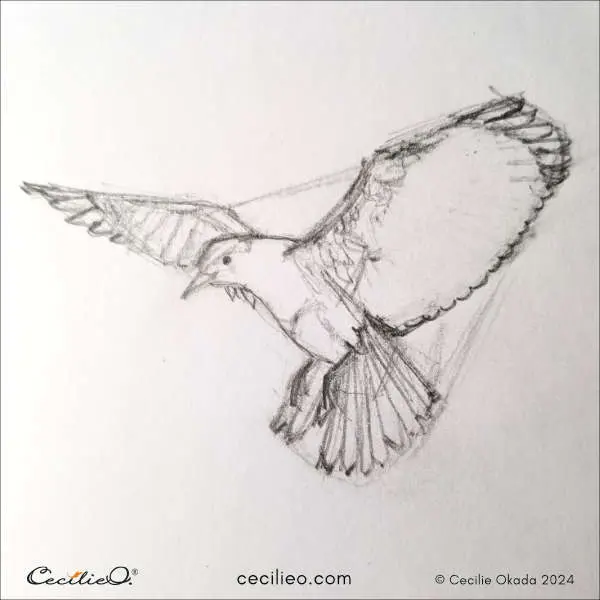
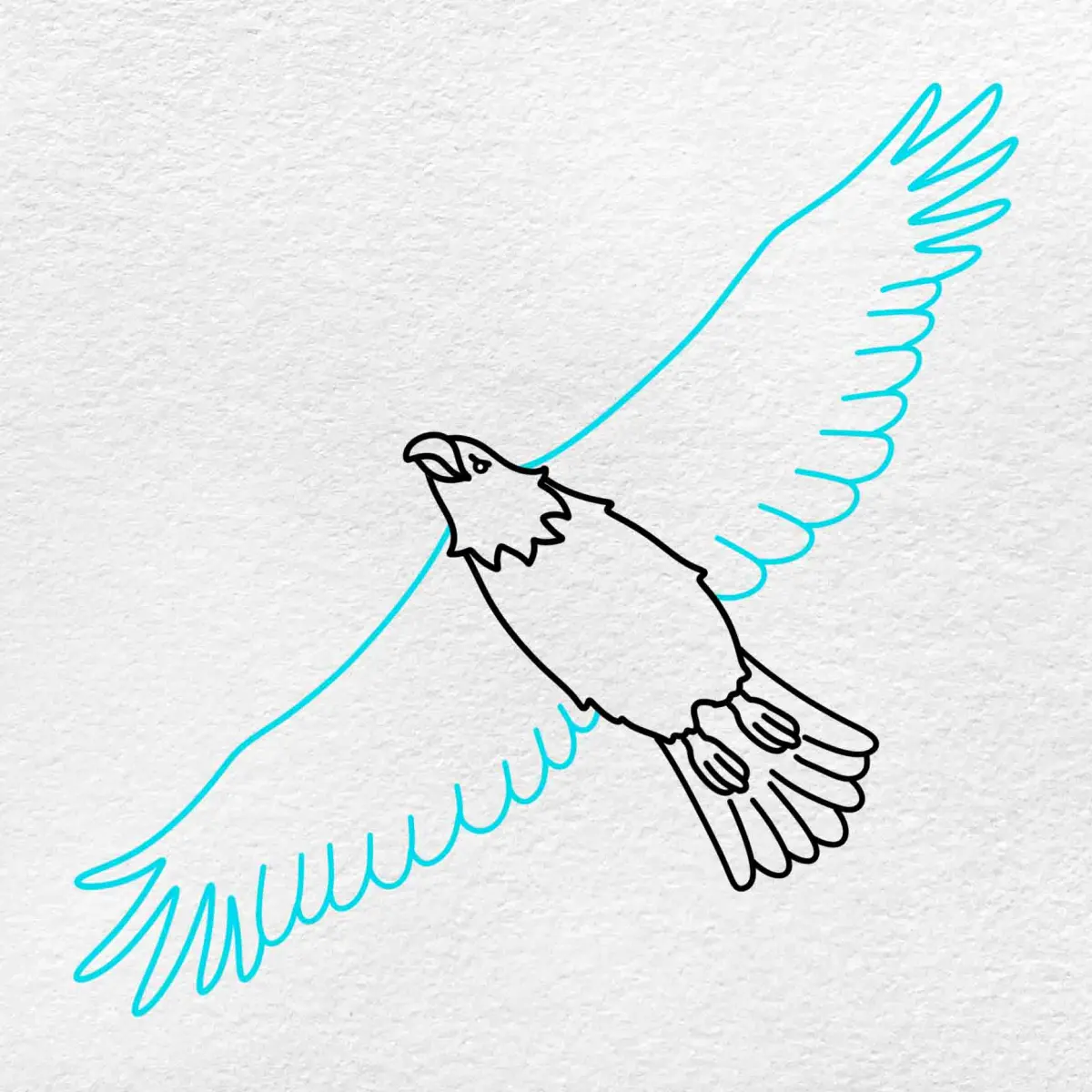
The most effective technique for capturing an eagle in flight is to visualize the wings as a wide, elongated "M" or a shallow "V" shape. Beginners often struggle by trying to draw every single feather, which leads to a cluttered and stiff appearance. Instead, focus on the overall gesture of the bird. Start by drawing a small, horizontal oval to represent the torso and a smaller circle for the head. From the shoulders, draw two long, sweeping lines that extend outward and slightly downward to establish the primary wing span.
Once you have the basic skeleton, you can thicken the lines to give the wings physical weight. Think of the eagle's wing as having three distinct sections: the upper arm, the forearm, and the hand, which holds the primary feathers. By keeping these segments simple, you maintain the fluidity of the flight motion. Use light, sweeping strokes to define the outer edges, ensuring the wings taper toward the tips. This structural approach provides a solid foundation that allows you to add detail later without losing the sense of movement.
Best drawing techniques for beginners
When you are just starting, it is best to use a "block-in" method where you define the bird's silhouette before adding any texture. This prevents you from getting lost in the details of the plumage. You should treat the eagle as a collection of geometric shapes rather than a complex biological organism. This shift in perspective makes the drawing process far less intimidating and more manageable for those without extensive anatomical training.
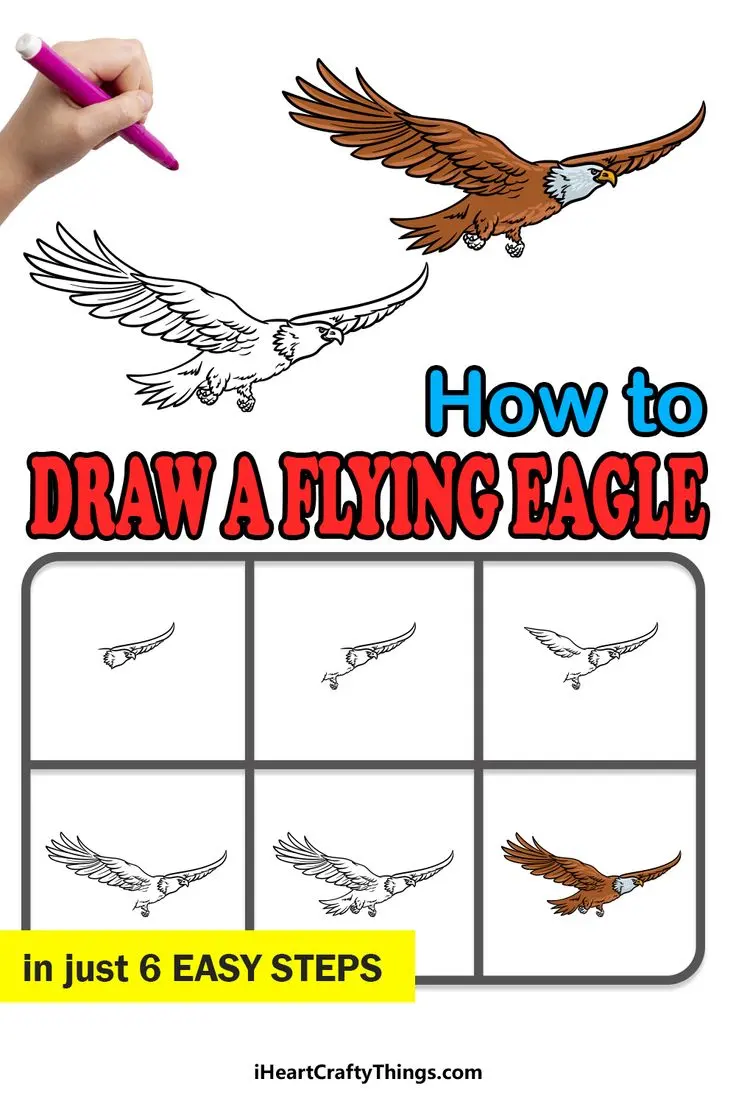
- Draw a central oval for the body and a small circle for the head.
- Extend two long, curved lines from the upper body for the wings.
- Draw a wide, fan-shaped tail at the base of the body.
- Connect these shapes with smooth, flowing outer lines.
- Add a small triangle for the beak to give the head direction.
By following these sequential steps, you ensure that the proportions remain balanced. If the wings look too small, the eagle will appear heavy; if they are too long, the drawing may look distorted. Aim for a wingspan that is roughly three times the width of the bird's body.
Why eagles look different in flight
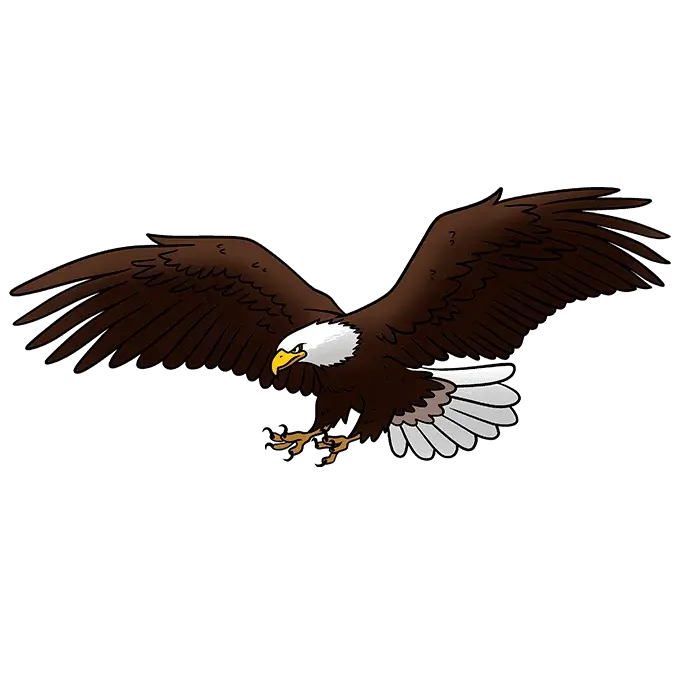
Understanding the mechanics of avian flight helps in drawing a more realistic eagle. When an eagle soars, its primary feathers at the wingtips often spread out like fingers to catch air currents. This "fingered" look is a signature feature of large raptors like the bald eagle or the golden eagle. If you draw the wings as solid, smooth blades, the bird will look more like a jet plane than a living creature. Always leave small gaps between the outer feathers to suggest this natural spread.
The position of the tail is another critical element that dictates the eagle's posture. In flight, the tail acts as a rudder, fanning out or narrowing depending on the bird's maneuvers. A fanned tail creates a wider, more majestic silhouette, while a closed tail suggests a bird in a high-speed dive. Observe how the head remains steady while the wings do the heavy lifting. By keeping the head parallel to the ground or slightly tilted, you convey a sense of focus and predatory intent that defines the eagle's character.
Common mistakes when drawing eagles
A frequent error is drawing the head too large or the beak too small. The eagle’s head should be relatively compact, with a powerful, hooked beak that extends forward. Another common mistake is placing the wings too low on the body; they should originate from the top of the torso, near the shoulders. If the wings are attached to the middle of the body, the eagle will appear to have a hunched, unnatural posture. Always check your vertical alignment before finalizing your lines.
- Avoid drawing feathers that are all the same size; they should be longest at the tips.
- Do not make the body too round; eagles have a sleek, muscular build.
- Avoid perfectly symmetrical wings, as the bird is rarely in a perfectly flat pose.
- Do not use heavy, dark outlines, as these can make the drawing look like a cartoon.
- Ensure the eyes are placed well forward on the head to capture the intense, piercing gaze.
Correcting these mistakes early in the sketching phase saves significant time and frustration during the shading process.
How to add realistic feather details
Once the silhouette is established, you can begin to suggest feathers without drawing every single one. Use "V" shapes or small, overlapping curves along the trailing edge of the wings to imply the texture of the plumage. Focus your detail on the tips of the wings and the head, as these are the areas the viewer notices first. The middle of the wing can remain relatively smooth, as the feathers there are smaller and tighter. This use of selective detail creates a focal point that draws the eye.
To finish your drawing, add a light layer of shading underneath the wings and on the underside of the body. This creates a sense of volume and depth, making the eagle look three-dimensional rather than flat. A simple gradient from dark to light across the wings can mimic the way light hits the feathers during flight. By focusing on the contrast between the dark flight feathers and the lighter body, you create a professional look with minimal effort. Your final sketch should capture the essence of flight through clean lines and strategic, sparse detail.
Key facts
- Eagles possess a wingspan that can reach up to 7.5 feet, which is significantly wider than their body length.
- The primary feathers on an eagle’s wing tip, known as primaries, fan out like fingers during flight to reduce turbulence.
- When drawing, always start with a horizontal "M" or "W" shape to establish the primary angle of the wings.
- An eagle’s head is relatively small compared to its massive wings, usually measuring about one-fifth of the total body length.
- Focus on the "wrist" joint of the wing, which is the sharpest angle located about one-third of the way from the body.
- Avoid drawing feathers as individual lines; instead, group them into large, overlapping shapes to maintain a clean silhouette.
The bottom line
To draw an eagle in flight, prioritize the silhouette by using a wide "M" shape for the wings. Focus on the primary feathers as large, grouped shapes rather than individual lines to maintain clarity. By keeping the head small and the beak hooked, you will capture the bird's predatory nature. Practice these proportions consistently, and you will quickly master the dynamic movement of this majestic raptor.
People also ask
Should I draw the head or the wings first when sketching an eagle?
Always start with the wings to establish the bird's scale and pose. The head is a smaller detail that should be added once the overall wingspan is mapped out.
How do I make the wings look powerful rather than stiff?
Create a slight curve in the wing feathers to suggest the weight of the air. Adding a subtle downward bend at the wingtips mimics the natural tension of a bird in motion.
Why do my eagle drawings often look like ducks or other birds?
The most common mistake is failing to draw the sharp, hooked beak and the heavy, powerful brow. These two features are the primary markers that distinguish an eagle from a generic bird.
Is it better to use a pencil or a pen for this drawing?
Use a graphite pencil for the initial layout to allow for adjustments. Once the proportions are correct, use a pen or darker pencil to define the primary feathers and the eye.
How do I represent the tail feathers in flight?
Draw the tail as a broad, rounded fan shape extending from the base of the body. Keep the tail feathers shorter than the wings to ensure the eagle looks balanced.
What is the most important part of the eagle's eye to capture?
Focus on the piercing, forward-facing gaze created by the prominent brow ridge. This creates the intense, predatory expression characteristic of the species.
This answer was created with the help of AI research tools and reference sources. Spotted an error? Let us know — we correct mistakes quickly. See our editorial policy.