How do you draw a butterfly?
Short answer
Drawing a butterfly involves creating a symmetrical body and wing structure using simple geometric shapes. Start by sketching a central vertical axis to ensure balance. Add an elongated oval for the thorax and abdomen, then attach large, curved wing segments. Finally, add intricate patterns and antennae to complete the realistic appearance.
On this page
How to draw a butterfly for beginners
Drawing a butterfly is best approached by breaking the creature down into basic geometric forms. Begin by drawing a light vertical line down the center of your paper to act as a guide for symmetry. This line ensures that both the left and right wings align properly, which is crucial for a natural look. Use a hard pencil, such as an HB, to keep your initial sketches faint so they can be easily erased later.
Once the guide is set, draw a small circle for the head and a larger, elongated oval for the body. The body consists of the thorax and the abdomen, which should be slightly segmented. From the thorax, draw two large, rounded triangles or teardrop shapes extending outward for the upper wings. Add smaller, rounded shapes beneath them for the lower wings. Following these steps will provide a stable foundation for adding details later.
Best techniques for drawing butterfly wings
The wings are the most distinctive feature of any butterfly, and their shape varies significantly across species. To achieve a realistic look, focus on the curvature of the wing edges rather than drawing perfectly straight lines. Most butterflies have a "forewing" that is larger and more triangular, while the "hindwing" is often more rounded or scalloped. Observing photographs of real specimens can help you understand how these shapes overlap near the body.
When adding detail to the wings, consider these structural elements:
- Veins: Draw thin, branching lines radiating from the center of the wings toward the edges.
- Patterns: Use circles or crescent shapes to represent eyespots, which are common in species like the Peacock butterfly.
- Symmetry: Ensure that the patterns on the left wing mirror those on the right wing to maintain biological accuracy.
- Texture: Use light, feathered strokes to suggest the presence of scales, which cover the wings of all Lepidoptera.
How to add realistic details to your drawing
After establishing the basic outline, you can refine your drawing by adding depth and texture. Butterflies are known for their complex color patterns and delicate anatomy. Start by defining the antennae, which should be long, thin, and tipped with a small club-like bulb at the end. These should extend from the top of the head and curve gracefully outward.
To add realism, focus on the transition between the body and the wings. The wings do not simply sprout from the abdomen; they are attached to the thorax. Use short, fine lines to indicate the presence of "fur" or scales on the thorax, which helps blend the wing joints into the body. You may also want to add a slight shadow beneath the butterfly if you are drawing it resting on a surface, as this creates a sense of volume and prevents the image from looking flat.
Common mistakes when drawing butterflies
One of the most frequent errors is failing to maintain symmetry across the vertical axis. Because butterflies are biologically symmetrical, any significant deviation in wing size or pattern placement will make the drawing look distorted. If you struggle with this, try folding your paper in half to check if the shapes align when held up to a light source. Another common mistake is drawing the body too large; the wings should occupy the vast majority of the total surface area.
Other pitfalls to avoid include:
- Drawing the wings as simple, flat shapes without considering their natural curvature or angle.
- Forgetting to include the thorax, which is the muscular center where the wings and legs attach.
- Using overly thick, heavy lines that obscure the delicate nature of the insect’s anatomy.
- Making the antennae too short or omitting the clubbed tips, which are characteristic of true butterflies.
How to color and shade your drawing
Coloring is the final step that brings your butterfly to life. Before applying color, use a kneaded eraser to lighten your initial construction lines. If you are using colored pencils, start with light, base layers and gradually build up the intensity of the pigment. Many butterflies, such as the Monarch, feature bold, high-contrast patterns that require careful layering to achieve a vibrant, saturated appearance.
Shading is equally important for creating a three-dimensional effect. Apply darker tones near the body and along the main veins of the wings, where shadows naturally fall. Use lighter tones or white highlights on the outer edges of the wings to simulate the way light reflects off the scales. Remember that butterfly wings are translucent in some areas, so varying your pressure can create a sense of delicate transparency. By focusing on these subtle gradations, you can transform a simple line drawing into a sophisticated and accurate representation of a butterfly.
Key facts
- Butterflies exhibit bilateral symmetry, meaning the left and right wings are mirror images of each other.
- The body consists of three distinct segments: the head, the thorax, and the abdomen.
- Start your sketch by drawing a vertical line to serve as a guide for the central body axis.
- Use simple geometric shapes like ovals and triangles to map out the wing proportions before adding details.
- Overlapping wing patterns create a sense of depth and realism in a two-dimensional drawing.
- Avoid drawing perfectly straight lines; butterfly wings have soft, organic curves and scalloped edges.
The bottom line
Drawing a butterfly is an exercise in balancing structural symmetry with organic, flowing detail. By starting with a central axis and simple geometric guides, you can establish correct proportions before refining the delicate wing shapes. Focus on soft curves and intricate patterns to capture the insect's essence. With practice, you will master the ability to translate these vibrant, complex creatures onto paper with grace and accuracy.
People also ask
Why do my butterfly drawings look stiff or unnatural?
This often happens because the wings are drawn too symmetrically or with rigid, straight lines. To fix this, soften your edges and ensure the wings follow a natural, flowing curve rather than a geometric triangle.
How do I make the butterfly wings look translucent?
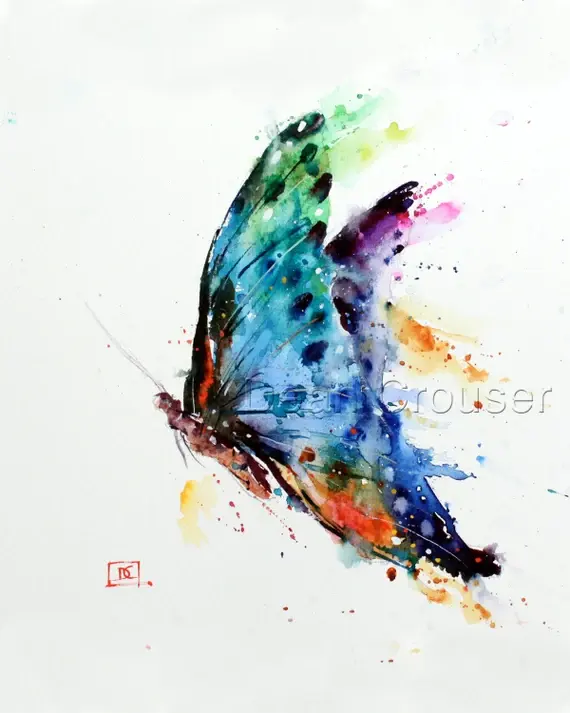
Use light, layered pencil strokes or thin watercolor washes to suggest transparency. Leave small white gaps or use a lighter color near the wing veins to mimic the delicate nature of the scales.
What is the best way to draw butterfly antennae?
Draw them as thin, slightly curved lines extending from the head, ending in small, rounded clubs. Keep them delicate, as they are thin sensory organs that should not overpower the wings.
Should I draw the wing patterns before or after the outline?
Always establish the outer silhouette first to ensure the proportions are correct. Once the shape is finalized, you can add the patterns, veins, and spots as interior details.
How can I add color to my butterfly drawing?
Use vibrant, contrasting colors to mimic the natural diversity of species like the Monarch or Blue Morpho. Layering colors from light to dark helps create the iridescent effect seen on many wings.
What is the most common mistake when drawing the body?
Many artists make the body too large, which distracts from the wings. Remember that the thorax and abdomen are relatively small compared to the expansive surface area of the wings.
This answer was created with the help of AI research tools and reference sources. Spotted an error? Let us know — we correct mistakes quickly. See our editorial policy.