Why is Bal du moulin de la Galette so famous?
Short answer
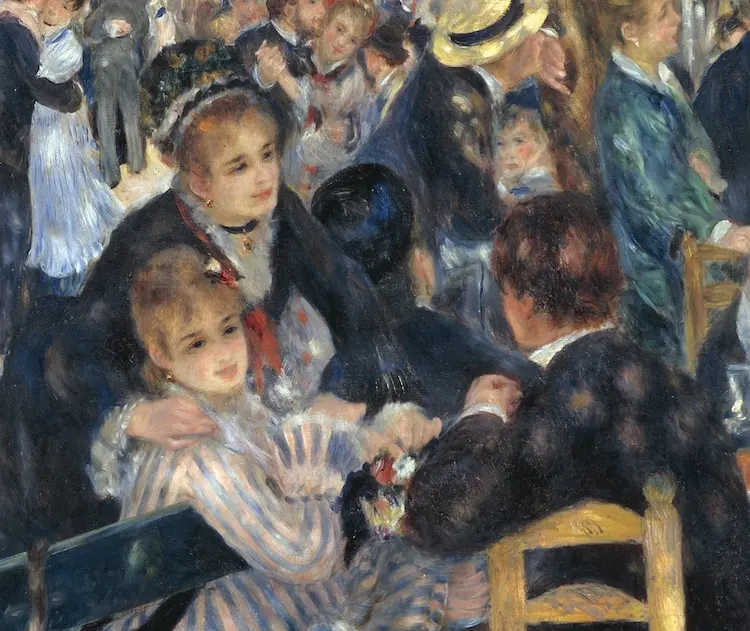
Pierre-Auguste Renoir’s Bal du moulin de la Galette is famous for capturing the vibrant spirit of 19th-century Parisian life. Painted in 1876, it epitomizes Impressionism through its innovative use of dappled light, fluid brushwork, and the candid depiction of a bustling social scene, fundamentally transforming how artists portrayed modern urban leisure.
On this page
Why is Bal du moulin de la Galette considered a masterpiece?
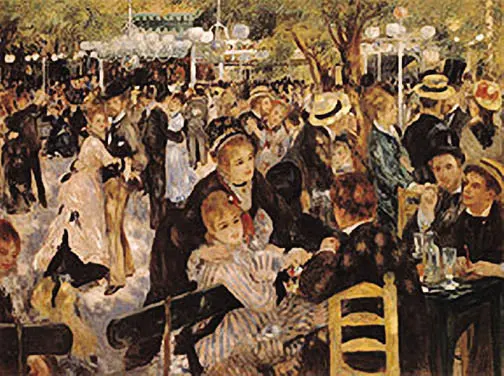
This painting stands as a cornerstone of Impressionism because it successfully captures the fleeting nature of light and movement in a public space. Renoir spent months working on-site at the Montmartre dance hall, aiming to record the atmosphere of the working-class leisure culture. By using short, broken brushstrokes, he created a sense of vibration and energy that makes the figures appear as if they are caught in the middle of a dance.
The work is celebrated for its technical ambition, particularly in how Renoir handled the play of sunlight filtering through the trees. This "dappled light" effect creates complex shadows on the clothing and faces of the dancers, a technique that was revolutionary at the time. It shifted the focus of art away from rigid, historical, or mythological subjects toward the immediate, ephemeral beauty of everyday life, cementing its legacy as a pivotal moment in Western art history.
How do you analyze the composition of the painting?
The composition of Bal du moulin de la Galette is deceptively casual, yet it is carefully constructed to draw the viewer into the crowd. Renoir utilized a diagonal perspective that leads the eye from the foreground figures into the depth of the dance floor. This arrangement creates an immersive experience, making the viewer feel like a participant in the social gathering rather than a detached observer.
When looking at the structure of the painting, consider these elements:
- The foreground figures are cropped, suggesting that the scene continues beyond the frame.
- The use of cool blues and purples in the shadows provides a stark contrast to the warm, golden light hitting the dancers.
- The blurring of figures in the background creates a sense of depth and movement, characteristic of the Impressionist style.
- The lack of a single focal point encourages the eye to wander across the canvas, mimicking the experience of being in a crowded room.
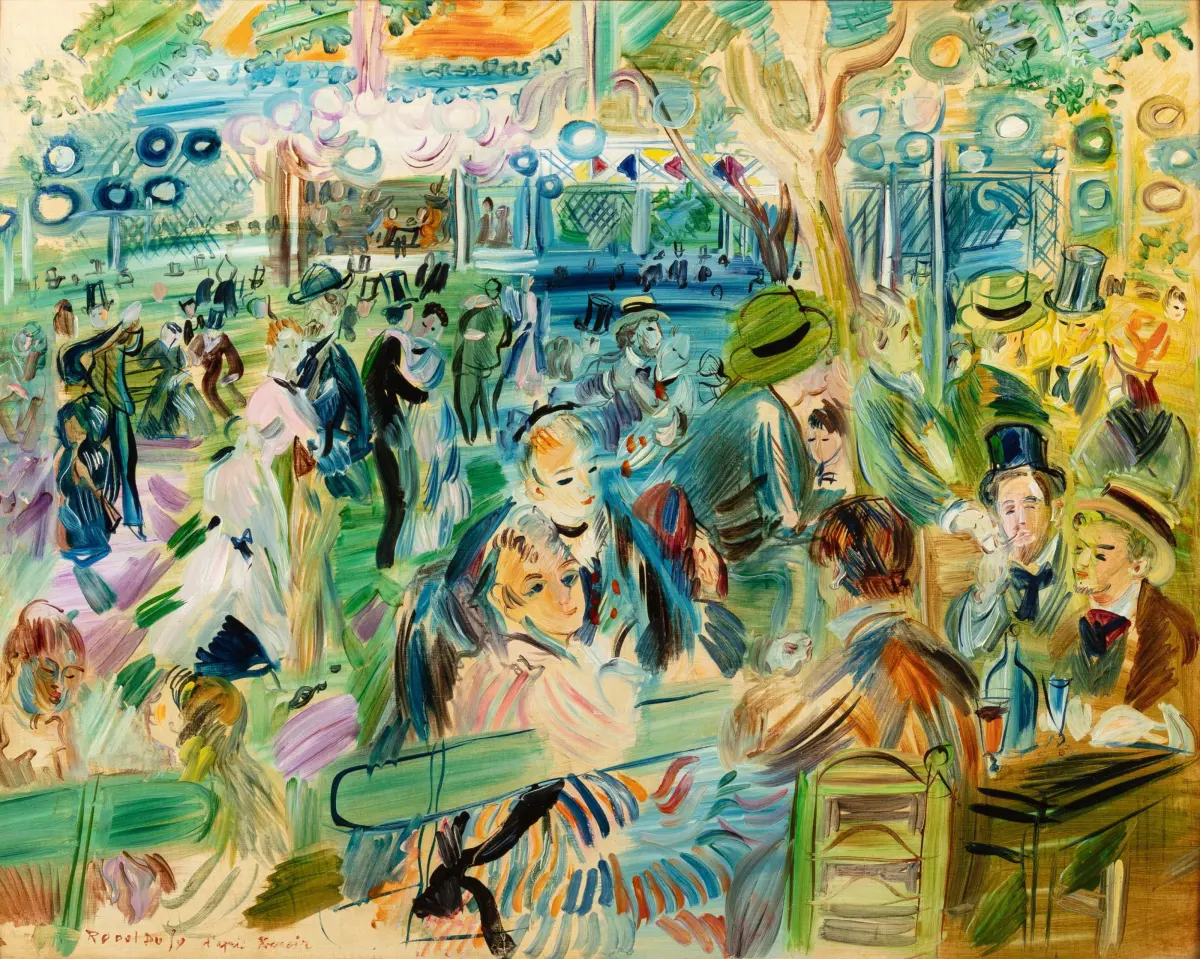
What was the historical context of the Moulin de la Galette?
The Moulin de la Galette was a popular outdoor dance hall located in the Montmartre district of Paris. During the 1870s, Montmartre was transitioning from a rural village into a bohemian hub for artists and writers. The venue was named after the "galettes," or small brown-bread cakes, that the mill owners traditionally served to patrons along with wine. It represented a democratic space where people from various social classes could mingle, dance, and socialize.
Renoir chose this location because it embodied the "joie de vivre" or joy of living that defined the era. By documenting this specific site, he preserved a slice of Parisian history that was rapidly changing due to industrialization and urban planning. The painting serves as a visual record of the fashion, social etiquette, and communal habits of the time, providing historians with invaluable insights into the late 19th-century urban experience.
Common mistakes when interpreting Impressionist art
A frequent error when viewing works like this is expecting the photographic clarity found in academic or realist paintings. Impressionism was never intended to be a precise, static reproduction of reality. Instead, it was an attempt to capture the "impression" of a scene as it is perceived by the human eye in a split second. Ignoring this intent often leads to critiques that the work looks "unfinished" or "blurry."
To better appreciate the style, follow these steps:
- Step back from the canvas to let the individual brushstrokes blend into a cohesive image.
- Observe how the colors are placed side-by-side rather than blended on a palette to create luminosity.
- Look for the absence of traditional black outlines, which Renoir avoided to keep the figures integrated with their environment.
- Focus on the light source and how it dictates the mood of the entire scene.
Where can you see the painting today?
Bal du moulin de la Galette is currently housed in the Musée d'Orsay in Paris, France. It is one of the museum's most prized possessions and is displayed in a gallery dedicated to the development of Impressionism. Because of its large scale—measuring approximately 1.3 meters by 1.7 meters—the painting commands significant attention and allows visitors to see the texture of the paint and the boldness of Renoir’s strokes in person.
If you are planning to visit, it is helpful to note that the museum is located in a former railway station, which provides a dramatic architectural backdrop for its collection. Viewing the painting in its home city allows you to connect the artwork to the very streets of Montmartre where Renoir once stood. Seeing the original work provides a profound understanding of why this piece remains a defining image of 19th-century culture, continuing to inspire artists and art lovers over a century after its creation.
Key facts
- Pierre-Auguste Renoir painted Bal du moulin de la Galette in 1876, capturing a Sunday afternoon in the Montmartre district of Paris.
- The painting measures approximately 1.3 meters by 1.7 meters and is currently housed at the Musée d'Orsay in Paris.
- It is considered a masterpiece of Impressionism because it masterfully depicts the play of dappled sunlight filtering through trees onto the crowd.
- The scene portrays a real-life dance hall, the Moulin de la Galette, which was named after the "galettes" (small cakes) provided to patrons as part of their entry fee.
- Renoir used his own friends and acquaintances as models for the figures, giving the painting a candid, intimate atmosphere rather than a posed look.
- When visiting the painting, avoid viewing it from too close a distance; stepping back allows the individual brushstrokes to coalesce into a cohesive, vibrant scene.
The bottom line
Renoir’s Bal du moulin de la Galette remains famous for its revolutionary ability to capture the fleeting, joyous essence of modern Parisian life. By mastering the complex interplay of light and shadow, Renoir elevated a casual social gathering into a timeless icon of Impressionism. It serves as a vital historical record of Montmartre’s vibrant culture, inviting viewers to experience the energy of a bygone era.
People also ask
Where can I see the original painting today?
The painting is part of the permanent collection at the Musée d'Orsay in Paris, France. It is displayed in the Impressionist galleries on the museum's upper level.
What was the significance of the Moulin de la Galette in the 19th century?
It was a popular open-air dance hall and entertainment venue in Montmartre. It served as a social hub where working-class Parisians and artists gathered to socialize on weekends.
Did Renoir paint this scene entirely on location?
Renoir painted the majority of the work on-site at the dance hall to capture the authentic lighting. He brought the canvas to the location daily to ensure the natural light effects remained consistent.
How did contemporary critics react to the painting when it was first shown?
Initial reception was mixed, as many critics were unsettled by the dappled light effects on the figures' clothing. However, it was later recognized as a defining achievement of the Impressionist movement.
What techniques did Renoir use to create the sense of movement?
He used loose, fluid brushwork and blurred edges to suggest the motion of dancing couples. By avoiding sharp outlines, he created a dynamic, energetic atmosphere that mimics the feeling of a busy crowd.
Are there other versions of this painting?
Renoir painted a smaller version of the same scene, which is now held in a private collection. The smaller version is similar in composition but features slightly different color treatments and brushwork.
This answer was created with the help of AI research tools and reference sources. Spotted an error? Let us know — we correct mistakes quickly. See our editorial policy.