Why is Las Meninas so famous?
Short answer
Las Meninas, painted by Diego Velázquez in 1656, is famous for its complex composition and psychological depth. It challenges the viewer’s perception by blurring the lines between reality and illusion. Through its sophisticated use of perspective, mirrors, and meta-commentary on the act of painting, it remains an unparalleled masterpiece of Western art.
On this page
Why is Las Meninas considered a masterpiece?
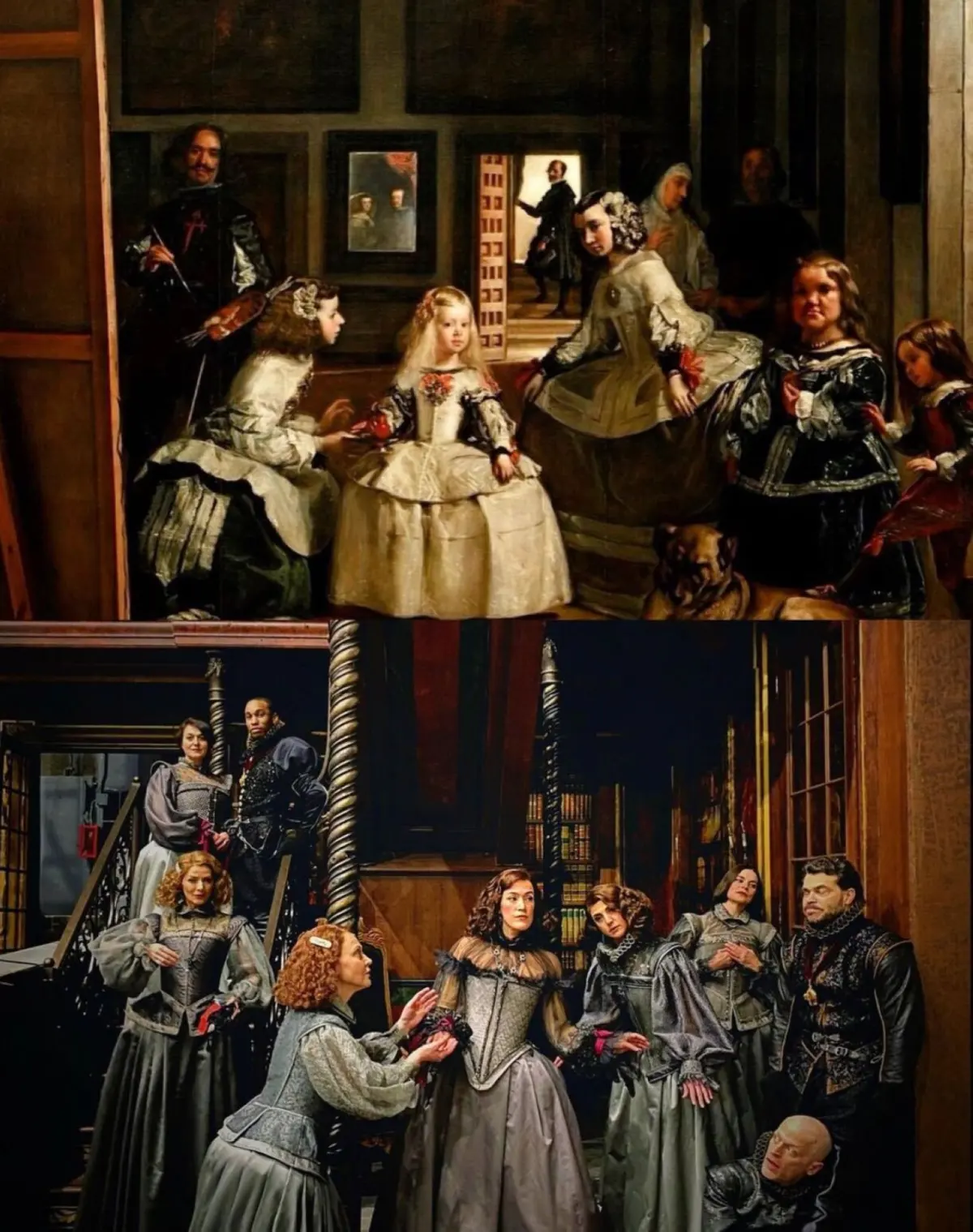
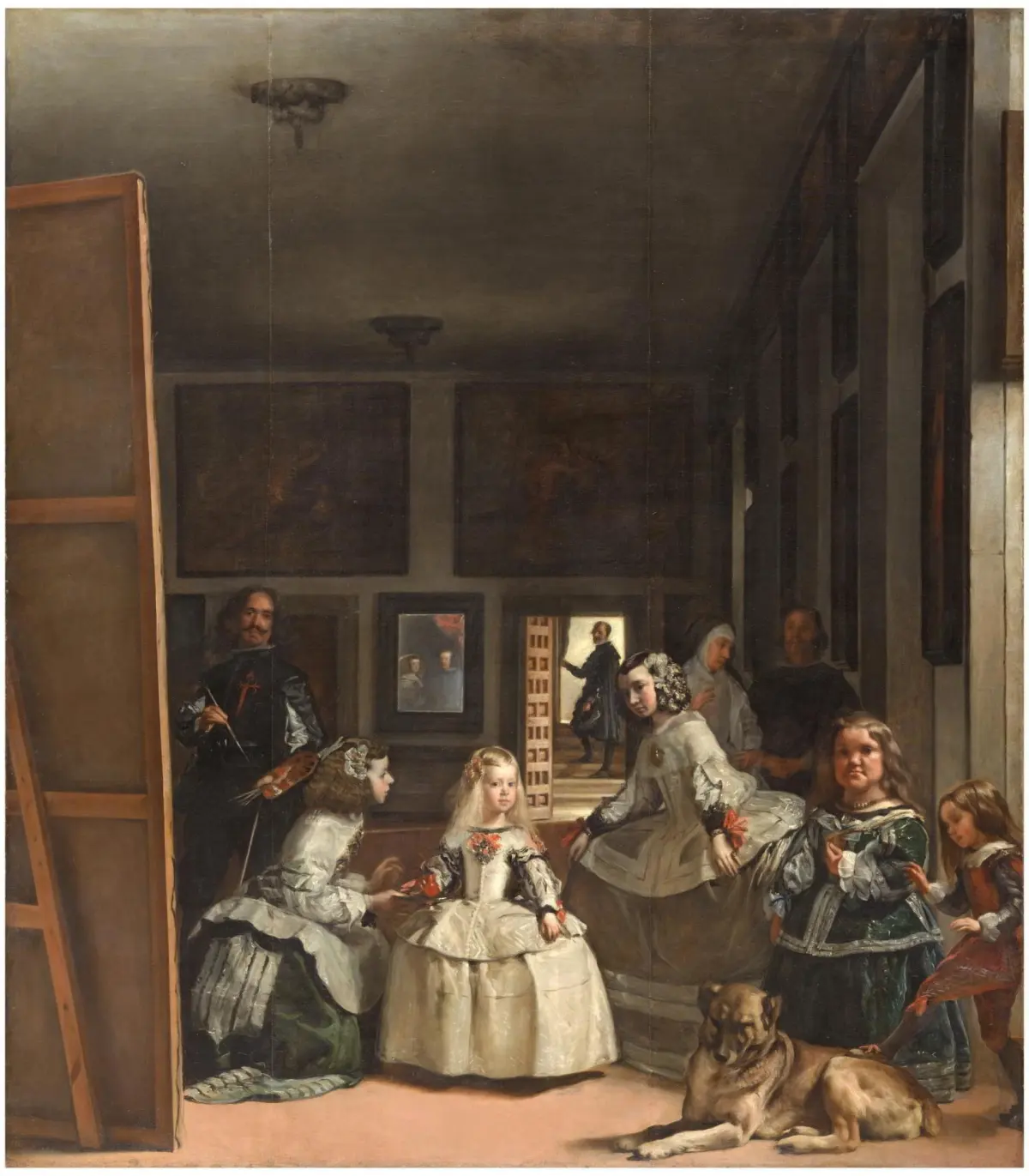
Las Meninas is a monumental oil painting that serves as a profound meditation on the nature of representation. Painted in 1656 during the Spanish Golden Age, it depicts a scene in the Royal Alcázar of Madrid featuring the five-year-old Infanta Margaret Theresa surrounded by her entourage of maids, dwarfs, and a dog. However, the true genius lies in how Velázquez positions himself within the frame, standing before a massive canvas. By including himself in the presence of royalty, he elevated the status of the artist from a mere craftsman to an intellectual creator.
The painting is celebrated for its technical mastery, particularly the use of chiaroscuro and loose, impressionistic brushwork that predates modern art styles by centuries. Unlike the rigid portraiture common in the 17th century, this work feels spontaneous and alive. It captures a fleeting moment of court life while simultaneously inviting the viewer to question what is actually being painted on the canvas hidden from our sight. This ambiguity has kept scholars and artists debating its meaning for over 350 years.
How to analyze the perspective in Las Meninas
Analyzing the spatial depth of the painting requires looking at how Velázquez manipulates the viewer's eye. The composition is built on a series of receding planes, leading from the foreground figures to the open doorway in the background. The most critical element is the mirror on the back wall, which reflects the images of King Philip IV and Queen Mariana. This inclusion creates a sophisticated play on space, suggesting that the monarchs are standing exactly where the viewer is currently positioned.
To effectively interpret the spatial arrangement, consider these visual markers:
- The vanishing point: Follow the lines of the ceiling and the window frames to see how they converge near the open door.
- The mirror reflection: Identify the blurred figures of the King and Queen, which anchor the perspective to the viewer's space.
- The lighting: Notice how the light source from the right illuminates the Infanta while leaving the background figures in shadow.
- The canvas edge: Observe how the large, dark shape of the back of the artist's canvas frames the entire scene.
What are the hidden meanings in Las Meninas?
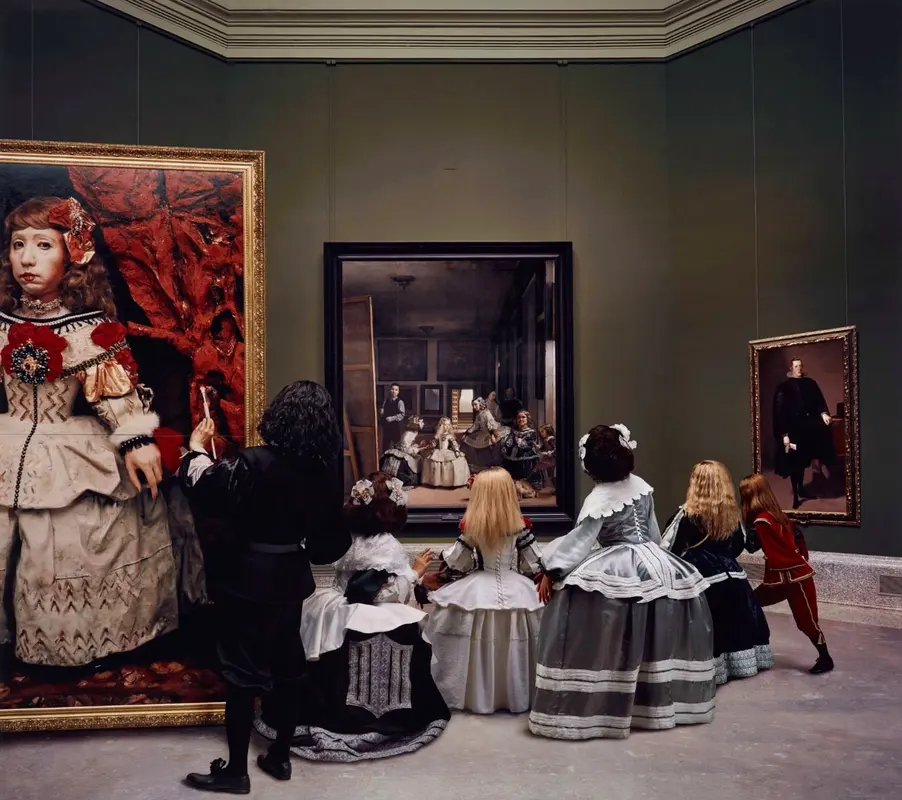
The painting functions as a complex puzzle regarding the relationship between the observer and the observed. By placing the King and Queen in the mirror, Velázquez suggests that the royal couple is the true subject of the portrait he is painting. This creates a "painting within a painting" effect that forces the audience to participate in the scene. The work acts as a visual manifesto, asserting that the artist’s gaze is just as powerful as the royal gaze.
Beyond the meta-commentary, the painting serves as a political statement about the artist's social standing. Velázquez famously included the red cross of the Order of Santiago on his chest, a prestigious knighthood he received years after the painting was completed. Legend suggests the King himself painted the cross onto the canvas after Velázquez passed away. This addition symbolizes the artist’s ultimate triumph, blending his professional talent with the noble status he spent his entire life pursuing within the rigid Spanish court hierarchy.
Common mistakes when interpreting Las Meninas
Many viewers fall into the trap of assuming the painting is a simple, candid snapshot of court life. While it appears informal, every element—from the placement of the dwarfs to the specific gaze of the Infanta—is highly calculated. Another common error is ignoring the historical context of the Habsburg court. Understanding that the painting was hung in the King’s private office, rather than a public gallery, changes how one interprets the intimacy of the scene.
When studying the work, avoid these common pitfalls:
- Viewing it as a realistic photograph: Remember that the artist intentionally distorted proportions to achieve a specific emotional effect.
- Overlooking the secondary figures: Do not focus solely on the Infanta; the maids, the dog, and the chaperone all serve to balance the composition.
- Ignoring the dark background: The shadows are not just empty space; they are essential for creating the atmospheric perspective that defines the room's volume.
- Misinterpreting the mirror: Do not assume the reflection is a flat image; treat it as a window into a space that exists behind the viewer.
Where can I see Las Meninas today?
The painting is housed in the Museo del Prado in Madrid, Spain. It remains the museum's most prized possession and is displayed in a dedicated room that allows visitors to view it from a distance. Seeing the work in person is a transformative experience, as the scale of the canvas—roughly 10.5 by 9 feet—is difficult to grasp through reproductions. The sheer physical presence of the painting allows for a much deeper appreciation of the brushwork and the way light interacts with the textures of the clothing.
If you plan to visit the museum, aim for early morning hours to avoid the largest crowds. Standing before the painting, take time to move slowly from left to right to see how the perspective shifts. Notice how the brushstrokes appear almost abstract when viewed up close but coalesce into perfect detail from a few paces away. This transition is the hallmark of Velázquez’s genius and a primary reason why the work continues to influence painters and art historians across the globe today.
Key facts
- Painted in 1656 by Diego Velázquez, Las Meninas is a massive oil-on-canvas work measuring approximately 10.5 by 9 feet.
- The painting depicts the five-year-old Infanta Margaret Theresa surrounded by her entourage of maids of honor, chaperones, a bodyguard, and two dwarves.
- Velázquez included himself in the composition, standing before a towering canvas, which serves as a bold statement on the status of the artist.
- The mirror on the back wall reflects King Philip IV and Queen Mariana, suggesting they are standing in the viewer's space.
- Art historians often analyze the work for its complex perspective, which creates an illusion of depth and invites the viewer into the royal chamber.
- When viewing the painting at the Museo del Prado in Madrid, stand at least 15 feet back to appreciate how the lighting and shadows unify the scene.
The bottom line
Las Meninas remains famous because it challenges the boundaries between the viewer and the subject. By incorporating himself and the reflection of the monarchs, Velázquez transformed a standard royal portrait into an intellectual puzzle about perspective and the nature of art. Its technical brilliance and psychological depth continue to influence artists, making it a cornerstone of Western art history that rewards careful, repeated observation.
People also ask
Where is Las Meninas currently located?
The painting is housed in the Museo del Prado in Madrid, Spain. It is considered one of the museum's most significant treasures and is displayed in a dedicated room.
What does the title Las Meninas mean?
The title translates from Spanish to "The Ladies-in-Waiting." It refers to the two young noblewomen, Doña María Agustina Sarmiento de Sotomayor and Doña Isabel de Velasco, who attend to the Infanta.
Why is the mirror in the painting so important?
The mirror is a technical masterpiece that creates a "meta-painting" effect. It forces the viewer to question whether they are standing in the position of the King and Queen or if the royal couple is looking at the painting from outside the frame.
Did Velázquez paint himself into the scene?
Yes, he is the figure on the left standing behind the large canvas. He wears the red cross of the Order of Santiago on his chest, an honor he reportedly received three years after the painting was completed.
What is the most common mistake people make when viewing this painting?
Many viewers focus only on the central figures and miss the subtle details in the background. Pay close attention to the open doorway on the right, where the queen’s chamberlain, José Nieto, stands on the stairs, adding another layer of depth.
Is Las Meninas considered a portrait or a genre painting?
It is both. While it functions as a group portrait of the royal family, its complex composition and focus on the act of painting elevate it to a philosophical exploration of reality and illusion.
This answer was created with the help of AI research tools and reference sources. Spotted an error? Let us know — we correct mistakes quickly. See our editorial policy.