What techniques did Frida Kahlo use?
Short answer
Frida Kahlo primarily utilized oil paint on small-scale supports like masonite, metal, and canvas. Her technique blended European Surrealist influences with Mexican folk art traditions. She employed meticulous brushwork, vibrant color palettes, and symbolic iconography to explore themes of physical pain, identity, and cultural heritage through a highly personal, introspective lens.
On this page
What materials did Frida Kahlo use?
Kahlo’s technical choices were often dictated by her physical limitations and the availability of materials. She frequently painted on small surfaces, such as sheets of tin, copper, or masonite, which allowed her to work while confined to her bed. These rigid supports provided a smooth, durable surface that accommodated her precise, miniature-like brushwork. Unlike many of her contemporaries who utilized large-scale canvases, Kahlo preferred the intimate scale of these materials, which mirrored the introspective nature of her subject matter.
When working with oil paints, she often applied them in thin, translucent glazes to build depth and luminosity. She occasionally incorporated mixed media elements, such as collage or small objects, to enhance the tactile quality of her work. Her palette was characterized by intense, saturated pigments, often sourced from traditional Mexican aesthetics, which she used to create stark contrasts against the often somber themes of her compositions.
- Masonite or fiberboard: Provided a sturdy, non-porous base for fine detail.
- Metal sheets (tin/copper): Offered a smooth finish reminiscent of retablo paintings.
- Oil pigments: Used for their slow drying time and ability to be blended into realistic textures.
- Fine-tipped sable brushes: Essential for the intricate linework found in her self-portraits.
How did Frida Kahlo apply paint?
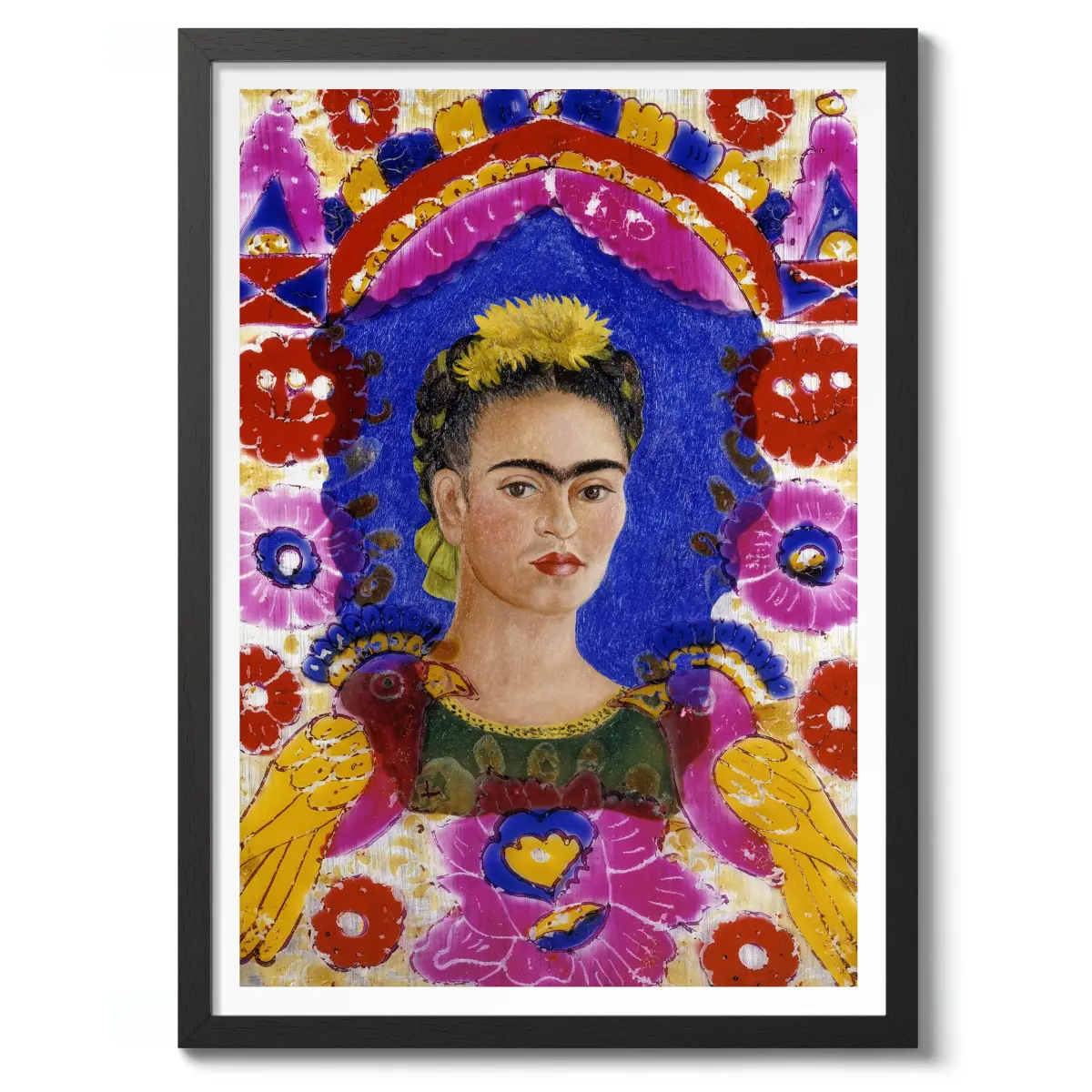
Kahlo’s application of paint was characterized by a meticulous, almost clinical precision. She favored a technique that emphasized clean edges and smooth surfaces, avoiding the thick impasto seen in the works of many Expressionists. By layering thin washes of color, she achieved a polished finish that gave her subjects a sense of stillness and permanence. This approach allowed her to render complex details, such as the fine texture of hair, intricate lace, or the anatomy of veins and roots, with striking clarity.
Her brushwork often appears tight and controlled, reflecting a disciplined practice developed during her long periods of convalescence. She would often outline her figures with a dark, definitive line, a technique borrowed from the ex-voto or retablo tradition of Mexican devotional art. This framing device helped to isolate her subjects, making them appear as if they were icons or theatrical performers on a stage. The combination of soft blending in the skin tones and sharp, graphic lines in the background creates a tension between the real and the surreal.
Why did Frida Kahlo use symbolism?
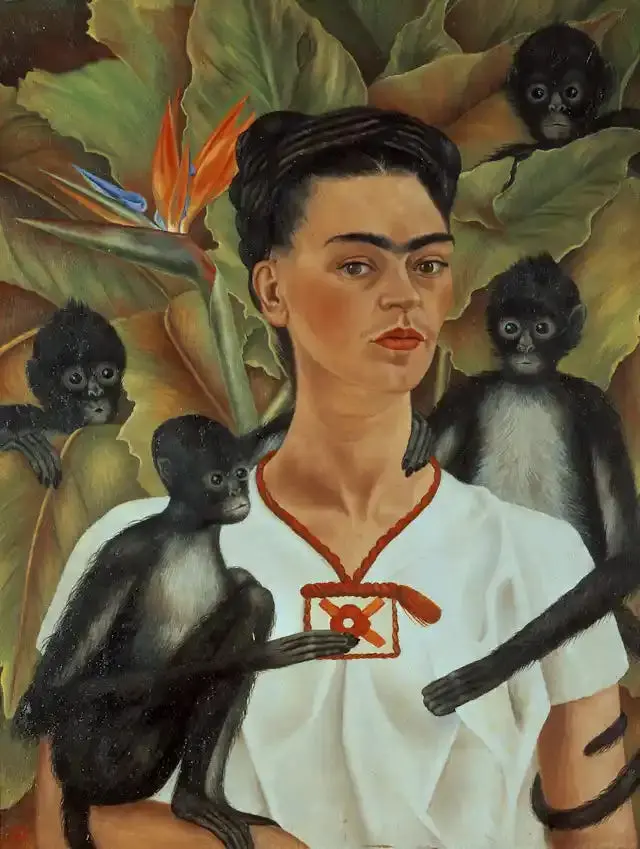
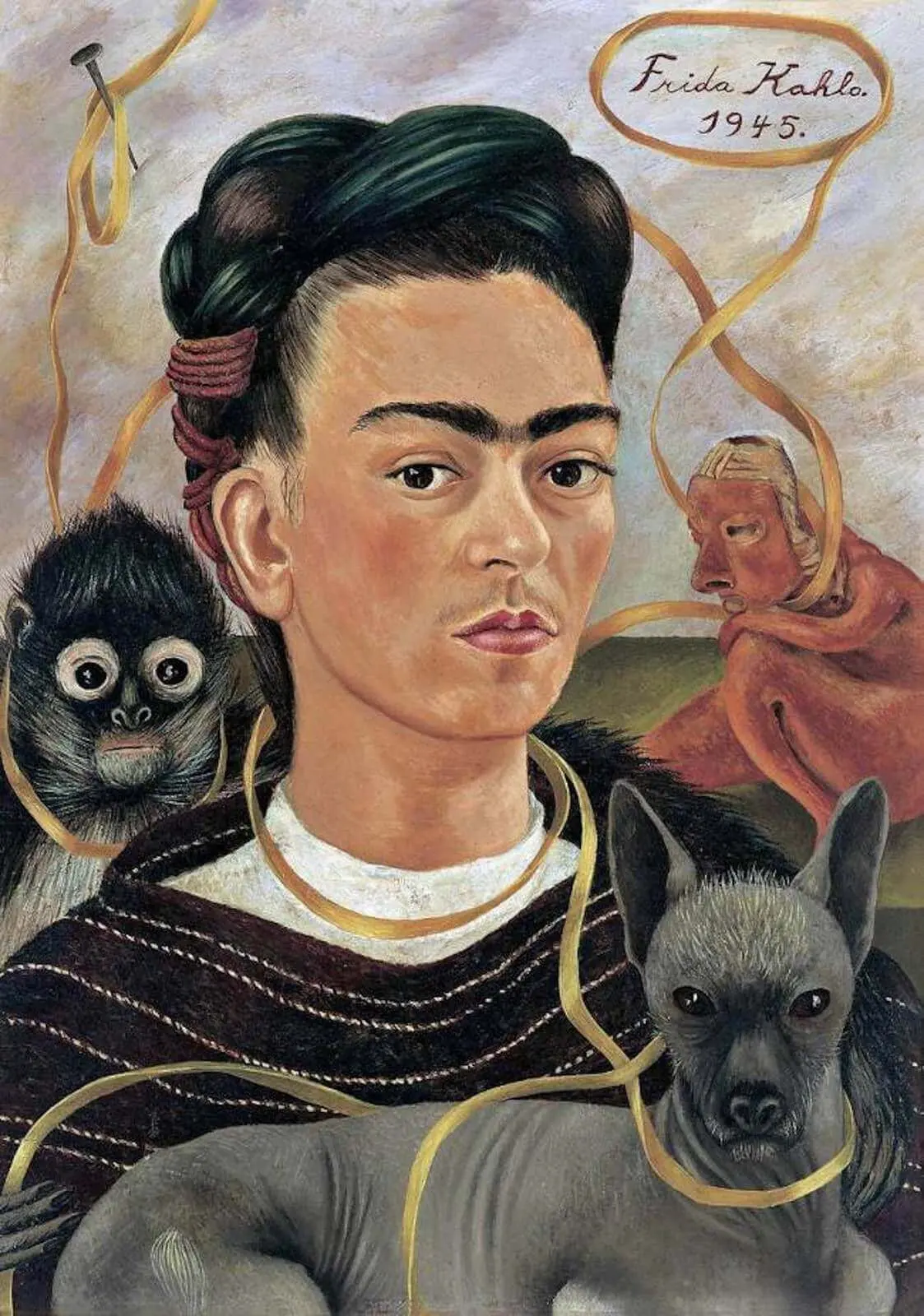
Symbolism was the primary language Kahlo used to externalize her internal reality. She utilized a recurring set of motifs—such as monkeys, thorns, hummingbirds, and medical apparatuses—to represent her emotional and physical suffering. For example, the hummingbird often symbolized her own spirit or a lost love, while the thorns represented the pain of her spinal injuries. These symbols were not merely decorative; they functioned as a complex visual shorthand for her autobiography.
Her integration of indigenous Mexican symbols, such as pre-Columbian artifacts and traditional dress, served as a deliberate assertion of her mexicanidad. By placing these symbols alongside Western artistic conventions, she challenged the boundaries between "high art" and folk culture. Her work often functions as a visual diary, where every object serves a specific narrative purpose. Understanding her technique requires looking beyond the literal representation to the metaphorical weight of each element within the composition.
- Monkeys: Often represented the children she could not have or her protective companions.
- Thorns: Symbolized the agony caused by her surgeries and her tumultuous marriage.
- Roots: Represented her connection to the earth and her ancestral heritage.
- Medical tools: Highlighted her vulnerability and the clinical reality of her disability.
Common mistakes when imitating Frida Kahlo
A frequent error when attempting to replicate Kahlo’s style is over-complicating the composition. Kahlo’s paintings are remarkably focused, usually centering the subject to command the viewer's full attention. Beginners often clutter the background with too many symbols, which dilutes the emotional impact of the primary figure. Another mistake is using heavy, opaque paint layers that obscure the fine detail work. To capture her aesthetic, one must prioritize a smooth, refined surface that allows for delicate, precise linework.
Another pitfall is failing to understand the importance of the horizon line and spatial depth. Kahlo often used a shallow, stage-like space that pushes the subject toward the viewer, creating an intense, confrontational experience. If the perspective is too deep or atmospheric, the painting loses that specific, iconic "icon" quality. Always remember that her technique was rooted in restraint and intentionality; every mark on the surface was placed with a specific psychological or narrative goal in mind.
How to develop a personal painting style
Developing a style inspired by Kahlo involves a rigorous commitment to self-reflection and observation. Start by identifying your own personal symbols—objects or motifs that hold deep, private meaning for you. Once you have your subject, practice working on a smaller scale to force yourself to focus on detail rather than broad, sweeping gestures. Experiment with different supports, such as wood panels or primed metal, to see how the surface texture changes the way your paint moves and sits.
- Select a subject that holds personal significance or represents an internal struggle.
- Sketch your composition on a rigid support to ensure the lines are clear and defined.
- Apply a thin, monochromatic underpainting to establish the values before adding color.
- Use small, high-quality brushes to layer your pigments, building up the details slowly.
- Incorporate symbolic elements that provide context to your narrative, ensuring they are placed intentionally.
- Finalize the piece by sharpening the outlines to create the distinct, graphic look characteristic of the genre.
Key facts
- Kahlo primarily used oil paint on small-scale surfaces, often choosing Masonite or metal sheets rather than traditional canvas.
- She frequently employed a "retablo" style, a traditional Mexican folk art form characterized by flat perspectives and vivid, symbolic colors.
- Her technique involved meticulous, thin brushwork that allowed for fine detail, reflecting her training in medical illustration and classical portraiture.
- She often incorporated physical objects into her works, such as ribbons, thorns, or anatomical diagrams, to emphasize themes of pain and identity.
- A common mistake for beginners is over-blending; Kahlo’s style relies on distinct, deliberate edges to create a stark, surrealist clarity.
- To emulate her style, focus on "frontal" composition, where the subject stares directly at the viewer to establish an intense, confrontational psychological presence.
The bottom line
Frida Kahlo’s artistic legacy is defined by her disciplined technique and the raw, autobiographical honesty of her subject matter. By blending the rigid, precise style of traditional Mexican retablos with a deeply personal visual language, she transformed her physical suffering into a powerful form of expression. Her work remains a testament to the idea that technical skill, when paired with authentic narrative, creates timeless, resonant art.
People also ask
Did Frida Kahlo consider herself a surrealist?
Kahlo famously rejected the label, stating that she did not paint dreams but rather her own reality. While her work shares visual similarities with surrealism, her imagery was rooted in personal trauma and Mexican cultural history.
What materials did she use for her self-portraits?
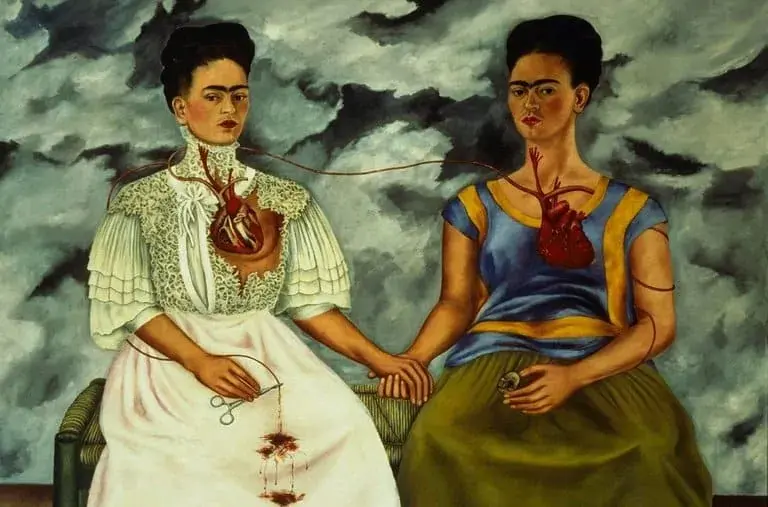
She frequently used oil paints on hard surfaces like Masonite, aluminum, or copper. These rigid supports allowed her to achieve the smooth, enamel-like finish seen in iconic works like "The Two Fridas."
How did her health issues influence her painting technique?
Due to chronic spinal pain and limited mobility, she often painted while lying in a specially designed bed with an easel attached. This physical constraint encouraged her to focus on small-scale, highly detailed works rather than large murals.
What is the significance of the "retablo" influence in her work?
Retablos are small devotional paintings on metal that depict miraculous events or thanksgivings. Kahlo adopted this format to tell her own life story, using the style's narrative simplicity to frame her suffering as a sacred or significant event.
Why are her colors so vibrant?
She utilized a palette inspired by Mexican folk art, which favors bold, saturated hues like cobalt blue, deep red, and yellow. These colors served to contrast with the somber, painful subject matter of her physical and emotional suffering.
How can I practice her style of symbolism?
Start by identifying personal objects or animals that represent your own emotional state or heritage. Incorporate these into a portrait as literal metaphors, such as using monkeys to represent companionship or vines to symbolize the constraints of pain.
This answer was created with the help of AI research tools and reference sources. Spotted an error? Let us know — we correct mistakes quickly. See our editorial policy.