What is Ukrainian Petrykivka painting?
Short answer
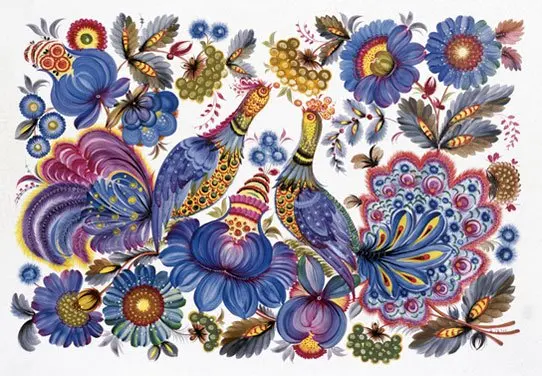
Petrykivka painting is a traditional Ukrainian decorative folk art style originating from the village of Petrykivka in the Dnipropetrovsk region. Characterized by vibrant floral motifs, rhythmic brushstrokes, and intricate compositions, it historically adorned household items and walls. Recognized by UNESCO as Intangible Cultural Heritage, it remains a symbol of Ukrainian national identity.
On this page
What are the characteristics of Petrykivka painting?
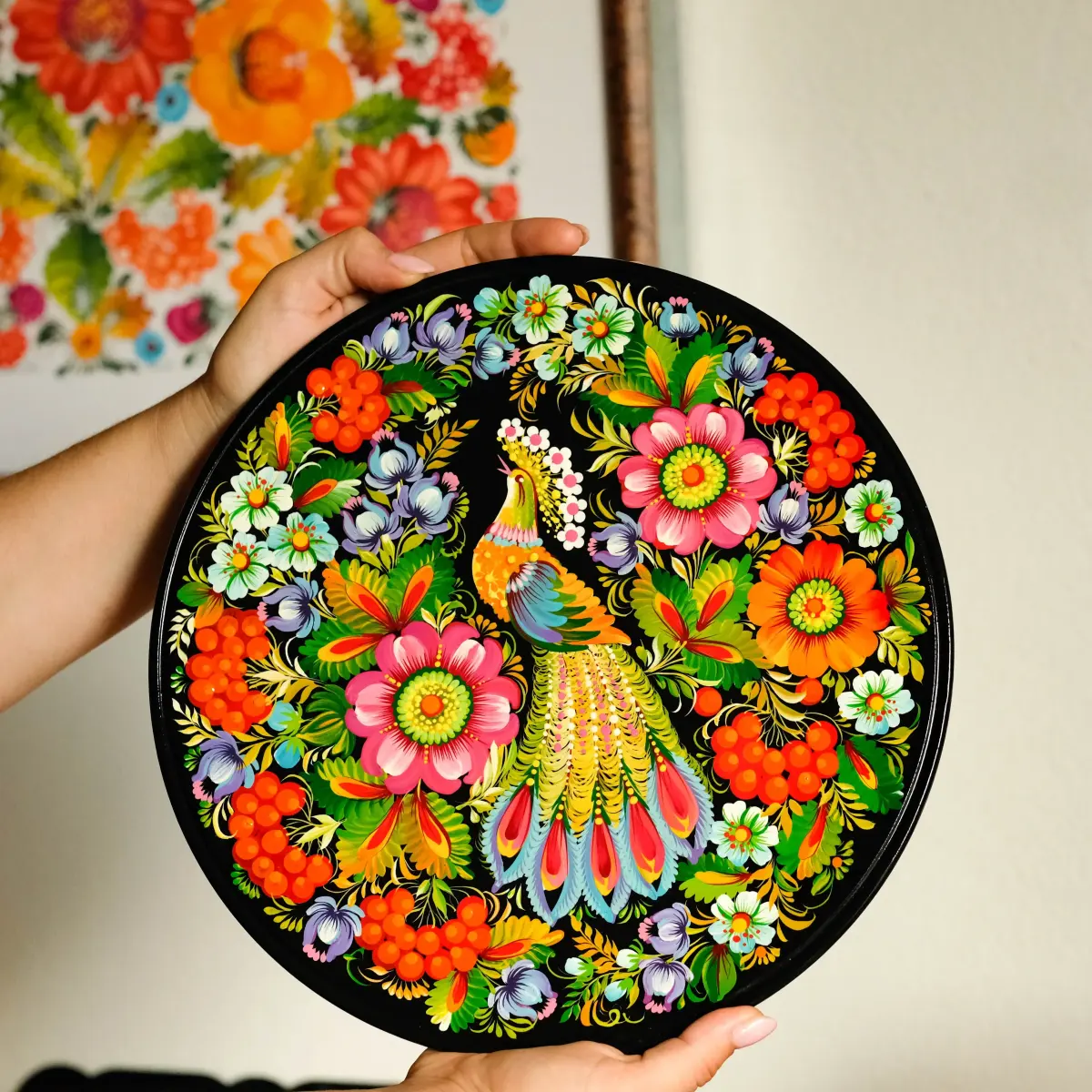
Petrykivka painting is defined by its unique "brush" technique and deep connection to the natural world. Artists primarily use motifs inspired by the flora and fauna of the Ukrainian steppe, such as sunflowers, roses, peonies, and the mythical "firebird." The style is easily recognizable by its vivid color palette, which traditionally relied on natural pigments derived from herbs, berries, and flowers, though modern artists now use gouache or watercolors.
The composition is typically centered around a main flower or cluster, with smaller elements radiating outward to create a sense of movement and growth. Unlike many other folk arts, Petrykivka does not use a pencil sketch; the artist paints directly onto the surface with a brush. This requires immense confidence and control, as every stroke must be deliberate and precise. The aesthetic is meant to be bright and optimistic, reflecting the rural traditions of the Dnipro region.
How to learn Petrykivka painting techniques?
Mastering this art form requires learning specific brushstrokes that define the style. The most famous is the "cybulka" (onion) stroke, which involves pressing the brush down and pulling it to create a teardrop shape. Beginners should focus on these foundational movements before attempting complex floral arrangements.
- Prepare your workspace with high-quality gouache paints and soft, natural-hair brushes.
- Practice the "transition stroke," which uses two colors on one brush to create a gradient effect.
- Master the "perekhidny mazok" by loading one side of the brush with a light color and the other with a dark color.
- Begin by painting simple leaves and buds to understand how the brush pressure dictates the width of the line.
- Compose your final design by layering larger flowers first, followed by smaller filler elements like berries or vines.
Why is Petrykivka painting historically significant?
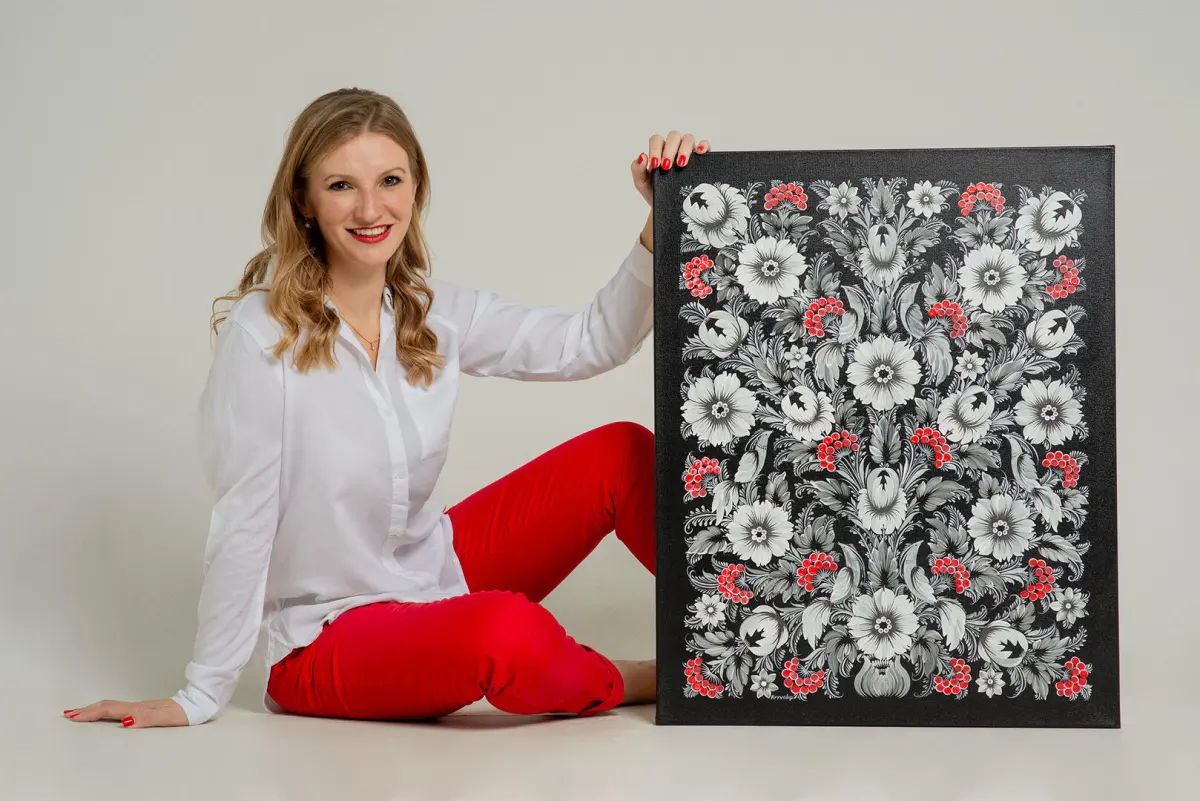
The tradition originated in the 18th century in the village of Petrykivka. Historically, women in the village painted their homes, stoves, and household items with these floral patterns to protect their families from evil spirits and bring good fortune. These paintings were often seasonal, with women repainting their homes every spring to celebrate the renewal of nature.
In 2013, the tradition was officially inscribed on the UNESCO Representative List of the Intangible Cultural Heritage of Humanity. This recognition solidified its status as a vital part of Ukrainian cultural identity. Today, the style is taught in specialized schools and has evolved from a domestic craft into a professional fine art form showcased in galleries worldwide. It serves as a visual language that connects modern Ukrainians to their ancestral roots and rural heritage.
Common mistakes when painting in the Petrykivka style
One of the most frequent errors for beginners is over-complicating the composition. Petrykivka is meant to look organic and light, not crowded or heavy. If you add too many details, the rhythmic flow of the design is lost. Another common mistake is using synthetic brushes that are too stiff, which prevents the artist from achieving the signature soft, tapered strokes required for petals and leaves.
- Avoid using a pencil to outline your design, as this stifles the fluidity of the brushwork.
- Do not use muddy color combinations; the style relies on clear, vibrant, and contrasting hues.
- Ensure your paint consistency is correct; it should be fluid enough to glide but thick enough to remain opaque.
- Do not neglect the "background" space; the design should feel balanced, with enough negative space to let the flowers "breathe."
- Avoid rigid, symmetrical patterns, as the beauty of the style lies in its natural, asymmetrical growth.
Best materials for Petrykivka painting beginners
To achieve the authentic look of traditional Petrykivka, the choice of tools is essential. While professional artists once used brushes made from cat hair—which were prized for their extreme softness and ability to hold a fine point—modern practitioners often use high-quality squirrel hair brushes. These provide the necessary flexibility to create the delicate, sweeping curves that define the style.
- Squirrel hair round brushes (sizes 1 through 4) for detailed work.
- Professional-grade gouache paints that offer high pigment concentration.
- Smooth, non-porous surfaces such as wood, ceramic, or high-quality thick paper.
- A palette for mixing colors to achieve the signature gradient transitions.
- A glass of water and a cloth for cleaning brushes between color changes.
By investing in these specific tools, you will find it significantly easier to replicate the fluid, light-handed strokes that make this art form so distinct. Practice on paper first before moving to permanent surfaces like wooden plates or decorative boxes to build your confidence and refine your technique.
Key facts
- Petrykivka painting is a traditional Ukrainian decorative folk art style originating from the village of Petrykivka in the Dnipropetrovsk region.
- The technique is characterized by vibrant, floral motifs, particularly the "tsibulka" (onion-shaped flower) and the "kucheryavka" (fern-like leaf).
- Artists historically used brushes made from cat fur to achieve the delicate, precise strokes required for fine petal details.
- In 2013, UNESCO inscribed Petrykivka painting on the Representative List of the Intangible Cultural Heritage of Humanity.
- Traditional color palettes rely on natural pigments, historically derived from crushed berries, flowers, and grasses mixed with egg yolk or milk.
- To avoid common mistakes, beginners should ensure their brush pressure is light, as the style relies on rhythmic, fluid movements rather than heavy, static lines.
The bottom line
Petrykivka painting is a distinctive Ukrainian folk art celebrated for its intricate floral motifs and rhythmic brushwork. Rooted in the rural traditions of the Dnipropetrovsk region, this UNESCO-recognized practice emphasizes harmony, vibrant color, and fluid movement. By mastering specific strokes and using high-contrast compositions, artists create decorative masterpieces that reflect the rich cultural heritage and natural beauty of the Ukrainian landscape for future generations.
People also ask
What surfaces are typically used for Petrykivka painting?
Traditionally, this art was applied to white-washed walls, wooden household items, and paper. Modern artists continue to paint on wood, ceramics, glass, and even textiles.
Are there specific brush strokes required for this style?
Yes, the technique relies on four primary strokes: the "transition," the "button," the "grass," and the "crest." Each requires specific pressure and angle to create the signature teardrop and leaf shapes.
Is Petrykivka painting strictly floral?
While flowers are the primary focus, the style often incorporates birds, roosters, and mythical creatures like the Firebird. These elements are integrated into the floral composition to represent harmony with nature.
Why is the background usually white?
A white background mimics the traditional whitewashed walls of Ukrainian village houses. This high-contrast base makes the saturated, bright colors of the floral patterns stand out vividly.
Can I use modern acrylic paints for this style?
Many contemporary artists use acrylics or gouache for convenience and durability. However, the paint must be thinned properly to maintain the characteristic transparency and fluidity of the traditional style.
How long does it take to learn the basics?
Mastering the fundamental strokes requires consistent practice, often taking several weeks of daily repetition. Developing a professional level of composition and detail usually takes years of dedicated study.
This answer was created with the help of AI research tools and reference sources. Spotted an error? Let us know — we correct mistakes quickly. See our editorial policy.