Is tracing cheating in art?
Short answer
Tracing is a tool, not an act of cheating, provided it is used to learn or assist in the creative process rather than to deceive. Many historical masters, including Johannes Vermeer and Norman Rockwell, utilized tracing methods to ensure accuracy. The morality of the practice depends entirely on transparency and the artist's intent.
On this page
Is tracing considered cheating in art?
Tracing is a foundational technique used to transfer images or study proportions, but it carries a stigma because of the potential to bypass the development of observational skills. In professional contexts, using a projector or light box to map out a complex composition is widely accepted as a time-saving measure. The controversy arises primarily when an artist traces someone else’s work and presents it as an original creation without credit.
When an artist traces their own sketches or photographs to refine a composition, it is viewed as a legitimate part of the workflow. The goal of art is often the final expression rather than the physical act of drawing every line freehand. As long as the artist maintains creative control over color, lighting, and interpretation, tracing remains a neutral technical aid.
How do professional artists use tracing?
Many illustrators and fine artists use tracing to ensure anatomical precision or to maintain perspective in architectural drawings. By projecting an image onto a canvas or using transfer paper, they can establish a solid foundation before committing to paint. This allows the artist to focus on complex rendering techniques, such as glazing or blending, rather than worrying about basic structural errors.
- Sketch your subject on paper or capture it digitally.
- Use a light box, graphite transfer paper, or a digital projector to cast the image onto your final surface.
- Lightly trace the primary structural lines to establish the composition.
- Remove the reference and begin the painting or drawing process.
- Use the traced lines only as a guide, adjusting them as you work to keep the piece feeling organic.
Why do artists trace to learn?
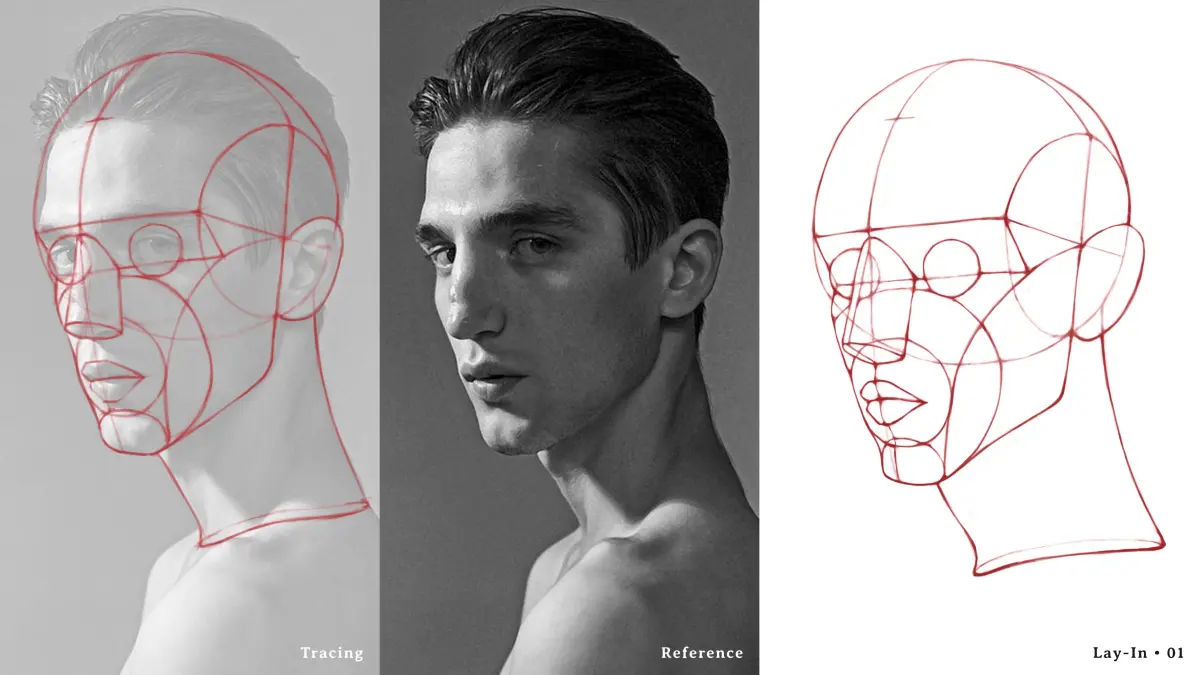
Tracing is an effective pedagogical method for beginners who struggle to see shapes and proportions correctly. By physically following the lines of a masterwork, a student can gain a tactile understanding of how an expert constructed a face or a landscape. This process helps train the hand-eye coordination necessary for eventual freehand drawing.
- It helps identify the underlying geometric shapes within complex subjects.
- It teaches the student how to simplify intricate details into manageable marks.
- It builds muscle memory for specific curves and line weights.
- It allows the learner to analyze the composition of successful works from a technical perspective.
Once the student understands the underlying structure, they should move away from tracing to develop their own unique style. Relying on tracing indefinitely can stunt the growth of observational skills, which are vital for drawing from life.
Common mistakes when tracing in art
The most significant error artists make is becoming overly dependent on the traced line. When an artist blindly follows a reference, the resulting work often looks stiff, flat, or lifeless. A traced line should be treated as a suggestion, not a mandate; artists must be willing to break away from the guide to add personality and artistic flair to the piece.
Another common mistake is failing to acknowledge the source material. If you are tracing a photograph taken by another person, you must obtain permission or ensure the image is in the public domain. Plagiarism is a legal and ethical issue that exists independently of the tools used to create the work. Always prioritize original photography or your own preliminary sketches to avoid copyright complications and to ensure the final piece remains your own intellectual property.
Best tools for tracing projects
For those interested in incorporating tracing into their practice, several tools can make the process more efficient and accurate. A traditional light box remains the gold standard for paper-based work, as it provides an even, bright surface that makes lines easy to see through thicker paper. For larger canvases, digital projectors are the preferred choice, as they allow the artist to scale an image to any size while keeping the proportions perfectly intact.
- LED light pads are lightweight, portable, and offer adjustable brightness settings.
- Graphite transfer paper allows you to trace onto surfaces that are not transparent, such as wood or canvas.
- Digital projectors allow for quick adjustments to composition size and placement.
- Graphite pencils or fine-tip pens are best for tracing, as they minimize the risk of smudging or damaging the surface.
Selecting the right tool depends on your medium and the scale of your work. By using these aids responsibly and with the intent to improve your craft, you can enhance your productivity without compromising your artistic integrity.
Key facts
- Tracing has been used by master artists like Johannes Vermeer and Norman Rockwell to ensure precise proportions and perspective.
- In professional illustration, using a light box or digital overlay is standard practice for maintaining consistency across complex character designs.
- Tracing is considered a valuable learning tool for beginners to develop muscle memory and understand the structural anatomy of subjects.
- The ethical boundary is crossed when an artist traces another creator's unique work and presents it as their own original creation.
- Using a reference photo to trace outlines is not plagiarism, but copying a copyrighted photograph directly without permission can lead to legal issues.
- Mastery of art requires more than just outlines; shading, color theory, and composition are skills that tracing alone cannot teach.
The bottom line
Tracing is a neutral tool that serves as a bridge between observation and execution. While it is an essential technique for professionals needing precision and speed, it cannot replace the foundational understanding of form and light. Use tracing to build your technical skills or refine your work, but ensure you respect copyright laws by avoiding the unauthorized reproduction of other artists' unique, protected intellectual property.
People also ask
Is it okay to trace over my own sketches?
Yes, tracing your own work is a common professional technique used to refine lines, clean up messy sketches, or transfer a drawing to a final surface like canvas or watercolor paper. It is an efficient way to preserve your original vision while improving the technical quality of the final piece.
How can I use tracing to improve my drawing skills?
Use tracing to study the underlying structure of professional drawings or photographs by identifying geometric shapes and major anatomical landmarks. Once you understand the structure, try drawing the same subject freehand next to the trace to test your internal sense of proportion.
What is the difference between tracing and referencing?
Referencing involves looking at a source image to inform your drawing, while tracing involves physically copying the lines of that source. Referencing allows for more creative interpretation, whereas tracing is primarily a tool for accuracy and speed.
Are there specific tools that make tracing easier?
Light boxes, tracing paper, and digital tablets are the most common tools for this purpose. These devices allow you to see through the top layer of paper or screen to accurately replicate the lines underneath.
Can I sell art that I traced from a photograph?
You can sell the work if you own the copyright to the photograph or if the image is in the public domain. If you trace a copyrighted photograph without permission, you may be infringing on the original photographer's intellectual property rights.
Does tracing prevent me from becoming a "real" artist?
Tracing is a technique, not a definition of artistic ability, and many successful professionals use it to meet tight deadlines. True artistic growth comes from mastering light, shadow, and composition, which are skills that exist independently of the method used to place the initial lines.
This answer was created with the help of AI research tools and reference sources. Spotted an error? Let us know — we correct mistakes quickly. See our editorial policy.