What is hyperrealism?
Short answer
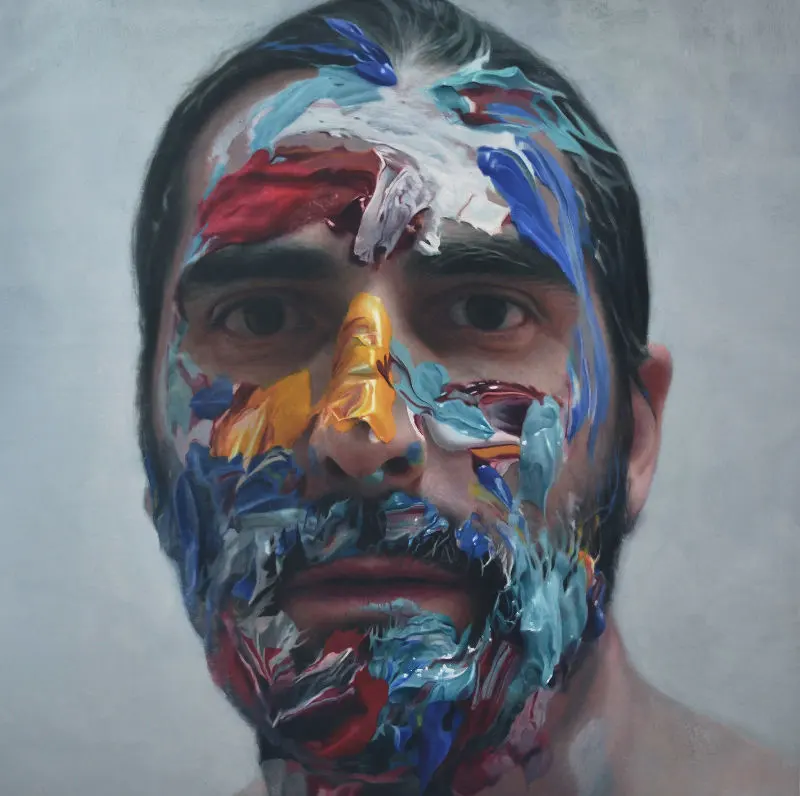
Hyperrealism is a genre of painting and sculpture that resembles a high-resolution photograph. Emerging in the late 1960s, it focuses on meticulous detail, lighting, and textures to create a convincing illusion of reality. Artists often use mechanical or digital aids to achieve extreme precision, pushing the boundaries of human perception and artistic representation.
On this page
What is the history of hyperrealism?
Hyperrealism evolved from Photorealism, a movement that gained prominence in the United States during the late 1960s and early 1970s. While Photorealists aimed to replicate photographs with paint, Hyperrealists took the concept further by adding emotional depth, narrative, and an almost superhuman level of detail. The movement gained international recognition at the 1972 Documenta 5 exhibition in Kassel, Germany, where artists like Chuck Close and Richard Estes showcased works that challenged the distinction between reality and art.
Over the decades, the movement expanded beyond traditional portraiture and landscape painting. Contemporary practitioners now utilize advanced materials, such as silicone and resin for sculpture, to mimic human skin, hair, and veins with startling accuracy. This evolution has transformed the genre from a mere technical exercise into a profound exploration of human existence. By magnifying mundane details, these artists force viewers to confront the complexity of the physical world in ways that standard photography often overlooks.
How to identify hyperrealistic art
Hyperrealistic works are defined by their intense focus on surface texture, light reflection, and shadow. Unlike traditional realism, which may soften edges or simplify complex patterns, hyperrealism celebrates every minute detail, from the pores on a face to the dust particles on a surface. These pieces often feature a large scale, which further emphasizes the artist's ability to maintain precision across a vast canvas or sculptural form.
To identify a piece as hyperrealistic, look for these specific characteristics:
- Extreme clarity in areas that would typically be blurred by a camera lens.
- A clinical, detached perspective that avoids overly stylized brushwork.
- Exceptional control over highlights and deep shadows to create a three-dimensional effect.
- The use of mixed media or unconventional materials to achieve lifelike textures.
- A focus on subjects that highlight the passage of time, such as aging skin or decaying objects.
Best techniques for hyperrealism beginners
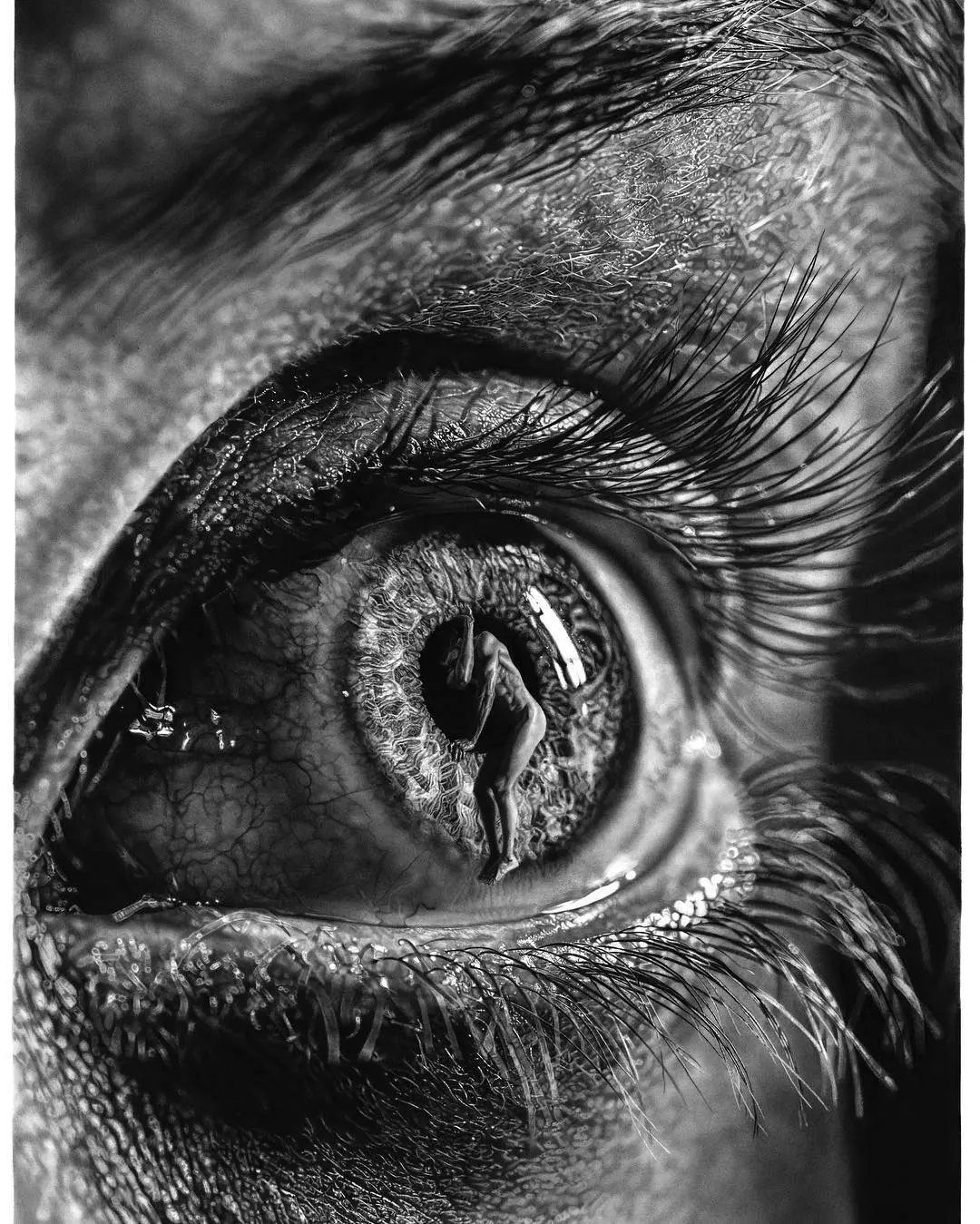
Achieving a hyperrealistic finish requires immense patience and a systematic approach to layering. Most artists begin by creating a precise underdrawing, often using a grid system or a projector to ensure accurate proportions. Once the foundation is set, the artist builds the image through thin, translucent layers of pigment. This process allows for subtle color shifts and depth that cannot be achieved with a single, thick application of paint.
If you are interested in starting your own hyperrealistic project, follow these fundamental steps:
- Select a high-resolution reference photograph with clear lighting and high contrast.
- Transfer your outline to the canvas using a light graphite pencil or a grid method for accuracy.
- Establish your darkest values first to create a roadmap for the rest of the composition.
- Apply thin, transparent glazes to build up color, ensuring each layer is completely dry before moving on.
- Use high-quality, fine-tipped brushes to refine the smallest details, such as reflections in the eyes or individual strands of hair.

Why hyperrealism is so difficult
The primary challenge of hyperrealism lies in the artist's ability to suppress their own stylistic impulses. The goal is to remove the "hand of the artist," meaning the work should not show visible brushstrokes or individual artistic quirks. This requires a high degree of technical discipline and the ability to maintain focus on a single project for hundreds of hours. Because the work is so precise, even a minor error in proportion or color temperature can be immediately noticeable to the viewer.
Furthermore, hyperrealism demands a deep understanding of optics and light physics. Artists must accurately calculate how light interacts with different surfaces, such as glass, metal, or skin. They must also account for atmospheric perspective and the way color shifts in shadows. This analytical approach often feels more like a scientific experiment than a creative endeavor, requiring the artist to balance technical rigor with the intuitive sense of composition needed to keep the viewer engaged.
Common mistakes when creating hyperrealism
One of the most frequent errors beginners make is over-blending their colors. While a smooth finish is essential, excessive blending can result in a muddy, dull appearance that lacks the vibrancy of real life. Another common pitfall is ignoring the importance of contrast. If the range between the lightest highlights and the darkest shadows is too narrow, the work will appear flat and lose its sense of depth.
To avoid these pitfalls, keep the following guidelines in mind:
- Avoid relying solely on black paint for shadows, as this can make the work look lifeless; instead, mix chromatic darks using complementary colors.
- Do not rush the drying time between layers, as this can cause the paint to lift or become streaky.
- Resist the urge to focus on details too early; always develop the overall composition before zooming in on specific textures.
- Ensure your workspace has consistent, neutral lighting to prevent color distortion while you work on your masterpiece.
Key facts
- Hyperrealism emerged in the United States and Europe during the late 1960s and early 1970s as an evolution of Photorealism.
- Artists often use high-resolution photographs as primary references to capture precise details that the human eye might overlook.
- The movement emphasizes the simulation of textures, such as skin pores, hair follicles, or reflective surfaces, to create an illusion of reality.
- Popular mediums include oil paint, acrylics, graphite, and charcoal, often applied with fine brushes to eliminate visible brushstrokes.
- A common technique involves using a grid system to transfer photographic proportions onto a canvas with mathematical accuracy.
- To avoid a "flat" appearance, artists must meticulously layer translucent glazes to replicate the depth and luminosity of human skin.
The bottom line
Hyperrealism is a demanding artistic discipline that pushes the boundaries of visual perception by elevating photographic accuracy to a heightened, immersive level. By combining technical precision with deliberate composition, artists transform mundane subjects into profound explorations of reality. Whether through painting or sculpture, the movement challenges viewers to reconsider the nature of truth in art, proving that meticulous observation remains a powerful tool for expression.
People also ask
How does hyperrealism differ from photorealism?
While both styles rely on photographs, photorealism focuses on the literal reproduction of a scene. Hyperrealism takes this further by adding emotional, social, or cultural context to create a heightened, almost surreal version of reality.
Do hyperrealist artists paint directly from life?
Most hyperrealist artists work from high-definition digital photographs rather than live subjects. This allows them to freeze a moment in time and study microscopic details that would be impossible to capture during a long sitting.
What is the most challenging aspect of hyperrealist portraiture?
The eyes and skin texture are generally considered the most difficult elements to master. Achieving the correct balance of light, shadow, and sub-surface scattering is essential to prevent the portrait from looking like a mannequin.
How long does it take to complete a hyperrealist painting?
Due to the extreme level of detail, a single large-scale work can take hundreds or even thousands of hours to complete. Many artists spend several months working on one piece to ensure every pixel-like detail is rendered perfectly.
Can hyperrealism be achieved with digital tools?
Yes, digital hyperrealism is a growing field where artists use tablets and software to replicate traditional painting techniques. However, the term is most traditionally associated with physical media like oil on canvas or sculpture.
What are common mistakes beginners make when attempting hyperrealism?
A frequent error is over-blending, which creates a muddy or artificial look. Beginners also often struggle with color temperature, failing to notice the subtle cool and warm tones present in shadows that give a subject its volume.
This answer was created with the help of AI research tools and reference sources. Spotted an error? Let us know — we correct mistakes quickly. See our editorial policy.