What is Realism in art?
Short answer
Realism is an artistic movement that emerged in 19th-century France, prioritizing the objective representation of everyday life over idealized or romanticized subjects. It rejects theatricality and historical grandeur in favor of depicting ordinary people, labor, and mundane settings with technical accuracy, aiming to capture the unvarnished truth of the contemporary human experience.
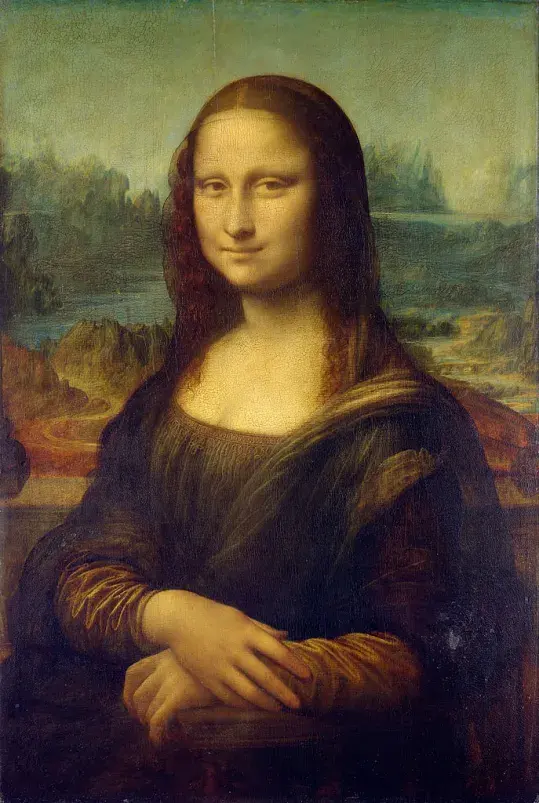
On this page
What is the history of Realism in art?
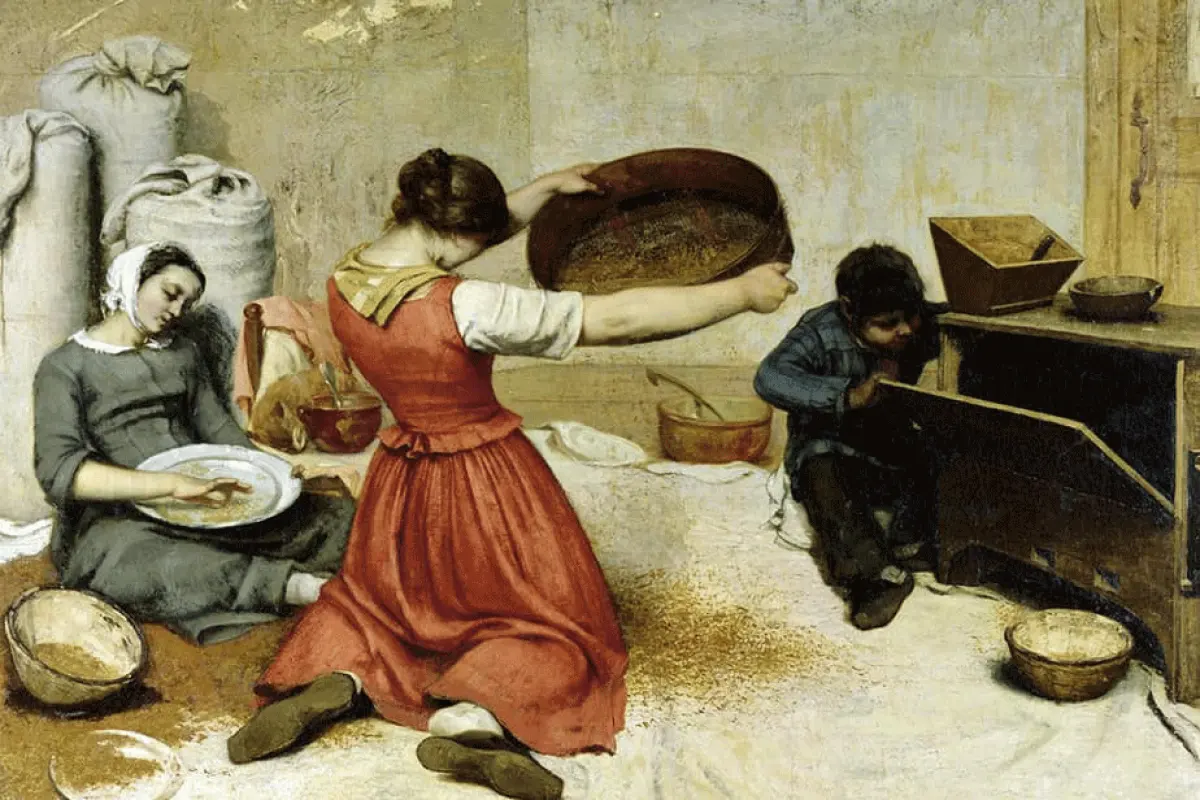
Realism emerged in the 1840s as a direct reaction against the prevailing Romantic movement, which favored emotional intensity and exotic, dramatic themes. Gustave Courbet, the movement's leading figure, famously declared that he could not paint an angel because he had never seen one. By focusing on the tangible world, artists sought to document the social realities of the Industrial Revolution and the lives of the working class.
The movement gained momentum following the 1848 French Revolution, as artists felt a responsibility to depict the struggles of common citizens. This shift marked a departure from the academic standards of the time, which prioritized mythological or religious narratives. Key figures such as Jean-François Millet and Honoré Daumier used their canvases to highlight the dignity of labor, often portraying peasants and urban workers in gritty, honest detail. This transition paved the way for modern art by validating the ordinary as a worthy subject for serious artistic inquiry.
How to identify Realism in paintings?
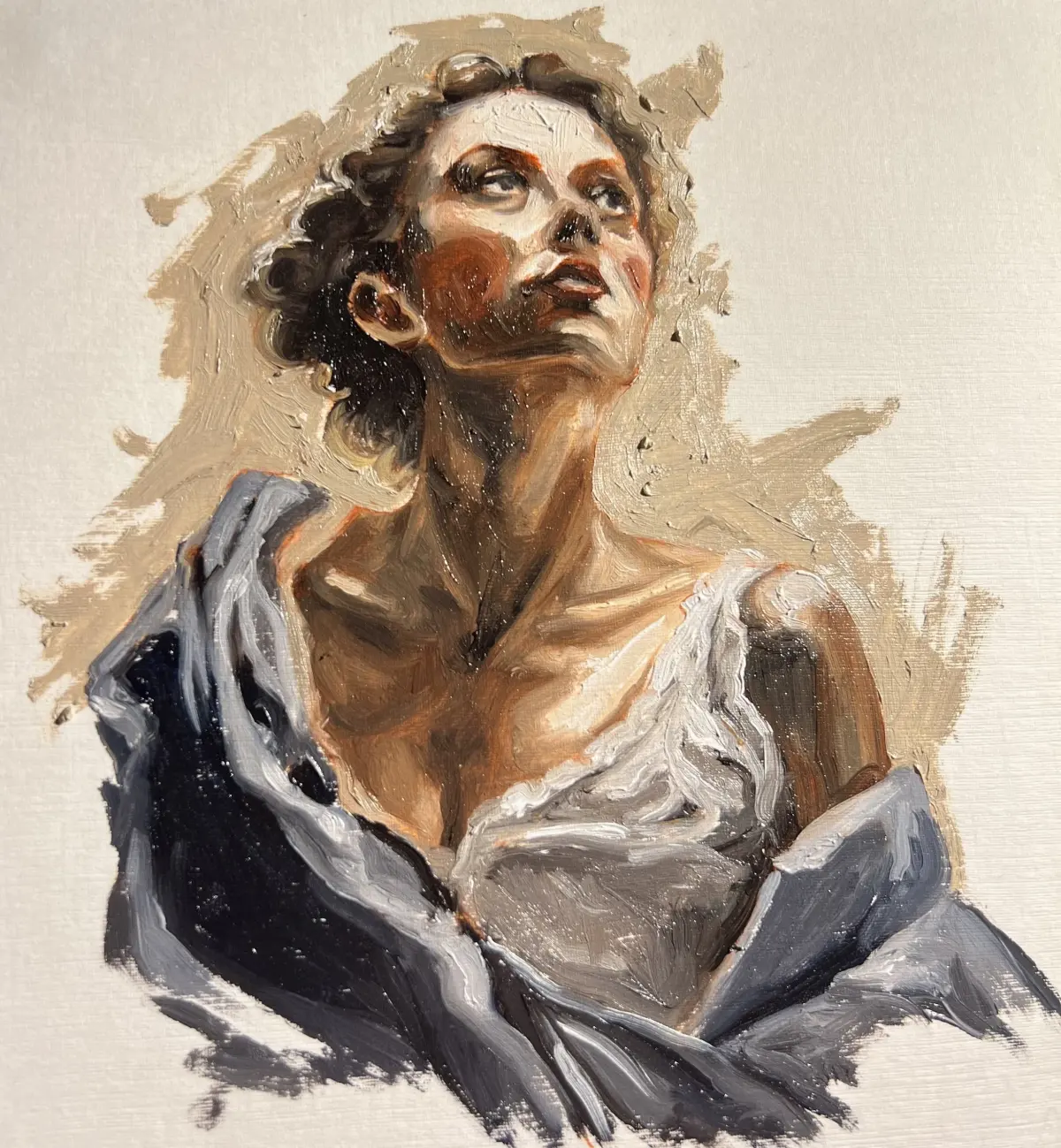
Identifying a Realist work requires looking beyond the subject matter to the artist's intent. Unlike Impressionism, which focuses on the fleeting effects of light, or Surrealism, which explores the subconscious, Realism is grounded in the physical presence of the world. You will notice a lack of dramatic lighting or exaggerated poses, as the goal is to present life exactly as it appears.
When analyzing a piece, consider these defining characteristics:
- Neutral or muted color palettes that reflect natural environments.
- A focus on contemporary subjects, such as laborers, domestic scenes, or urban streets.
- The absence of overt moralizing or idealized beauty, often resulting in "ugly" or raw imagery.
- Meticulous attention to texture, weight, and the physical reality of objects.
- A sense of stillness that suggests a snapshot of an ongoing, unscripted moment.
Why did Realism change the art world?
Realism fundamentally altered the relationship between the artist and the public by democratizing the subject matter of fine art. Before this period, galleries and salons were dominated by historical, religious, or aristocratic themes that felt disconnected from the lives of ordinary people. By bringing the reality of the working class into prestigious institutions, Realists challenged the social hierarchy and forced viewers to confront the economic and social disparities of the era.
This movement also catalyzed the development of modern art by emphasizing the artist's personal observation over traditional academic training. It encouraged painters to trust their own eyes rather than following rigid, centuries-old formulas for composition and color. This independence provided the foundation for later movements like Impressionism and Post-Impressionism, which continued to push the boundaries of what could be considered art. By stripping away the artifice of the past, Realism established the modern standard that art should be a sincere reflection of the creator's reality.
Common mistakes when analyzing Realist art
A frequent error is confusing Realism with photorealism or hyperrealism. While Realism aims for an accurate depiction of life, it does not necessarily demand the microscopic precision of a camera lens. Another common mistake is assuming that all realistic-looking art from the past is part of the "Realism" movement. Many artists throughout history painted with high technical skill, but they were often working within the constraints of Classicism or Romanticism, which idealized their subjects.
To avoid these pitfalls, keep these guidelines in mind:
- Contextualize the work: Ask if the artist is depicting a contemporary social issue or merely capturing a scene for aesthetic beauty.
- Evaluate the subject: Realism specifically focuses on the mundane, the working class, and the unglamorous aspects of daily life.
- Look past the technique: Do not mistake high technical skill for the movement itself; look for the "truth" the artist is trying to reveal.
- Consider the era: Ensure the work aligns with the 19th-century push against Romanticism and academic idealism.
How to practice Realism in drawing?
Practicing Realism requires a disciplined approach to observation and a commitment to setting aside personal biases. The goal is to record what is actually in front of you, rather than what your brain "thinks" an object should look like. Start by selecting simple, everyday objects—such as a piece of fruit, a worn shoe, or a kitchen tool—and focus on capturing their specific textures and shadows.
Follow these steps to improve your observational skills:
- Begin with a light gesture sketch to establish the proportions and placement of your subject.
- Focus on the light source to determine where the highlights, mid-tones, and deep shadows fall.
- Use a limited palette to avoid the distraction of vibrant, unrealistic colors.
- Spend more time looking at the subject than at your paper, constantly checking for subtle shifts in shape and value.
- Avoid adding "decorative" details that are not present in the physical object, as this distracts from the honest representation of your subject.
Key facts
- Realism emerged in mid-19th-century France as a reaction against the emotional drama of Romanticism and the idealism of Neoclassicism.
- Gustave Courbet, a leading figure of the movement, famously stated, "Show me an angel and I will paint one," emphasizing his focus on tangible, observable reality.
- Realist artists prioritized the depiction of everyday life, often choosing subjects like laborers, peasants, and mundane domestic scenes rather than historical or mythological figures.
- A central goal of the movement was to achieve "truth to nature" by avoiding stylistic embellishments and capturing the world exactly as it appeared to the human eye.
- To practice Realism, focus on accurate proportions and neutral color palettes, avoiding the temptation to "beautify" or exaggerate the features of your subject.
- A common mistake in Realist art is over-blending brushstrokes; instead, leave visible marks to maintain a sense of texture and physical presence in the work.
The bottom line
Realism is an artistic movement that rejects idealization in favor of the honest, objective representation of everyday life. By focusing on the mundane and the tangible, Realist artists sought to document the world as it truly exists. Whether through painting or literature, this movement challenges viewers to find beauty and significance in the ordinary, grounding art firmly in the realities of the human experience.
People also ask
How does Realism differ from Photorealism?
Realism focuses on the honest, unvarnished depiction of life and social conditions, often carrying a political or moral weight. Photorealism, which emerged in the late 1960s, aims to replicate the exact appearance of a photograph with mechanical precision, often stripping away the artist's subjective interpretation.
Did Realism only focus on painting?
While painting is the most famous medium, Realism was a significant movement in literature and sculpture as well. Authors like Gustave Flaubert and Honoré de Balzac applied the same principles of objective observation and detailed description to their novels to capture the complexities of contemporary society.
Why did Realist artists choose to paint poor people?
Realists believed that art should reflect the actual lived experience of the majority of the population rather than the elite. By painting laborers and the working class, they sought to bring attention to social inequality and the dignity of manual work.
Is Realism the same as Naturalism?
These terms are often used interchangeably, but Naturalism is frequently considered a more scientific, detached extension of Realism. Naturalism often incorporates the influence of environmental and hereditary factors on the subjects, reflecting the late 19th-century interest in Darwinian biology and sociology.
What techniques define a Realist painting?
Realist painters typically use a muted, earthy color palette and careful attention to light and shadow to create a sense of three-dimensional volume. They avoid dramatic, theatrical lighting, preferring the natural, diffused light found in ordinary settings.
Can abstract art be considered Realist?
Generally, no, because the core of Realism is the faithful representation of the physical world. Abstract art prioritizes form, color, and emotion over the depiction of recognizable objects, which is the direct opposite of the Realist objective.
This answer was created with the help of AI research tools and reference sources. Spotted an error? Let us know — we correct mistakes quickly. See our editorial policy.