What is Socialist Realism?
Short answer
Socialist Realism was the official state-sanctioned artistic style in the Soviet Union and other communist countries from the 1930s until the late 1980s. It required artists to depict life through a lens of revolutionary development, emphasizing optimism, the glorification of the proletariat, and unwavering support for the Communist Party’s ideological goals.
On this page
What is the history of Socialist Realism?
Socialist Realism emerged as the mandatory aesthetic doctrine in the Soviet Union during the early 1930s. In 1932, the Central Committee of the Communist Party issued a decree that abolished all independent artistic groups, forcing creators into state-run unions. This shift marked the end of the experimental avant-garde period that had flourished following the 1917 Russian Revolution.
The style was officially codified at the 1934 Congress of Soviet Writers. Andrei Zhdanov, a key party official, defined it as the truthful, historically concrete representation of reality in its revolutionary development. By mandating this approach, the state transformed art from a form of personal expression into a tool for political agitation and education. It remained the dominant aesthetic framework for decades, influencing literature, painting, sculpture, film, and architecture across the Eastern Bloc and Maoist China.
How to identify Socialist Realism art
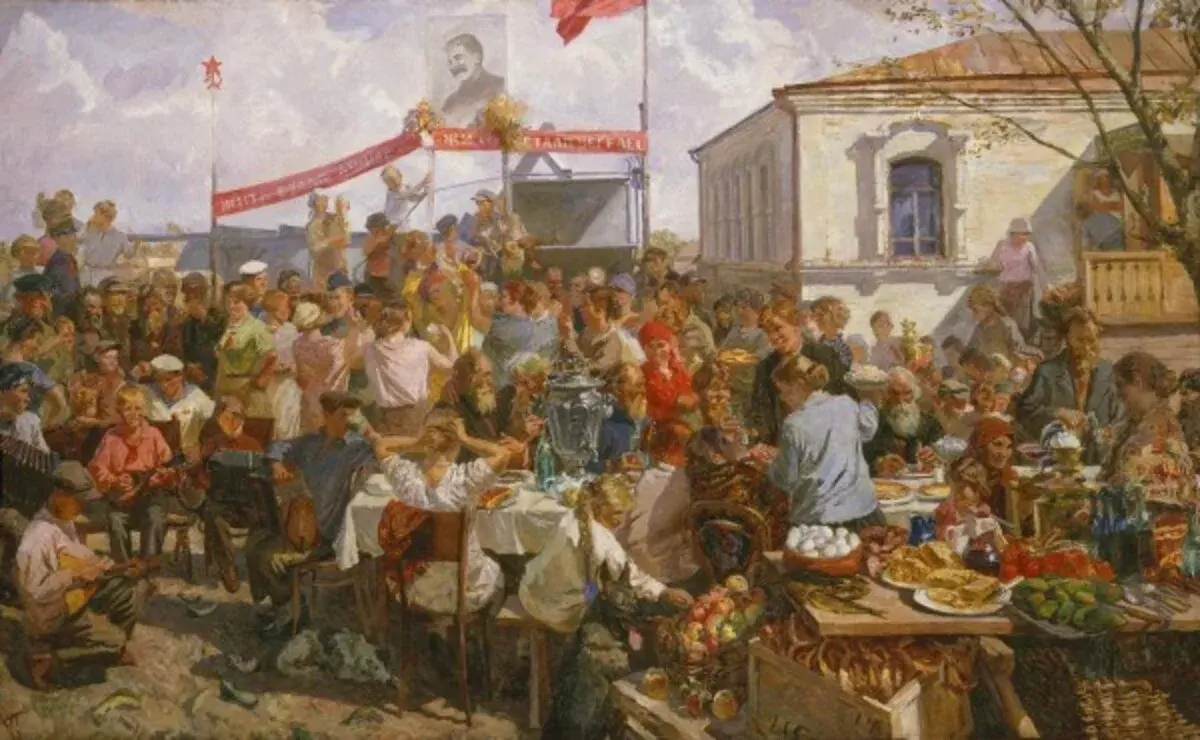
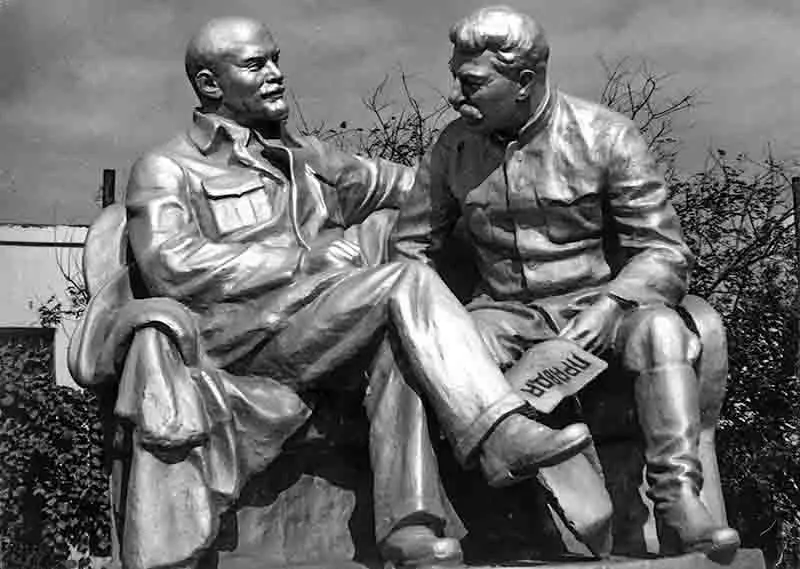
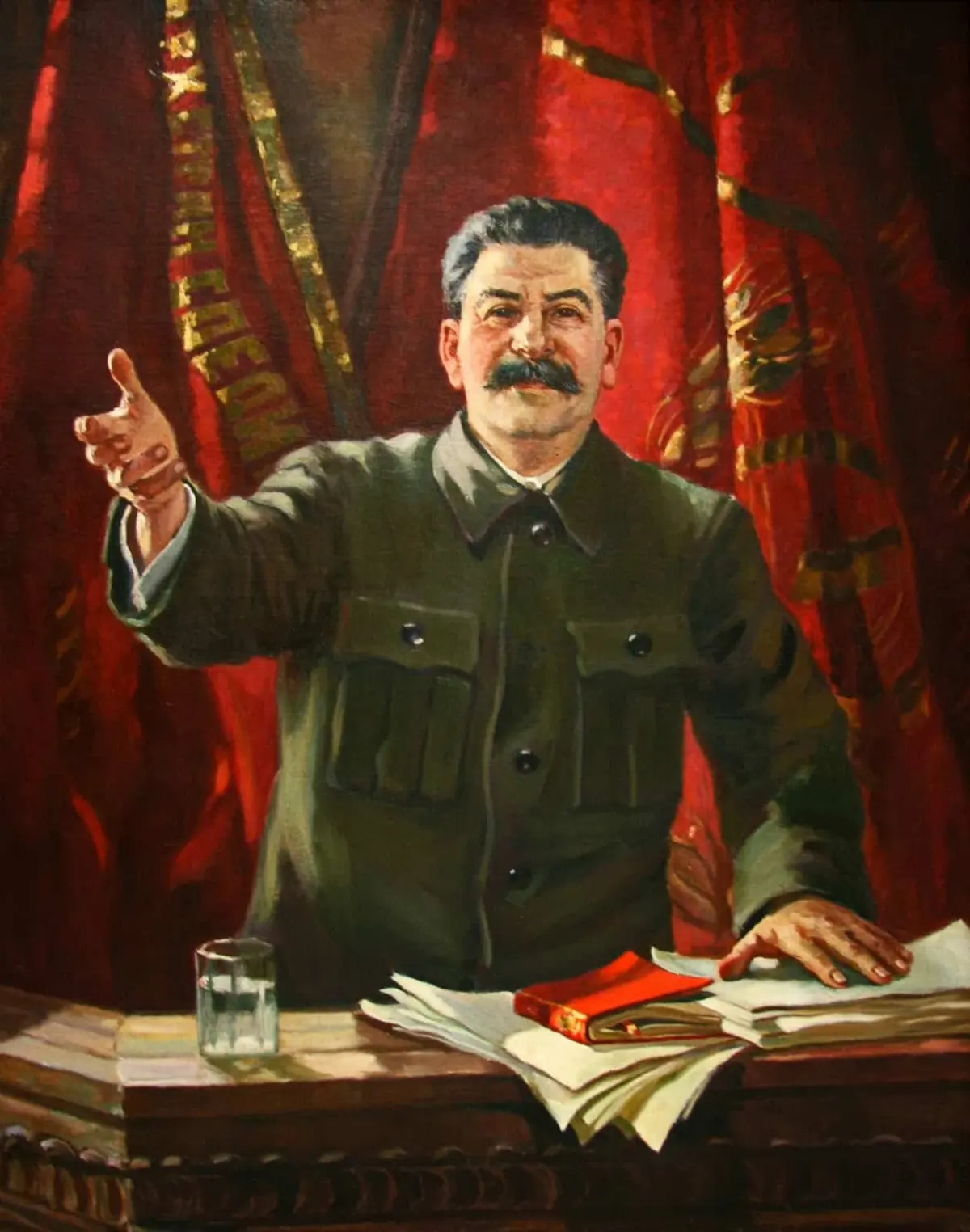
Identifying this style requires looking for specific thematic and stylistic choices that prioritize political messaging over individual artistic vision. The imagery is almost always positive, heroic, and accessible to the common worker. Artists avoided abstraction, surrealism, or dark, ambiguous themes, as these were considered bourgeois or decadent.
Common visual tropes include:
- Idealized depictions of industrial workers, farmers, and soldiers.
- Radiant, healthy figures looking toward a bright, utopian future.
- Prominent placement of political leaders such as Vladimir Lenin or Joseph Stalin.
- Scenes of collective labor, such as factories, construction sites, or bountiful harvests.
- Clear, realistic brushwork that makes the subject matter instantly recognizable to the general public.
These works were designed to be didactic, meaning they were meant to teach the viewer about the virtues of communism. By presenting a perfected version of society, the art served to validate the state's policies and inspire dedication to the collective cause.
Why did Socialist Realism become mandatory?
The implementation of this style was a strategic move by the Soviet government to unify the populace under a single national identity. By controlling the visual and literary output of the country, the state could effectively disseminate its ideology to a largely illiterate or semi-literate population. Art became a form of social engineering, intended to mold the "New Soviet Man."
The state utilized several mechanisms to ensure compliance:
- State-controlled commissions provided steady income for artists who adhered to the guidelines.
- The Union of Soviet Writers and similar organizations controlled access to materials, exhibition spaces, and publishing houses.
- Censorship boards reviewed all works before they reached the public to ensure they contained no "anti-Soviet" sentiment.
- Artists who deviated from the prescribed style faced professional ostracism, loss of livelihood, or imprisonment.
This system effectively silenced dissent and ensured that the cultural landscape reflected the party's current political priorities. It turned the artist into a "soldier on the cultural front," responsible for bolstering the morale of the working class.
Common mistakes when studying Socialist Realism
A frequent error is assuming that all art produced in the Soviet Union was Socialist Realism. While the state promoted this style, many artists practiced "unofficial" art in private, often at great personal risk. Confusing these two distinct spheres leads to a misunderstanding of the complexity of Soviet cultural life.
Another mistake is dismissing the style solely as propaganda without acknowledging its technical skill. Many practitioners were highly trained in traditional academic techniques, and their work often displays masterful composition and draftsmanship. To analyze it properly, one must separate the political intent from the technical execution. Finally, avoid viewing the style as static; it evolved over time, shifting from the intense cult of personality under Stalin to more nuanced, though still restricted, depictions of daily life during the later Khrushchev and Brezhnev eras.
Best examples of Socialist Realism for beginners
For those wishing to explore the style, looking at iconic works provides a clear understanding of the genre's core tenets. Vera Mukhina’s sculpture Worker and Kolkhoz Woman (1937) is perhaps the most famous example. It features a male worker and a female collective farmer holding a hammer and sickle, their bodies surging forward in a display of unity and strength.
In painting, works like Aleksandr Deyneka’s The Future Pilots (1938) capture the optimism of the era, showing young men looking up at the sky, symbolizing the Soviet Union's technological and military aspirations. For literature, Nikolai Ostrovsky’s novel How the Steel Was Tempered serves as the quintessential example of the "heroic" narrative, detailing the protagonist's unwavering devotion to the revolution despite immense physical suffering. By examining these works, one can see how the style successfully combined technical realism with a heavy layer of ideological instruction, creating a lasting, if controversial, legacy in the history of 20th-century art.
Key facts
- Socialist Realism was established as the official state art style of the Soviet Union in 1934.
- Artworks were required to be "proletarian" in content and "realistic" in form to be easily understood by the masses.
- The style functioned as a tool for political propaganda, aiming to promote the ideals of communism and the state.
- Common subjects included heroic factory workers, productive farmers, and idealized portraits of leaders like Joseph Stalin.
- Artists were expected to portray life not as it was, but as it should be under a socialist future.
- To succeed in this style, focus on clarity, optimism, and the glorification of collective labor rather than abstract or individualistic themes.
The bottom line
Socialist Realism was a state-enforced artistic doctrine that demanded creators produce accessible, optimistic, and politically charged works to support communist ideology. By prioritizing collective heroism and idealized labor over personal expression, the movement served as a powerful propaganda instrument. While it produced technically proficient art, it ultimately stifled individual creativity, illustrating the profound impact that political control can have on the evolution of culture.
People also ask
Was Socialist Realism the same as Social Realism?
No, these are distinct movements. Social Realism was an independent artistic trend in the West that critiqued social injustices, while Socialist Realism was a state-mandated aesthetic designed to praise the Soviet government.
Why were abstract art styles banned under this movement?
Soviet authorities viewed abstraction as "bourgeois" and elitist, believing it was inaccessible to the working class. They demanded art that clearly communicated political messages to the public.
What happened to artists who refused to follow these guidelines?
Artists who deviated from the official style faced severe consequences, including censorship, exclusion from state unions, loss of employment, and in extreme cases, imprisonment or exile.
Did this style only apply to painting?
No, Socialist Realism extended to all forms of creative expression, including literature, music, architecture, and cinema. Every medium was expected to reflect the same ideological optimism.
What is the most common mistake when identifying this style?
A common error is assuming all Soviet-era art is Socialist Realism. Many artists worked in private, non-conformist styles that were hidden from the state to avoid persecution.
How did the movement end?
The style began to decline following the death of Stalin in 1953 and eventually collapsed alongside the Soviet Union in 1991. It remains a controversial symbol of state control over creativity.
This answer was created with the help of AI research tools and reference sources. Spotted an error? Let us know — we correct mistakes quickly. See our editorial policy.