How do you draw a lavender plant?
Short answer
Drawing a lavender plant involves capturing its signature vertical structure, featuring long, slender stems topped with small, clustered flower spikes. Focus on creating a rhythmic, upright composition. Use light, feathery pencil strokes for the foliage and soft, oval-shaped marks for the florets to convey the plant's delicate, airy, and aromatic texture.
On this page
How to sketch the basic structure of lavender
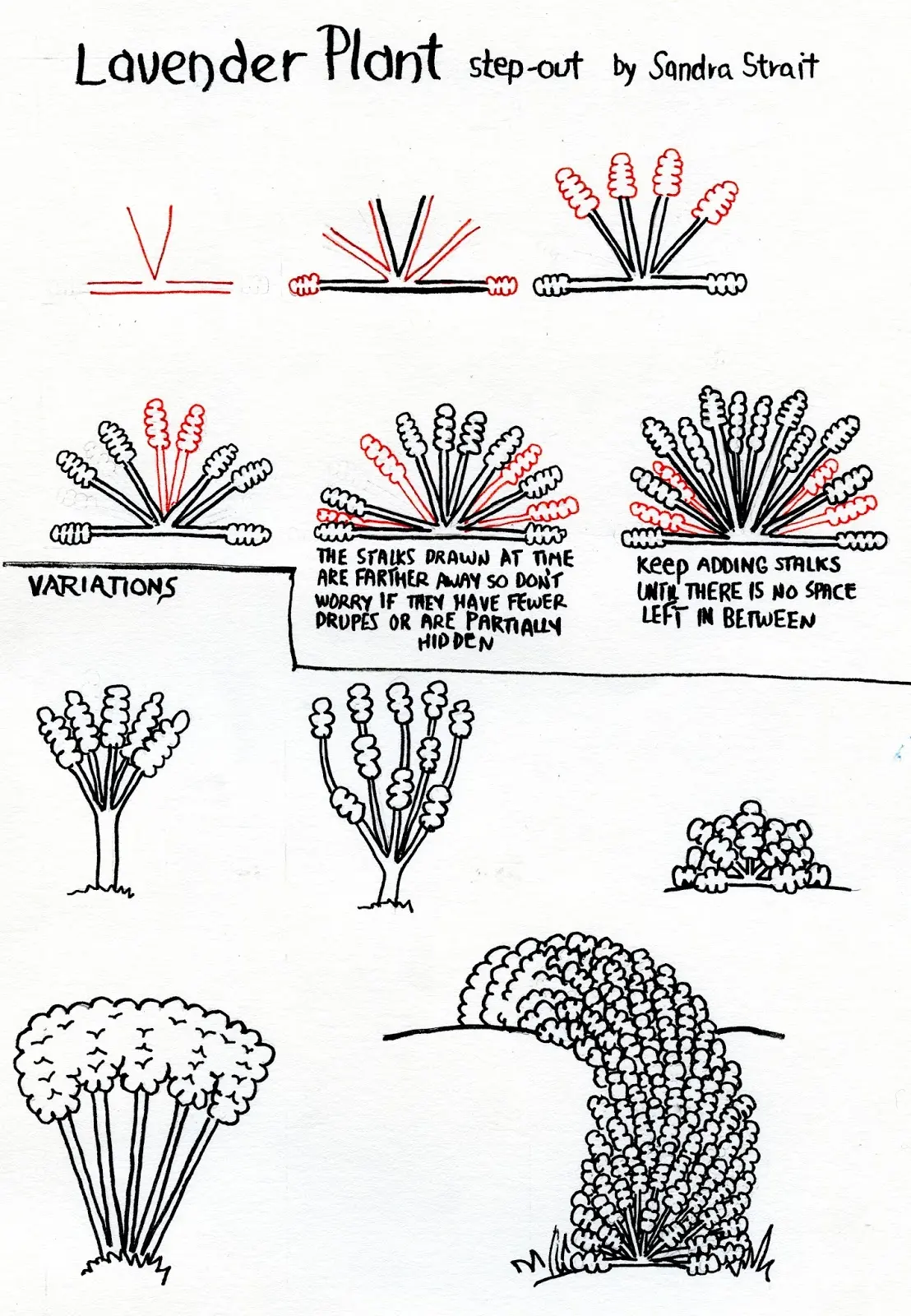
Begin by drawing a series of long, thin, vertical lines to represent the stems. Lavender stems are sturdy but flexible, so give them a slight, natural curve rather than making them perfectly straight. At the top of each stem, sketch an elongated, narrow oval or a series of small, stacked circles to map out where the flower spikes will sit. This creates a skeletal framework that ensures your proportions remain balanced before you add detail.
Keep your initial lines very light so they can be easily erased or covered by darker shading later. The number of stems you draw will determine the density of your lavender bush. A standard artistic arrangement often features five to seven stems of varying heights to create visual interest. Once the stems are placed, sketch the base of the plant by drawing a cluster of thin, lance-shaped leaves near the bottom, pointing outward in different directions.
How to draw realistic lavender flowers
The flowers are the most recognizable part of the plant, consisting of tiny, tightly packed florets. Instead of drawing every individual petal, use short, rhythmic, comma-shaped marks or small dashes to suggest the texture of the buds. Start at the bottom of the flower spike and work your way up, making the marks slightly smaller as you reach the tip. This technique mimics the natural growth pattern where the buds are most developed at the base.
To add depth, vary the pressure of your pencil. Press harder on the side of the spike that would be in shadow and use lighter, flicking motions on the side catching the light. You can also leave tiny white gaps between your marks to represent the spaces between florets. This creates a soft, fuzzy appearance that is characteristic of lavender. Avoid drawing perfect circles, as the organic shape of the flower is irregular and slightly jagged.
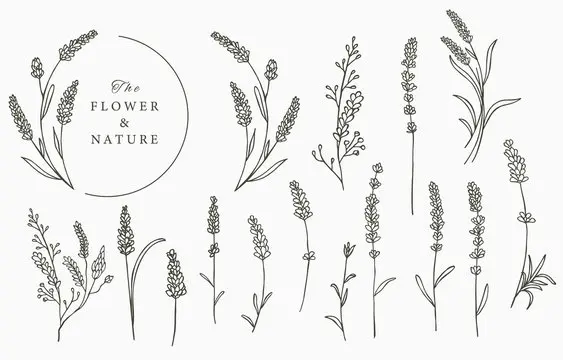
Best techniques for drawing lavender leaves
Lavender leaves are narrow, silver-green, and grow in dense tufts at the base of the plant. To draw them, use long, thin strokes that taper to a sharp point at both ends. They should look like thin blades of grass or elongated needles. Group them together in clusters rather than spacing them out evenly, as this reflects the way the plant grows in a clump.
- Start by drawing the midrib of each leaf to establish its direction.
- Add the outer edges of the leaf, keeping the width consistent and very narrow.
- Overlap some leaves to create a sense of depth and volume within the base.
- Use short, diagonal hatching lines to add a hint of texture to the surface of the leaves.
By layering these shapes, you create a realistic base that anchors the tall, delicate flower spikes. Ensure the leaves look slightly chaotic and overlapping to avoid a rigid, manufactured look.

Common mistakes when drawing lavender
A frequent error is making the flower spikes too uniform in shape, like a rigid cylinder or a perfect stick. Lavender spikes are naturally uneven, often tapering toward the top and bulging slightly in the middle. Another common mistake is drawing the stems too thick. Lavender stems are remarkably thin, so use a sharp pencil and a light touch to keep them delicate. If the stems are too heavy, the plant will lose its characteristic airy and graceful quality.
Avoid drawing the leaves as broad, flat shapes. Lavender foliage is distinctively needle-like and slender; drawing them too wide will make the plant look more like a common garden herb than lavender. Finally, do not forget to add variation in height. If all your flower spikes are the exact same length, the drawing will look stiff and artificial. Varying the heights of the stems and the tilt of the flower heads adds a sense of life and natural movement to your piece.
How to add texture and shading to lavender
Shading is essential to transform a flat sketch into a three-dimensional drawing. Use a soft lead pencil to add shadows on one side of the stems and flower spikes to suggest a light source. For the flower spikes, focus your shading on the underside of the florets, which helps them pop against the stem. Use a blending stump or a clean finger to gently soften these shadows, creating a smooth transition from light to dark.
To finish your drawing, consider these final touches:
- Use a kneaded eraser to lift small highlights from the tops of the flower spikes.
- Add a few stray, tiny dots around the spikes to represent pollen or loose petals blowing in the wind.
- Darken the base of the plant where the leaves meet the soil to ground the drawing.
- Add a few light, horizontal lines across the stems to suggest subtle nodes or joints.
By focusing on these small details, you provide the viewer with a sense of the plant's texture, making the final artwork appear professional and complete.
Key facts
- Lavender features a long, slender, upright stem topped with a cluster of small, tiered flower buds.
- The leaves are narrow, lance-shaped, and typically grow in a dense, bushy mound at the base.
- Use a light, feathery touch for the flowers to capture their delicate, spike-like appearance.
- Group the flower buds in small, repeating "v" or "u" shapes along the top third of the stem.
- Keep the stems slightly curved rather than perfectly straight to mimic natural growth.
- Use a muted color palette of soft purples, dusty blues, and sage greens for realism.
The bottom line
Drawing lavender successfully relies on capturing its delicate, airy structure rather than focusing on rigid detail. By layering small, rhythmic strokes for the flower spikes and grounding them with a soft, bushy base of foliage, you create a naturalistic representation. Focus on varying the density of the florets and maintaining thin, graceful stems to ensure the plant retains its characteristic elegance and light, garden-fresh appearance.
People also ask
What is the best medium for drawing lavender?
Colored pencils or pastels are ideal because they allow you to layer soft, muted tones effectively. These mediums make it easier to blend the transition between the green stem and the purple buds.
How do I create the texture of the flower spikes?
Use short, quick dashes or small dots to represent individual florets. Avoid drawing solid blocks of color, as this obscures the characteristic airy, spiked look of the plant.
Should I draw the leaves individually?
It is better to draw the leaf clusters as a mass or a bushy shape at the bottom. Adding too much detail to every single leaf can make the drawing look cluttered and heavy.
How can I make the lavender look realistic?
Vary the size and spacing of the flower buds as they move toward the tip of the stem. They should be more tightly packed at the top and slightly more spread out toward the bottom of the spike.
What are common mistakes when drawing lavender?
Beginners often draw the stems too thick or make the flowers look like solid cylinders. Ensure the stems are thin and the flower clusters have negative space between them to maintain a light, organic feel.
How do I add depth to the drawing?
Use a darker shade of purple or blue on one side of the flower spikes to suggest shadows. Adding a touch of white or light gray highlights on the opposite side creates a three-dimensional effect.
This answer was created with the help of AI research tools and reference sources. Spotted an error? Let us know — we correct mistakes quickly. See our editorial policy.