What is a tapestry?
Short answer
A tapestry is a heavy, hand-woven textile used for wall hangings, furniture upholstery, or floor coverings. Unlike standard cloth, tapestries are created by weaving colored weft threads through stationary warp threads to form intricate pictorial designs. This ancient art form combines structural durability with complex artistic narratives, often depicting historical or mythological scenes.
On this page
What is the history of tapestry weaving?
Tapestry weaving is one of the oldest textile traditions, dating back to ancient Egypt, Greece, and China. During the Middle Ages and the Renaissance in Europe, tapestries became status symbols for royalty and the church. They were prized not only for their beauty but also for their utility, as they provided essential insulation against cold stone walls in drafty castles and cathedrals.
The industry reached its peak in the 15th and 16th centuries with centers like Arras, Brussels, and the Gobelins Manufactory in Paris. These workshops produced massive, narrative-driven cycles that acted as portable murals. Because they could be rolled up and transported, monarchs often moved their collections between palaces. Today, these historical pieces are preserved in major museums, offering a detailed look at the fashion, politics, and artistic values of the eras in which they were commissioned.
How is a tapestry made?
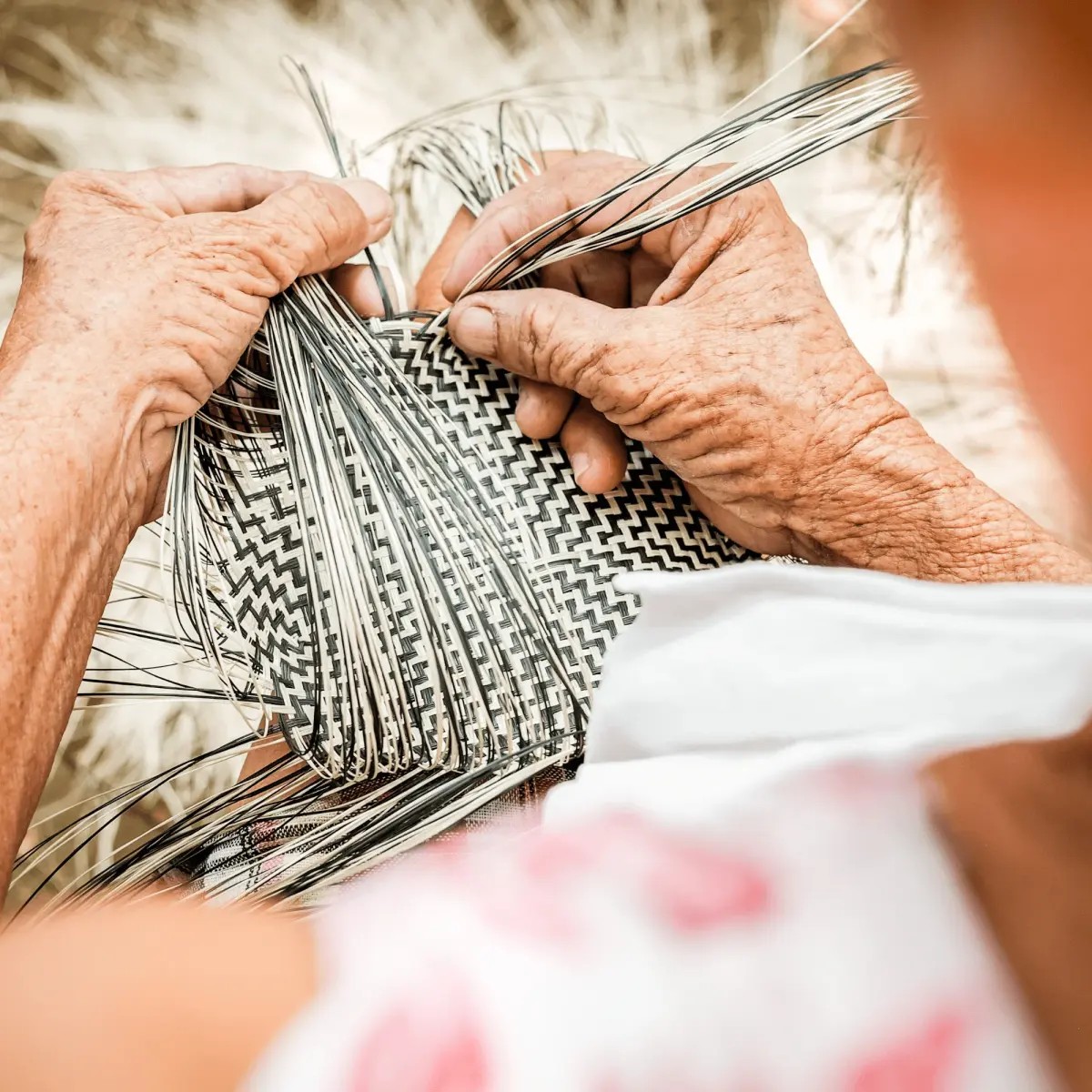
The creation of a tapestry is a labor-intensive process that relies on the "weft-faced" technique. In this method, the horizontal weft threads are packed so tightly that they completely cover the vertical warp threads, which remain hidden. This allows the weaver to create detailed images, similar to painting with thread.
- Prepare a loom by stringing the warp threads under high tension.
- Place a full-scale drawing, known as a cartoon, behind the warp threads.
- Weave the colored weft yarns through the warp, following the design of the cartoon.
- Use a comb or beater to push the weft threads down firmly to ensure a solid, durable surface.
- Finish the edges and remove the tapestry from the loom for final mounting.
Modern weavers may use high-warp or low-warp looms, depending on the scale of the project and the desired level of detail.
How to identify a real tapestry
Distinguishing a genuine woven tapestry from a printed imitation requires close inspection of the physical structure. A true tapestry is a structural textile where the image is built into the weave itself. If you look at the back of the piece, you should see the same pattern or a mirror image of the front, confirming that the threads were woven together rather than printed on top of a base fabric.
- Check the texture: A real tapestry has a distinct, raised, and tactile surface.
- Examine the edges: Authentic pieces often have hand-finished selvedges or fringe.
- Inspect the weight: Because of the dense packing of threads, tapestries are significantly heavier than standard printed wall hangings.
- Look for color variation: Hand-woven pieces often feature subtle shifts in hue where the weaver changed bobbins or blended threads.
If the image appears perfectly uniform or flat, it is likely a digitally printed reproduction rather than a traditional woven tapestry.
Common mistakes when hanging a tapestry
Many collectors damage their textiles by using improper mounting techniques that put unnecessary stress on the fibers. A common error is using nails or tacks directly through the fabric, which creates holes and can cause the piece to sag or tear over time. Another frequent mistake is hanging a tapestry in direct sunlight, which leads to irreversible fading of organic dyes and the degradation of natural fibers like wool and silk.
To protect your investment, consider these best practices for display:
- Use a sleeve: Sew a strip of heavy fabric to the top back of the tapestry and slide a rod through it to distribute the weight evenly.
- Use Velcro: For lighter pieces, attach a strip of industrial-strength Velcro to the top edge and mount the corresponding strip to a wooden board.
- Avoid humidity: Keep the tapestry away from damp walls or areas with high moisture to prevent mold and mildew growth.
- Rotate the display: If possible, move the tapestry to a different location periodically to prevent uneven wear from light exposure.
How to care for and clean a tapestry
Proper maintenance is essential to preserve the structural integrity of a tapestry for future generations. Dust is the most common enemy, as it settles into the weave and acts like an abrasive, wearing down the fibers over time. You should gently vacuum your tapestry once or twice a year using a low-suction setting and a brush attachment, always placing a piece of fine mesh screen between the nozzle and the fabric to prevent snagging.
If the tapestry becomes stained or heavily soiled, avoid standard household cleaning methods. Never attempt to wash a large, antique, or high-value tapestry in a washing machine or with harsh chemical detergents. Instead, consult a professional textile conservator who specializes in historical fabrics. They have the expertise to perform delicate surface cleaning or wet cleaning without compromising the structural stability or the integrity of the original dyes. By minimizing handling and controlling the environment, you ensure the longevity of the textile.
Key facts
- A tapestry is a heavy, hand-woven textile featuring intricate pictorial designs, traditionally created on a vertical loom.
- Unlike standard fabric, the image in a tapestry is formed by the horizontal "weft" threads, which completely hide the vertical "warp" threads.
- Tapestries served a functional purpose in medieval castles, acting as essential insulation to keep cold stone walls from radiating chill.
- The famous "Lady and the Unicorn" series, woven in the late 15th century, remains one of the most iconic examples of millefleur tapestry style.
- When hanging a tapestry, always use a rod with a sleeve sewn to the back to distribute weight evenly and prevent the fabric from stretching or sagging.
- Avoid hanging tapestries in direct sunlight, as ultraviolet rays will cause the natural dyes to fade significantly over time.
The bottom line
Tapestries are sophisticated, hand-woven textiles that blend artistic expression with historical utility. By concealing structural warp threads beneath decorative weft patterns, weavers create durable, portable murals that once insulated grand stone halls. Today, these pieces are prized as significant works of art. Proper care, including protection from direct sunlight and gentle cleaning methods, is essential to preserve their intricate details and vibrant colors for future generations.
People also ask
What is the difference between a tapestry and a rug?
While both are woven textiles, tapestries are designed specifically for wall display and are generally lighter than floor coverings. Rugs are constructed to withstand heavy foot traffic and friction, whereas tapestries prioritize delicate detail and visual storytelling.
Can tapestries be washed in a machine?
You should never machine wash a historical or high-quality tapestry, as the agitation can damage the delicate fibers and warp the design. If cleaning is necessary, consult a professional textile conservator who specializes in antique fabric restoration.
What materials are used to make traditional tapestries?
Traditional tapestries are typically woven using wool for the weft threads because it holds dye well and provides durability. Silk is often incorporated into the design to add highlights, shimmer, and finer detail to the imagery.
How long does it take to weave a tapestry?
The time required depends on the complexity and size, but a skilled weaver might only complete a few square inches per day. A large-scale historical tapestry could take a team of professional weavers several years to finish.
Are tapestries still being made today?
Yes, contemporary artists continue to use tapestry weaving as a medium for fine art. While the techniques remain rooted in centuries-old traditions, modern weavers often experiment with synthetic materials and abstract designs.
How do I remove dust from a tapestry?
Use a soft-bristled brush or a vacuum cleaner on the lowest suction setting, placing a mesh screen between the nozzle and the fabric. This prevents the vacuum from pulling on loose threads or damaging the structural integrity of the weave.
This answer was created with the help of AI research tools and reference sources. Spotted an error? Let us know — we correct mistakes quickly. See our editorial policy.