What is weaving?
Short answer
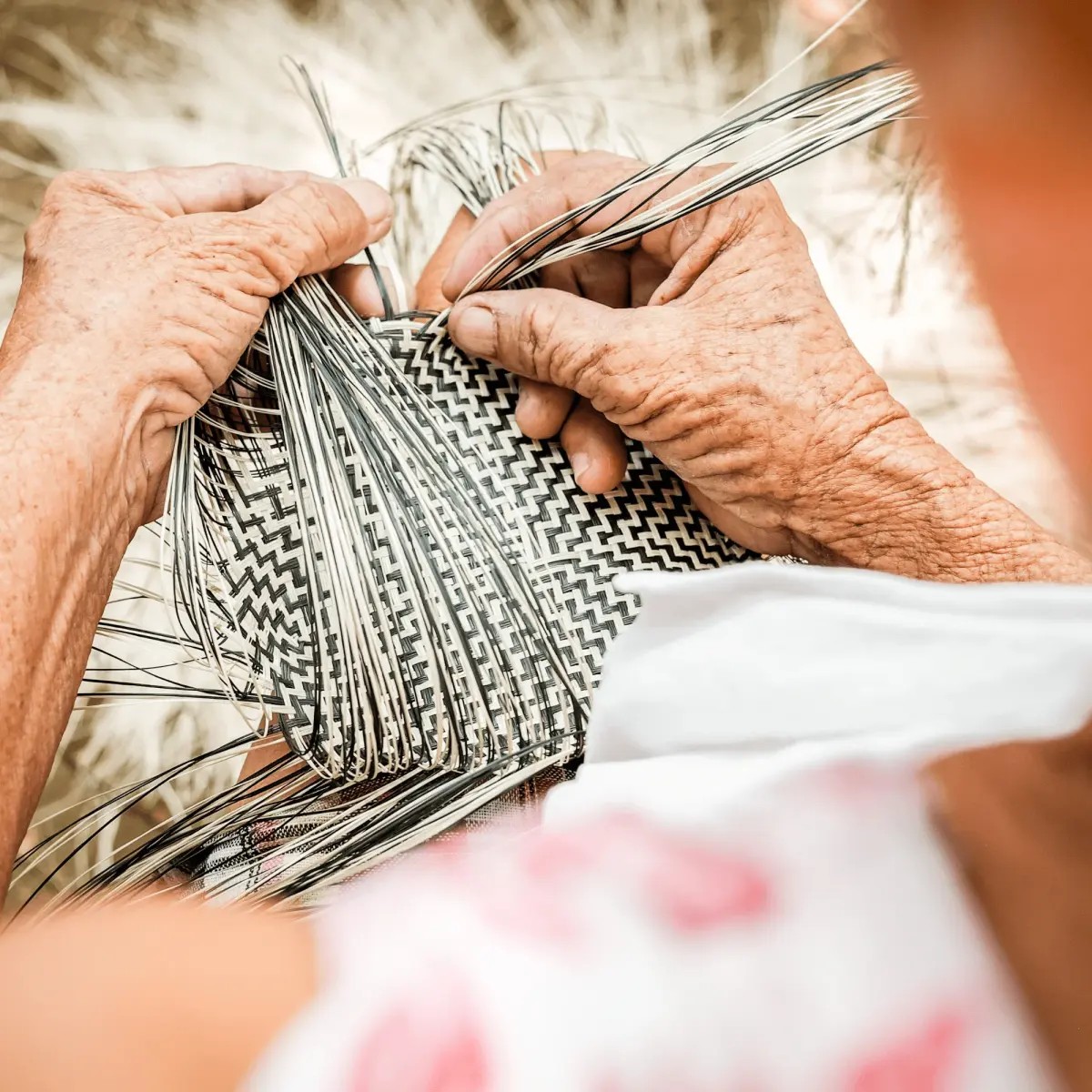
Weaving is a textile production method where two distinct sets of yarns, the warp and the weft, are interlaced at right angles to create fabric. By passing the weft threads over and under the stationary warp threads on a loom, weavers construct durable, versatile materials ranging from simple household linens to complex tapestries.
On this page
How does the weaving process work?
Weaving relies on the fundamental principle of interlacing two sets of threads. The warp consists of longitudinal yarns held under tension on a loom, while the weft is the transverse thread passed back and forth through the warp. The loom provides the mechanical structure to separate these threads using a device called a heddle, which lifts specific warp yarns to create a gap known as the shed.
Once the shed is open, the weaver inserts the weft thread, often using a shuttle to carry the yarn across the width of the loom. After each pass, the weaver uses a reed to beat the weft firmly against the previous row, ensuring a consistent and tight weave. This rhythmic process continues until the desired length of fabric is achieved, resulting in a stable, non-stretchy material.
What equipment do you need to start?
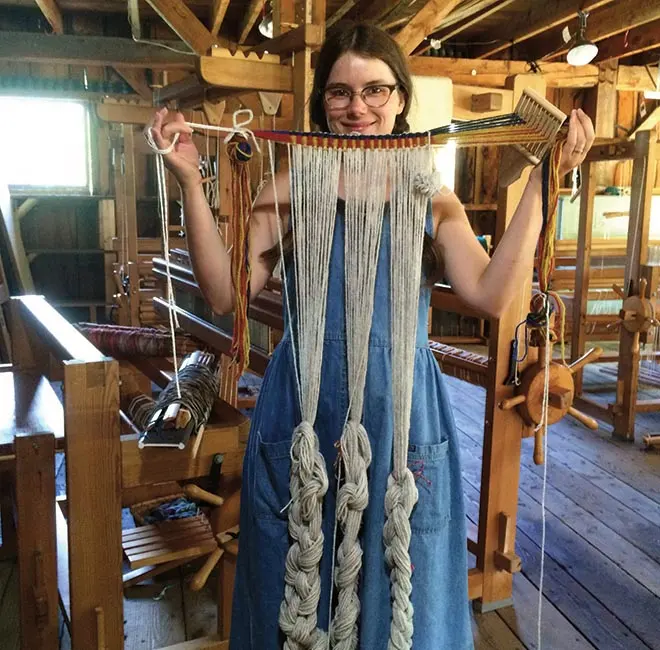
Beginning weavers do not need industrial machinery to produce high-quality textiles. A rigid heddle loom is the most popular choice for novices because it is portable, affordable, and capable of producing a wide range of fabrics like scarves, table runners, and wall hangings. These looms simplify the threading process significantly compared to floor looms.
To begin your first project, ensure you have the following essential tools:
- A rigid heddle loom with a matching reed.
- A warping peg or board to measure your yarn lengths.
- A shuttle to carry the weft yarn.
- A threading hook to pull warp threads through the heddle eyes.
- Measuring tape and scissors for precision cutting.
- A sturdy table to clamp your loom during operation.
How to weave your first project
Learning to weave is a sequential process that requires patience during the setup phase. Most of the work involves preparing the loom, known as dressing the warp, before any actual weaving occurs. Once the warp is properly tensioned, the rhythmic motion of throwing the shuttle becomes quite meditative and efficient.
Follow these steps to complete a simple plain-weave scarf:
- Measure and cut your warp yarns to the desired length, adding extra for fringe.
- Thread each warp yarn through the slots and eyes of the rigid heddle according to your pattern.
- Tie the warp securely to the front apron rod of the loom, maintaining even tension across the width.
- Wind the warp onto the back beam, ensuring no threads become tangled or loose.
- Begin weaving by creating a shed, passing the shuttle through, and beating the weft into place.
- Advance the fabric as you work, keeping the tension consistent throughout the entire length.
Common mistakes when weaving
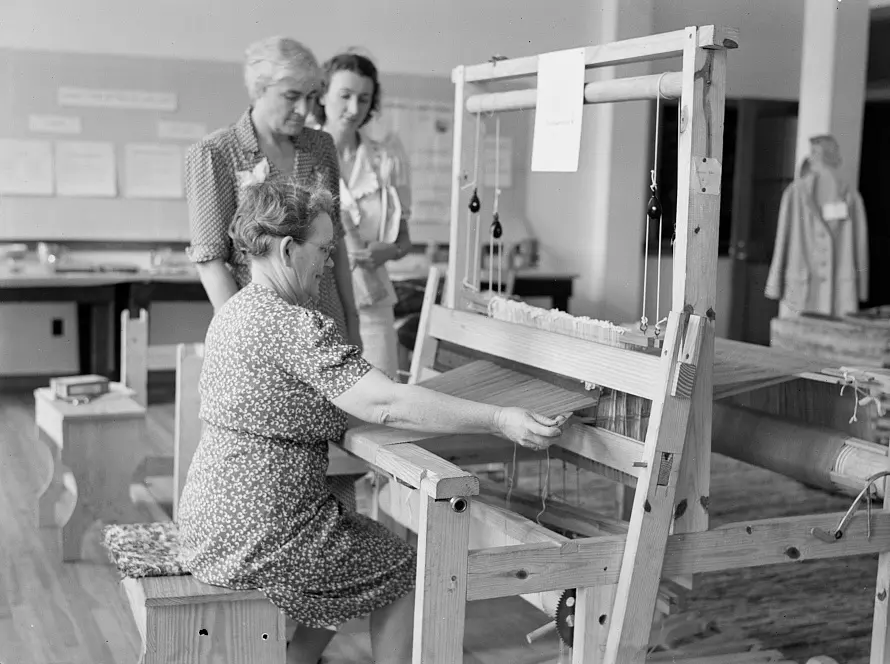
Even experienced weavers encounter technical challenges that can affect the quality of the finished textile. One of the most frequent issues is "draw-in," which occurs when the weft thread is pulled too tightly at the edges, causing the fabric to narrow and creating an hourglass shape. To avoid this, always lay your weft yarn in the shed at a 45-degree angle before beating it into place.
Another common error is the presence of "skips" or "floats," where the weft accidentally skips over multiple warp threads instead of interlacing correctly. This usually happens due to a mis-threaded heddle or a shed that is not fully open. Regularly check your work every few inches to catch these errors early. If you spot a mistake, it is much easier to unpick a few rows than to attempt a repair after the fabric has been removed from the loom.
Why choose weaving over other crafts?
Weaving offers a level of structural integrity that other textile crafts, such as knitting or crochet, cannot replicate. Because woven fabric is constructed on a grid, it is generally more stable and less prone to distortion, making it ideal for functional items like upholstery, rugs, and heavy garments. The ability to control every intersection of thread allows for immense creative freedom in pattern design.
Furthermore, weaving is an ancient craft that connects modern makers to a global history spanning thousands of years. From the intricate silk brocades of ancient China to the geometric wool blankets of the American Southwest, the techniques remain remarkably consistent. By mastering the loom, you gain the ability to create bespoke, heirloom-quality textiles that are tailored specifically to your aesthetic preferences and functional needs. Whether you are interested in historical reproduction or contemporary art, weaving provides a deep sense of accomplishment through the transformation of simple, individual strands into a cohesive, durable fabric that will last for generations.
Key facts
- Weaving is the process of interlacing two sets of threads, known as the warp and the weft, at right angles to create fabric.
- The warp threads are held stationary under tension on a loom, while the weft threads are passed over and under them.
- The earliest evidence of weaving dates back to the Neolithic period, approximately 12,000 years ago.
- A basic "plain weave" is the simplest pattern, created by passing the weft over one warp thread and under the next in a repeating sequence.
- Modern industrial looms can operate at high speeds, inserting several hundred wefts per minute to produce massive quantities of cloth.
- Common mistakes for beginners include uneven tensioning of the warp threads, which causes the fabric to pucker or warp into an hourglass shape.
The bottom line
Weaving is a foundational textile technique that transforms individual fibers into functional and decorative cloth through the systematic interlacing of warp and weft threads. By mastering the tension of the loom and the rhythm of the pass, weavers can create diverse patterns and textures. Whether practiced as an ancient craft or an industrial necessity, weaving remains a vital method for producing the fabrics that define our daily lives.
People also ask
What is the difference between knitting and weaving?
Knitting creates fabric by interlocking a single continuous yarn into a series of loops using needles. Weaving relies on two distinct sets of yarns crossing each other at right angles to form a stable, non-stretchy structure.
What materials are commonly used in weaving?
Natural fibers like cotton, wool, linen, and silk are traditional choices for their durability and texture. Synthetic fibers such as polyester and nylon are also frequently used in modern manufacturing for increased strength and colorfastness.
Do I need an expensive loom to start weaving?
You can begin with a simple frame loom, which is a basic wooden or cardboard rectangle that holds the warp threads. Many beginners start by making small wall hangings or coasters to learn the fundamental mechanics before investing in complex equipment.
What is a shuttle?
A shuttle is a tool designed to carry the weft thread back and forth through the shed, which is the gap created between the warp threads. It acts as a bobbin to hold the yarn and allows the weaver to pass it across the loom efficiently.
How do you finish a woven piece?
Once the weaving is removed from the loom, the loose ends of the warp threads are typically knotted, braided, or hemmed to prevent the fabric from unraveling. Some weavers choose to leave the fringe exposed as a decorative element.
Why is "selvedge" important in weaving?
The selvedge is the finished, self-bound edge of the fabric that prevents fraying during production and use. A clean, even selvedge is often considered a hallmark of high-quality craftsmanship in hand-woven textiles.
This answer was created with the help of AI research tools and reference sources. Spotted an error? Let us know — we correct mistakes quickly. See our editorial policy.