What is basket weaving?
Short answer
Basket weaving is the ancient craft of interlacing flexible plant materials, such as reeds, grasses, or willow, to create functional containers and decorative objects. By manipulating warps and wefts through various patterns, artisans build structural integrity without mechanical fasteners. It remains a vital cultural practice globally, blending artistic expression with practical utility.
On this page
What are the basic techniques of basket weaving?
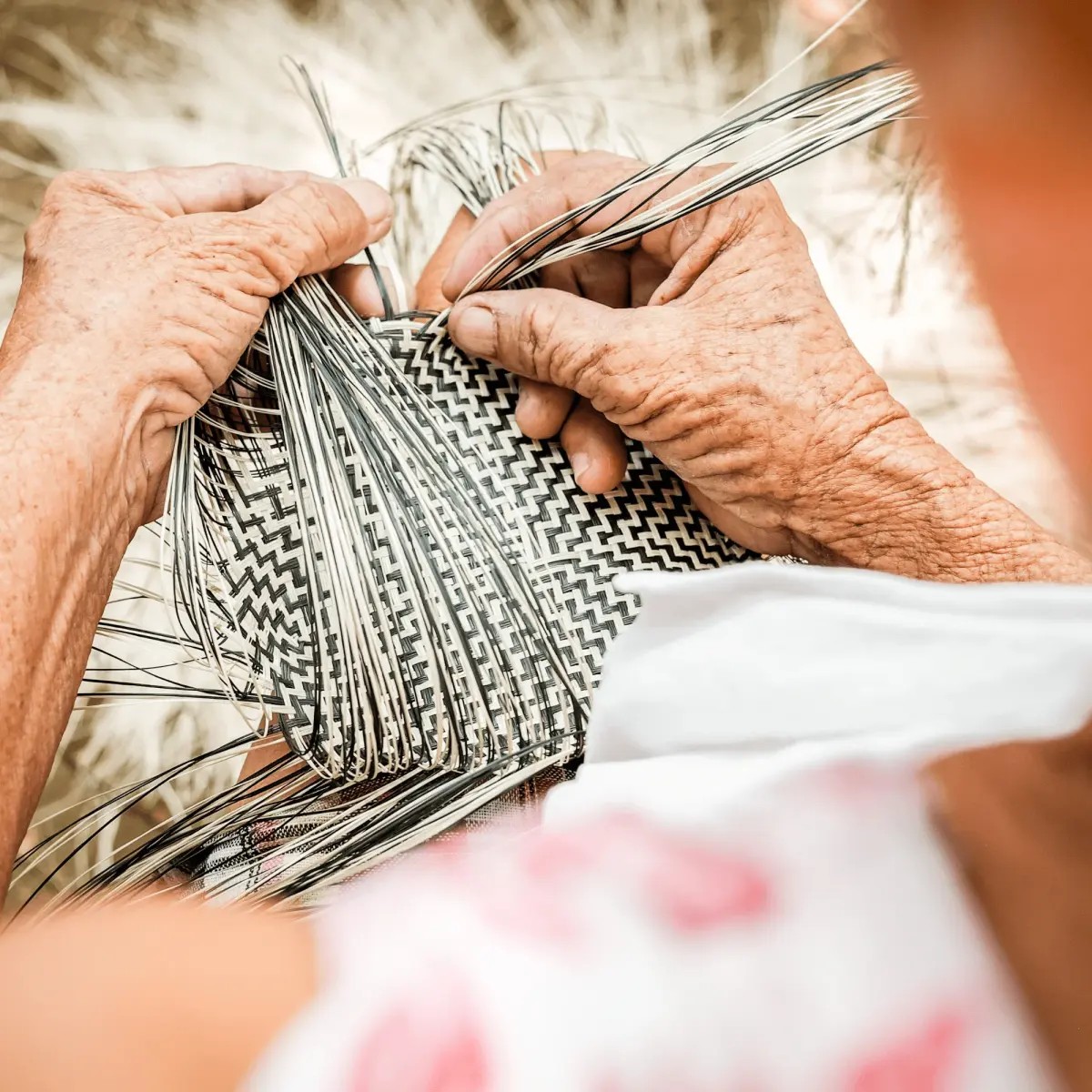
Basket weaving relies on the fundamental interaction between two sets of structural elements: the warp, which provides the stationary frame, and the weft, which is woven through those supports to create the walls. The most common technique is "plaiting," where flat strips are woven in an over-under pattern, similar to textile weaving. Another essential method is "twining," where two or more weft strands are twisted around individual warp spokes as they move across the frame.
"Coiling" represents a distinct approach where a bundle of material, such as pine needles or grass, is sewn into a spiral shape using a continuous binding thread. This technique allows for greater sculptural freedom and is frequently used to create intricate, airtight vessels. Regardless of the method, the weaver must maintain consistent tension to ensure the basket remains symmetrical and structurally sound as it grows in size.
- Prepare your materials by soaking them in warm water to increase pliability.
- Establish a sturdy base by crossing your primary warp spokes at their center points.
- Secure the base by weaving a few rows of "twining" to lock the spokes in place.
- Gradually flare the spokes outward to define the desired shape of the basket walls.
- Finish the rim by folding or tucking the remaining warp ends back into the weave.
What materials are used for basket weaving?
Artisans select materials based on local availability and the intended function of the finished piece. Willow, rattan, and bamboo are among the most popular choices due to their strength and ability to be split into consistent, flexible strips. In many regions, weavers utilize native grasses, sedges, or even recycled materials like paper and plastic strips to create contemporary variations of traditional forms.
The preparation of these materials is often as labor-intensive as the weaving itself. Natural fibers must be harvested at specific times of the year, dried, and then rehydrated before they can be manipulated without snapping. Some materials, such as rattan, are often processed into "reeds" of varying widths, which provide a uniform consistency that is ideal for beginners learning the basic structural requirements of a basket.
- Willow: Highly durable, traditional, and requires significant soaking.
- Rattan: Versatile, easy to dye, and available in many widths.
- Pine Needles: Best for coiled baskets, offering a fine, textured finish.
- Grasses: Excellent for intricate, decorative, or lightweight vessels.
- Synthetic Fibers: Durable and weather-resistant, perfect for outdoor use.
How long does it take to learn basket weaving?
The time required to master basket weaving depends on the complexity of the pattern and the weaver's familiarity with fiber manipulation. A beginner can typically complete a simple, small round basket in a single four-hour session. However, learning to shape complex curves, integrate handles, and master decorative weaves often requires several months of consistent practice to develop the necessary muscle memory.
Patience is the most critical tool for any aspiring weaver. The process is inherently slow and requires a rhythmic, meditative approach to ensure the tension remains uniform. Beginners often find that their first few attempts result in uneven sides or loose weaves, but these challenges are essential for understanding how materials behave under stress. With regular practice, most students find they can produce functional baskets with clean lines and stable structures within their first year.
Common mistakes when starting basket weaving
The most frequent error beginners make is failing to maintain consistent tension throughout the weaving process. If the weft is pulled too tightly in some spots and too loosely in others, the basket will inevitably warp or develop gaps. Another common mistake is neglecting to soak the materials sufficiently. Dry fibers are brittle and prone to snapping, which can ruin the structural integrity of the entire piece.
Beginners also often struggle with the "upsetting" phase, where the base spokes are bent upward to begin the walls. If the transition is too sharp, the spokes may crack; if it is too gradual, the basket will lack a defined shape. To avoid these issues, always keep a spray bottle of water nearby to keep the fibers supple and take frequent breaks to step back and inspect the symmetry of your work from different angles.
Why basket weaving is still relevant today
Basket weaving has evolved from a purely utilitarian necessity into a celebrated art form that bridges historical tradition and modern design. While mass-produced plastic containers have largely replaced hand-woven baskets for storage, the craft remains a vital way to preserve cultural heritage. Many indigenous communities continue to use traditional weaving techniques to create items that carry specific symbolic meanings and maintain a connection to ancestral lands.
In the contemporary art world, basketry is increasingly recognized for its sculptural potential. Artists are pushing the boundaries of the medium by incorporating unconventional materials and abstract forms that challenge the definition of a "vessel." This resurgence of interest highlights a broader societal shift toward valuing handmade goods and sustainable practices. Whether for functional home storage or as a piece of fine art, the practice of weaving remains a profound testament to human ingenuity and the enduring beauty of natural fibers.
Key facts
- Basket weaving is the process of interlacing pliable plant materials, such as reeds, willow, grasses, or wood splints, to create containers or mats.
- The three primary techniques used are coiling, plaiting, and wicker weaving, each requiring different structural approaches.
- Archaeological evidence suggests basketry predates pottery, with some of the oldest discovered fragments dating back approximately 10,000 to 12,000 years.
- Beginners should always soak dried reed or rattan in warm water for 10 to 20 minutes to restore flexibility before weaving to prevent snapping.
- A common mistake is failing to keep the "stakes" or vertical spokes tight, which leads to a weak, misshapen basket that lacks structural integrity.
- Maintaining consistent tension throughout the process is essential; uneven pulling will result in a lopsided or wavy finished product.
The bottom line
Basket weaving is a timeless craft that combines artistic expression with functional utility. By mastering basic techniques like plaiting and coiling, you can transform simple natural fibers into durable, handmade containers. While the process requires patience and attention to tension, the ability to create objects from scratch is deeply rewarding. Start with high-quality, pre-soaked reed to ensure your first project is both successful and structurally sound.
People also ask
What materials are best for a beginner to use?
Round reed is the most popular choice for beginners because it is uniform in size and easy to manipulate. Willow and rattan are also excellent options, though they may require more preparation time.
How do I prevent my basket from becoming moldy?
Ensure that your finished basket is completely dry before storing it in a humid area. If you live in a damp climate, apply a light coat of clear, non-toxic sealant to protect the organic fibers from moisture.
Can I use synthetic materials for basket weaving?
Yes, many modern weavers use waxed linen, plastic tubing, or recycled wire. These materials are durable and offer a contemporary aesthetic while following the same traditional weaving patterns.
What is the difference between a stake and a weaver?
Stakes are the rigid, vertical foundation pieces that provide the basket's shape and strength. Weavers are the more flexible, thinner strands that you pass horizontally over and under the stakes to build the walls.
Why does my basket keep shrinking as I weave upward?
This usually happens because you are pulling the weaver too tightly around the stakes. To keep the sides straight, ensure the stakes remain perpendicular to the base throughout the entire process.
How long does it take to learn the basics?
Most beginners can complete a simple, small round basket in three to five hours. Mastering complex patterns or intricate rim designs typically requires several months of consistent practice.
This answer was created with the help of AI research tools and reference sources. Spotted an error? Let us know — we correct mistakes quickly. See our editorial policy.