How do you paint a lighthouse in watercolor?
Short answer
Painting a lighthouse in watercolor requires careful planning of light and shadow to establish structural form. Begin by sketching the tower’s vertical axis, then apply light washes for the sky and sea. Build depth through layered glazes, reserving white paper for highlights, and finish with precise, dark details to define architectural features.
On this page
How to prepare the watercolor paper and sketch
Successful lighthouse paintings begin with a solid foundation on high-quality cold-press watercolor paper, ideally 140-pound (300 gsm) weight. This thickness prevents the paper from buckling when you apply multiple layers of water. Before touching a brush to the surface, create a light pencil sketch. Focus on the verticality of the lighthouse tower, ensuring the lines are perfectly plumb, as even a slight lean can make the structure look unstable.
Use a hard pencil, such as an H or 2H, to keep your lines faint and easy to erase or paint over. Map out the horizon line carefully, ensuring it does not cut the lighthouse in half, which creates a distracting composition. Include basic shapes for the lantern room and the gallery. Keep your initial sketch minimal to avoid smudging the paper, as excess graphite can muddy your transparent watercolor washes later in the process.
Which watercolor brushes and paints to choose
For a lighthouse painting, you need a balanced set of brushes to handle both broad washes and fine architectural details. A large round or flat brush, such as a size 12 or 14, is essential for covering the sky and surrounding water areas. A smaller round brush, size 4 or 6, is necessary for painting the lighthouse structure itself. A fine rigger or liner brush is vital for painting the narrow railings, lantern glass, and distant ropes.
Regarding your palette, choose professional-grade pigments for better lightfastness and transparency. You will need a variety of blues, such as Cerulean or Cobalt, for the sky and ocean. For the lighthouse, keep a warm yellow or red handy for the lantern room and a neutral gray or burnt umber for shadows. Avoid using too many opaque colors, as they can obscure the luminous quality that makes watercolor unique.
- Select a large mop brush for the sky wash.
- Use a medium round brush for the lighthouse tower.
- Keep a small pointed brush for the lantern room details.
- Test your color mixtures on a scrap piece of paper first.
How to layer colors for depth and light
Watercolor is a medium of light, meaning you must work from the lightest values to the darkest. Start by painting the sky and sea with diluted washes, allowing the white of the paper to represent the brightest highlights on the lighthouse tower. Once the initial washes are bone dry, begin adding color to the tower. Use a light touch to suggest the curvature of the structure by applying a slightly darker wash on one side to indicate the direction of the sun.
As you build the layers, ensure each application is completely dry before adding the next to prevent unwanted bleeding. This technique, known as glazing, allows the lower colors to shine through the upper layers, creating a sense of depth and luminosity. If you want to depict a brick or stone texture, use a dry-brush technique with a thicker, less watery paint mixture once the base coat is fully set.
Common mistakes when painting lighthouses
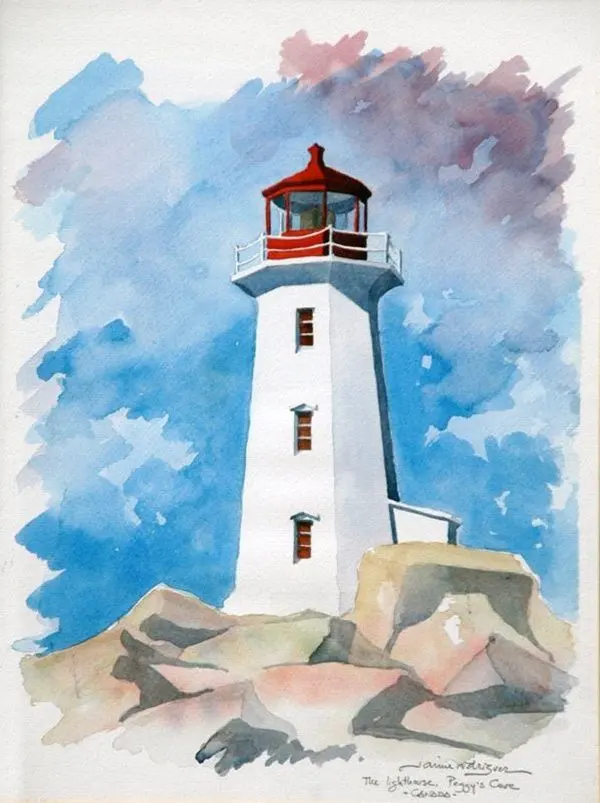
Many beginners struggle with perspective and value control, which can make a lighthouse appear flat or disconnected from its environment. A frequent error is painting the tower with a single, uniform color, which ignores the way light hits a cylindrical object. Always remember that the side facing the light source should be lighter, while the side in shadow requires a cooler, darker tone to create a three-dimensional effect.
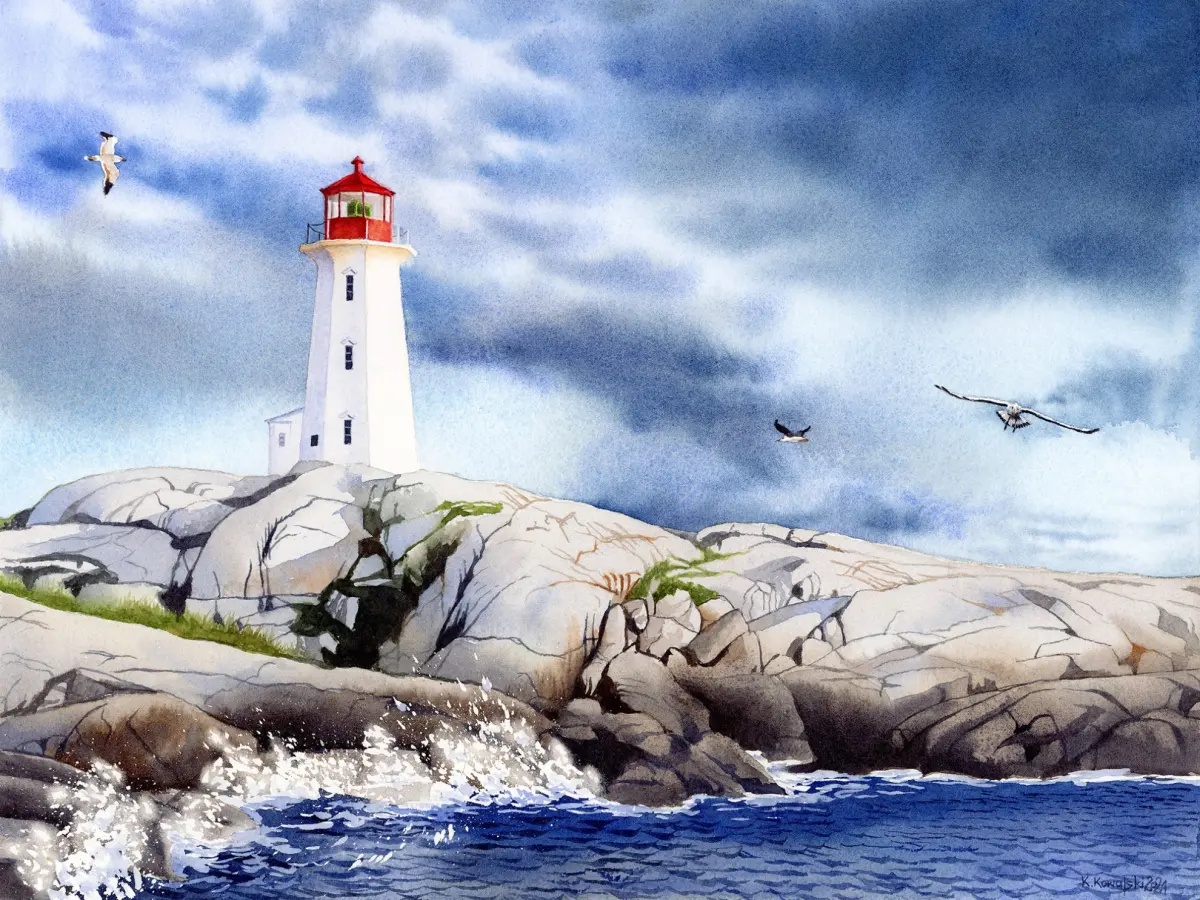
Another mistake is failing to connect the lighthouse to the ground. If the base of the tower looks like it is floating, the entire painting will lack grounding. Add a small patch of grass, rocks, or a shadow cast by the structure to anchor it firmly to the landscape. Finally, avoid overworking your painting. Watercolor thrives on freshness, and scrubbing the paper too much will damage the fibers and result in a dull, muddy appearance that loses the characteristic sparkle of the medium.
- Avoid using black paint directly from the tube for shadows.
- Do not ignore the horizon line's relationship to the base.
- Refrain from using too much water when painting fine details.
- Remember to leave white space for the lantern glass reflections.
How to finish and protect your watercolor
The final stage of your painting involves adding the "darkest darks" to provide contrast and focus. Use a concentrated mixture of your darkest colors to define the lantern room, the windows, and any ironwork. These final touches should be applied sparingly, as they act as the visual anchor for the viewer's eye. Once the painting is completely dry, carefully erase any remaining visible pencil marks with a soft, white eraser to clean up the edges.
To protect your finished work, store it away from direct sunlight, which can cause pigments to fade over time. If you plan to frame the painting, use an acid-free mat to keep the watercolor from touching the glass, as moisture can cause the paper to stick or grow mold. By following these steps, you ensure that your lighthouse painting remains a vibrant and accurate representation of your artistic vision for many years to come.
Key facts
- Use masking fluid to preserve the stark white of the lighthouse tower before applying washes to the sky or sea.
- Establish a light source early to ensure shadows on the cylindrical tower consistently fall on one side.
- Mix a neutral grey using complementary colors like burnt sienna and ultramarine blue rather than using black paint.
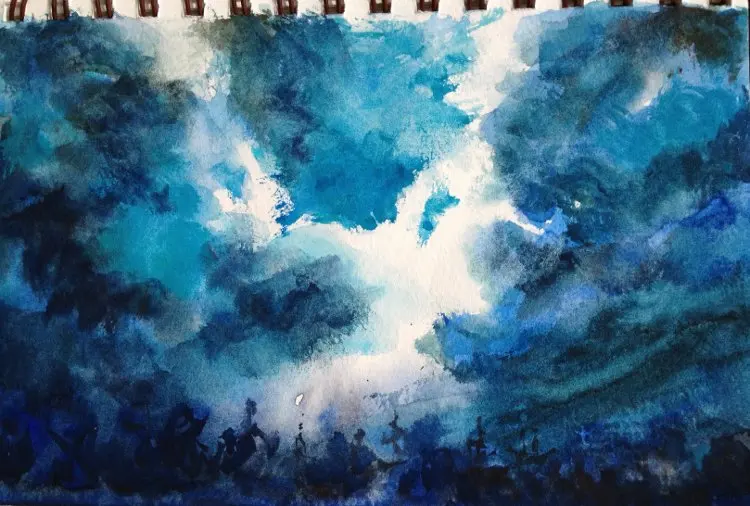
- Apply the wet-on-wet technique for the sky and water to create soft, atmospheric transitions.
- Use a small round brush, size 2 or 4, to add detail to the lantern room and gallery railings.
- Keep the horizon line perfectly level to prevent the lighthouse from appearing as if it is sliding into the ocean.
The bottom line
Painting a lighthouse in watercolor requires a balance between architectural precision and the fluid nature of the medium. By utilizing masking fluid for highlights and maintaining a consistent light source, you can create a convincing sense of depth. Focus on mastering wet-on-wet techniques for the surrounding environment while keeping the tower’s structure sharp, ensuring your final piece captures the timeless, sturdy essence of coastal life.
People also ask
How can I make the lighthouse tower look round?
Use a gradient wash that transitions from a darker tone on the shadowed side to a lighter tone on the sunlit side. Adding a thin, vertical highlight near the edge of the shadow side further enhances the illusion of volume.
What is the best way to paint realistic ocean waves?
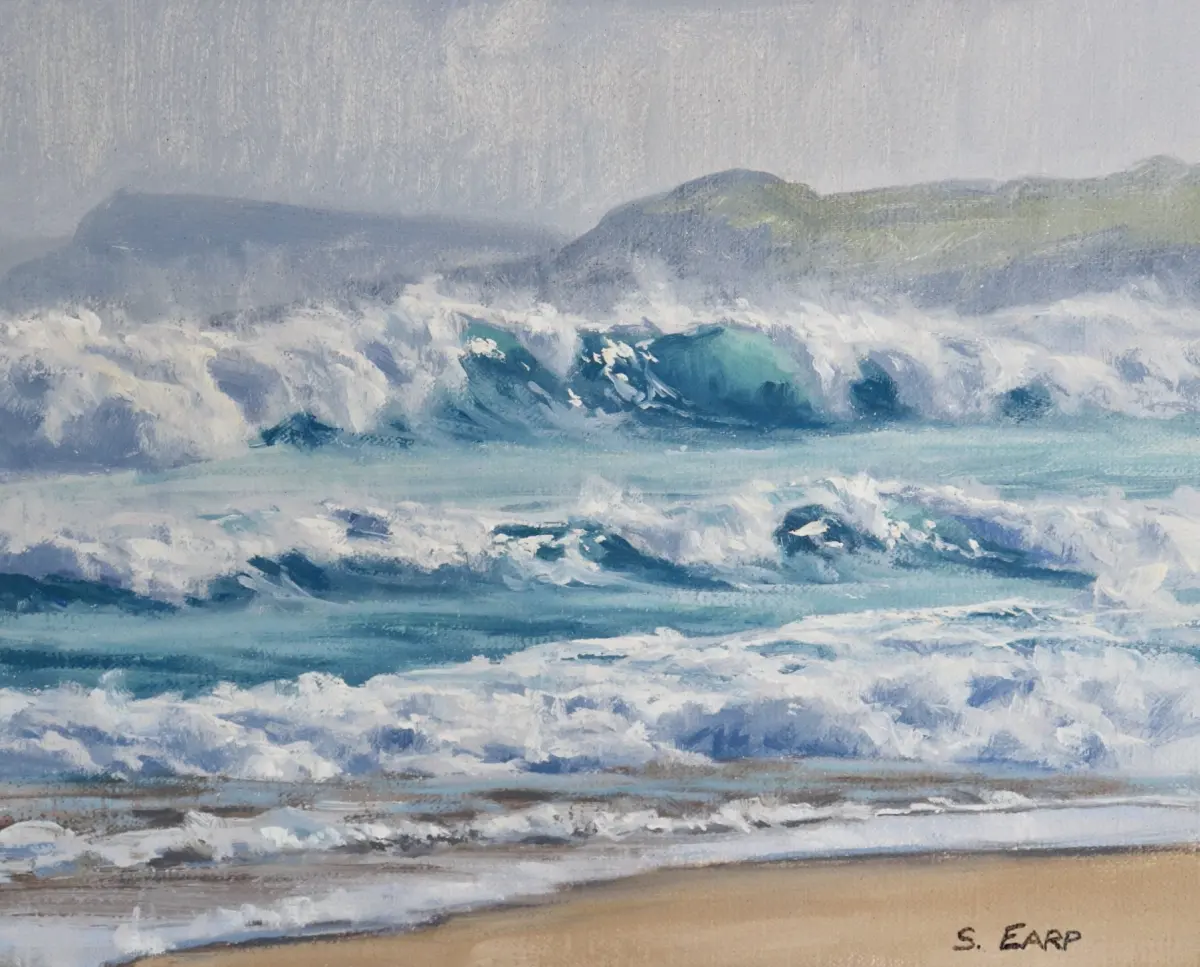
Use horizontal, broken brushstrokes with varying shades of blue and green to suggest movement. Leave small gaps of white paper between strokes to represent the foam and crests of the water.
Should I paint the lighthouse before or after the background?
Paint the background first if you want the lighthouse to appear solid and crisp against the environment. If you prefer a more blended, atmospheric look, you can paint the sky behind the lighthouse while the tower is still damp.
How do I prevent my colors from looking muddy?
Avoid over-mixing colors on the palette and limit the number of times you brush over the same area on the paper. Allow each layer to dry completely before adding a new wash to maintain color clarity.
What kind of paper is best for watercolor lighthouses?
Use 140-pound (300 gsm) cold-press watercolor paper. This weight is sturdy enough to handle multiple washes without buckling, and the texture helps capture the rough, weathered look of coastal structures.
How do I paint the light beam coming from the lantern?
Use a clean, damp brush to "lift" or scrub away a soft, wedge-shaped area of color from the sky after the paint has dried. Alternatively, use a touch of opaque white gouache to suggest the glow of the light.
This answer was created with the help of AI research tools and reference sources. Spotted an error? Let us know — we correct mistakes quickly. See our editorial policy.