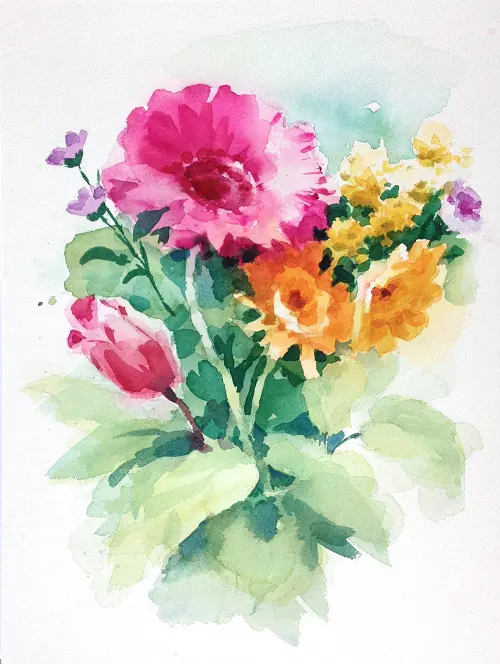
How do you paint a sunset with watercolor?
Short answer
Painting a sunset with watercolor requires a wet-on-wet technique to blend vibrant hues seamlessly. By applying layers of yellow, orange, and purple onto dampened paper, you create a soft, atmospheric glow. Control the pigment concentration and water ratio to maintain luminosity, allowing colors to bleed naturally while preserving the horizon's clarity.
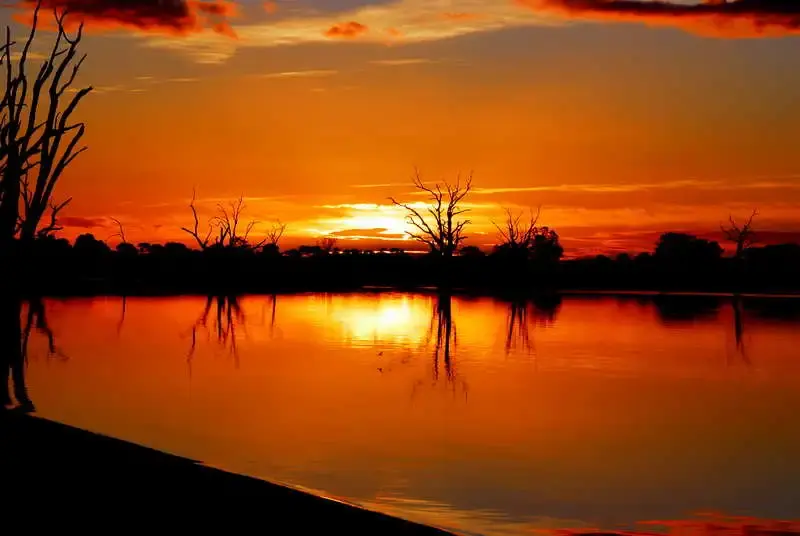
On this page
What materials are best for watercolor sunsets?
To achieve professional results, prioritize high-quality materials that handle water effectively. Cold-press watercolor paper with a weight of at least 140 pounds (300 gsm) is essential, as it prevents buckling when saturated with multiple washes. Cotton-based paper is superior to wood pulp because it allows for better pigment flow and easier lifting of colors if adjustments are needed.
For your palette, select transparent pigments rather than opaque ones to maintain the characteristic glow of a sunset. Essential colors include:
- Aureolin or Cadmium Yellow for the brightest light.
- Permanent Rose or Alizarin Crimson for warm transitions.
- Ultramarine Blue or Dioxazine Purple for the darkening upper sky.
- A large mop brush, such as a size 10 or 12, is ideal for covering large areas quickly and maintaining a consistent wet surface.
How to prepare the paper for blending
The secret to a smooth sunset gradient lies in the initial preparation of your paper. Before applying any pigment, use a clean, damp brush to coat the entire painting surface with a thin layer of clear water. The paper should look shiny but not have large puddles sitting on the surface, which can cause unwanted blooms or backruns.
If the paper begins to dry while you are working, the colors will not blend smoothly, resulting in harsh lines. Keep a spray bottle of water nearby to lightly mist the edges if the paper loses its sheen. This preparation step ensures that your colors migrate across the page, creating the soft, diffused transitions found in a natural sky.
How to paint the sunset gradient
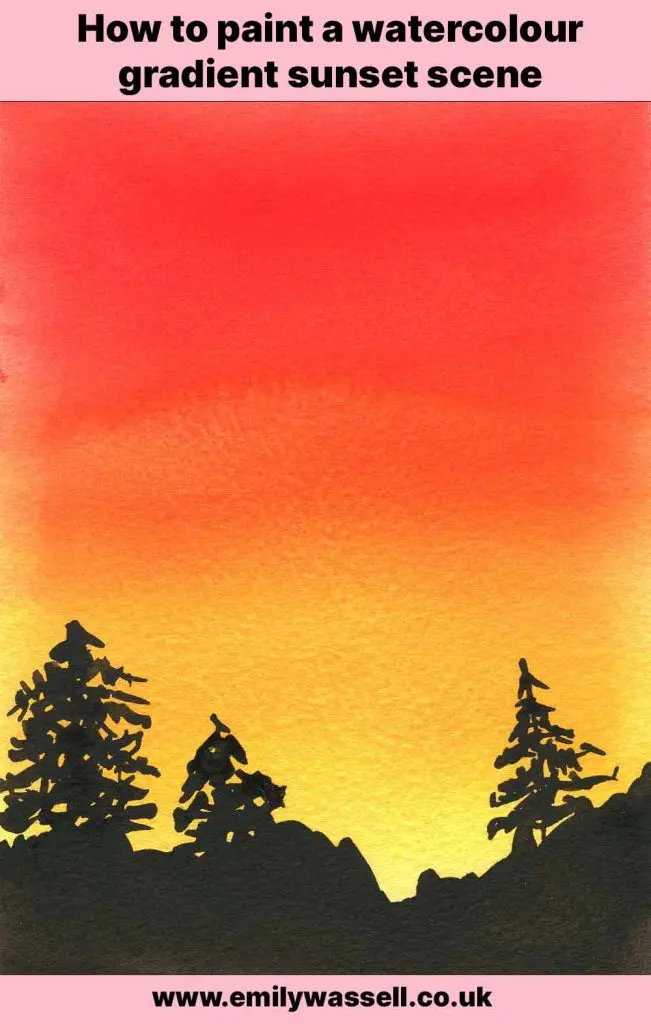
- Start at the top of the paper with your darkest color, such as a mix of blue and purple, and apply it with horizontal strokes.
- Gradually introduce your reds and oranges as you move toward the center of the horizon, overlapping the previous color slightly.
- Finish at the bottom with your lightest yellow, allowing the pigment to settle into the damp surface.
- Tilt your board slightly to encourage the colors to flow downward and blend together naturally without overworking the paper.
Avoid the temptation to brush back and forth repeatedly, as this will muddy the colors and damage the paper fibers. Once the initial wash is applied, resist the urge to touch it again until it is completely dry. If you see small white spots, known as "holidays," leave them alone; they often add to the texture of the sky.
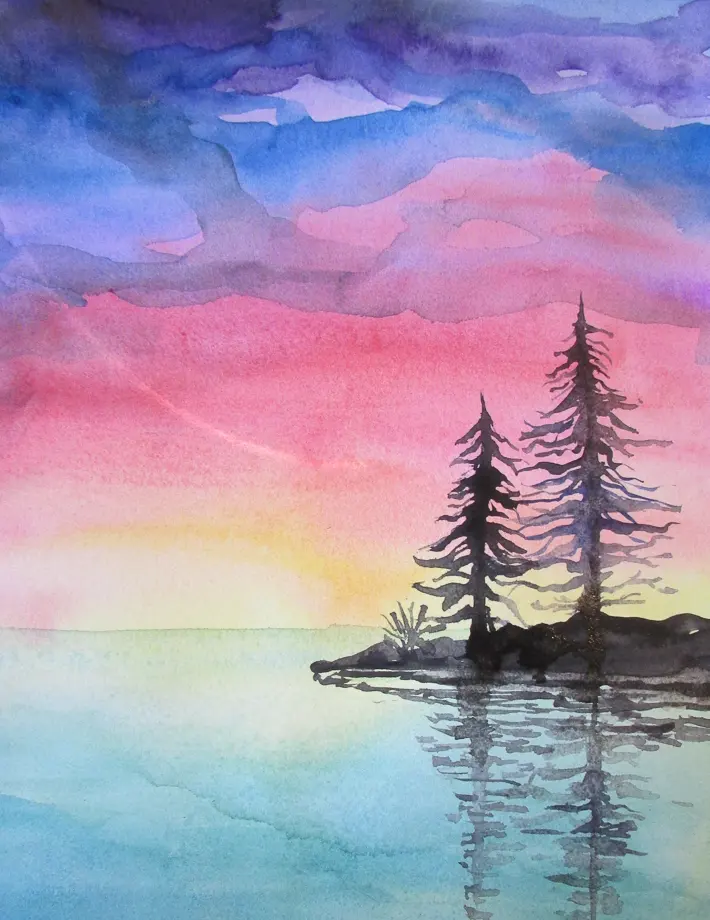
How to add clouds and silhouettes
Once the sky wash is fully dry, you can add depth by painting clouds or foreground elements. For clouds, use a slightly thicker paint consistency and a "dry brush" technique, where you drag a brush with very little water across the paper. This creates soft, wispy edges that mimic the appearance of cirrus clouds caught in the late afternoon light.
Silhouettes are best added at the very end to provide contrast and scale to your composition. Use a dark, concentrated mixture of Payne’s Gray or Indigo to paint trees, mountains, or buildings along the horizon line. Because the sky is already dry, these shapes will have crisp, sharp edges that make the soft colors of the sunset appear even more vibrant by comparison.
Common mistakes when painting sunsets
One of the most frequent errors is using too much water when applying the final layers, which can cause the underlying sky colors to lift and create a muddy appearance. Always ensure your brush is damp but not dripping when applying dark silhouettes. Additionally, beginners often choose colors that are too similar, resulting in a flat image that lacks the dramatic contrast of a true sunset.
Another common pitfall is over-blending the colors, which strips the painting of its energy and clarity. Allow the pigments to interact on the paper on their own; watercolor is a medium that thrives on spontaneity. If you find your colors turning brown, it is likely because you are mixing complementary colors, such as orange and blue, too aggressively. Stick to adjacent colors on the color wheel to keep your sunset bright and luminous until the very end.
Key facts
- Use high-quality 140lb (300gsm) cold-press watercolor paper to prevent buckling when applying wet-on-wet washes.
- Start with a clean water wash over the entire paper surface to allow pigments to flow and blend seamlessly.
- Apply colors from lightest to darkest, starting with yellows and oranges at the horizon and moving to purples or blues at the top.
- Utilize the "wet-on-wet" technique to achieve soft, diffused edges that mimic the natural gradient of a sunset sky.
- Leave small areas of white paper untouched to represent the brightest highlights of the sun or clouds.
- Avoid overworking the paint; excessive brushing will muddy the colors and damage the paper’s delicate texture.
The bottom line
Painting a sunset requires patience and a light touch. By mastering the wet-on-wet technique and maintaining a limited, warm-toned palette, you can capture the vibrant transitions of light. Focus on preserving white space for highlights and avoid the temptation to over-blend your colors. With high-quality paper and controlled water application, you will achieve a luminous, professional-looking sky that captures the fleeting beauty of dusk.
People also ask
Should I use masking fluid for the sun?
Masking fluid is an excellent tool for preserving the pure white of the paper for a bright sun. Apply it before you begin painting and remove it only after the entire sky wash is completely dry.
Why do my colors turn brown when I blend them?
Colors turn muddy when you mix too many complementary hues, such as orange and blue, directly on the paper. Limit your palette to warm colors like gamboge, cadmium orange, and alizarin crimson to keep the sky vibrant.
How do I create realistic clouds in a sunset?
Use a damp, clean brush to "lift" or remove pigment from the paper while the paint is still wet. This creates soft, billowy cloud shapes that appear integrated into the atmosphere rather than painted on top.
Is it better to paint the sky upside down?
Painting with the board slightly tilted allows gravity to assist the paint flow, creating smooth, even gradients. Some artists prefer working upside down to maintain better control over the color distribution as the paint settles.
How long should I wait for the paint to dry?
Allow each layer to dry completely before adding dark silhouettes or foreground details. If the paper is still damp, your foreground paint will bleed into the sky, ruining the crispness of your landscape elements.
Can I use salt to create texture in the sky?
Sprinkling table salt onto a wet wash creates star-like patterns as the salt absorbs the pigment. Wait for the paint to reach a semi-dry state before applying the salt for the most dramatic, crystalline effects.
This answer was created with the help of AI research tools and reference sources. Spotted an error? Let us know — we correct mistakes quickly. See our editorial policy.