How do you draw a banjo?
Short answer
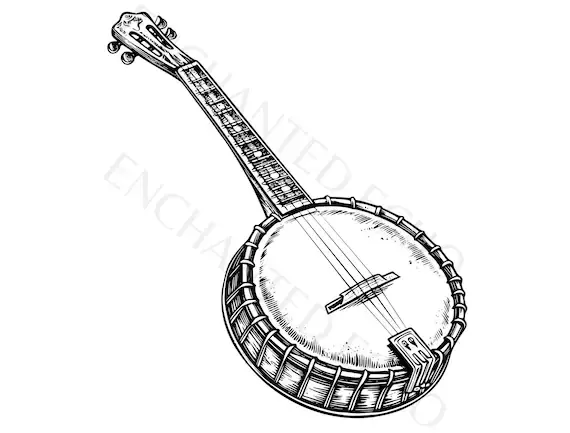
Drawing a banjo involves capturing its distinct circular body, long neck, and tensioned strings. Start by sketching a large circle for the pot, then attach a long, slender rectangle for the neck. Add the bridge, tailpiece, and tuning pegs to complete the iconic silhouette of this traditional American stringed instrument.
On this page
How to draw a banjo step by step
To begin your drawing, establish the circular pot, which is the heart of the banjo. Use a compass or a circular object to ensure the shape is symmetrical, as a lopsided pot will make the instrument look structurally unsound. Once the circle is drawn, sketch a long, narrow rectangle extending from the top edge to serve as the neck. Ensure the neck is centered accurately, as the strings must run in a straight line from the tuning pegs down to the tailpiece.
Follow these steps to refine the structure:
- Draw the circular rim and a slightly smaller inner circle to represent the head tension hoop.
- Extend the neck rectangle and add a slightly wider headstock at the very top.
- Place a small horizontal line near the center of the pot to represent the bridge.
- Draw five thin, parallel lines running from the bridge up the neck to the headstock.
- Add four tuning pegs on the side of the headstock and one peg halfway down the neck for the drone string.
What are the key parts of a banjo
Understanding the anatomy of the banjo is essential for a realistic drawing. The pot consists of the rim, the head (the drum-like membrane), and the tension hoop that holds the head in place. The bridge sits directly on the head, transferring the vibration of the strings to the body. The tailpiece is located at the bottom of the pot, acting as the anchor point for the strings.
The neck is characterized by a fretboard with metal frets, which are the thin horizontal lines running across the wood. Most banjos feature a fifth string that begins halfway up the neck, which is a unique visual identifier compared to a guitar. Including the resonator, which is the wooden back often found on bluegrass banjos, adds depth to your drawing. A resonator appears as a slightly larger circle behind the main pot, providing a sense of three-dimensional volume to the instrument.
How to add realistic details to your banjo
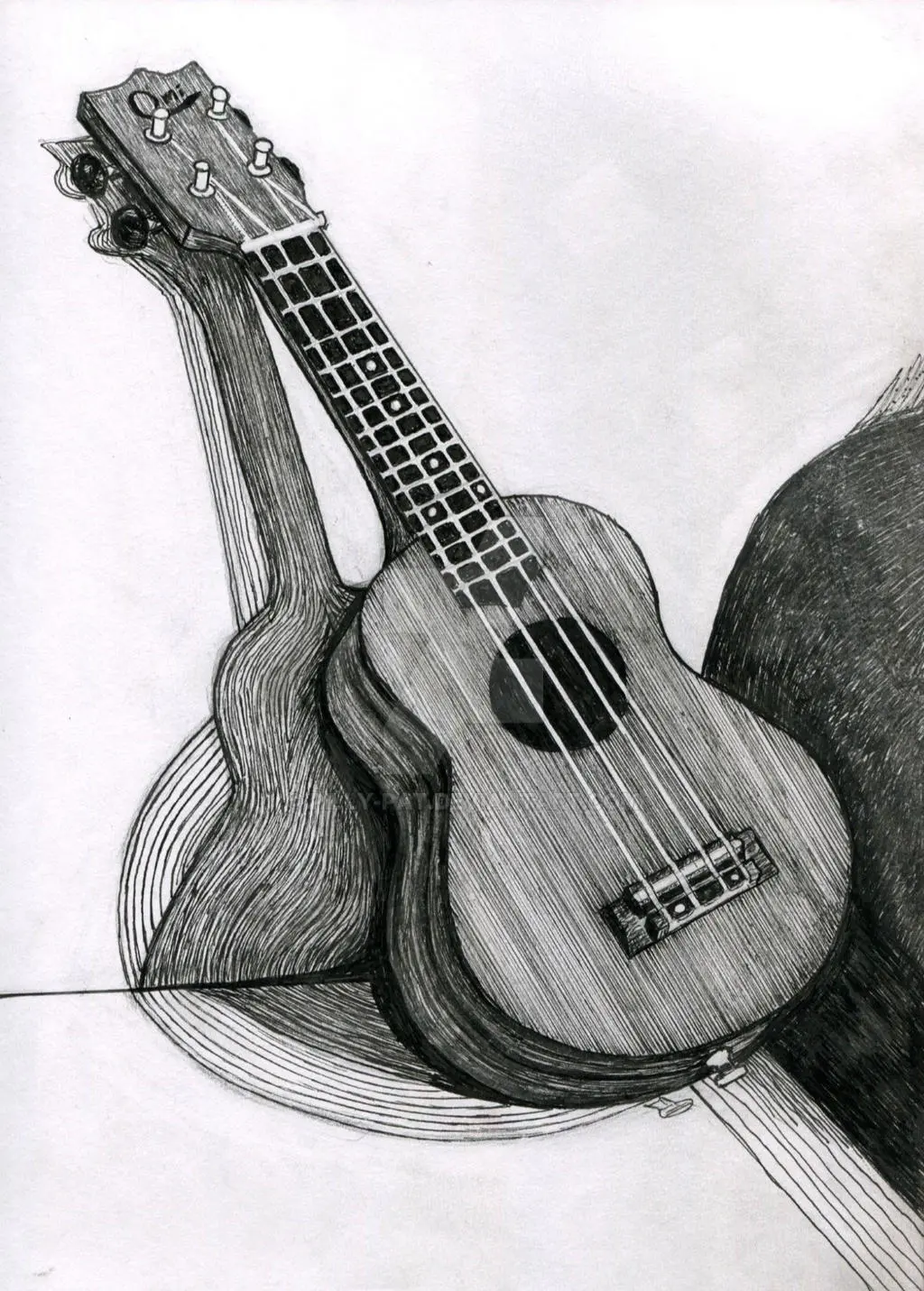
Texture and shading bring a technical drawing to life. Use light, circular shading on the head to suggest the material, which is typically synthetic plastic or animal skin. The metal hardware, such as the tension hooks that circle the pot, should be drawn as small vertical lines with a metallic sheen. Adding these small, repetitive details creates a sense of mechanical complexity that defines the banjo’s industrial aesthetic.
Consider these elements for added realism:
- Use cross-hatching on the neck to represent the dark wood grain of the fretboard.
- Draw small dots on the fretboard to indicate the position markers, usually located at the 5th, 7th, 10th, and 12th frets.
- Add highlights to the tuning pegs to show they are made of polished metal or plastic.
- Sketch a shadow beneath the bridge to ground the object within your composition.
- Vary the thickness of your lines to distinguish between the heavy rim and the thin, delicate strings.
Common mistakes when drawing a banjo
A frequent error is misaligning the neck with the center of the pot. If the neck is off-center, the strings will not appear to sit correctly on the bridge, making the instrument look non-functional. Another common issue is failing to include the fifth string peg. Beginners often draw a standard guitar neck, forgetting that the banjo's fifth string is shorter and terminates halfway up the neck, which is a signature feature of the instrument.
Proportions are also frequently misjudged, particularly the size of the headstock. The headstock should be wider than the neck but not as wide as the pot itself. Avoid drawing the strings as thick, heavy lines; they should be very fine and light to maintain the delicate appearance of the instrument. Finally, ensure that the bridge is placed in the lower half of the circle, as this is where it naturally sits on a real banjo to provide the correct scale length for the strings.
Best techniques for shading a banjo
Shading is the final step to provide weight and form to your drawing. Focus on the cylindrical nature of the pot by using a gradient of light to dark across its surface. The side of the rim should be darker than the front-facing head, as this creates the illusion of depth. Use a soft graphite pencil to blend these tones, ensuring that the transition from light to shadow is smooth and consistent with a single light source.
When shading the neck, follow the length of the wood grain to emphasize its elongated shape. Use a kneaded eraser to pull out highlights on the metal tension hooks and the tuning pegs, which will make them appear reflective. By focusing on the interplay between the matte wood, the taut drum head, and the polished metal hardware, you create a convincing representation of the banjo. Take your time with the final highlights, as these small points of light provide the necessary contrast to make the instrument pop off the page.
Key facts
- A banjo is defined by its circular drum-like body, known as the pot, which features a stretched membrane head.
- The instrument typically has a long, slender neck with four or five strings running over a bridge.
- When drawing, always start with a perfect circle for the pot to establish the instrument's center of gravity.
- The bridge should be placed slightly below the center of the drum head to allow for proper string vibration.
- Banjos feature a distinct "fifth string" peg located halfway up the neck, which is a key identifying detail.
- Use a straightedge for the neck to ensure the frets remain perpendicular to the strings for visual accuracy.
The bottom line
Drawing a banjo requires balancing geometric precision with specific structural details. By anchoring your sketch with a circular pot and a straight, fretted neck, you create a solid foundation. Remember to include the signature fifth-string peg and a bridge positioned on the drum head to ensure the instrument is instantly recognizable. With these core elements in place, you can confidently capture the unique aesthetic of this iconic folk instrument.
People also ask
Why is the fifth string peg placed halfway up the neck?
The fifth string, or drone string, is shorter than the others and starts at the fifth fret. This unique design allows for the characteristic high-pitched, rhythmic sound essential to bluegrass and old-time music.
Should the banjo head be drawn as perfectly flat?
No, the head is a tensioned membrane stretched over a tone ring. Drawing it with a slight curve or shading the edges helps convey the depth and tension of the material.
How many frets should I include on the neck?
Standard banjos typically feature between 17 and 22 frets. Drawing 19 frets is a safe and accurate choice for a realistic representation of a standard five-string instrument.
What is the purpose of the resonator on the back of the banjo?
The resonator is a bowl-shaped wooden back that projects sound forward. When drawing, add a slightly larger circle behind the pot to represent this component.
How do I draw the bridge accurately?
The bridge is a small, thin piece of wood that stands upright on the head. Draw it as a simple rectangular shape with small notches on top to hold the strings in place.
Is the headstock shape standard for all banjos?
No, headstock shapes vary significantly by manufacturer, such as Gibson or Deering. You can choose a simple paddle shape or a more decorative scroll design depending on the style you prefer.
This answer was created with the help of AI research tools and reference sources. Spotted an error? Let us know — we correct mistakes quickly. See our editorial policy.