What is the difference between cubism and surrealism?
Short answer
Cubism and surrealism are distinct 20th-century art movements. Cubism, emerging around 1907, focuses on deconstructing physical objects into geometric forms and multiple perspectives. Surrealism, beginning in the 1920s, prioritizes the subconscious mind, dream imagery, and irrational juxtapositions. While Cubism analyzes reality through structure, Surrealism explores the hidden, illogical depths of human psychology.
On this page
What defines the Cubist style
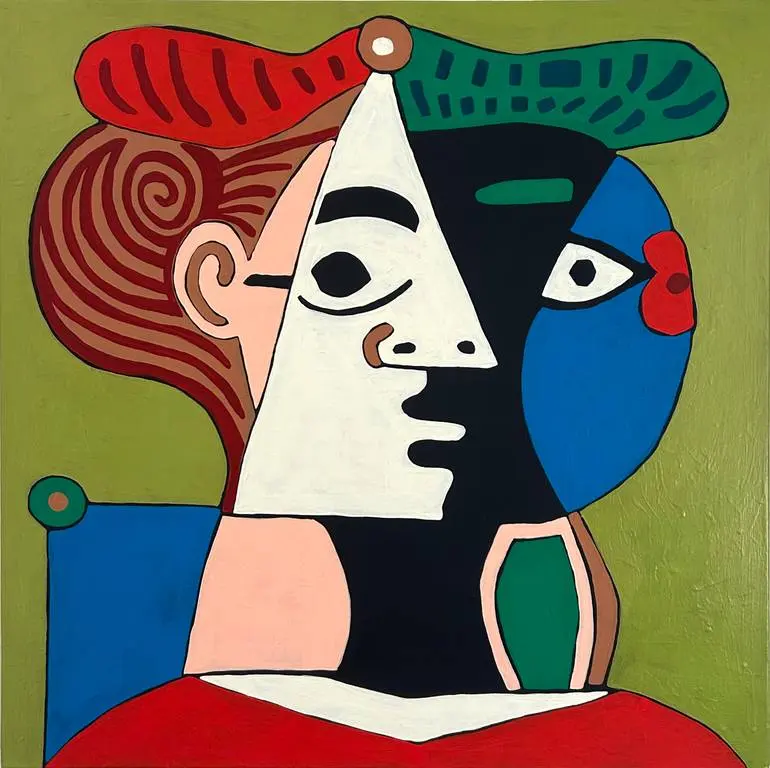
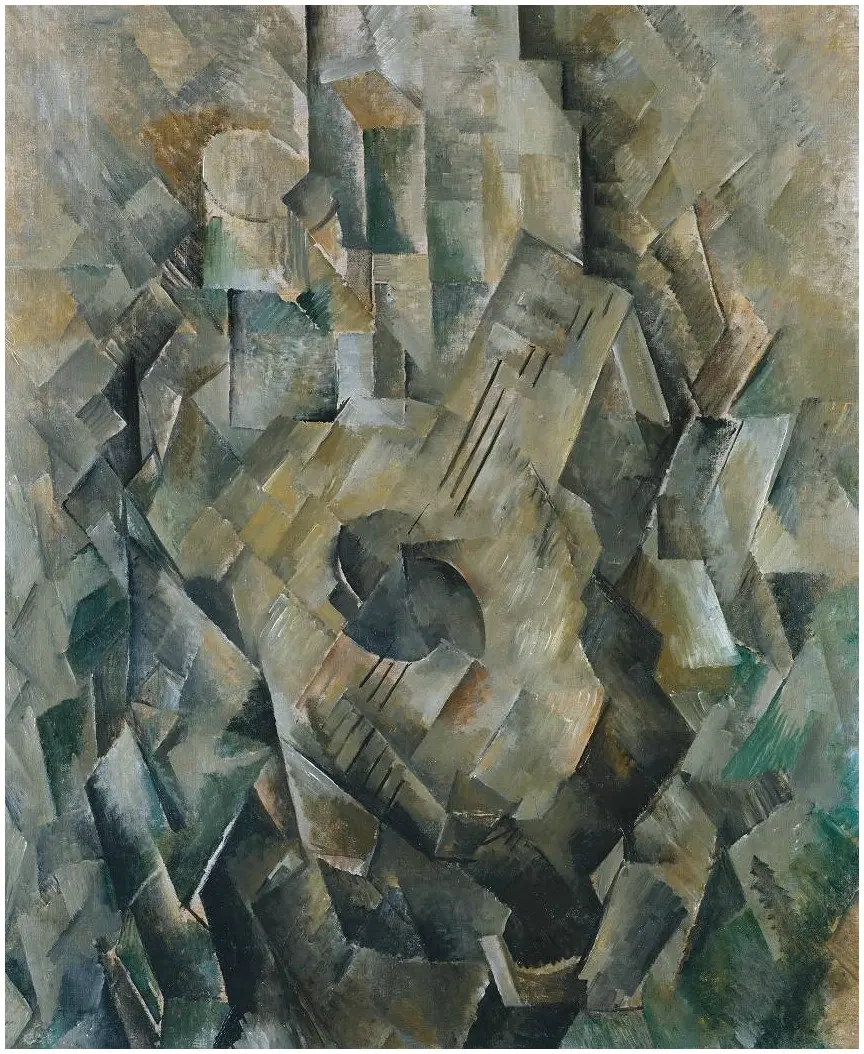
Cubism was pioneered by Pablo Picasso and Georges Braque in Paris between 1907 and 1914. The movement sought to move away from traditional perspective, which had dominated Western art since the Renaissance. Instead of depicting a subject from a single viewpoint, artists broke objects into geometric planes and reassembled them to show multiple sides simultaneously. This analytical approach forced the viewer to mentally reconstruct the subject, emphasizing the two-dimensional nature of the canvas.
The movement is generally categorized into two distinct phases:
- Analytic Cubism: Focused on monochromatic palettes and the fragmentation of objects into complex, overlapping grids.
- Synthetic Cubism: Introduced brighter colors, simpler shapes, and the use of collage elements like newspaper clippings or fabric.
By flattening the image and rejecting realistic modeling, Cubists revolutionized how artists perceived space and form. This shift laid the groundwork for almost all subsequent abstract art movements by proving that painting did not need to be a literal window into reality.
What defines the Surrealist style
Surrealism emerged in 1924 following the publication of André Breton’s "Surrealist Manifesto." Influenced heavily by the psychoanalytic theories of Sigmund Freud, the movement aimed to bridge the gap between dreams and reality. Surrealists believed that the rational mind suppressed the creative power of the unconscious. To bypass this control, they employed techniques like automatism—drawing or writing without conscious thought—to unlock raw, unfiltered imagery.
Surrealist works often feature recognizable objects placed in impossible or unsettling contexts. Common themes include:
- Dreamlike landscapes that defy the laws of physics.
- The juxtaposition of unrelated objects to create a sense of mystery.
- Distorted anatomy or figures that represent repressed desires and fears.
Artists like Salvador Dalí and René Magritte used precise, realistic painting techniques to render these bizarre scenes. This contrast between the realistic style and the illogical subject matter is what makes Surrealist art so visually arresting and conceptually challenging for the viewer.
How to identify the differences
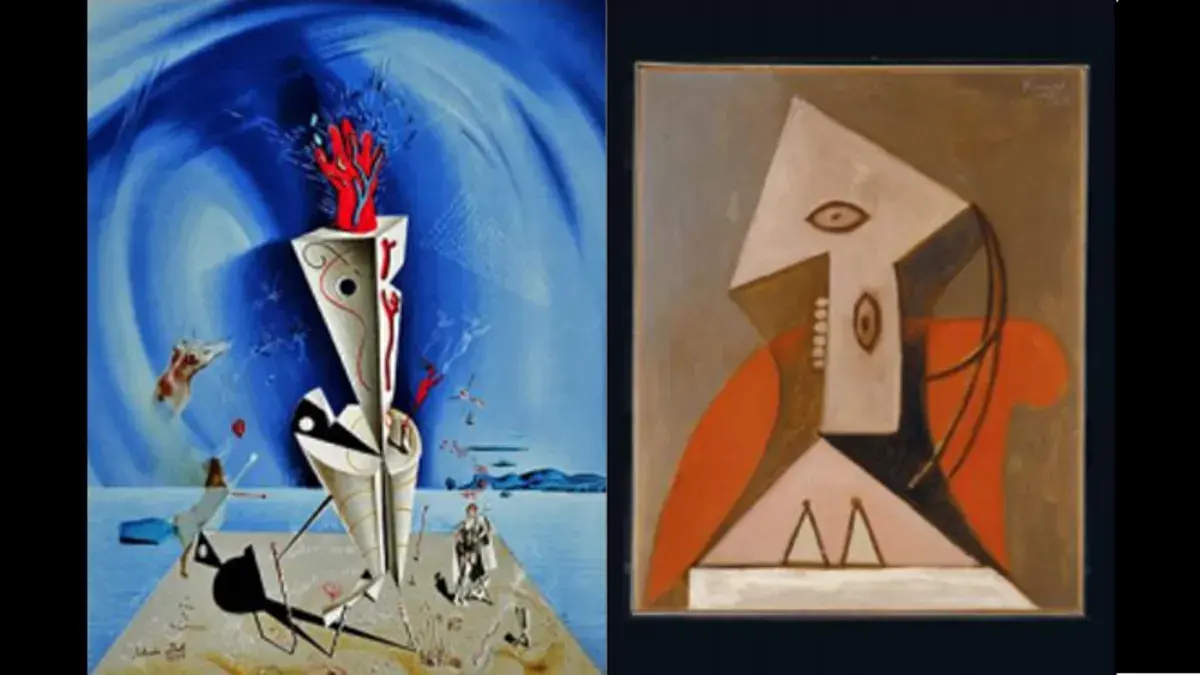
The most practical way to distinguish between these two movements is to analyze the artist's primary objective. If the work appears to be a puzzle of shapes, lines, and overlapping angles, it is likely Cubist. The artist is interested in the formal properties of the subject—how it exists in space and how it can be broken down into geometric components. There is little concern for narrative or emotional symbolism.
Conversely, if the work evokes a sense of wonder, horror, or confusion through strange imagery, it is likely Surrealist. A Surrealist painting might look like a high-resolution photograph of a melting clock or a man with an apple for a face. The focus here is on the psychological impact and the "uncanny" nature of the scene. While Cubism is an intellectual exercise in structure, Surrealism is an emotional exploration of the psyche.
Common mistakes when analyzing art
A frequent error is assuming that all abstract art belongs to the same category. Many viewers label any non-realistic painting as "Cubist," ignoring the vast differences between movements like Fauvism, Futurism, and Surrealism. To avoid this, look for the presence of recognizable objects. Cubism usually retains a link to the original object through its fragmented parts, whereas Surrealism often presents objects with photographic clarity, even if their placement makes no logical sense.
Another mistake is over-interpreting the "meaning" of a Cubist work. Because Cubism is primarily concerned with form, space, and perspective, searching for a hidden psychological message in a Picasso guitar painting will often lead to frustration. Conversely, trying to analyze a Surrealist work using geometric logic will fail because the movement is intentionally irrational. Always consider the artist's intent: are they building a structure or telling a dream?
How to appreciate these movements today
To better understand these styles, try visiting a museum with a focus on 20th-century collections. Start by standing before a Cubist work and tracing the lines to see how the artist flattened the depth of the subject. Notice how the colors are often muted to keep the focus on the structure. Then, move to a Surrealist piece and allow yourself to react to the atmosphere of the painting. Ask yourself what feelings the strange combination of items evokes in your own mind.
If you are interested in practicing these styles, follow these simple steps:
- For Cubism: Take a simple household object, draw it from three different angles, and combine those views into a single geometric composition.
- For Surrealism: Pick two unrelated objects—such as a telephone and a lobster—and draw them together in a setting where they would never normally appear.
By engaging with these movements through both observation and creation, you will develop a sharper eye for the distinct philosophies that shaped modern art history.
Key facts
- Cubism began in Paris around 1907, pioneered by Pablo Picasso and Georges Braque, to depict objects from multiple viewpoints simultaneously.
- Surrealism emerged in the 1920s, heavily influenced by Sigmund Freud’s theories on the unconscious mind and dream states.
- Cubist artists used geometric shapes and fragmented planes to analyze the structure of subjects rather than their realistic appearance.
- Surrealist artists like Salvador Dalí and René Magritte sought to bridge the gap between reality and imagination through bizarre, illogical juxtapositions.
- To distinguish the two, look for the "shattered" look of Cubism versus the "dreamlike" or "hallucinatory" narratives found in Surrealism.
- Avoid the mistake of thinking Cubism is abstract; it is a representational style that breaks down physical objects into mathematical, flat components.
The bottom line
Cubism and Surrealism represent two distinct shifts in 20th-century art. Cubism focuses on the structural analysis of objects, breaking them into geometric planes to challenge traditional perspective. In contrast, Surrealism explores the depths of the human psyche, using realistic techniques to depict illogical, dreamlike scenes. Understanding this difference helps viewers appreciate how artists moved from deconstructing physical reality to unlocking the mysteries of the unconscious mind.
People also ask
Did Cubism and Surrealism happen at the same time?
Cubism predates Surrealism, with its peak occurring between 1907 and 1914. Surrealism officially began as a literary and artistic movement in 1924, though some artists transitioned between styles over their careers.
Can an artwork be both Cubist and Surrealist?
While they are distinct movements, some artists incorporated elements of both. For example, Picasso’s later works sometimes blended the structural fragmentation of Cubism with the distorted, psychological imagery characteristic of Surrealism.
Why did Cubist artists paint things from so many angles?
Cubists believed that traditional perspective was limited. By showing multiple viewpoints at once, they aimed to represent the totality of an object as it exists in the mind rather than just a single snapshot.
Is Surrealism just about painting weird things?
Surrealism is rooted in the "psychic automatism" of the subconscious. It aims to express the actual functioning of thought, free from the constraints of logic, morality, or aesthetic concerns.
What is the most famous example of a Cubist painting?
"Les Demoiselles d'Avignon" by Pablo Picasso, painted in 1907, is widely considered the foundational work of the movement. It features sharp, angular figures that challenged contemporary standards of beauty.
How do I identify a Surrealist painting?
Look for realistic painting techniques applied to impossible subjects. Surrealists often depicted melting clocks, floating objects, or strange landscapes that feel like a vivid, unsettling dream.
This answer was created with the help of AI research tools and reference sources. Spotted an error? Let us know — we correct mistakes quickly. See our editorial policy.