How do you paint a sunset with acrylic paint?
Short answer
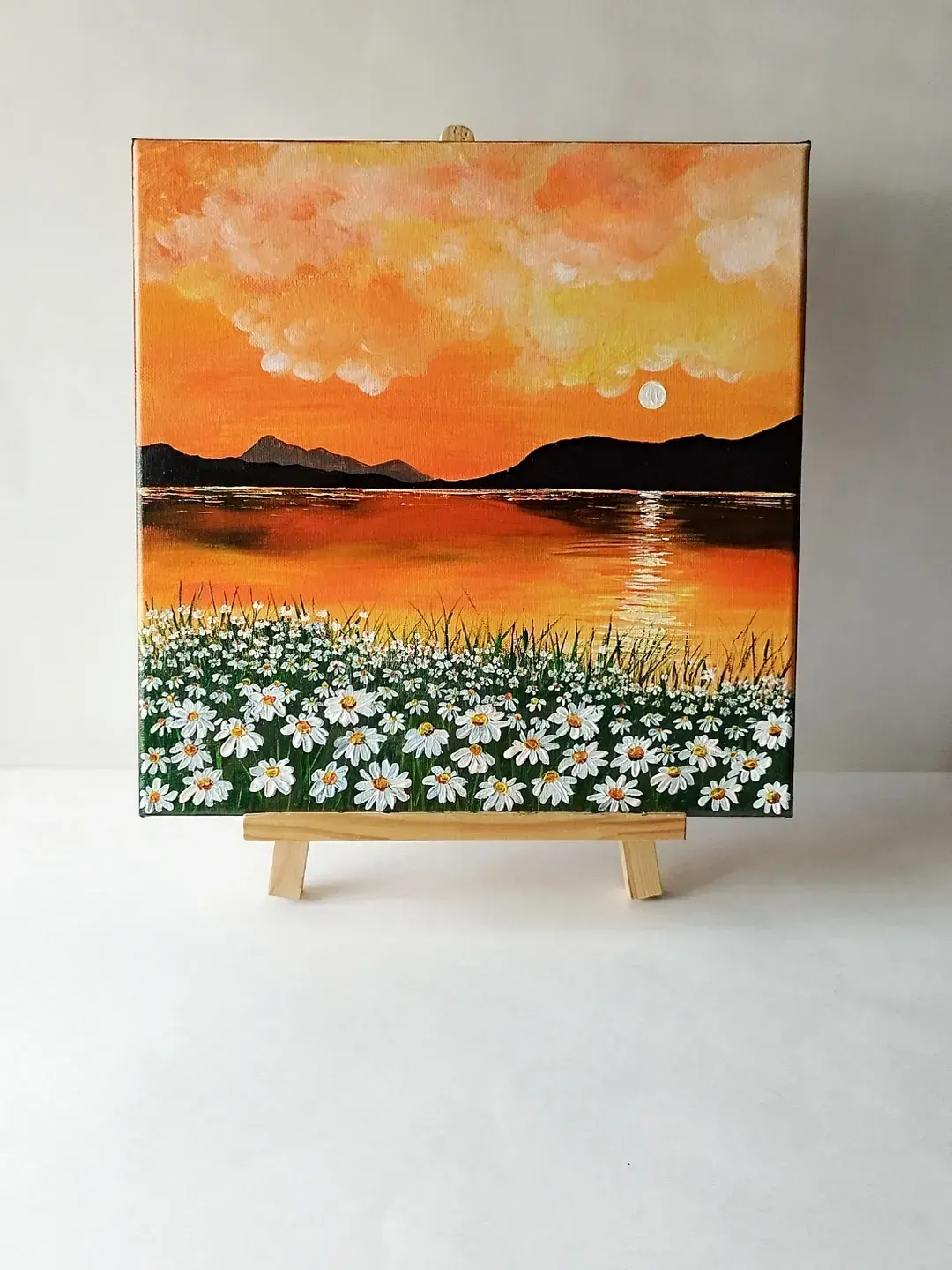
Painting a sunset with acrylics involves layering colors from light to dark, starting with a yellow horizon and transitioning into oranges, reds, and deep purples. By blending wet paint directly on the canvas and adding silhouettes for depth, you can capture the vibrant, shifting light characteristic of a fading day.
On this page
What supplies do you need for acrylic sunset painting
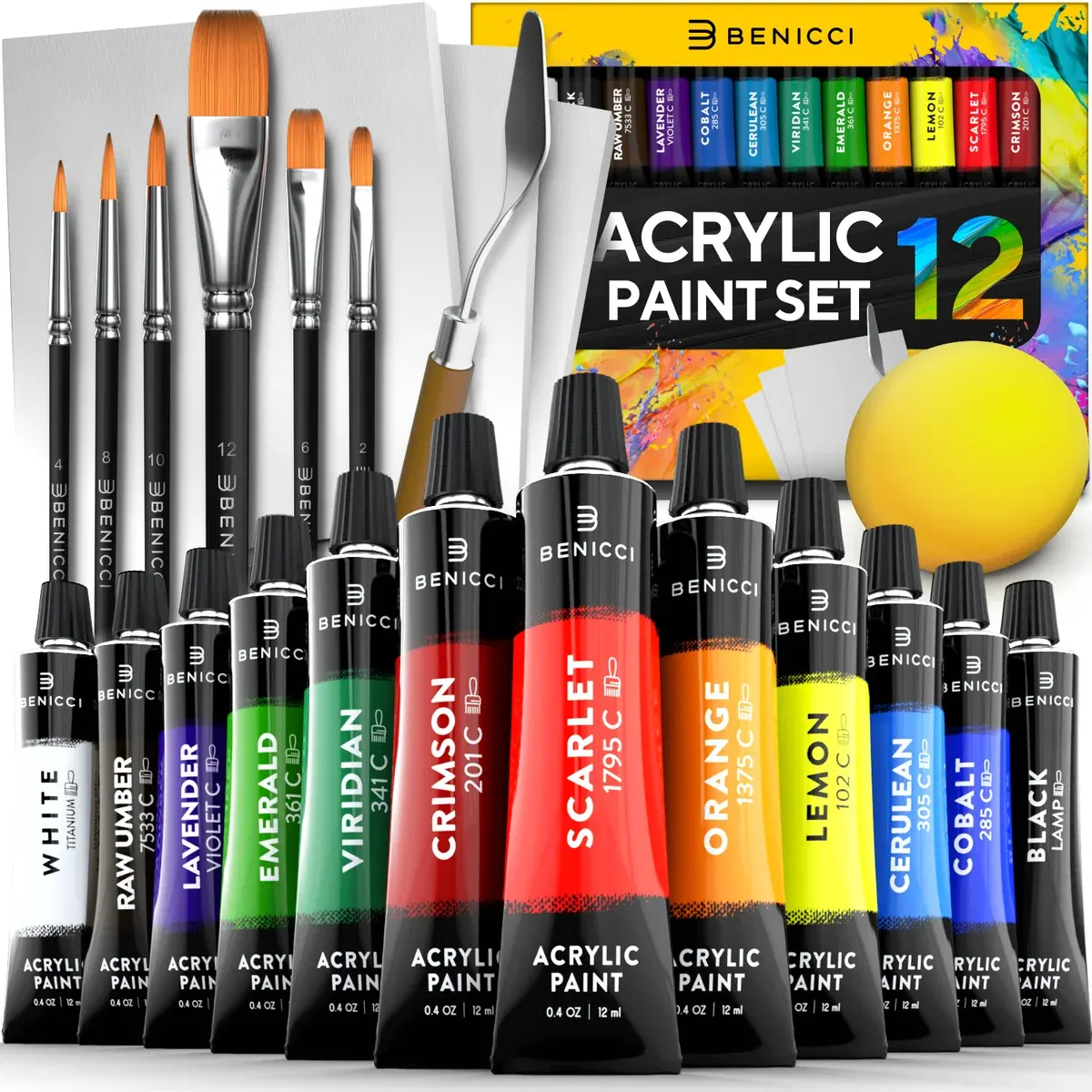
To begin your sunset painting, you need a basic set of high-quality acrylic paints. Essential colors include cadmium yellow, cadmium orange, alizarin crimson, ultramarine blue, and titanium white. These colors allow for a wide range of hues when mixed. You will also need a variety of synthetic brushes, specifically a large flat brush for broad washes and a smaller filbert brush for blending edges.
Prepare a sturdy surface such as a stretched canvas or heavy-duty acrylic paper. Using a palette, preferably a stay-wet model, helps keep your acrylics from drying out too quickly during the blending process. A container of water for rinsing brushes and a roll of paper towels are also necessary. Having a spray bottle filled with water is a professional trick to keep your paint workable while you blend the colors across the surface.
How to blend colors for a smooth sunset gradient
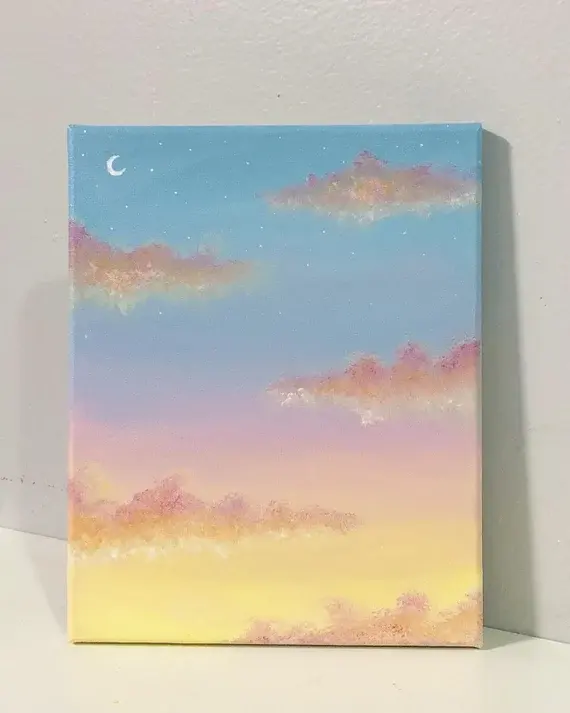
The key to a realistic sunset is a smooth gradient, which requires working while the paint remains wet. Start by applying your lightest color, usually yellow, along the horizon line. Gradually add orange, then red, and finally blue or violet as you move toward the top of the canvas. Because acrylics dry quickly, you must work in sections or keep the surface moist.
- Apply horizontal bands of color starting from the horizon upward.
- Use a clean, damp brush to gently drag the edges where two colors meet.
- Use light, cross-hatch strokes to marry the colors together seamlessly.
- Add white to your lighter colors if you need to soften the transition between shades.
If the paint begins to dry, lightly mist the canvas with water. Avoid over-blending, as this can turn your vibrant colors into a muddy, brownish gray.
How to add clouds and atmospheric effects
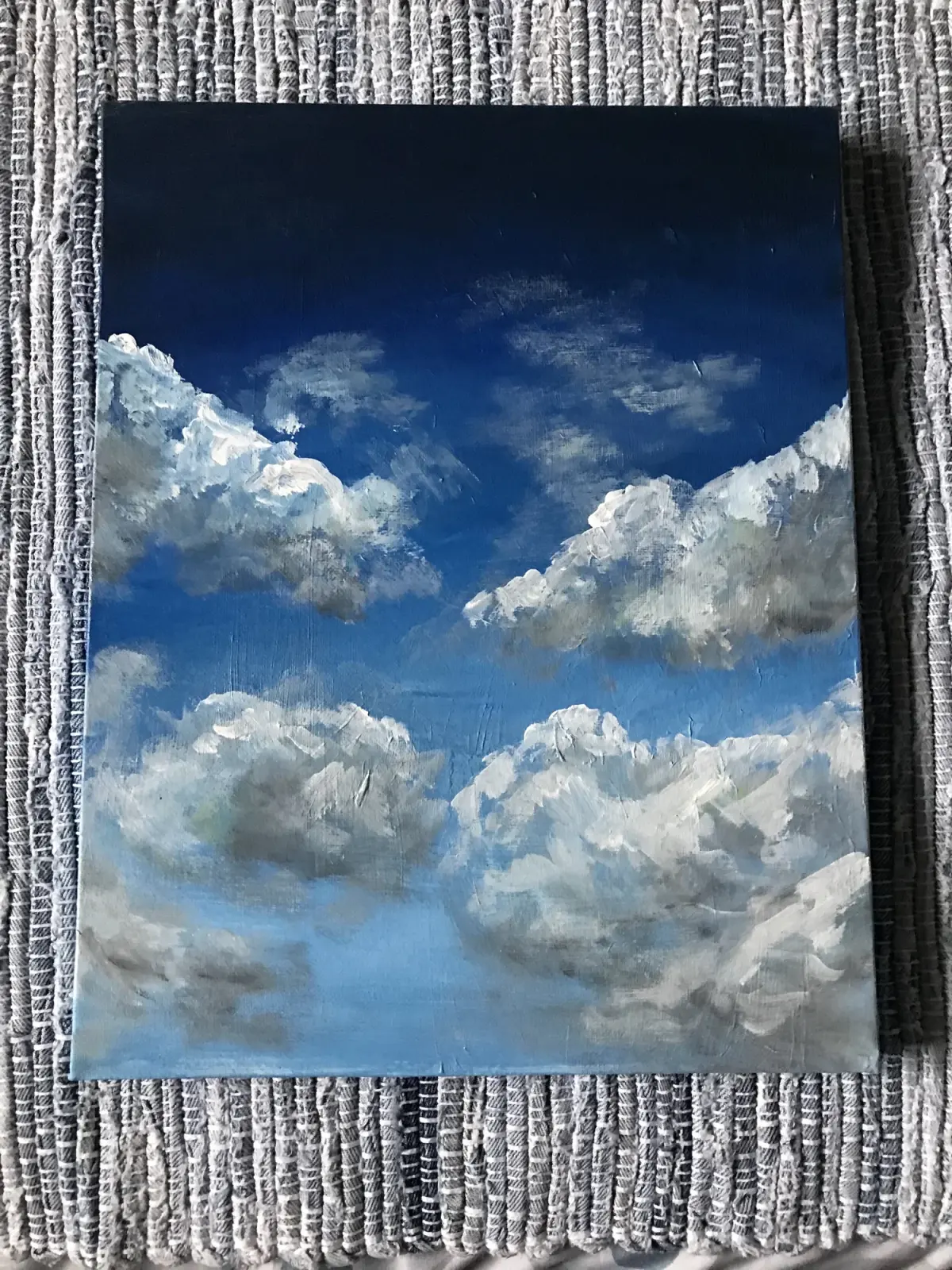
Clouds add depth and movement to a sunset. Once your background gradient is dry to the touch, use a dry-brush technique to create soft, wispy clouds. Load a small amount of white or pale pink paint onto your brush, wipe most of it off on a paper towel, and lightly skim the surface of the canvas. This creates a translucent effect that mimics the way light catches high-altitude clouds.
For more defined clouds, use a thicker application of paint. Focus on the undersides of the clouds, as they are often darker or tinged with the deeper colors of the sunset. Keep the following tips in mind:
- Paint clouds in irregular, organic shapes rather than perfect circles.
- Ensure clouds are smaller and more compressed near the horizon, appearing larger as they move toward the top of the canvas.
- Use a stippling motion with a stiff-bristled brush to create fluffy, textured edges on larger cloud formations.
Common mistakes when painting sunsets
One of the most frequent errors is overworking the paint, which results in a loss of vibrancy. When you blend too much, the colors mix into a dull neutral tone. Another common mistake is neglecting the horizon line. If the horizon is not perfectly straight, the entire painting may feel unbalanced. Use masking tape to create a crisp, clean line if you struggle with steady hand control.
Another issue involves the transition of colors. Beginners often jump from yellow to red without using orange, creating a harsh, unnatural stripe. Always transition through the color wheel to ensure a natural look. Finally, avoid using too much black paint for silhouettes. Deep purples, blues, or dark browns often look more realistic and atmospheric than pure black, which can appear flat and lifeless against a colorful sky.
How to finish your sunset painting with silhouettes
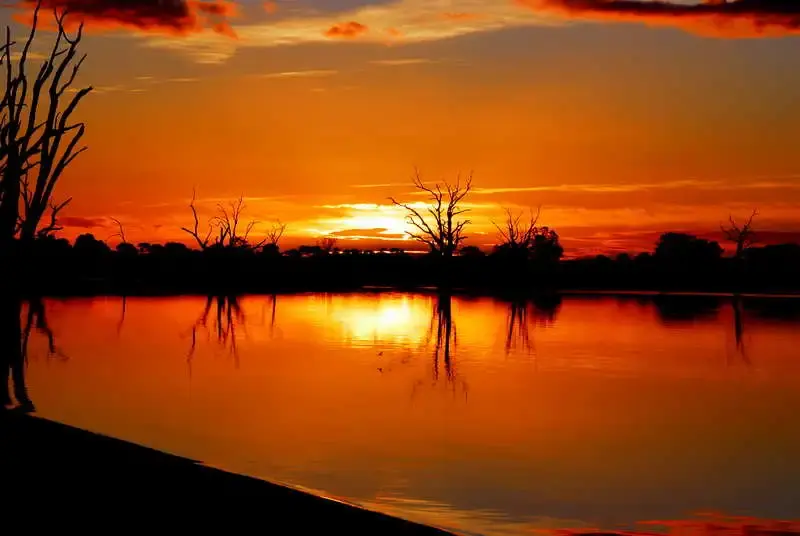
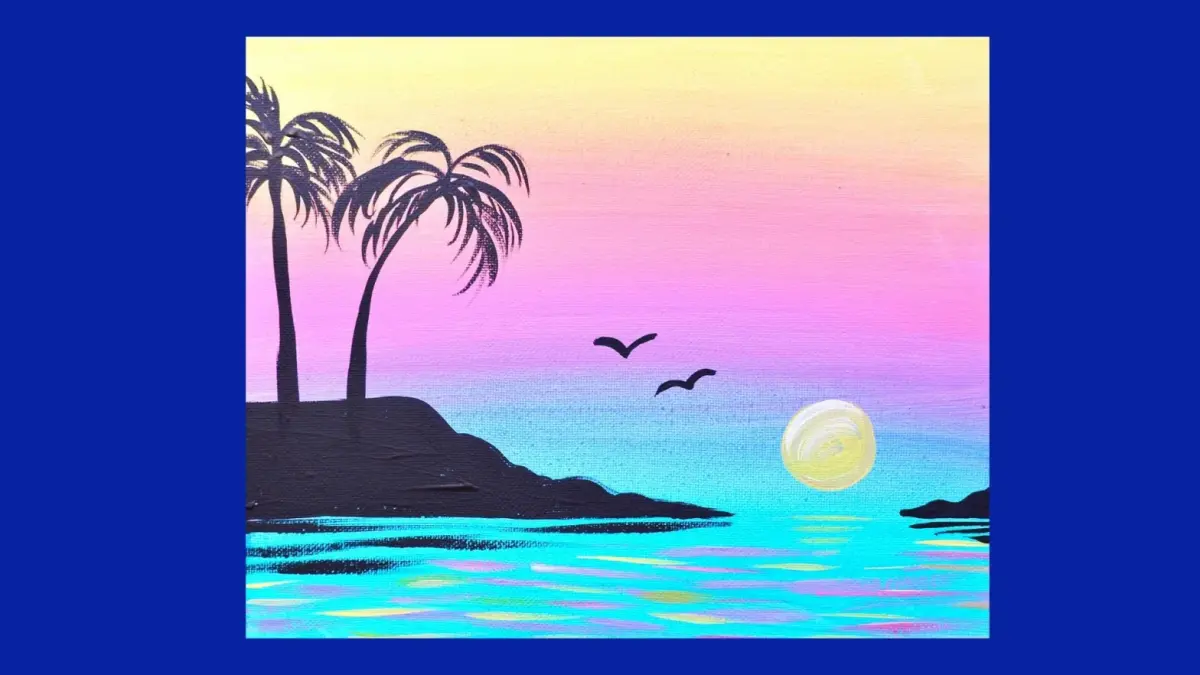
Adding a foreground element, such as palm trees, mountains, or a building, provides a focal point and gives the viewer a sense of scale. Silhouettes should be painted in dark, opaque colors once the sky is completely dry. Because the sun is setting, the light source is behind these objects, meaning they should appear as solid, dark shapes with minimal detail.
- Sketch the outline of your silhouette lightly with a pencil or thin brush.
- Fill in the shape using a dark mix of ultramarine blue and alizarin crimson.
- Add subtle details like branches or grass blades using a fine-liner brush.
- Ensure the base of your silhouette is grounded, perhaps by adding a dark strip of land.
By keeping the silhouettes simple and high-contrast, you allow the vibrant colors of the sunset to remain the primary feature of your composition. Once finished, consider applying a coat of acrylic varnish to protect the surface and unify the sheen of the paint.
Key facts
- Acrylic paint dries within 10 to 20 minutes, making it ideal for layering colors quickly.
- Use a "wet-on-wet" technique by blending colors while they are still damp to achieve a smooth gradient.
- Start with the lightest colors, such as yellow or pale orange, near the horizon line.
- Use a large, flat brush to cover broad areas and a smaller round brush for blending transitions.
- Add a retarder or a small amount of water to the paint to slow down the drying process.
- Paint silhouettes of trees or buildings in pure black or deep purple once the sky is completely dry.
The bottom line
Painting a sunset is a rewarding exercise in color blending and light management. By applying light colors first and working toward darker hues, you create the illusion of a glowing horizon. Remember to keep your brushes damp and work quickly to ensure smooth transitions. With the right tools and a bit of patience, you can capture the fleeting beauty of a twilight sky on your canvas.
People also ask
How do I prevent acrylic paint from drying too fast while blending?
You can use a spray bottle to lightly mist your canvas with water, which keeps the paint workable for longer. Alternatively, mix in a commercial acrylic retarder medium to extend the open time of the pigment.
Should I use a primer before I start painting my sunset?
Yes, applying a coat of white gesso to your canvas creates a smooth, non-porous surface that helps colors appear more vibrant. It also prevents the paint from soaking into the fabric of the canvas.
What is the best way to transition from orange to purple in the sky?
Blend a layer of red between the orange and purple sections while all three colors are wet. This middle color acts as a bridge, preventing a muddy brown line from forming where the colors meet.
How do I create realistic clouds in a sunset?
Use a dry, stiff-bristled brush to dab white or light pink paint onto the sky in soft, irregular shapes. Keep the edges of these clouds feathered and light to mimic the wispy nature of high-altitude formations.
Can I paint over a mistake if the acrylic has already dried?
Absolutely, because acrylic paint is opaque once dry, you can simply paint over the error with a new layer. Wait for the initial layer to dry fully, then apply your correction directly on top of the surface.
What brushes are essential for a sunset landscape?
You need a wide flat brush for the sky, a medium filbert brush for cloud shapes, and a fine-tipped liner brush for distant details. These three shapes provide the versatility required for both broad gradients and crisp silhouettes.
This answer was created with the help of AI research tools and reference sources. Spotted an error? Let us know — we correct mistakes quickly. See our editorial policy.