What are the best acrylic paint sets for beginners?
Short answer
The best acrylic paint sets for beginners balance affordability with quality, offering high pigment density and smooth consistency. Top recommendations include Liquitex BASICS for versatility, Winsor & Newton Galeria for professional-grade flow, and Golden Open for extended working times. These sets provide the essential color palette needed to master fundamental painting techniques.
On this page
Best acrylic paint sets for beginners
Choosing the right starter set depends on your specific goals and budget. For most students, student-grade paints offer the best value because they contain more binder and less pigment, making them easier to manipulate while learning. Liquitex BASICS is widely considered the gold standard for beginners due to its heavy body consistency and wide range of available colors.
If you prefer a more fluid application, Winsor & Newton Galeria offers a satin finish that is highly forgiving for those transitioning from watercolors. For artists who find acrylics dry too quickly, Golden Open acrylics are an excellent choice. These paints remain workable for hours, allowing for seamless blending and experimentation without the pressure of rapid drying times.
- Liquitex BASICS: Best for thick, textured applications and general practice.
- Winsor & Newton Galeria: Ideal for smooth, even coverage and layering.
- Golden Open: Perfect for painters who want to blend colors like oils.
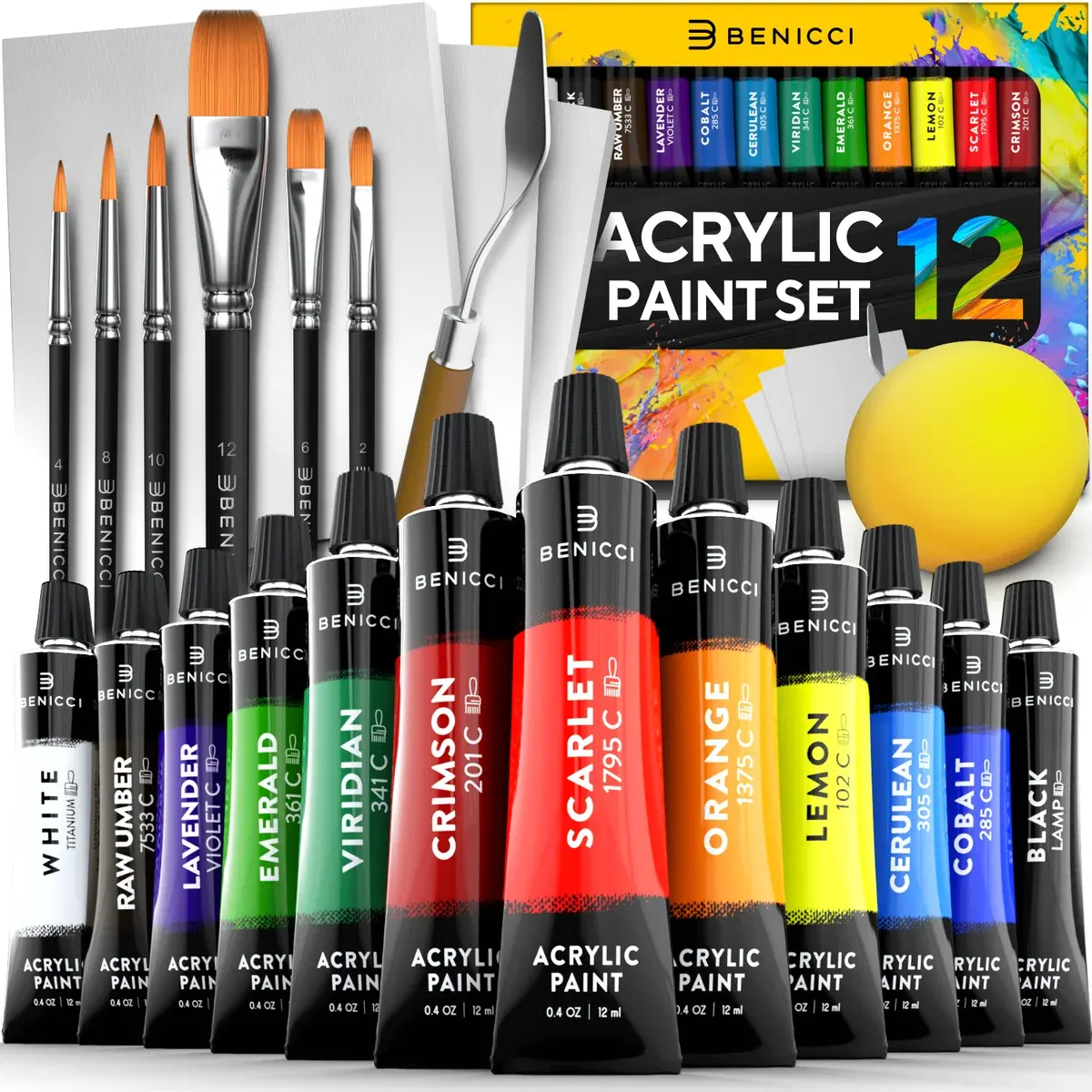
- Arteza Acrylics: A budget-friendly option for those who want a large variety of colors immediately.
How to choose the right colors
You do not need an extensive collection of colors to start painting effectively. In fact, limiting your palette is often the best way to learn color theory and mixing. A basic set should include a primary triad of red, yellow, and blue, along with black and white. This allows you to mix almost any secondary or tertiary color you might need.
When purchasing a set, look for one that includes at least two versions of each primary color: a "warm" and a "cool" variant. For example, having both a Cadmium Red (warm) and a Crimson (cool) will significantly expand your mixing capabilities. Avoid sets that prioritize quantity over quality, as cheap sets often contain chalky pigments that turn muddy when mixed.
- Start with a primary triad: Cadmium Red, Lemon Yellow, and Ultramarine Blue.
- Add Titanium White for lightening colors and Ivory Black for darkening.
- Purchase a small set of synthetic brushes in flat, filbert, and round shapes.
- Use a palette pad or a plastic tray to keep your workspace organized.

Essential supplies for acrylic painting
Beyond the paint itself, your choice of tools will dictate the quality of your finished work. Synthetic brushes are superior to natural hair brushes for acrylics because they withstand the alkaline nature of the paint without fraying. A basic set should include a flat brush for large areas, a round brush for details, and a filbert brush for blending.
Surface preparation is equally important for a successful painting experience. Beginners often make the mistake of painting directly on raw canvas or wood, which absorbs the moisture from the paint too quickly. Always use a surface primed with gesso, which provides a smooth, non-porous barrier. This ensures your colors remain vibrant and your brushstrokes glide across the surface without dragging or skipping.
- Synthetic brushes: Choose nylon or polyester bristles for durability.
- Gesso: Apply two thin coats to any surface to prevent paint absorption.
- Palette knives: Essential for mixing paint without ruining your expensive brushes.
- Water containers: Keep two jars—one for cleaning brushes and one for thinning paint.

Common mistakes when starting with acrylics
The most frequent error beginners make is allowing paint to dry on their brushes. Acrylics become water-resistant once they cure, meaning a dried brush is often permanently ruined. To prevent this, keep your brushes submerged in water while not in use and wash them thoroughly with soap and water immediately after your session.
Another common issue is over-thinning the paint with water. While acrylics are water-soluble, adding too much water breaks down the polymer binder, resulting in a weak, patchy finish. If you want to thin your paint while maintaining its integrity, use an acrylic medium instead of water. Mediums adjust the consistency, flow, and finish of the paint without compromising the durability of the pigment particles or the final adhesion to the canvas.
- Do not leave brushes in water for more than an hour, as this can damage the ferrules.
- Avoid using household sponges for cleaning, as they can scratch the bristles.
- Never mix acrylics with oil paints, as the two mediums are chemically incompatible.
- Do not paint in direct sunlight, as this accelerates the drying process beyond control.
How to maintain your acrylic paint set
Proper storage is vital to extending the life of your materials. Acrylic paint tubes should always be capped tightly to prevent air from entering and hardening the contents. If you notice a small amount of dried paint around the cap, wipe it away with a damp cloth before closing it to ensure an airtight seal. Store your paints in a cool, dry environment away from direct heat sources.
If you are mixing custom colors, consider using a stay-wet palette. These specialized containers feature a damp sponge and a sheet of permeable paper, which keeps your mixed paint moist for several days. This saves both time and money, as you will waste significantly less paint during your practice sessions. By following these simple maintenance habits, you ensure that your supplies remain in excellent condition for your next creative project.
Key facts
- Acrylic paint is water-soluble, meaning you can thin it with water for watercolor-like washes or use it thick for impasto textures.
- Beginners should look for "student grade" paints, which offer a balance of affordability and sufficient pigment load for learning.
- A basic palette of six colors—primary red, blue, yellow, black, white, and a secondary green or brown—is enough to mix almost any shade.
- Synthetic brushes are superior to natural hair brushes for acrylics because they resist the alkaline nature of the paint and hold their shape better.
- Acrylics dry very quickly, usually within 10 to 20 minutes, so keep a spray bottle of water nearby to keep your palette moist.
- Always wash brushes immediately after use, as dried acrylic acts like plastic and can permanently ruin your tools.
The bottom line
For beginners, the best approach is to invest in a versatile student-grade set of acrylic tubes and a basic collection of synthetic brushes. Focus on learning color mixing and brush control rather than buying expensive equipment. By utilizing a stay-wet palette and cleaning your tools promptly, you will avoid common frustrations and enjoy a smoother transition into painting, allowing your creative skills to develop consistently over time.
People also ask
Do I need to buy expensive brushes for my first set?
No, you should start with an affordable synthetic brush set containing a variety of shapes like flats, rounds, and filberts. High-end natural hair brushes are unnecessary and often degrade quickly when used with acrylics.
What surface should I paint on as a beginner?
Stretched canvases are popular, but canvas panels or heavy-weight acrylic paper are more budget-friendly for practice. Ensure your surface is "gessoed" or primed so the paint adheres properly and does not soak into the fibers.
How do I keep my paint from drying out on the palette?
Use a stay-wet palette, which consists of a sponge layer soaked in water covered by a sheet of parchment paper. This setup keeps the paint hydrated for hours or even days, preventing waste.
Can I mix acrylic paint with other mediums?
You can mix acrylics with various mediums to change their consistency, such as matte or gloss gels for texture. Avoid mixing them with oil paints, as the two mediums have different chemical compositions and will not bond.
How do I clean my brushes effectively?
Rinse your brushes in cool water until the water runs clear, then use mild soap to remove residue near the ferrule. Never let the brush sit head-down in water, as this will permanently bend the bristles.
Is it necessary to varnish my finished painting?
Varnish is not strictly required, but it protects your work from dust, UV light, and scratches. Wait at least 24 to 48 hours for the paint to cure completely before applying a dedicated acrylic varnish.
This answer was created with the help of AI research tools and reference sources. Spotted an error? Let us know — we correct mistakes quickly. See our editorial policy.