How do you paint the sky with acrylic paint?
Short answer
Painting a realistic sky with acrylics requires layering colors from dark to light while the paint remains wet. Use a large, flat brush to blend a gradient of blues and whites horizontally. By controlling moisture levels and working quickly, you can achieve smooth transitions that mimic the natural depth of the atmosphere.
On this page
Which acrylic painting supplies are best for skies?
To achieve a professional-looking sky, you need high-quality, heavy-body acrylic paints that offer rich pigmentation. Essential colors include Ultramarine Blue, Cerulean Blue, Titanium White, and a touch of Phthalo Blue for depth. Avoid budget craft paints, as they often lack the opacity required for smooth blending and can result in a streaky, uneven finish.
Your choice of brushes significantly impacts the final result. A large, synthetic flat brush or a wide "mop" brush is ideal for covering large areas quickly. These brushes hold enough moisture to keep the paint workable for longer periods. Additionally, keep a spray bottle of water nearby to lightly mist your canvas, which prevents the fast-drying acrylics from setting before you have finished your blending process.
How to blend acrylic skies smoothly
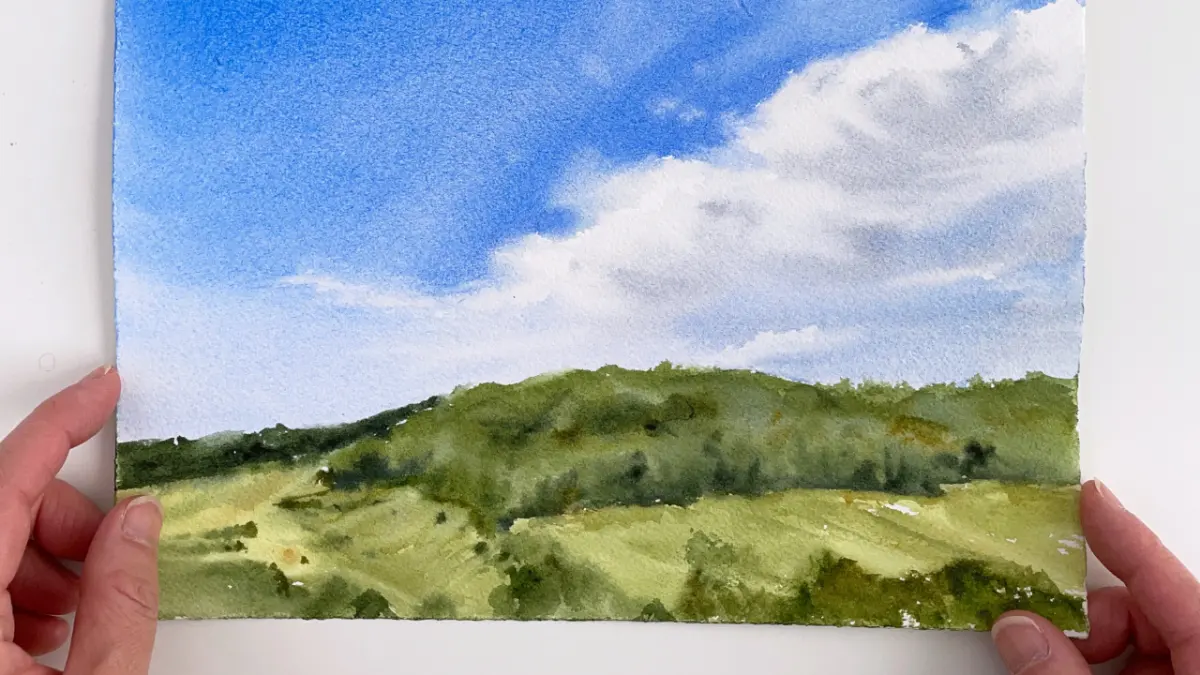
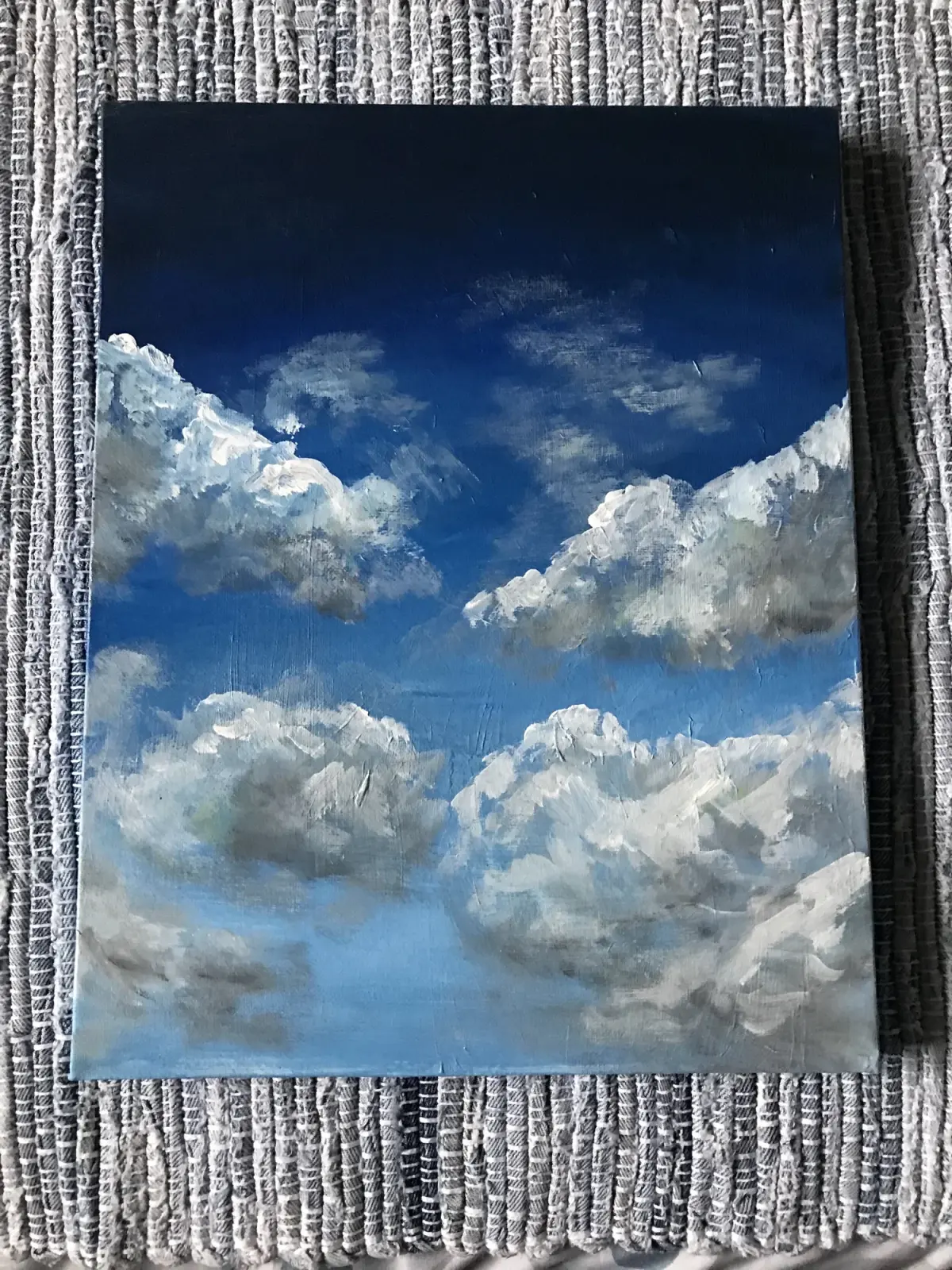
The secret to a realistic sky is the gradient, which transitions from a deep, saturated blue at the top to a lighter, paler hue near the horizon. Start by applying your darkest blue at the top of the canvas. Gradually mix in increasing amounts of Titanium White as you move downward toward the horizon line.
- Apply a horizontal band of dark blue at the top.
- Add a lighter blue mixture immediately below the first band.
- Use a clean, dry brush to lightly sweep across the junction where the two colors meet.
- Continue this process, adding more white to your mixture until you reach the horizon.
- Work quickly to ensure the paint remains wet, as acrylics dry within minutes.
How to paint realistic clouds with acrylics
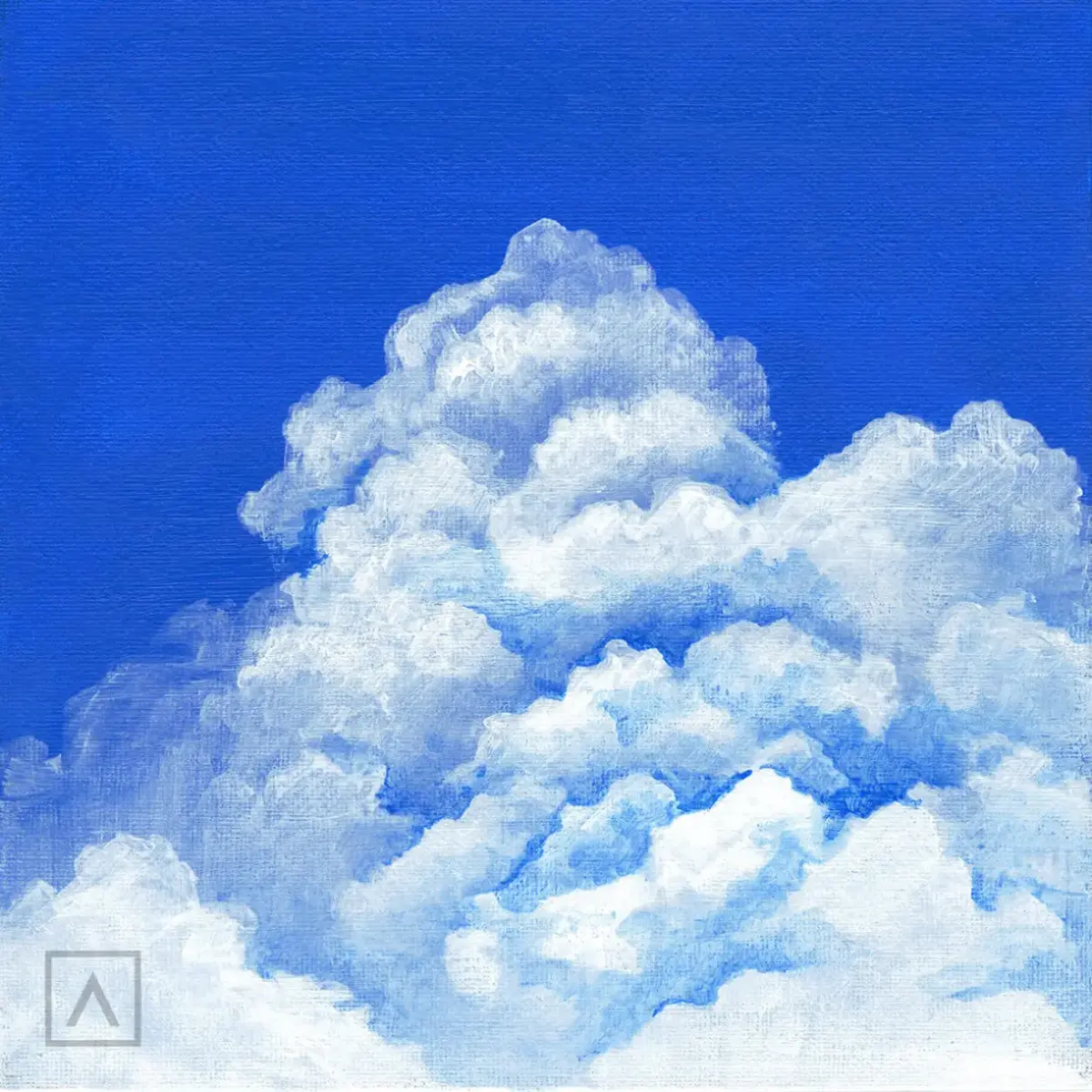
Clouds should be painted using a "scumbling" technique, which involves applying thin, opaque layers of white or off-white paint over the dried blue base. Do not try to paint the entire cloud at once. Instead, focus on the shadows first, using a mixture of blue and a tiny amount of red or gray to create a soft, muted tone.
Once the shadows are established, apply highlights using pure Titanium White. Focus these highlights on the top edges of the clouds where the sun would naturally hit. Use a stippling motion with a round brush to create soft, irregular edges that mimic the fluffy texture of cumulus clouds. Avoid perfectly round shapes, as natural clouds are organic, asymmetrical, and constantly shifting in form and density.
Common mistakes when painting skies
One of the most frequent errors is over-blending, which can turn a vibrant sky into a muddy, uniform gray. Once you have achieved a decent transition, stop touching the area. If you continue to brush over the same spot, you will lift the wet paint and create unwanted texture or "pilling" on the canvas surface.
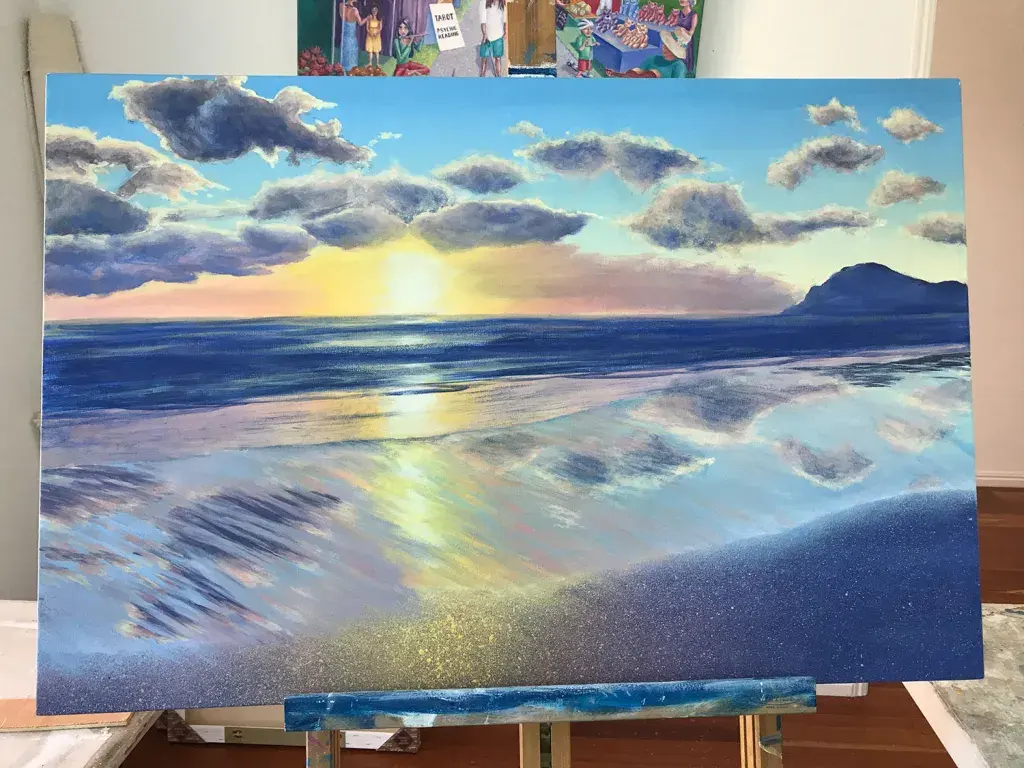
Another common mistake is neglecting the horizon line. Many beginners paint the sky and the ground as two separate entities without considering how they interact. The horizon should generally be the lightest part of the sky, often incorporating subtle hints of pink, yellow, or lavender depending on the time of day. Ignoring the atmospheric perspective—the way colors become paler and cooler as they recede into the distance—often makes a painting look flat and disconnected from its environment.
How long does it take to dry and finish?
Acrylic paint typically dries to the touch within 15 to 30 minutes, depending on the humidity and the thickness of the application. However, "curing" takes much longer, often up to several days. If you find that your paint is drying too fast, consider using a professional-grade acrylic retarder medium. This additive slows down the evaporation process, giving you more time to perfect your gradients and cloud formations without the stress of the paint hardening prematurely.
After your sky is completely dry, you may choose to apply a final varnish to protect the surface and unify the sheen. A matte or satin varnish works best for skies, as a high-gloss finish can create distracting reflections that obscure the subtle color transitions. Ensure the painting is entirely dust-free before applying the varnish in thin, even layers. By following these technical steps, you can create a sky that feels expansive, luminous, and professionally rendered.
Key facts
- Acrylic paint dries rapidly, often within 10 to 20 minutes, requiring quick blending techniques.
- Use a retarder medium to extend the drying time, allowing for smoother gradients in the sky.
- Start with a base coat of white gesso to ensure the canvas surface is smooth and non-porous.
- Work from the top of the canvas downward, applying darker blues at the zenith and lighter hues toward the horizon.
- Use a large, flat synthetic brush to blend colors horizontally while the paint remains wet.
- Apply thin, diluted layers of paint, known as glazes, to create depth and atmospheric perspective.
The bottom line
Painting a sky with acrylics requires balancing speed with careful color transitions. By utilizing blending mediums and working from the top down, you can create a natural atmospheric gradient. Remember to keep your paint thin and your brushes clean to avoid muddy colors. With practice, layering opaque clouds over a dry blue base will provide the depth and luminosity necessary for a professional-looking landscape painting.
People also ask
How do I create a realistic sunset gradient?
Mix your colors on the palette first, creating a transition from deep purple to orange and yellow. Apply the colors in horizontal bands and use a clean, dry brush to lightly sweep over the seams where they meet.
Why does my sky look streaky or patchy?
Streaks often occur because the paint is too thick or the brush is too dry. Add a small amount of water or acrylic glazing medium to your paint to improve flow and consistency.
Should I paint clouds before or after the blue sky?
It is easiest to paint the blue sky first, let it dry, and then layer clouds on top. This allows you to use opaque white paint to build up the highlights and volume of the clouds.
How do I achieve a soft, hazy horizon line?
Keep the colors at the horizon desaturated and light, often mixing in a touch of white or grey. Use a soft-bristled blending brush to gently blur the transition between the sky and the landscape.
Can I fix mistakes once the acrylic paint has dried?
Yes, acrylics are opaque when applied thickly, so you can simply paint over any errors once the layer is dry. If the mistake is minor, a light sanding with fine-grit sandpaper can smooth the surface before repainting.
What is the best brush shape for painting skies?
Large flat or bright brushes are ideal for covering wide areas of sky quickly. A soft, round mop brush is the best tool for blending colors together without leaving visible brush marks.
This answer was created with the help of AI research tools and reference sources. Spotted an error? Let us know — we correct mistakes quickly. See our editorial policy.