How long does watercolor take to dry?
Short answer
Watercolor paint typically dries to the touch within 10 to 30 minutes, depending on environmental conditions and application thickness. However, the paint remains chemically active for several hours and may take up to 24 hours to cure completely, especially in humid climates or when using heavy, layered washes on thick paper.
On this page
How long does it take to dry watercolor paint?
The drying time for watercolor is primarily dictated by the evaporation rate of the water carrier. In a standard room environment with moderate humidity and temperature, a thin wash will often appear dry within 15 minutes. As the water evaporates, the pigment particles settle into the fibers of the paper, creating the characteristic transparent finish of the medium.
Several environmental factors influence this duration significantly. High humidity prevents moisture from escaping the paper, which can extend drying times by several hours. Conversely, a warm, dry room or a gentle breeze can accelerate the process, drying a painting in under five minutes. Artists should observe the surface sheen; when the paper no longer reflects light, the paint has reached a "surface dry" state, though it may still be cold to the touch, indicating lingering moisture.
Why does watercolor drying time vary?
The variation in drying time is largely due to the interaction between the paint and the substrate. Watercolor paper is designed to be absorbent, pulling moisture away from the surface and into the internal sizing of the sheet. If you use heavy-weight paper, such as 300-pound cold-press stock, the paper acts as a reservoir, holding more water and requiring more time to reach equilibrium with the surrounding air.
Beyond the paper, the technique used during application plays a critical role. A "wet-on-wet" technique involves saturating the paper with water before adding pigment, which keeps the surface wet for an extended period. In contrast, "dry brush" techniques use minimal water, allowing the paint to dry almost instantly upon contact. Understanding these variables allows artists to manipulate the working time of their materials effectively.
- Thin, single-layer washes dry in 10-15 minutes.
- Heavy, saturated wet-on-wet areas take 30-60 minutes.
- Thick, impasto-like applications can take several hours to set.
- High-humidity environments can double these expected timeframes.
How to speed up watercolor drying
If you are working on a deadline or need to apply subsequent layers without waiting for natural evaporation, you can safely accelerate the drying process. The most common method is using a hair dryer set to a low, cool, or warm heat setting. Holding the dryer at least six inches away from the paper prevents the pigment from moving or creating unwanted "blooms" or watermarks caused by uneven heat distribution.
Another effective approach involves environmental control. Placing your painting near a circulating fan or in a climate-controlled room with a dehumidifier will draw moisture out of the paper fibers efficiently. Avoid placing the painting directly on a radiator or in direct, intense sunlight, as extreme heat can warp the paper or cause the gum arabic binder in the paint to crack, leading to a brittle finish.
- Use a hair dryer on a low setting for quick results.
- Position the painting in front of a desk fan for steady airflow.
- Ensure the room has low relative humidity.
- Avoid excessive heat to prevent paper buckling or pigment damage.
Common mistakes when drying watercolor
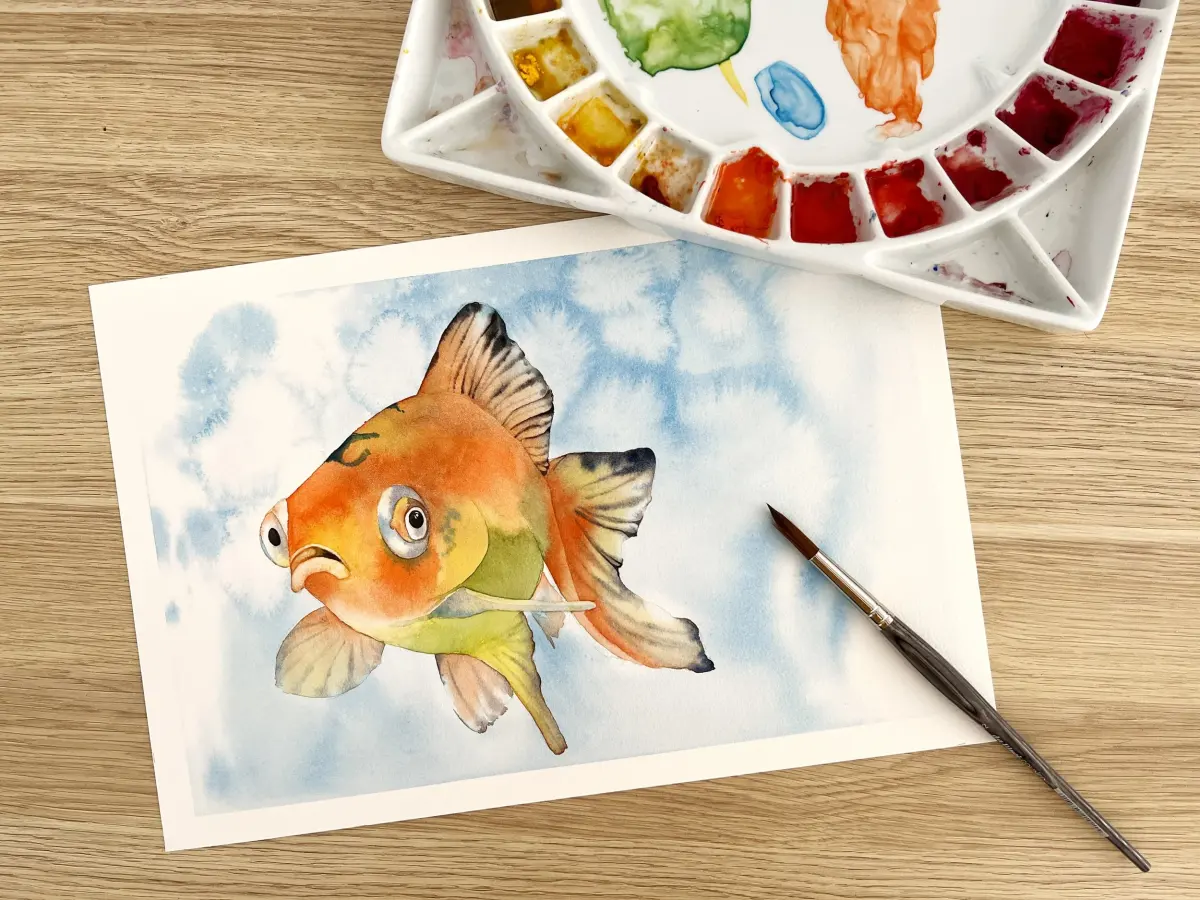
One of the most frequent errors is attempting to paint over an area that is only partially dry. When the surface feels dry but the paper fibers are still damp underneath, adding a new layer of paint will cause the underlying pigment to lift, creating muddy colors or "cauliflower" textures. This happens because the fresh water reactivates the previous layer, pulling the pigment upward into the new application.
Another common mistake is rushing the process by using high heat. While a hair dryer is useful, using the "high" setting can cause the paper to expand and contract rapidly, leading to buckling or surface damage. Additionally, artists often fail to account for the "curing" phase. Even when a painting looks dry, the binder may still be slightly tacky, making it susceptible to dust or damage if framed or stored immediately. Always allow at least 24 hours before sealing a finished piece behind glass.
Best practices for managing drying times
To master the timing of your work, it is helpful to plan your layers based on the state of the paper. If you need to blend colors seamlessly, work while the paper is glistening, which is the "wet" stage. If you need to add crisp details or sharp edges, wait until the paper is completely dry to the touch. This intentional pacing prevents frustration and ensures that your colors remain vibrant and distinct rather than bleeding into one another unintentionally.
Finally, keep a dedicated drying station in your studio. A flat, clean surface away from high-traffic areas or pets is ideal. By allowing your work to dry naturally in a controlled environment, you protect the integrity of the paper and the longevity of the pigments. Patience is a fundamental component of the watercolor process, and respecting the drying time is the best way to achieve professional, clean results in every painting you create.
Key facts
- Thin watercolor washes typically dry to the touch within 10 to 20 minutes.
- Heavy, saturated applications of paint can take several hours to dry completely.
- Humidity levels significantly impact drying times, with high moisture slowing evaporation.
- Using a hair dryer on a cool setting can speed up the process without damaging paper fibers.
- Paper thickness affects drying; heavier 300lb paper holds more water and dries slower than 90lb paper.
- Watercolor paint is considered "bone dry" when the paper returns to room temperature to the touch.
The bottom line
Drying time for watercolors depends on water volume, paper weight, and environmental conditions. While thin washes dry in minutes, thick applications require patience. To achieve professional results, allow your work to air dry naturally whenever possible to ensure pigment stability. If you are in a rush, use a cool-setting hair dryer, but always wait until the paper is completely room temperature before applying additional layers.
People also ask
Can I use a hair dryer to speed up the drying process?
Yes, using a hair dryer on a cool or low-heat setting is a common technique to accelerate drying. Avoid using high heat, as it can cause the paper to warp or the paint to crack.
How do I know if my watercolor painting is completely dry?
A painting is dry when the surface feels cool to the touch and the paper fibers feel flat. If the paper still feels cold, there is likely moisture trapped within the fibers.
Does the type of paper I use change how fast the paint dries?
Yes, cold-press paper has more texture and can hold more water, leading to longer drying times. Smooth hot-press paper allows water to sit on the surface, which may evaporate faster but can lead to streaking.
Why does my watercolor painting look lighter after it dries?
Watercolor paint undergoes a process called "drying shift," where colors appear less vibrant as the water evaporates. This is a natural characteristic of the binder and pigment settling into the paper.
Is it safe to leave a wet watercolor painting out overnight?
Leaving a painting out overnight is generally safe and often beneficial for even drying. Ensure the area is dust-free and away from direct sunlight to prevent uneven fading or debris sticking to the wet surface.
How does room temperature affect my painting?
Warmer, dry environments promote faster evaporation of water from the paper. Conversely, cold or damp rooms will keep the paper saturated for much longer, potentially leading to unwanted blooms or backruns.
This answer was created with the help of AI research tools and reference sources. Spotted an error? Let us know — we correct mistakes quickly. See our editorial policy.