How do you choose art for your home?
Short answer
Choosing art for your home involves balancing personal taste with spatial harmony. Focus on pieces that evoke an emotional response while considering scale, color, and lighting. Start by identifying your preferred style, then curate a collection that reflects your personality. Proper placement and professional framing will ensure your art enhances your living space.
On this page
How to find your personal art style
Discovering what you love is the most important step in building an art collection. Before purchasing, visit local galleries, museums, and online marketplaces to observe which mediums, subjects, and color palettes resonate with you. Pay attention to whether you gravitate toward abstract expressionism, minimalist photography, traditional landscapes, or contemporary mixed media. Keeping a digital folder of images you admire can help you identify recurring themes or patterns in your aesthetic preferences.
Once you have identified your style, consider the atmosphere you wish to create in specific rooms. A bedroom might benefit from calming, muted tones, while a dining room could feature bold, energetic pieces to spark conversation. Do not feel pressured to adhere to a single genre; eclectic collections often feel more authentic and lived-in. Focus on acquiring works that bring you genuine joy rather than pieces chosen solely to match a specific furniture set or current interior design trend.
How to choose the right size for wall art
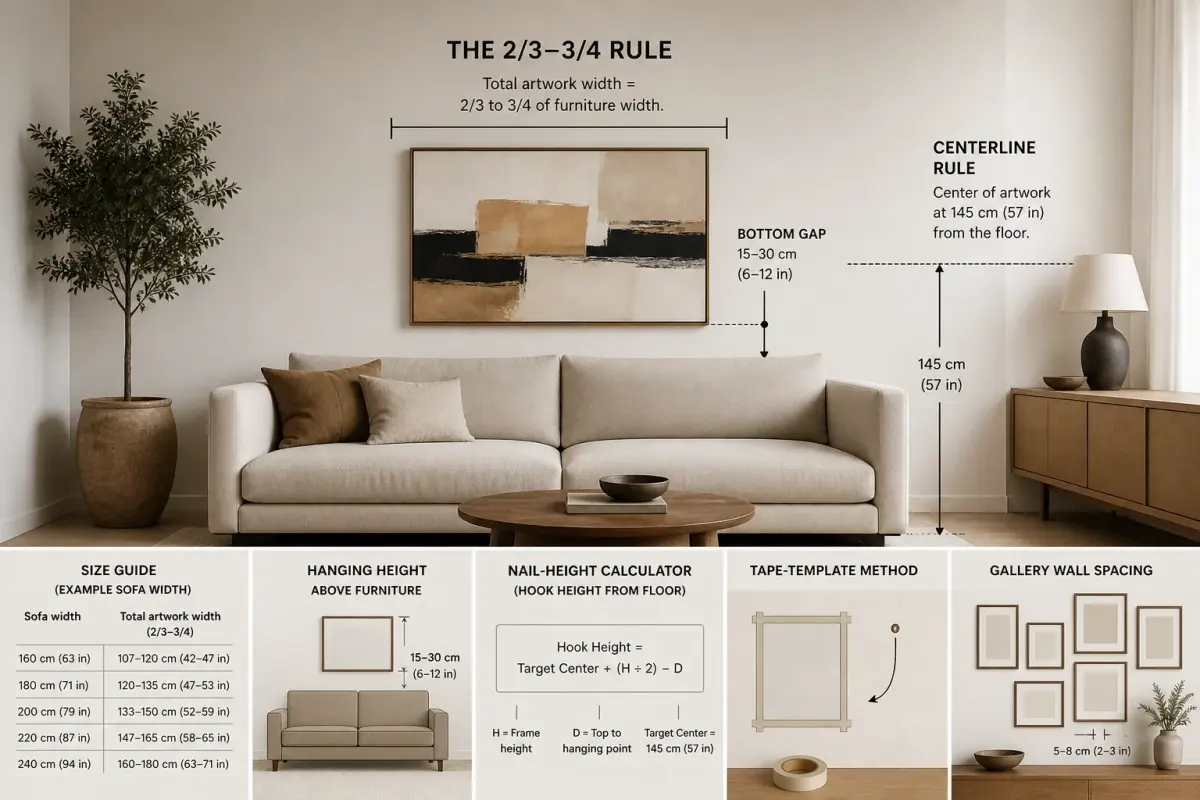
Scale is a critical factor in how art interacts with a room. A common guideline is that a piece of art should cover approximately 50% to 75% of the available wall space above a piece of furniture, such as a sofa or console table. If a piece is too small, it will look lost; if it is too large, it can overwhelm the room. Use painter's tape to outline the dimensions of a potential artwork on your wall before committing to a purchase to ensure the scale feels balanced.
When hanging art, consider the "center point" rule. The center of the artwork should generally hang at eye level, which is approximately 57 to 60 inches from the floor. If you are hanging a gallery wall, treat the entire arrangement as a single unit rather than focusing on individual frames. Follow these steps to ensure a professional installation:
- Measure the width of your furniture and mark the center point on the wall.
- Lay your art pieces on the floor to experiment with different arrangements before drilling holes.
- Use a level to ensure frames are perfectly straight, as even a slight tilt can disrupt the visual flow of a room.
Best places to buy art for beginners
You do not need a massive budget to start a meaningful collection. Emerging artists often sell their work at accessible price points through platforms like Saatchi Art, Etsy, or local university art shows. Prints and limited-edition lithographs are excellent entry points for those who cannot afford original paintings. These pieces often carry the artist’s signature and a numbering system, providing a sense of authenticity and historical value to your collection.
If you are looking for unique finds, consider these avenues:
- Local art fairs and student exhibitions: These provide opportunities to meet artists and purchase affordable, original works.
- Estate sales and antique shops: These locations are ideal for finding vintage prints or unique frames that add character to a home.
- Online print shops: Many websites offer high-quality giclée prints of famous works or contemporary designs that fit standard frame sizes.
- Commissioned work: Reach out to local artists if you have a specific vision, as many are willing to customize sizes or color palettes for a reasonable fee.
Why lighting matters for your art
Lighting is the final component that transforms a decorative object into a focal point. Natural light is excellent during the day, but direct sunlight can fade pigments and damage paper over time. Avoid placing valuable or fragile works on walls that receive intense, direct exposure to the sun. If you must place art in a sunlit area, consider using UV-protective glass or acrylic, which filters out harmful rays while maintaining clarity and color accuracy.
For evening ambiance, install dedicated lighting to highlight your pieces. Picture lights, which mount directly above the frame, offer a classic gallery feel and focus attention on the artwork's texture and detail. Alternatively, track lighting or recessed spotlights can be adjusted to wash a wall with light, creating a sophisticated museum-like atmosphere. When selecting bulbs, opt for warm-toned LEDs with a high Color Rendering Index (CRI), as these provide the most accurate representation of the artist's original color palette without generating excessive heat that could degrade the piece.
Common mistakes when hanging art
One of the most frequent errors is hanging art too high, which disconnects the piece from the furniture and the room’s overall flow. Another mistake is overcrowding a wall, which creates visual clutter and prevents the eye from resting on individual pieces. Aim for negative space around your art to allow each work to breathe. If you are unsure about placement, it is better to have one large, impactful piece than several small, poorly spaced items that make the wall look messy.
Avoid these pitfalls to maintain a polished look:
- Hanging art in high-humidity areas like bathrooms without proper protection, which can lead to mold or warping.
- Using mismatched hardware that does not support the weight of the frame, risking damage to both the wall and the artwork.
- Ignoring the surrounding decor, such as busy wallpaper or patterned textiles, which can compete with the visual complexity of the art.
- Failing to use archival-quality matting and backing, which can cause paper-based art to yellow or deteriorate over time.
Key facts
- Hang artwork so the center of the piece is at eye level, typically 57 to 60 inches from the floor.
- Use the "60-30-10" rule for color: 60% of the room is a dominant color, 30% secondary, and 10% an accent color found in art.
- Group smaller items in odd numbers, such as sets of three or five, to create a more visually balanced display.
- Measure your wall space before purchasing; art should generally occupy about two-thirds to three-quarters of the available wall width.
- Invest in acid-free matting and UV-protective glass to prevent fading and damage to prints or original works over time.
- Avoid hanging art in direct sunlight or high-humidity areas like bathrooms to preserve the integrity of the materials.
The bottom line
Choosing art for your home is a personal process that balances aesthetic preference with fundamental design principles. By prioritizing proper scale, thoughtful placement at eye level, and a cohesive color strategy, you can transform any space into a curated environment. Focus on pieces that resonate with you emotionally, as the most successful home collections are those that reflect the unique personality and history of the inhabitant.
People also ask
How do I choose art that matches my furniture?
Focus on complementary color palettes or shared textures rather than exact matches. If your furniture is minimalist, bold abstract art can provide a necessary focal point to anchor the room.
Is it better to buy original art or prints?
Original art offers unique texture and investment potential, while high-quality limited edition prints allow you to own works by famous artists at a fraction of the cost. Choose based on your budget and desire for exclusivity.
How do I create a gallery wall successfully?
Lay your pieces out on the floor first to experiment with spacing and arrangement. Aim for consistent gaps between frames, usually two to three inches, to keep the collection looking cohesive rather than cluttered.
Should art frames always match each other?
Matching frames create a formal, uniform look, while mixed frames provide an eclectic, collected aesthetic. Choose a consistent frame style if you want the art itself to be the primary focus.
How high should I hang art above a sofa?
Position the bottom of the frame about 6 to 8 inches above the top of the sofa back. This distance ensures the art feels connected to the furniture rather than floating too high on the wall.
Can I hang art in a small room?
Yes, but avoid overcrowding the space with too many small pieces. A single, large-scale statement piece can actually make a small room feel more expansive and intentional.
This answer was created with the help of AI research tools and reference sources. Spotted an error? Let us know — we correct mistakes quickly. See our editorial policy.