How high should you hang art?
Short answer
The center of a piece of art should generally hang at eye level, which is approximately 57 to 60 inches from the floor to the center of the artwork. This standard measurement ensures that the work is visually balanced and comfortable for the average viewer to appreciate without straining their neck or eyes.
On this page
How high should art be hung in a room
The "57-inch rule" is the gold standard used by museums and galleries to ensure consistency. By placing the center of the artwork at 57 inches above the floor, you align the focal point with the average human sightline. While this is a universal starting point, you may need to adjust slightly based on your ceiling height or the specific furniture beneath the piece.
If you are hanging art in a room where people are primarily seated, such as a dining room or a living room, you can lower the height by a few inches. This creates a more cohesive connection between the furniture and the wall decor. Always prioritize the relationship between the art and the room's architecture rather than strictly adhering to a number that feels off in your specific space.
How to hang art above furniture
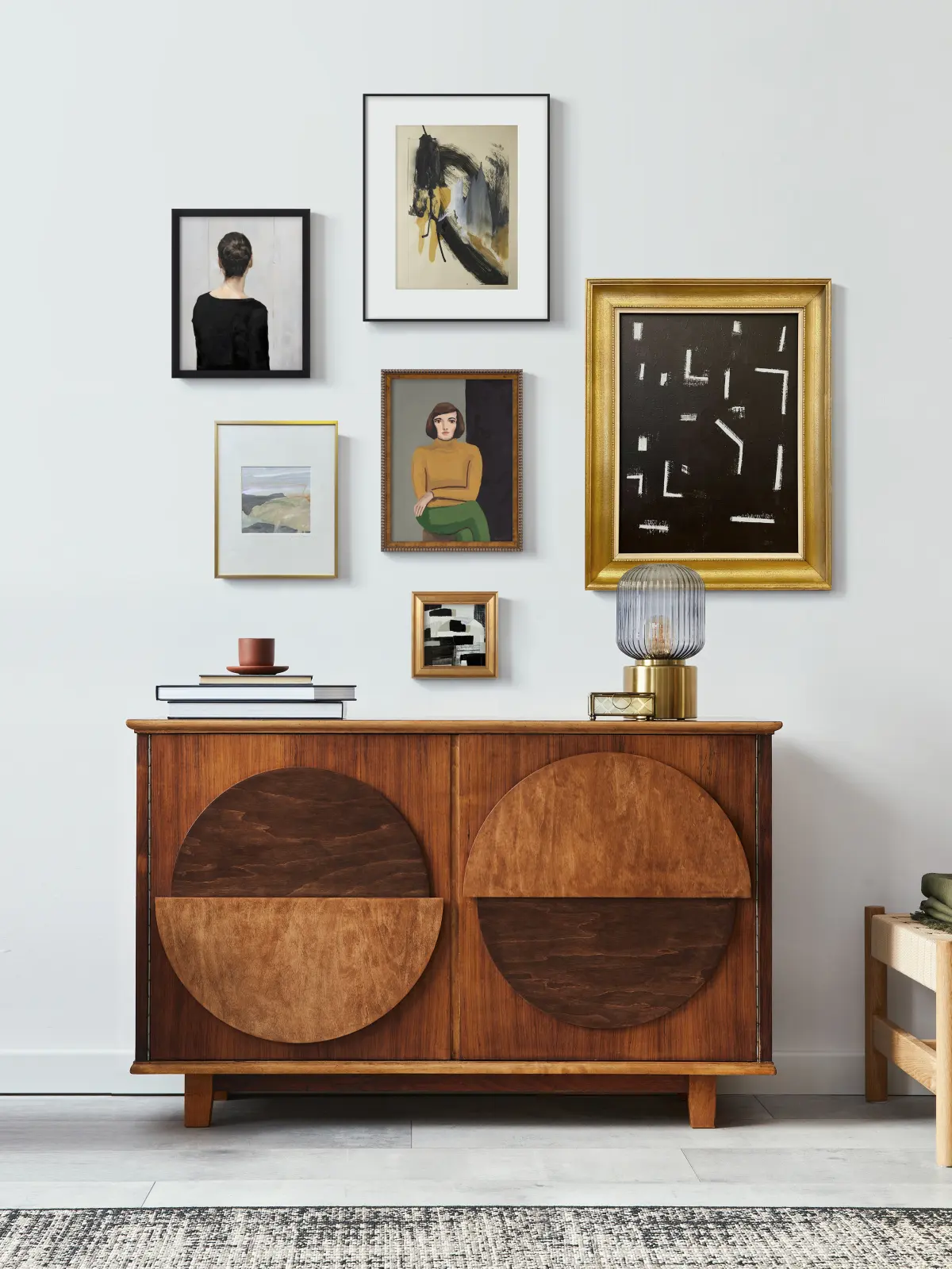
When placing art above a sofa, console table, or headboard, the goal is to create a visual anchor. The art should feel like an extension of the furniture rather than a floating element. Aim for a gap of 6 to 10 inches between the top of the furniture and the bottom of the frame. This distance provides enough breathing room while maintaining a unified display.
When working with larger furniture pieces, consider the scale of the artwork to ensure the arrangement does not look sparse. If the piece is too small, it will appear lost against the wall. Follow these steps to achieve the correct placement:
- Measure the width of your furniture piece to find the center point.
- Hold the artwork against the wall to test the 6-to-10-inch gap.
- Mark the wall lightly with a pencil at the center of the frame's wire or hardware.
- Use a level to ensure the hardware is perfectly horizontal before driving your nail.
Best ways to arrange a gallery wall
A gallery wall requires careful planning to avoid a cluttered appearance. Start by laying your pieces out on the floor to experiment with spacing and composition before putting a single hole in the wall. A consistent gap of 2 to 3 inches between frames helps the collection feel like a single, cohesive unit rather than a random assortment of pictures.
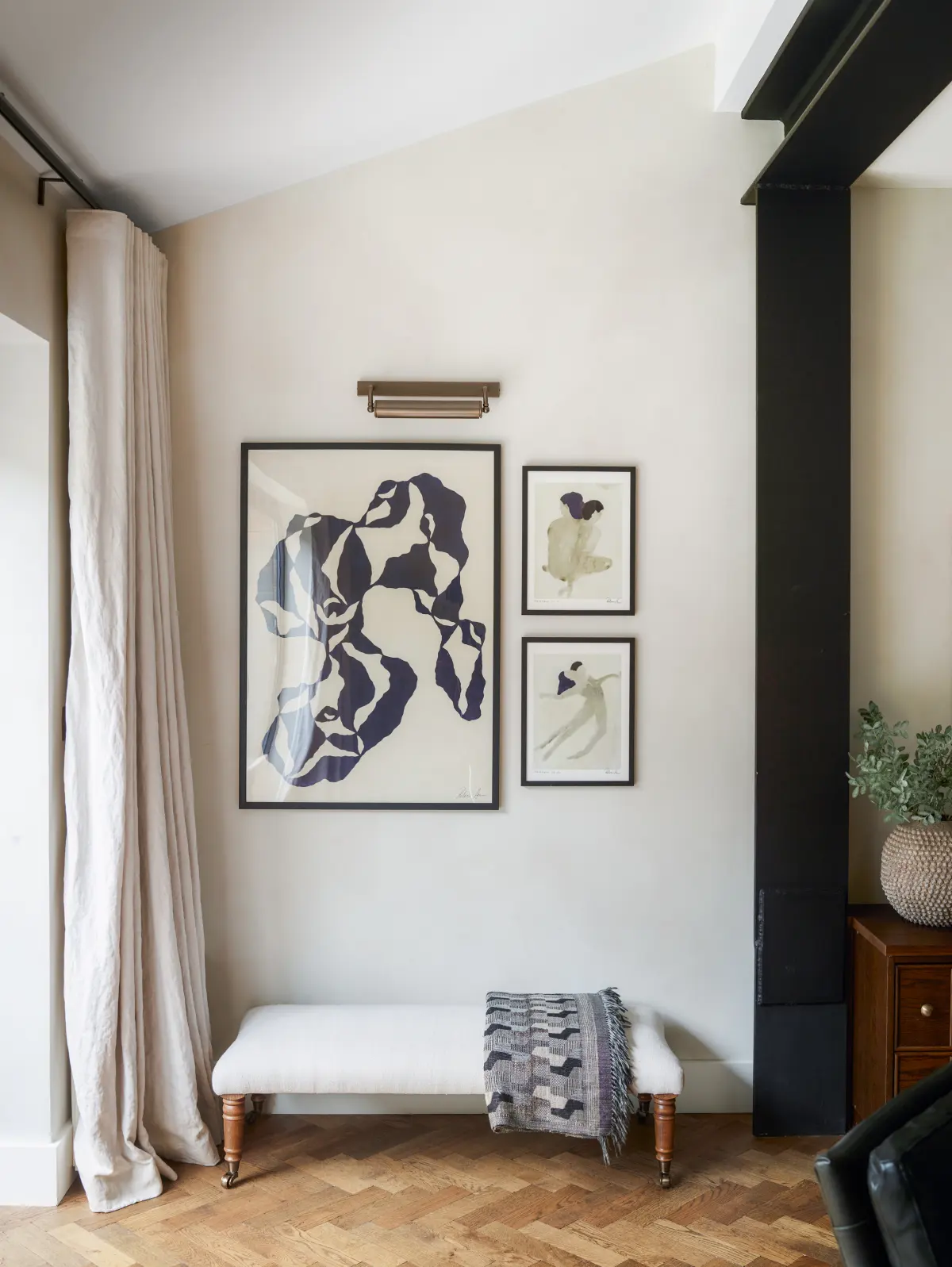
To maintain order, choose a common element—such as matching frame colors, a similar artistic style, or a unified color palette—to tie the pieces together. You can also use a "center line" approach, where you align the centers of all frames along a single horizontal axis. This technique works exceptionally well for eclectic collections that vary in size and shape.
Common mistakes when hanging art
The most frequent error is hanging art too high, which is a common habit because people often place art at their own eye level while standing on a ladder. This results in the art being disconnected from the rest of the room. Always step back several feet to evaluate the placement from a seated or standing position before finalizing the installation.
Another mistake is failing to account for the hardware on the back of the frame. A wire may sag when hung, causing the piece to sit lower than you originally measured. To avoid this, measure the distance from the top of the frame to the taut wire, then subtract that distance from your target height. Use these tips to avoid common pitfalls:
- Avoid hanging art in direct sunlight, which can fade colors and damage paper or canvas over time.
- Do not use a single small nail for heavy frames; always use appropriate wall anchors or studs for security.
- Refrain from crowding art into corners, as this makes the space feel smaller and visually cramped.
How to hang art in hallways and staircases
Hallways often have high traffic, making them ideal spots for art, but they require a slightly different approach. Because these spaces are transition areas, you should hang art slightly lower than in living rooms, typically around 55 to 57 inches to the center. This keeps the art within the natural field of vision for someone walking through the space.
In staircases, the height of the art should follow the incline of the stairs. Maintain a consistent distance from the center of the art to the steps as you move upward. This creates a rhythmic flow that guides the eye along the path of the staircase. By keeping the spacing uniform between each piece, you ensure the display feels intentional and professional rather than haphazard.
Key facts
- The standard museum-grade hanging height for the center of a piece is 57 to 60 inches from the floor.
- Always measure to the center of the artwork, not the top edge, to ensure visual balance.
- When hanging art above a sofa, leave 6 to 10 inches of space between the top of the furniture and the bottom of the frame.
- Use the "eye-level" rule as a baseline, which is generally 57 inches for the average person.
- In rooms where people primarily sit, such as a dining room, hang art slightly lower so it is visible from a seated position.
- Group multiple pieces as a single unit by treating the entire arrangement as one large piece and centering that collective mass.
The bottom line
The most effective way to display art is by following the 57-inch rule, which positions the center of the piece at average eye level. While furniture placement and room function may require minor adjustments, consistency is key to a professional look. By centering your art correctly and maintaining uniform spacing in groupings, you create a balanced environment that draws the eye and enhances the room’s overall aesthetic.
People also ask
How do I hang art in a hallway?
Hallways are high-traffic areas, so hang art slightly higher, around 60 to 62 inches, to prevent accidental contact. Ensure the pieces are spaced evenly to create a cohesive rhythm along the wall.
Should I hang art differently if I have high ceilings?
High ceilings can make standard placement look too low, but you should still anchor art to the furniture below it. If there is no furniture, use larger pieces or vertical groupings to fill the negative space without floating the art too high.
How do I hang art above a fireplace?
The bottom of the frame should be 4 to 6 inches above the mantelpiece. Avoid hanging it too high, as this creates a visual disconnect between the fireplace and the art.
What is the best way to hang a gallery wall?
Lay all pieces out on the floor first to experiment with spacing and arrangement. Maintain a consistent gap of 2 to 3 inches between frames to keep the display looking organized rather than cluttered.
Can I hang art in a bathroom?
Yes, but avoid placing art directly above a shower or tub where humidity can damage the frame or canvas. Use glass-fronted frames to protect the artwork from moisture and temperature fluctuations.
How do I determine the center point if the hanging hardware is not at the top?
Measure the distance from the top of the frame to the wire when it is pulled taut. Subtract this measurement from your desired hanging height to find exactly where to place your nail or hook.
This answer was created with the help of AI research tools and reference sources. Spotted an error? Let us know — we correct mistakes quickly. See our editorial policy.