What is Neo-Expressionism?
Short answer
Neo-Expressionism was an international art movement that emerged in the late 1970s and flourished throughout the 1980s. Characterized by intense subjectivity, raw brushwork, and vivid colors, it marked a return to figurative painting and emotional expression after the dominance of minimalist and conceptual art. It revitalized the role of the individual artist.

On this page
What defined the Neo-Expressionist style?
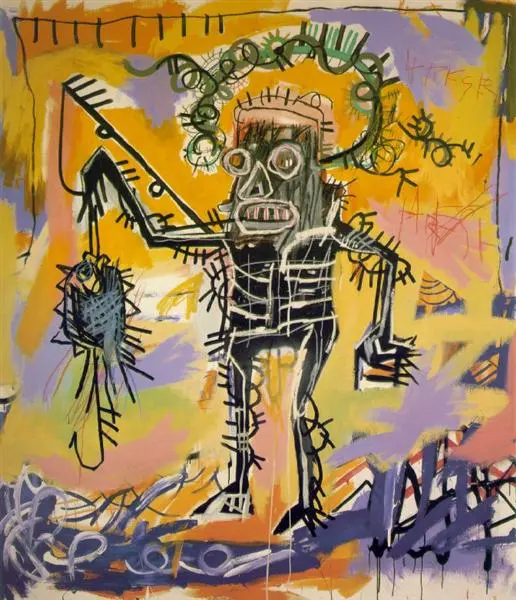
Neo-Expressionism emerged as a reactionary movement against the cool, detached nature of Minimalism and Conceptualism. Artists sought to return to the human figure, narrative storytelling, and the physical act of painting. The style is instantly recognizable by its aggressive, gestural brushstrokes, thick impasto application, and a palette that often favors jarring, high-contrast colors. By rejecting the "purity" of abstract art, these painters embraced a gritty, sometimes chaotic aesthetic that prioritized personal psychological depth over formalist constraints.
The movement was not a unified school but rather a global phenomenon with distinct regional variations. In Germany, it was known as Neue Wilde (New Wild Ones), focusing on historical trauma and national identity. In the United States, it often blended pop culture imagery with raw, graffiti-inspired spontaneity. Despite these differences, the core philosophy remained consistent: art should be an unfiltered expression of the human condition, often exploring themes of alienation, sexuality, and the burden of history.
Who were the most influential Neo-Expressionist artists?
The movement featured several key figures who transformed the art market during the 1980s. Jean-Michel Basquiat is perhaps the most iconic, blending street art aesthetics with complex social commentary. Julian Schnabel gained fame for his "plate paintings," which incorporated broken ceramic shards into massive, textured canvases. In Germany, Anselm Kiefer explored dark, mythological, and historical themes, often using materials like straw, ash, and lead to give his work a sculptural, weathered quality that felt ancient and heavy.
Other essential artists who shaped the movement include:
- Georg Baselitz, known for his signature upside-down figures.
- Francesco Clemente, who focused on fragmented, dreamlike, and erotic imagery.
- Sandro Chia, whose work often referenced Italian Renaissance traditions through a distorted, modern lens.
- Eric Fischl, celebrated for his unsettling, voyeuristic depictions of American suburban life.
- David Salle, who utilized layered, disparate imagery to create complex visual puzzles.
How did Neo-Expressionism impact the art market?
The 1980s saw an unprecedented explosion in the art market, and Neo-Expressionism was at the center of this commercial boom. Collectors and galleries shifted their focus back to painting, viewing it as a lucrative and collectible commodity. This period saw the rise of the "art star," where the personality of the creator became as important as the work itself. Large-scale canvases were highly sought after by corporations and wealthy private collectors, leading to record-breaking auction prices that signaled a new era of global art investment.
This commercial success brought both opportunities and criticisms. While it provided artists with unprecedented financial resources and public platforms, it also invited accusations of superficiality and trend-chasing. Critics argued that the movement was overly focused on spectacle and celebrity, potentially diluting the intellectual rigor of the art world. Despite these tensions, the movement effectively bridged the gap between the avant-garde and the mainstream, ensuring that painting remained a central pillar of contemporary art long after the initial hype subsided.

Common mistakes when interpreting Neo-Expressionist art
A frequent error is assuming that Neo-Expressionism is merely a nostalgic imitation of early 20th-century German Expressionism. While it draws inspiration from the past, it is deeply rooted in the specific anxieties of the post-Cold War era. Another common mistake is viewing the work as purely decorative or chaotic. Most Neo-Expressionist pieces are highly calculated, using deliberate compositional strategies to convey specific emotional or political messages. Ignoring the historical context of the 1980s often leads to a shallow reading of these complex, layered works.
To better understand these paintings, follow these steps:
- Research the specific cultural context of the artist, such as post-war German history or the New York City street scene.
- Look past the aggressive brushwork to identify recurring symbols or motifs hidden within the layers.
- Consider the scale of the work; these paintings were often designed to physically overwhelm the viewer, which is a key part of the intended experience.
- Compare the work to the minimalist art that preceded it to understand what the artist was actively rejecting or subverting.
How to explore Neo-Expressionism today
For those interested in studying the movement, visiting major museums is the best starting point. Many institutions hold significant collections of 1980s art that provide a comprehensive overview of the era’s intensity. Digital archives and exhibition catalogs from the 1980s are also invaluable resources for seeing how these works were originally presented and received. Because the movement was so prolific, you can find representative pieces in most major international contemporary art galleries and auction house previews.
If you are just beginning your exploration, focus on these activities:
- Visit the Broad in Los Angeles or the Museum of Modern Art in New York to see iconic works by Basquiat and Schnabel.
- Read biographies of the "New Wild Ones" to understand the social environment of Berlin in the late 1970s.
- Watch documentary films about the 1980s art scene to hear directly from the artists about their motivations.
- Attend retrospectives that focus on individual artists, as these provide the deepest insights into how their styles evolved over time.
Key facts
- Neo-Expressionism emerged in the late 1970s and reached its peak popularity during the 1980s.
- The movement marked a return to large-scale, figurative painting after the dominance of Minimalism and Conceptual art.
- Artists utilized aggressive, gestural brushwork and intense, often jarring color palettes to convey raw emotion.
- Key figures include Jean-Michel Basquiat, Julian Schnabel, Anselm Kiefer, and Georg Baselitz.
- The style frequently incorporates mixed media, such as broken pottery, straw, or found objects, directly onto the canvas.
- To identify the style, look for distorted human figures, chaotic compositions, and themes exploring cultural identity or historical trauma.
The bottom line
Neo-Expressionism represents a pivotal shift in late 20th-century art, reclaiming the power of the human figure and emotional intensity. By rejecting the cold detachment of minimalism, these artists used bold colors and unconventional materials to express complex, often haunting, narratives. Today, the movement serves as a reminder that painting remains a vital, visceral medium for exploring the turbulent intersections of personal identity and collective history.
People also ask
How does Neo-Expressionism differ from original Expressionism?
While original Expressionism emerged in the early 20th century to capture psychological anxiety, Neo-Expressionism is a postmodern revival. It often incorporates irony, historical references, and a more eclectic, aggressive approach to materials that the earlier movement lacked.
Why did Neo-Expressionism become so popular in the 1980s?
The movement gained momentum as a reaction against the austerity of 1970s conceptual art. Collectors and galleries sought the return of "painterly" works that felt visceral, human, and commercially viable for the booming art market of the decade.
Are there specific techniques used to create Neo-Expressionist art?
Artists often use "all-over" composition, where the entire surface of the canvas is treated with equal intensity. Practical techniques include layering thick impasto paint, scratching into the surface, and embedding physical objects to create a tactile, three-dimensional effect.
What is a common mistake when studying Neo-Expressionist works?
A frequent error is assuming the art is purely chaotic or lacks intellectual depth. Despite the messy appearance, these works are often highly calculated critiques of societal structures, mythology, or personal history.
Is Neo-Expressionism considered a global movement?
Yes, it manifested differently across the world, such as the "Neue Wilden" (New Fauves) in Germany and the "Transavanguardia" in Italy. Each region adapted the style to address its own specific political and cultural context.
How can I distinguish a Neo-Expressionist painting from abstract expressionism?
Neo-Expressionism usually retains recognizable, albeit distorted, imagery or symbols, whereas Abstract Expressionism is typically non-representational. If you see a figure, a face, or a clear cultural symbol, it is likely Neo-Expressionist.
This answer was created with the help of AI research tools and reference sources. Spotted an error? Let us know — we correct mistakes quickly. See our editorial policy.