What is Jean-Michel Basquiat known for?
Short answer
Jean-Michel Basquiat was a pivotal American artist who rose to prominence in the 1980s for his raw, neo-expressionist paintings. He is best known for blending street art, social commentary, and complex symbolism. His work challenged racial hierarchies and art world elitism, making him one of the most influential figures in contemporary art history.
On this page
How did Basquiat start his career?
Basquiat first gained public attention in the late 1970s under the tag "SAMO," a collaborative graffiti project with his friend Al Diaz. They spray-painted cryptic, poetic, and often biting aphorisms across Lower Manhattan, particularly near art galleries and clubs. This early work served as a bridge between the gritty, unauthorized street culture of New York City and the formal gallery system. By 1980, he transitioned from walls to canvas, participating in the "Times Square Show," which introduced his distinct aesthetic to the professional art world.
His early style was defined by a frantic, energetic application of paint and a reliance on text-based imagery. He often incorporated anatomical diagrams, historical figures, and cultural icons into his compositions. This period established the foundational themes of his career, specifically his interest in the duality of human experience and the historical marginalization of Black individuals. He quickly moved from being an underground street artist to a darling of the high-end art market, famously befriending and collaborating with Andy Warhol.
What are the key themes in his art?
Basquiat’s work serves as a dense web of cultural, historical, and personal references. He frequently addressed the systemic racism and socioeconomic disparities he observed in American society. By juxtaposing images of African American athletes, musicians, and historical figures with crowns and halos, he elevated these subjects to the status of royalty or saints. This iconography was meant to reclaim narratives that had been erased or ignored by Western art history.
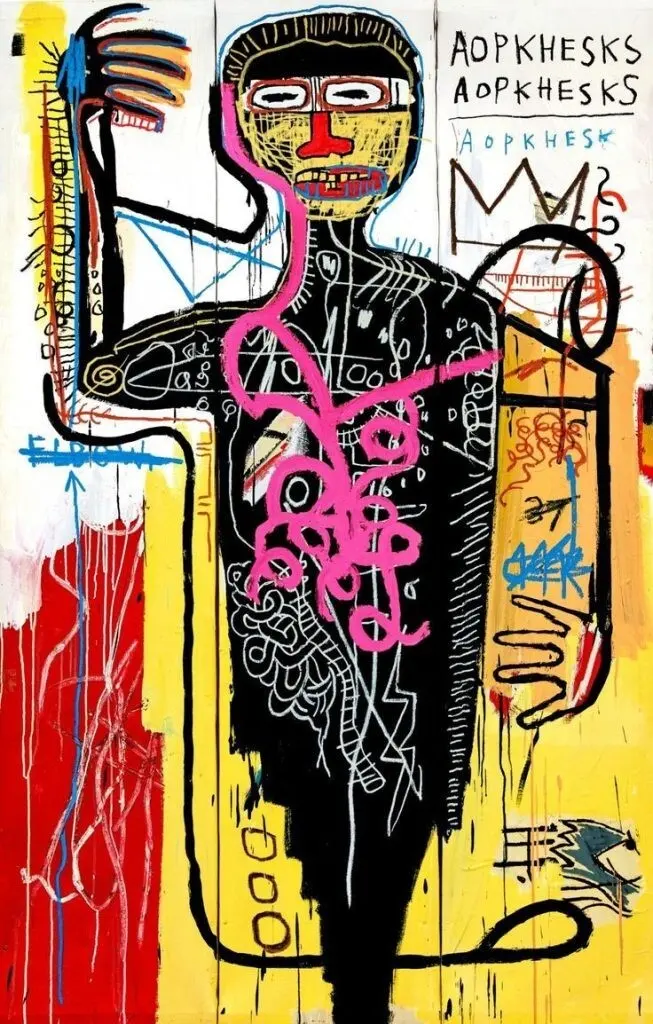
Beyond social critique, his art explored the complexities of identity and the human condition. He often used anatomical drawings inspired by his childhood copy of "Gray’s Anatomy," a book his mother gave him after a car accident. These skeletal figures and internal organs suggest a preoccupation with the fragility of life and the physical toll of societal trauma. His work remains a powerful exploration of:
- The intersection of jazz music and improvisational painting techniques.
- The critique of colonial history and its ongoing impact on modern society.
- The tension between the commercialization of art and the authenticity of the artist.
Why is his painting style considered unique?
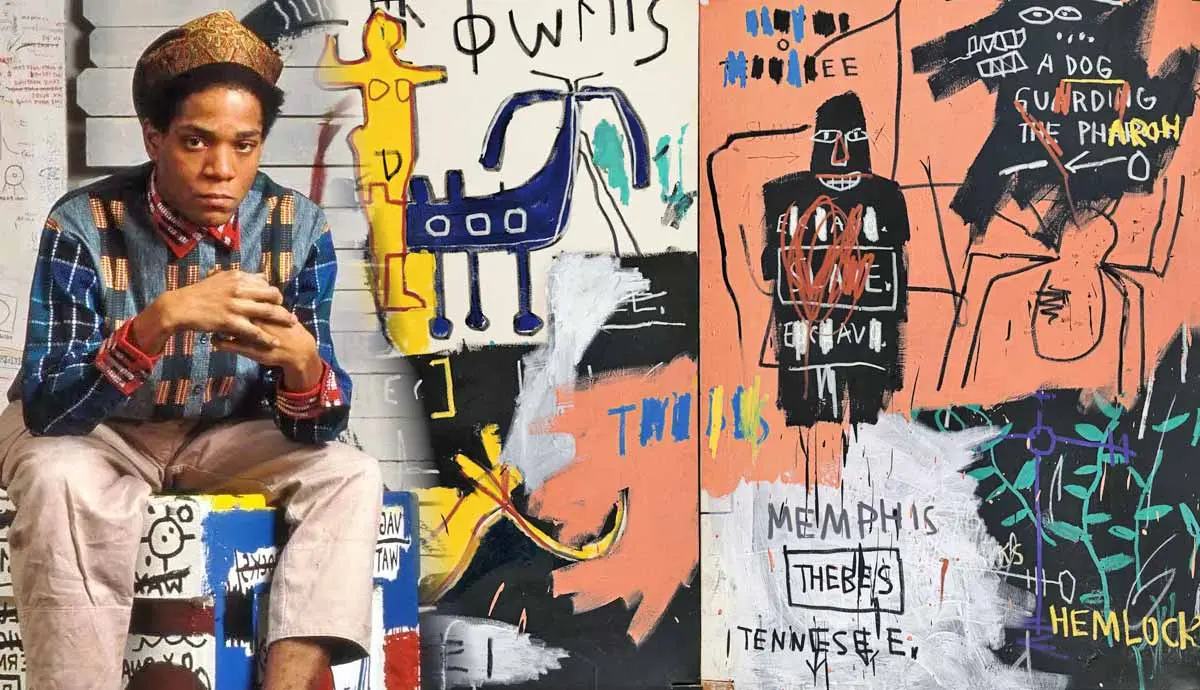
The "Neo-Expressionist" movement of the 1980s was characterized by a return to painterly, emotional, and often aggressive brushwork, and Basquiat was its most prominent practitioner. His style is instantly recognizable due to its layered, chaotic, and highly textured surfaces. He often utilized mixed media, combining oil stick, acrylic, spray paint, and collage elements on canvas. This layering process allowed him to build a history within each piece, where words and images are crossed out or obscured, forcing the viewer to engage with the act of erasure.
His process was deeply improvisational, mirroring the structure of bebop jazz. He would often paint while listening to music, allowing the rhythm and dissonance of the sound to dictate his color choices and mark-making. This approach resulted in a visual language that felt both spontaneous and deeply calculated. To understand his technique, consider these primary elements:
- The use of "pentimenti," or visible traces of previous marks that the artist decided to leave behind.
- The integration of text, which functions as both a visual element and a narrative device.
- The bold, primary color palette that contrasts sharply with dark, often somber backgrounds.
How to appreciate Basquiat’s work as a beginner?
Approaching a Basquiat painting for the first time can be overwhelming due to the sheer volume of information on the canvas. To truly appreciate his output, do not feel pressured to decode every single symbol immediately. Instead, focus on the emotional intensity of the piece and the way the colors and lines interact to create a sense of movement. Start by observing the composition from a distance to grasp the overall energy, then step closer to examine the individual words and scribbles.
When viewing his work in a museum or gallery, keep these practical tips in mind:
- Look for recurring motifs like the three-pointed crown, which signifies his respect for Black heroes.
- Pay attention to the "crossed-out" words; Basquiat once noted that he crossed things out so you would want to see them more.
- Research the historical figures he depicts, such as Charlie Parker or Joe Louis, to understand the context of his admiration.
- Avoid looking for a linear narrative, as his paintings are meant to be experienced as a collage of thoughts rather than a story.
Common mistakes when interpreting his art
A frequent error is assuming that Basquiat’s work is purely chaotic or unrefined. While his style appears raw, he possessed a deep knowledge of art history, frequently referencing masters like Picasso, Rauschenberg, and Twombly. Dismissing his work as "graffiti art" ignores the sophisticated technical skill and intellectual rigor he applied to every composition. Another mistake is ignoring the role of his personal life, as his struggles with fame, addiction, and the pressures of the art market profoundly influenced his later output.
Furthermore, viewers often make the mistake of viewing his work as static. Because he constantly evolved his style and experimented with new materials, his early work differs significantly from his later, more polished pieces. It is essential to view his career as a progression rather than a single, unchanging aesthetic. By failing to account for the context of the 1980s New York art scene, one might miss the urgency and the political stakes that drove his creative output until his untimely death in 1988 at the age of 27.
Key facts
- Jean-Michel Basquiat rose to fame in the late 1970s as part of the graffiti duo SAMO©, which tagged cryptic phrases across Lower Manhattan.
- His signature aesthetic blended raw, expressive brushwork with social commentary, often incorporating anatomical diagrams, crowns, and historical figures.
- In 1982, at age 21, he became the youngest artist ever to exhibit at Documenta in Kassel, Germany, cementing his status in the international art scene.
- He maintained a high-profile creative partnership with Andy Warhol between 1983 and 1985, resulting in over 100 collaborative paintings.
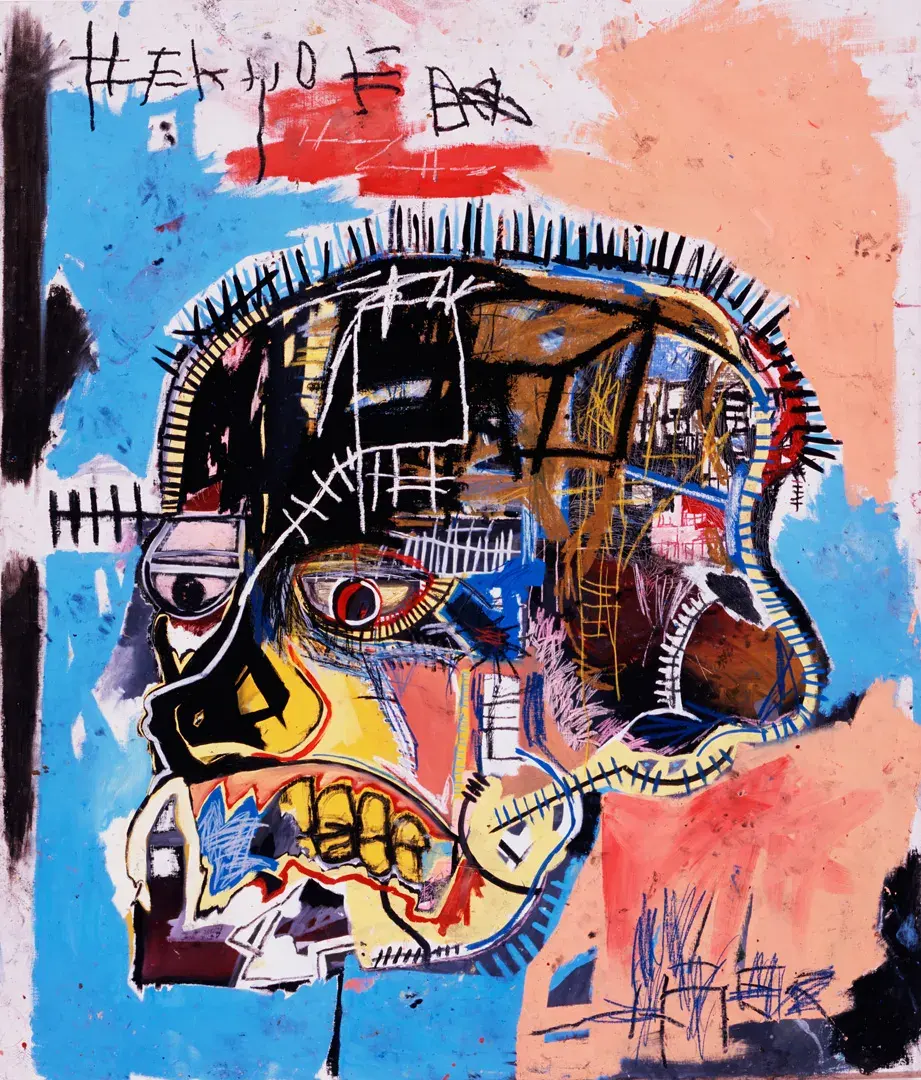
- His 1982 painting "Untitled," depicting a skull-like head, sold for $110.5 million in 2017, setting a record for the highest price ever paid for an American artist's work at auction.
- When collecting or studying his work, look for his frequent use of text and crossed-out words, which he claimed were used to make the viewer want to read them more.
The bottom line
Jean-Michel Basquiat remains a pivotal figure in contemporary art, remembered for bridging the gap between street culture and the elite gallery world. His work challenged racial hierarchies and explored the complexities of identity through a unique, high-energy visual language. By blending personal history with biting social critique, Basquiat transformed the trajectory of modern painting, leaving a legacy that continues to command record-breaking prices and global admiration.
People also ask
What was the meaning behind the crown motif in his paintings?
Basquiat frequently painted crowns to elevate his subjects, often portraying Black historical figures, athletes, and musicians as royalty. It served as a visual assertion of power and dignity in a society that historically marginalized these individuals.
Did Basquiat have formal art training?
He was largely self-taught, having dropped out of high school at age 17. He developed his style by spending significant time sketching in the Brooklyn Museum and absorbing the visual culture of the New York City streets.
Why are his paintings often described as Neo-Expressionist?
The term refers to his return to intense, emotional, and gestural painting styles during the 1980s. This movement rejected the minimalism and conceptual art that dominated the previous decade in favor of raw, figurative imagery.
How did his Haitian and Puerto Rican heritage influence his art?
His cultural background provided a rich tapestry of references, including Spanish and French phrases, Caribbean history, and colonial themes. These elements often appeared alongside critiques of systemic racism and police brutality.
What common mistakes should collectors avoid when identifying his work?
A major mistake is assuming that all graffiti-style art from the 1980s is by Basquiat. His work is highly technical and specific in its layering; always verify provenance through the Estate of Jean-Michel Basquiat to avoid fraudulent pieces.
How did his death affect the art market?
Basquiat died of a drug overdose in 1988 at the age of 27. Following his passing, his market value surged as critics and collectors recognized the profound historical and cultural significance of his brief but prolific career.
This answer was created with the help of AI research tools and reference sources. Spotted an error? Let us know — we correct mistakes quickly. See our editorial policy.