What is Jean-François Millet known for?
Short answer
Jean-François Millet is best known as a foundational member of the Barbizon school and a master of 19th-century Realism. He gained international fame for his poignant, dignified depictions of French peasant life. His most iconic works, including The Gleaners and The Angelus, transformed agricultural labor into subjects of profound artistic significance.
On this page
Why is Jean-François Millet famous?
Millet is celebrated for elevating the status of rural laborers in fine art. During the mid-19th century, academic painting focused heavily on historical, mythological, or aristocratic subjects. Millet broke this tradition by centering his canvases on the daily toil of farmers, sowers, and gleaners. He viewed the connection between humanity and the earth as a spiritual and essential bond, rather than a menial task.
His style is characterized by a somber color palette and a focus on the silhouette of his figures against the landscape. By monumentalizing the peasant, he challenged the social hierarchies of his time. His work resonated deeply with later generations, particularly influencing Vincent van Gogh, who admired Millet’s ability to capture the "soul" of the countryside. His legacy remains tied to this shift toward social realism, which paved the way for modern artistic movements that prioritized everyday human experience over idealized beauty.
What are Jean-François Millet’s most famous paintings?
Millet’s reputation rests on several masterpieces that define the Realist movement. These works are noted for their emotional weight and technical mastery of light and shadow.
- The Gleaners (1857): This painting depicts three women gathering leftover grain in a field. It highlights the stark poverty of the rural working class.
- The Angelus (1857–1859): Two peasants stop their work to pray in a field at sunset. It became one of the most reproduced images in art history.
- The Sower (1850): A dramatic, large-scale depiction of a man scattering seeds. It emphasizes the rhythmic, timeless nature of agricultural labor.
- Man with a Hoe (1860–1862): A controversial work that critics at the time viewed as a brutal, almost animalistic representation of the peasant.
These paintings were often misunderstood during his lifetime. Critics frequently accused him of socialist leanings because he depicted the poor with such solemn dignity, suggesting that he was highlighting the inequality inherent in the French class system of the era.
How to appreciate the Barbizon school style
The Barbizon school refers to a group of painters who settled in the village of Barbizon near the Forest of Fontainebleau. They sought to escape the rigid constraints of the Paris Salon and the industrialization of the city. To appreciate their work, one should focus on their dedication to painting en plein air, or outdoors, which allowed them to capture shifting light and atmospheric conditions accurately.
- Observe the landscape: Notice how the forest and fields are not just backgrounds but active participants in the composition.
- Analyze the brushwork: Look for loose, expressive strokes that prioritize atmosphere over fine, polished detail.
- Consider the mood: These artists often used muted, earthy tones to evoke a sense of melancholy or quiet contemplation.
- Compare with predecessors: Contrast their naturalistic approach with the highly stylized, dramatic compositions of the Neoclassical period.
By focusing on these elements, you can better understand how Millet and his contemporaries moved away from artificial studio settings to embrace the raw, unvarnished beauty of the French countryside.
Common mistakes when studying Millet’s work
One common error is viewing Millet’s paintings purely as political propaganda. While his subjects were poor, he did not consider himself a political activist. He was primarily interested in the timeless, biblical quality of human labor. Another mistake is assuming his work was universally praised during his life. In reality, he struggled financially for many years and faced significant backlash from conservative critics who found his focus on "ugly" or "coarse" peasants offensive to the refined tastes of the time.
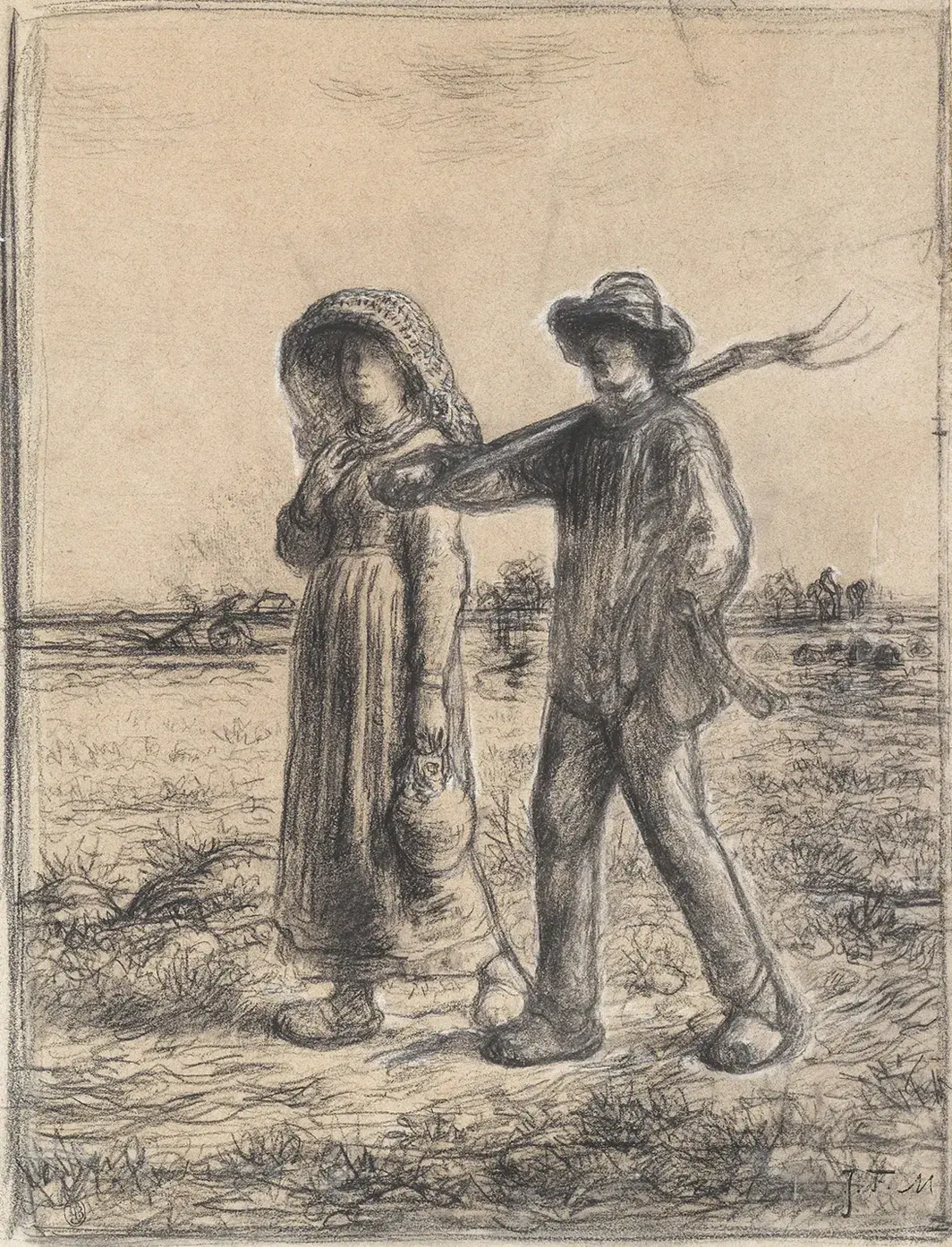
Another frequent oversight is ignoring his mastery of drawing. Before moving to oil painting, Millet was an accomplished draftsman. His charcoal and pastel sketches often contain more emotional intensity than his finished canvases. When studying his work, ensure you look at his drawings to understand how he developed his compositions. Failing to recognize his technical training leads to a superficial understanding of his work, which was always rooted in rigorous observation and traditional compositional principles, even when the subject matter felt revolutionary.
Where can you see Millet’s art today?
If you wish to view his works in person, you must visit the major museums that hold his most significant collections. The Musée d'Orsay in Paris is the primary destination, as it houses The Gleaners and The Angelus, along with several other key pieces. The Museum of Fine Arts in Boston also maintains an extensive collection of his paintings and drawings, thanks to the enthusiasm of 19th-century American collectors who were among the first to recognize his genius.
- Check local museum schedules for traveling exhibitions featuring 19th-century French art.
- Visit digital archives provided by the Musée d'Orsay to see high-resolution images of his lesser-known sketches.
- Consider reading contemporary biographies to understand the specific hardships he faced while living in Barbizon.
By engaging with these resources, you can gain a deeper appreciation for how a humble painter from Normandy managed to change the course of art history. His work continues to serve as a reminder of the dignity found in the simplest human activities and the enduring power of the natural world.
Key facts
- Jean-François Millet was a founding member of the Barbizon school of painters in rural France.
- He is best known for his depictions of peasant farmers, elevating humble agricultural labor to the status of fine art.
- His most famous painting, The Gleaners (1857), depicts three women gathering leftover wheat after the harvest.
- Millet was born in 1814 in Gruchy and spent most of his professional life in the village of Barbizon.
- He used a somber, earthy color palette to emphasize the hardship and dignity of the working class.
- The Angelus (1857–1859) is another iconic work, showing two peasants pausing their work to pray in a field.
The bottom line
Jean-François Millet transformed 19th-century art by shifting the focus from aristocratic subjects to the daily lives of rural peasants. By portraying agricultural labor with solemnity and technical mastery, he challenged contemporary artistic conventions. His legacy remains defined by his ability to find beauty in the mundane, influencing generations of artists who sought to depict the human condition with empathy, realism, and profound social awareness.
People also ask
Did Millet focus exclusively on painting landscapes?
While he painted landscapes, his primary focus was the human figure within the rural environment. He believed that the peasant experience was a profound subject worthy of serious artistic exploration.
How did Millet’s work influence later artists?
His emphasis on social realism and the dignity of labor had a significant impact on Vincent van Gogh. Van Gogh frequently studied and copied Millet’s compositions throughout his own career.
What was the public reaction to his paintings during his lifetime?
His work was often controversial because it depicted the poor with a raw, unidealized honesty. Some critics viewed his focus on the lower classes as a political statement or a critique of the social order.
What techniques did Millet use to create his style?
He used heavy brushwork and muted tones to create a sense of weight and permanence. By simplifying forms, he gave his figures a monumental quality that suggested timelessness.
Where can I see Millet’s original paintings today?
Many of his masterpieces are housed in the Musée d’Orsay in Paris. Other significant collections can be found at the Museum of Fine Arts in Boston and the Louvre.
Was Millet considered a successful artist during his career?
He struggled financially for much of his early life, but he achieved significant recognition and commercial success by the 1860s. He was eventually awarded the Legion of Honour in 1868.
This answer was created with the help of AI research tools and reference sources. Spotted an error? Let us know — we correct mistakes quickly. See our editorial policy.