What is Jackson Pollock known for?
Short answer
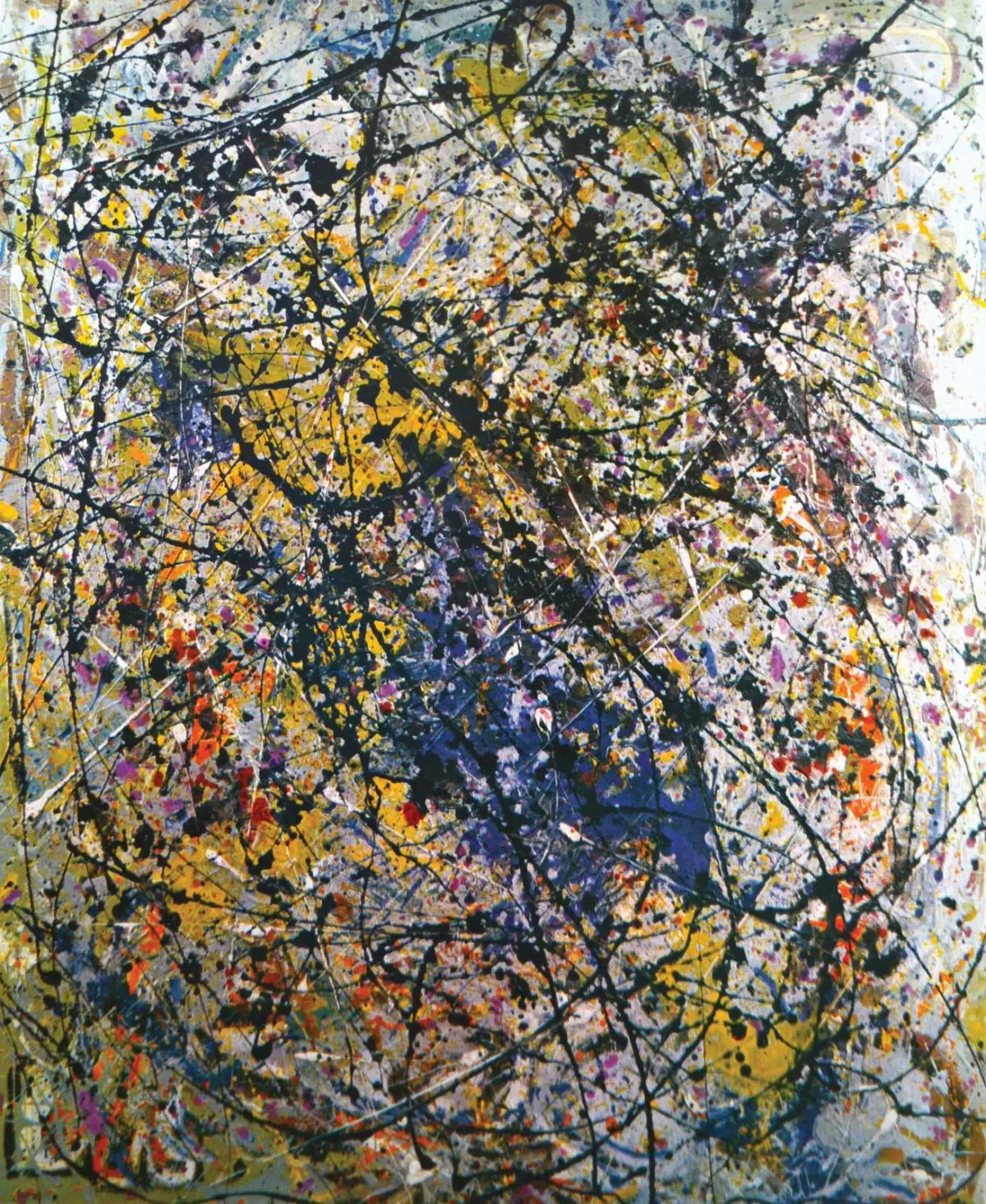
Jackson Pollock is best known for pioneering "drip painting," a radical technique that redefined Abstract Expressionism. By placing canvases on the floor and pouring or splashing household paint, he emphasized the physical act of creation. His work shifted the focus of modern art from representation to the raw, energetic expression of gesture.
On this page
What is drip painting technique?
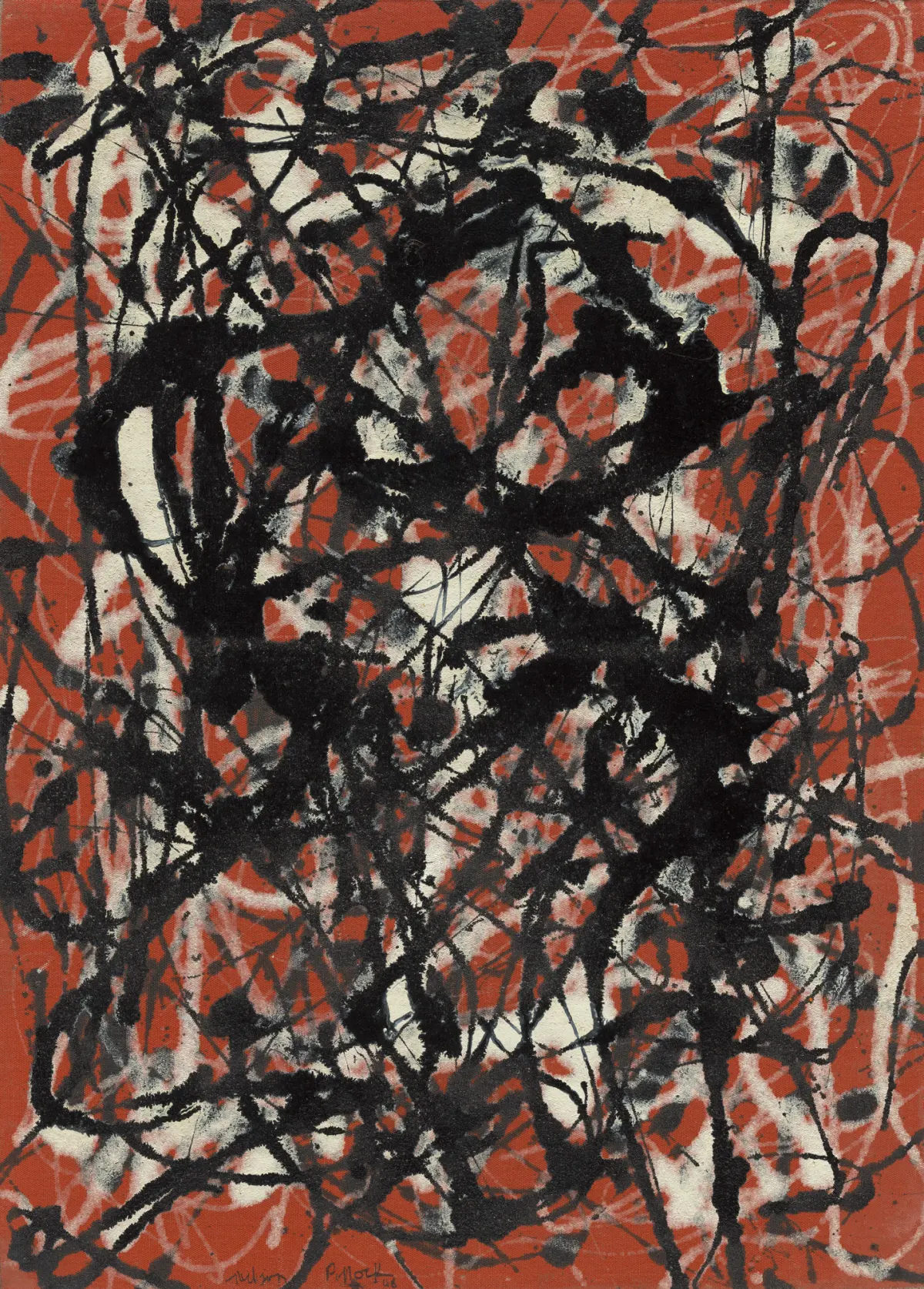
Drip painting, often called "action painting," involves applying paint to a canvas laid flat on the ground rather than mounted on an easel. Pollock utilized unconventional tools such as sticks, hardened brushes, and turkey basters to manipulate liquid paint. By moving around the canvas, he allowed gravity and momentum to dictate the composition, creating complex, web-like layers of color.
This technique removed the traditional barrier between the artist and the work. Because the canvas was on the floor, Pollock could approach it from all four sides, effectively entering the painting space. This physical immersion resulted in works that captured the rhythm of his movements. Key characteristics of his drip style include:
- Lack of a central focal point.
- Dense, rhythmic layering of lines.
- Use of industrial paints like enamel and aluminum.
- Visible traces of debris or accidental marks.
Why did Pollock change modern art?
Pollock’s influence on the mid-20th-century art world was seismic, as he helped shift the center of the avant-garde from Paris to New York City. Before his rise, most modern art focused on surrealism or cubism, which still relied on recognizable forms or structured geometry. Pollock’s work abandoned these conventions entirely, prioritizing the subconscious and the spontaneous act of creation.
Critics and curators viewed his output as the ultimate expression of artistic freedom. By removing the brush from the canvas, he challenged the definition of technical skill, arguing that the artist's intent and energy were more important than fine detail. This paved the way for later movements, including Color Field painting and Performance art, where the process of making the work became as significant as the finished product itself.
How to appreciate abstract expressionism
Appreciating Pollock’s work requires shifting your focus from looking for a "subject" to observing the energy of the marks. Instead of asking what a painting represents, consider how the lines interact with one another and how the scale of the work affects your perception. His large-scale paintings are designed to overwhelm the viewer’s field of vision, creating an immersive experience.
When viewing these works in a gallery or museum, try these steps to deepen your understanding:
- Stand at a distance to see the overall density and balance of the composition.
- Step closer to observe the texture of the paint and the specific direction of the drips.
- Trace the path of a single line with your eyes to follow the artist's movement.
- Note how the colors overlap to create a sense of depth despite the flat surface.
Common mistakes when analyzing Pollock
A frequent error when analyzing Pollock is assuming the work was created randomly or without thought. While the results appear chaotic, Pollock often exercised significant control over the viscosity of the paint and the speed of his gestures. He was not merely throwing paint; he was orchestrating a complex visual language that required intense concentration and physical stamina to execute correctly.
Another mistake is ignoring the historical context of his career. Pollock did not start as a drip painter; he spent years studying the works of Pablo Picasso, Joan Miró, and Mexican muralists. His early work was heavily figurative and symbolic, reflecting his interest in Jungian psychology and mythology. Understanding this progression helps clarify that his transition to abstraction was a deliberate, intellectual evolution rather than a sudden departure from artistic discipline or formal training.
Where to see his most famous works
Pollock’s most significant works are housed in major institutions across the United States. His breakthrough 1948 painting, Number 1A, 1948, is a cornerstone of the Museum of Modern Art (MoMA) collection in New York. Another masterpiece, Autumn Rhythm (Number 30), resides at the Metropolitan Museum of Art, showcasing his mastery of line and space.
If you are planning to view these works, keep in mind that scale is vital. Many of his most famous pieces are massive, measuring several feet in width and height. Seeing these works in person allows you to appreciate the physical presence that photographs simply cannot replicate. Notable locations to visit include:
- The Museum of Modern Art (MoMA), New York City.
- The Metropolitan Museum of Art, New York City.
- The Solomon R. Guggenheim Museum, New York City.
- The Tate Modern, London.
- The Art Institute of Chicago.
Visiting these collections provides a comprehensive look at how Pollock’s career unfolded, from his early experimental sketches to the monumental drip canvases that defined his legacy as a titan of American art.
Key facts
- Jackson Pollock is most famous for his "drip technique," where he poured or splattered liquid household paint onto canvases laid flat on the floor.
- His most productive period, known as his "drip period," lasted from 1947 to 1950 and produced his most iconic large-scale works.
- He was a central figure in the Abstract Expressionist movement, which shifted the center of the art world from Paris to New York City in the 1940s.
- To replicate his style, avoid using traditional brushes; instead, use sticks, hardened brushes, or turkey basters to create rhythmic, layered webs of paint.
- A common mistake for beginners is over-mixing colors, which leads to a muddy appearance; instead, layer distinct, contrasting colors to maintain visual depth.
- Pollock’s work is often categorized as "Action Painting," a term coined by critic Harold Rosenberg to describe art that emphasizes the physical act of creation.
The bottom line
Jackson Pollock revolutionized modern art by abandoning traditional brushes and easels in favor of his signature drip technique. By treating the canvas as an arena for physical action, he created complex, rhythmic compositions that defined the Abstract Expressionist movement. His legacy remains a testament to the power of spontaneity and raw emotional expression, forever changing how we perceive the relationship between the artist and the finished work.
People also ask
Why did Pollock paint on the floor instead of an easel?
Pollock believed that painting on the floor allowed him to be "in" the painting, giving him total control over the flow of paint from all four sides. This method helped him achieve a more fluid, immersive connection with the canvas.
What kind of paint did Jackson Pollock use?
He primarily used commercial house paints, such as Duco or Sapolin, rather than traditional artist oils. These industrial paints were thinner and flowed more easily, allowing for the complex, web-like patterns characteristic of his work.
Was Pollock’s work considered controversial during his lifetime?
Yes, his work polarized the public and critics alike. While some saw his paintings as revolutionary expressions of the subconscious, others dismissed them as chaotic, random, or lacking technical skill.
How can I identify a genuine Jackson Pollock painting?
Authentic works are characterized by complex, multi-layered "all-over" compositions that lack a single focal point. They often contain non-art materials like sand, glass, or cigarette butts embedded in the paint layers.
What is the significance of the "all-over" style?
The "all-over" style means that the visual interest is distributed evenly across the entire surface of the canvas. This technique removes the traditional hierarchy between the center and the edges of the artwork.
Did Pollock have formal art training?
Yes, Pollock studied at the Art Students League in New York under the regionalist painter Thomas Hart Benton. Though his later work became fully abstract, his early training provided him with a solid foundation in composition and drawing.
This answer was created with the help of AI research tools and reference sources. Spotted an error? Let us know — we correct mistakes quickly. See our editorial policy.