Why is The Creation of Adam so famous?
Short answer
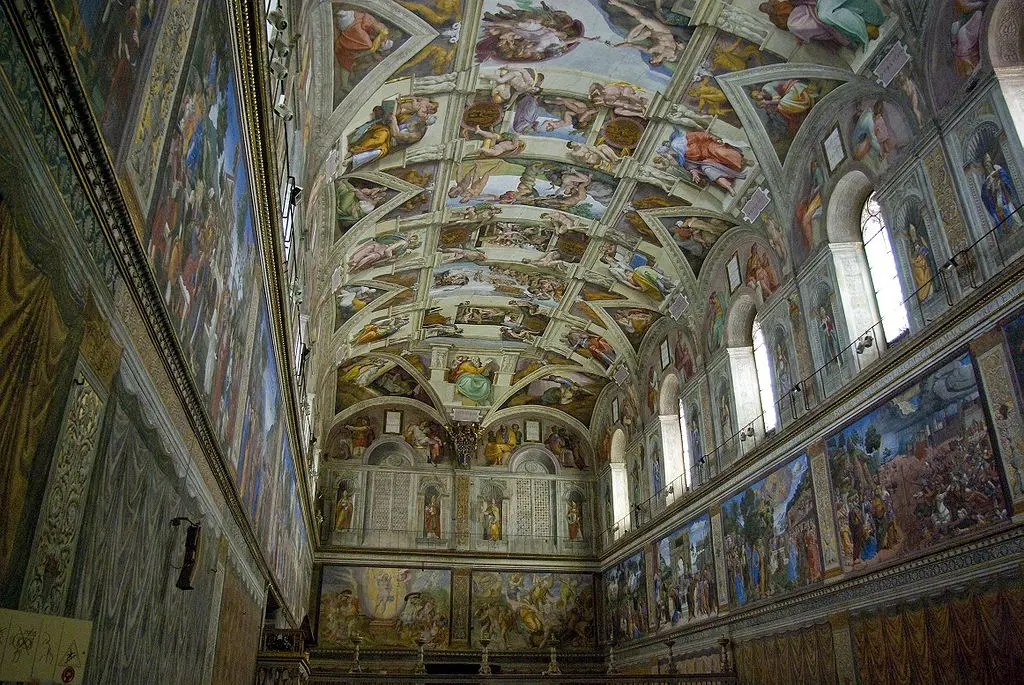
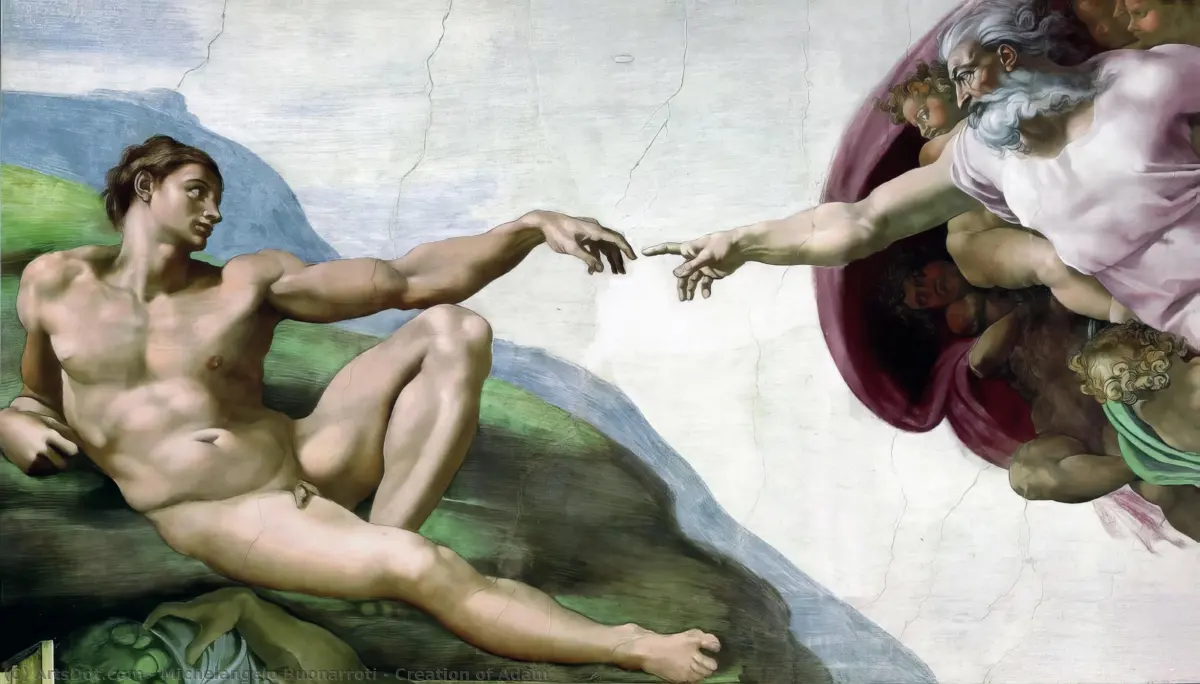
Michelangelo’s The Creation of Adam is famous for its revolutionary depiction of the human form and its profound theological symbolism. Painted between 1508 and 1512 on the Sistine Chapel ceiling, it captures the exact moment God gives life to Adam. The iconic near-touch of their fingers remains an unparalleled masterpiece of Western art.
On this page
Why is The Creation of Adam so famous?
The fame of this fresco stems primarily from Michelangelo’s technical mastery of anatomy and his ability to convey complex spiritual concepts through visual storytelling. Unlike earlier depictions of this biblical scene, which often showed God physically molding clay, Michelangelo chose to emphasize the spark of divine intelligence. By focusing on the gesture of the outstretched hands, he created a visual tension that has captivated viewers for over five centuries.
This work is also celebrated for its influence on the development of High Renaissance art. Michelangelo’s figures possess a sculptural quality that makes them appear three-dimensional, a technique known as rilievo. This approach transformed how artists approached the human body, moving away from flat, stylized medieval figures toward a more dynamic and realistic representation. The painting serves as a definitive example of the period's obsession with human potential and divine connection.
How do you analyze the symbolism in the painting?
To understand the deeper meaning behind the fresco, scholars often look at the composition of the two distinct groups. On the right, God is surrounded by a swirling, cloud-like mantle filled with cherubim, representing the heavens. On the left, Adam rests on the earth, appearing heavy and lethargic, waiting for the infusion of life. The gap between their fingers acts as the focal point, symbolizing the bridge between the mortal and the divine.
Many art historians have also pointed to the anatomical accuracy hidden within the painting. Some researchers argue that the shape surrounding God is a perfect anatomical representation of the human brain, suggesting that Michelangelo believed God was bestowing not just life, but intellect and consciousness. Whether intentional or not, this theory has fueled centuries of debate and keeps the painting at the center of modern art historical discourse.
- Observe the contrast between the muscular, active God and the passive, relaxed Adam.
- Examine the negative space between the fingers to understand the tension of the composition.
- Consider the surrounding figures to see how they provide a sense of motion and divine energy.
- Compare the physical landscape of the earth beneath Adam to the ethereal, weightless nature of the divine cloud.
What techniques did Michelangelo use?
Michelangelo utilized the buon fresco technique, which involves painting directly onto wet lime plaster. This method requires extreme speed and precision, as the artist must complete sections before the plaster dries. Because the Sistine Chapel ceiling is immense, he had to work while lying on scaffolding, often enduring physical pain and dripping paint. The result is a durable, vibrant surface that has retained its integrity for hundreds of years.
His preparation involved extensive sketching and the use of cartoons, which are full-scale drawings transferred to the wall. This meticulous planning allowed him to achieve the perfect proportions of the figures, which were designed to look correct from the ground, despite the curvature of the ceiling. The following steps outline the traditional process he employed:
- Preparation of the wall with a rough layer of plaster called the arriccio.
- Creation of a detailed preparatory drawing on paper.
- Transferring the drawing to the wall using charcoal or pouncing.
- Application of the intonaco, the final smooth layer of wet plaster.
- Painting with mineral pigments that bonded with the wall as it dried.
Common mistakes when interpreting The Creation of Adam
A frequent error is assuming the painting depicts the very first moment of Adam's existence. In reality, the scene shows Adam already fully formed but lacking the "spark" of life. Viewers often overlook the fact that Adam is not yet alive in the spiritual sense, even though he is physically present. Recognizing this distinction is crucial to understanding why the gesture of the hands is so vital to the narrative.
Another common mistake is focusing solely on the central figures while ignoring the surrounding characters. The figures within the divine mantle, particularly the child figure tucked under God's arm, have been interpreted as everything from the future Eve to the Christ child or even the souls of unborn humanity. Ignoring these secondary figures misses the complexity of Michelangelo's theological vision, which sought to connect the creation of man to the broader history of salvation.
How to appreciate the work in person
Visiting the Sistine Chapel requires planning, as the space is often crowded and photography is strictly prohibited. To get the best experience, arrive early in the morning to avoid the largest tour groups. Because the ceiling is high, it is helpful to bring a pair of small, high-quality binoculars or a monocular. This allows you to see the intricate brushwork and the subtle expressions on the faces of the figures that are otherwise lost to the naked eye.
When you stand in the chapel, take a moment to look away from the crowd and focus on the spatial relationship between the figures. Pay attention to how the light in the painting seems to originate from the divine side, casting shadows that define the musculature of Adam. By slowing down and observing the interplay of light, shadow, and gesture, you can appreciate why this work remains the pinnacle of Western artistic achievement.
Key facts
- Michelangelo painted the fresco between 1508 and 1512 on the ceiling of the Sistine Chapel in Vatican City.
- The scene depicts the biblical moment from Genesis where God breathes life into the first man, Adam.
- The focal point is the near-touching fingers of God and Adam, representing the spark of life and human potential.
- Art historians often note the anatomical accuracy of the shroud surrounding God, which resembles the shape of a human brain.
- The work measures approximately 9 feet 7 inches by 18 feet 8 inches, making it one of the largest and most complex paintings of the High Renaissance.
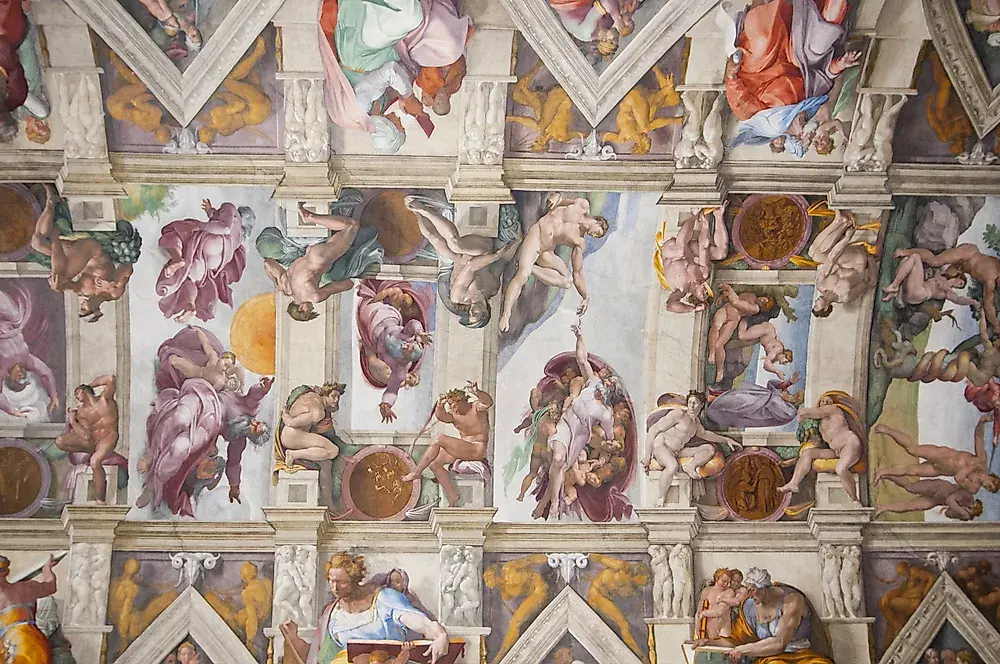
- When viewing the fresco, stand near the center of the chapel and look upward; avoid rushing, as the ceiling contains over 300 figures in total.
The bottom line
The Creation of Adam remains iconic because it perfectly synthesizes theological narrative with revolutionary artistic technique. By capturing the precise moment of divine contact, Michelangelo elevated the human form to a status of godlike grace. Its enduring fame stems from the masterful composition, the anatomical sophistication, and its central role in the history of Western art, serving as a testament to the peak of Renaissance humanism.
People also ask
Is the Sistine Chapel ceiling a single painting?
No, it is a massive collection of nine central panels illustrating scenes from the Book of Genesis, surrounded by prophets, sibyls, and ancestors of Christ. Michelangelo completed these interconnected works over four years while working primarily on scaffolding.
Did Michelangelo paint the ceiling while lying on his back?
This is a common misconception; he actually stood on a custom-built wooden scaffold that allowed him to reach the ceiling while standing upright. He did have to tilt his head back for long periods, which caused him significant physical strain and eye fatigue.
What materials did Michelangelo use to create the fresco?
He used the buon fresco technique, which involves applying water-based pigments directly onto wet lime plaster. As the plaster dried, the colors became a permanent, integral part of the wall structure.
Why are the figures in the painting so muscular?
Michelangelo was deeply influenced by classical Greek and Roman sculpture, which emphasized idealized, powerful human forms. He used this "heroic" anatomy to convey divine power and the dignity of the human spirit.
Can visitors take photographs of The Creation of Adam?
Photography and video recording are strictly prohibited inside the Sistine Chapel to preserve the artwork and maintain a respectful, quiet atmosphere. Security guards enforce this rule to prevent flash damage and crowding.
How has the painting been maintained over the centuries?
The fresco underwent a major restoration between 1980 and 1994 to remove centuries of soot, candle wax, and grime. This revealed the original, vibrant colors that had been hidden under dark layers of dirt.
This answer was created with the help of AI research tools and reference sources. Spotted an error? Let us know — we correct mistakes quickly. See our editorial policy.