What is René Magritte known for?
Short answer
René Magritte was a Belgian Surrealist painter celebrated for his witty, thought-provoking images that challenged perceptions of reality. He is best known for juxtaposing ordinary objects in unusual contexts to reveal the underlying mystery of the mundane. His iconic works, such as The Treachery of Images, remain staples of modern art history.
On this page
What is René Magritte’s artistic style?
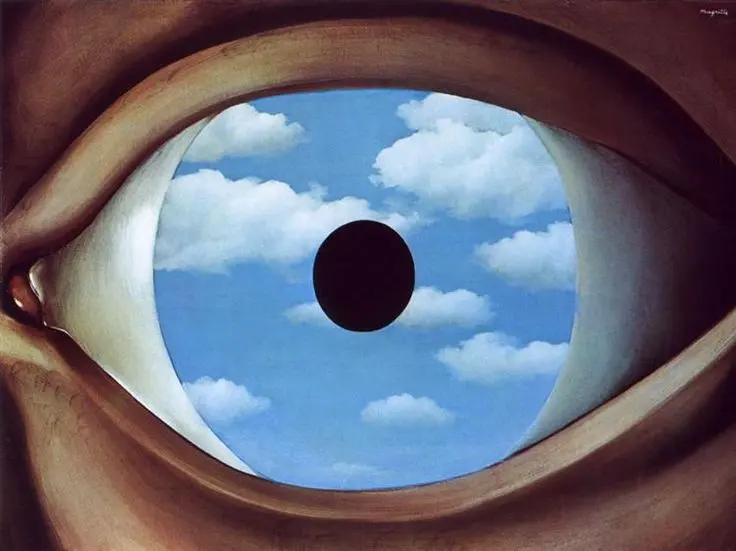
Magritte’s style is defined by a technique often called "magic realism," which uses precise, realistic painting to depict impossible scenarios. Unlike many Surrealists who relied on abstract or dreamlike distortion, Magritte painted everyday items—apples, bowler hats, pipes, and clouds—with photographic clarity. By placing these recognizable objects in strange, illogical settings, he forced viewers to question the relationship between language, visual representation, and the physical world.
His work avoids the emotional turbulence found in the art of contemporaries like Salvador Dalí. Instead, Magritte focused on philosophical inquiry and irony. He aimed to make the familiar seem alien, stripping away the comfort of our daily assumptions. His paintings often serve as visual puzzles, encouraging the viewer to look past the surface of the canvas to uncover deeper layers of meaning.
Why are his paintings so famous?
The fame of Magritte’s work stems from its accessibility and its profound intellectual depth. His images are instantly recognizable and have permeated popular culture, appearing in advertisements, films, and music videos. By using common symbols, he created a visual language that transcends cultural barriers, making his work as relevant to modern audiences as it was in the mid-20th century.
Several key themes consistently appear in his most famous compositions:
- The subversion of identity, often represented by the faceless man in a bowler hat.
- The tension between the object and its name, famously explored in his pipe painting.
- The use of concealment, such as faces obscured by green apples or heavy fabric.
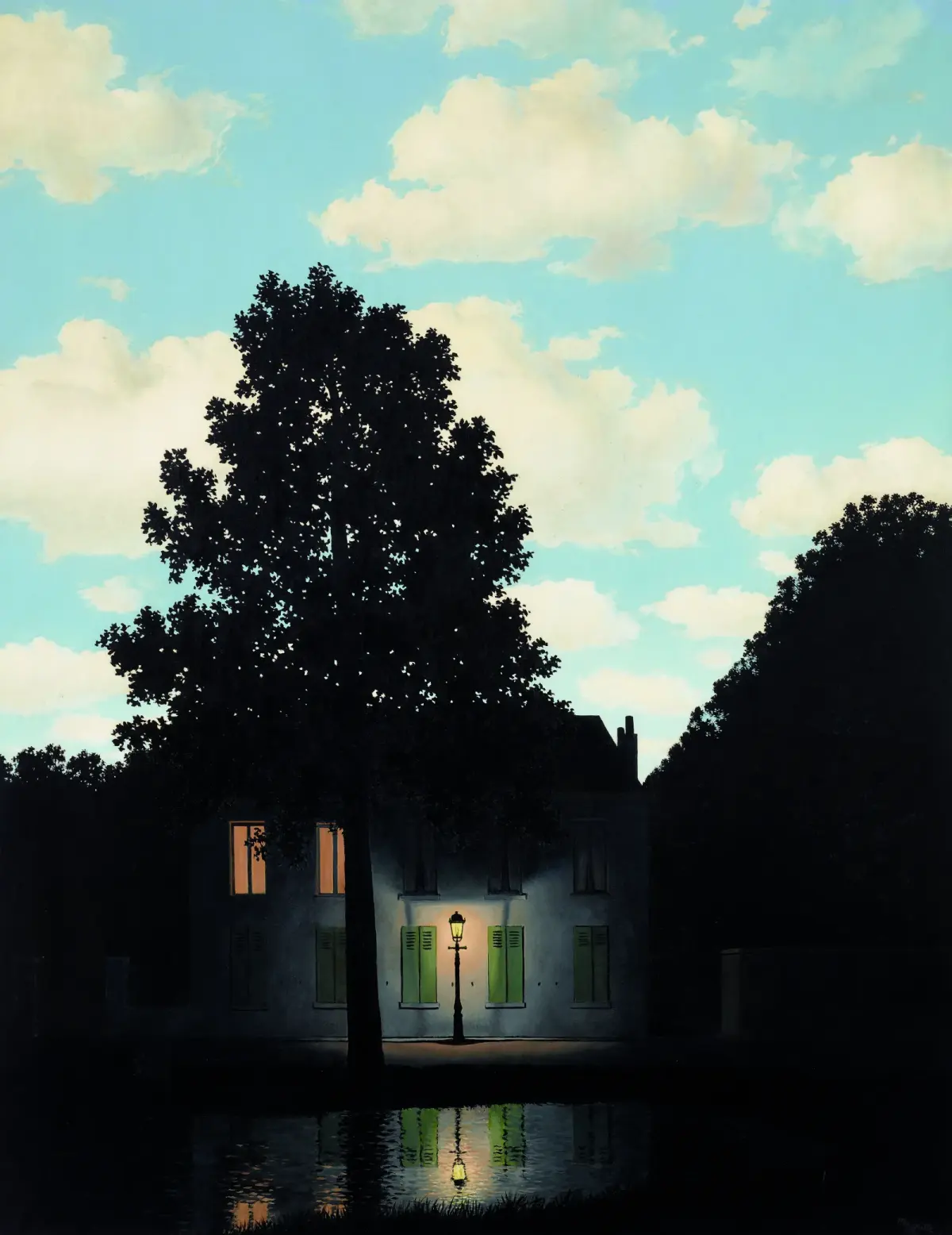
- The juxtaposition of day and night within a single landscape.
These motifs allow his art to function as a critique of how we process information. He famously argued that his paintings did not hide anything; rather, they evoked mystery, which is a fundamental aspect of human existence.
How to understand his most iconic works
To interpret a Magritte painting, one must look for the contradiction between the title and the visual content. For example, in The Treachery of Images, he depicts a pipe with the caption "Ceci n'est pas une pipe" (This is not a pipe). This is not a trick, but a literal truth: it is a painting of a pipe, not the physical object itself.
When viewing his work, follow these steps to gain a deeper appreciation:
- Identify the primary object: Look at the most prominent item in the frame.
- Observe the setting: Ask yourself if the environment matches the object's typical context.
- Analyze the title: Consider how the title reinforces or contradicts the visual narrative.
- Reflect on the feeling: Note if the painting evokes a sense of humor, unease, or curiosity.
By following this approach, you can move beyond the initial shock of the image and begin to engage with the artist’s philosophical intent.
Common mistakes when analyzing Magritte
A frequent mistake people make when studying Magritte is attempting to find a singular, definitive meaning for his paintings. Because Magritte was heavily influenced by philosophy and linguistics, he intentionally avoided providing clear explanations for his work. He believed that the mystery was the point, and assigning a rigid definition to a painting often limits the viewer’s ability to experience that mystery.
Another error is assuming his work is purely about dreams or the subconscious. While he was associated with the Surrealist movement, his approach was more analytical than the psychoanalytic methods of his peers. He did not paint his dreams; he painted his thoughts about the nature of reality. Avoid the temptation to psychoanalyze the artist based on his imagery, as this often leads to misinterpretations of his work’s primary purpose, which was to challenge the viewer's intellect rather than their psyche.
Best ways to explore his legacy today
If you are interested in learning more about Magritte’s influence, visiting dedicated collections is the best starting point. The Magritte Museum in Brussels houses the world’s largest collection of his work, offering an immersive look at his creative evolution. For those unable to travel, many major art institutions, such as the Museum of Modern Art in New York, maintain significant holdings of his paintings that are available for digital viewing.
When exploring his legacy, consider these resources for a well-rounded understanding:
- Read his personal correspondence to understand his views on art and philosophy.
- Study the work of contemporary artists who use irony and juxtaposition, as many cite Magritte as a primary influence.
- Examine the impact of his work on modern graphic design and advertising, where his visual shorthand remains highly effective.
By engaging with these materials, you will discover that Magritte’s work is not just a collection of clever tricks, but a sustained, lifelong investigation into the limits of human perception and the power of the visual image to reshape our understanding of the world around us.
Key facts
- René Magritte (1898–1967) was a Belgian Surrealist painter famous for challenging observers' preconditioned perceptions of reality.
- His most iconic work, The Treachery of Images (1929), features a realistic pipe with the text "Ceci n'est pas une pipe" (This is not a pipe) written below it.
- Magritte frequently utilized recurring motifs such as bowler hats, green apples, pipes, and cloudy blue skies to create a sense of mystery.
- He preferred a clean, graphic style of painting, often avoiding the complex brushwork associated with other Surrealists like Salvador Dalí.
- To understand his work, focus on the gap between the object, its name, and its representation rather than looking for a hidden psychological meaning.
- Avoid interpreting his paintings as dreams; Magritte insisted his work was intended to make the viewer aware of the limitations of language and perception.
The bottom line
René Magritte remains a towering figure in modern art because he transformed painting into a philosophical exercise. By juxtaposing ordinary objects in impossible contexts, he exposed the arbitrary relationship between language and reality. His work serves as a reminder that what we see is rarely the whole truth, encouraging viewers to question their assumptions about the world through his witty, precise, and deeply intellectual visual puzzles.
People also ask
Why did Magritte paint men in bowler hats?
The bowler hat was a standard middle-class garment in Brussels during the early 20th century. Magritte used it to represent the "everyman" or the anonymity of the modern individual, allowing the viewer to project themselves into his scenes.
Was Magritte part of the original Surrealist movement in Paris?
Yes, Magritte moved to Paris in 1927 and joined the circle of André Breton, the founder of Surrealism. He remained a central figure in the movement until his death, though he maintained a distinct, philosophical approach.
What is the meaning behind the green apple in his work?
The green apple, most famously seen in The Son of Man, represents the tension between the visible and the hidden. By obscuring a subject's face with an apple, Magritte forces the viewer to confront the frustration of not seeing what is behind the object.
Did Magritte have formal training in art?
He studied at the Académie Royale des Beaux-Arts in Brussels from 1916 to 1918. However, he found the traditional instruction restrictive and eventually developed his own unique, illustrative style.
Are all of Magritte's paintings surreal?
While he is the definitive Surrealist painter, his early work was influenced by Cubism and Futurism. He also experimented with an "Impressionist" style during the 1940s, though he is best known for his mature Surrealist period.
Where can I see his original paintings today?
The Magritte Museum in Brussels, Belgium, holds the world's largest collection of his works. Major pieces are also housed in the Museum of Modern Art in New York and the Tate Modern in London.
This answer was created with the help of AI research tools and reference sources. Spotted an error? Let us know — we correct mistakes quickly. See our editorial policy.