What is Edward Hopper's most famous painting?
Short answer
Nighthawks, painted in 1942, is Edward Hopper’s most famous work. This iconic oil-on-canvas piece depicts four people in a brightly lit downtown diner late at night. Its masterful use of light, shadow, and urban isolation has made it one of the most recognizable and frequently parodied images in American art history.
On this page
What is the history of Nighthawks?
Edward Hopper completed Nighthawks in January 1942, shortly after the United States entered World War II. The painting was acquired by the Art Institute of Chicago later that same year for $3,000, where it has remained a centerpiece of their collection ever since. Hopper often claimed that the work was inspired by a restaurant on Greenwich Avenue in New York City, though he noted that he simplified the scene to emphasize the sense of loneliness.
The painting reflects the mood of a nation suddenly plunged into war, characterized by a pervasive sense of anxiety and detachment. While Hopper resisted the idea that he intentionally infused his art with symbols of urban alienation, critics frequently point to the lack of a visible door leading out of the diner as a metaphor for entrapment. The composition relies on a sharp contrast between the warm, artificial glow of the diner and the dark, deserted street outside, creating a cinematic atmosphere that has influenced countless filmmakers and photographers.
How to analyze Hopper's painting style
Hopper’s technique is defined by his precise control of light and his ability to capture the stillness of a moment. He utilized a limited palette and strong geometric lines to direct the viewer's eye toward the subjects. Unlike his contemporaries, who were often focused on the chaotic energy of the city, Hopper focused on the quiet, often overlooked corners of the urban landscape.
To better understand his artistic approach, consider these key elements:
- Lighting: He used light as a primary narrative tool to highlight specific areas of interest while plunging others into deep shadow.
- Perspective: The wide, horizontal composition mimics a theater stage, placing the viewer in the role of an observer looking into a private space.
- Color: He favored muted tones that emphasize the coldness of the environment, punctuated by the vibrant yellow and red of the diner's interior.
- Narrative: He purposefully left his scenes ambiguous, allowing the viewer to invent their own stories about the people depicted.
Why Nighthawks is so iconic
The enduring popularity of Nighthawks stems from its universal appeal. It captures the quintessential experience of being alone in a crowd, a feeling that remains relevant in modern society. The image has transcended the art world to become a cultural touchstone, appearing in everything from television shows and films to advertisements and album covers.
Its visual clarity makes it an excellent entry point for those new to 20th-century American realism. The painting does not require extensive art historical knowledge to appreciate, as the emotional resonance is immediate and palpable. By stripping away the clutter of everyday life, Hopper forces the viewer to confront the stark reality of the human condition. This simplicity is precisely why the image is so easily reproduced and why it continues to resonate with audiences more than eight decades after its creation.
Common mistakes when interpreting Hopper
One frequent error is assuming that the people in the painting are interacting with one another. A closer look reveals that none of the patrons are making eye contact or engaged in conversation. They are physically close but emotionally distant, which is a hallmark of Hopper’s commentary on modern life. Another mistake is over-analyzing the specific identities of the figures. Hopper used his wife, Josephine, as the model for the woman in the red dress, but the other figures were largely composites or imagined, meant to represent archetypes rather than specific individuals.
When studying the work, avoid these pitfalls:
- Assuming the painting is a literal depiction of a specific, identifiable location that still exists today.
- Ignoring the influence of film noir, which shares the same dramatic lighting and sense of suspense found in Hopper's work.
- Focusing only on the subjects while neglecting the architectural details, such as the curved glass window, which is vital to the composition.
- Overlooking the influence of the Great Depression and wartime uncertainty on the artist's psychological state.
How to view Nighthawks in person
If you wish to see the painting, it is permanently housed at the Art Institute of Chicago. The museum provides an excellent environment for viewing the piece, as it is displayed in a gallery that allows for quiet contemplation. Because the painting is quite large—measuring approximately 33 by 60 inches—seeing it in person offers a sense of scale that digital reproductions simply cannot convey. The texture of the oil paint and the subtle variations in the color of the walls become much more apparent when viewed up close.
Before visiting, check the museum's website for any temporary gallery closures or special exhibitions that might affect the display of their American art collection. It is often best to visit during weekday mornings to avoid large crowds, allowing you to stand before the canvas without distraction. Take your time to observe how the light shifts across the surface as you move, and consider how the painting’s composition draws you into the diner’s silent, frozen world. By engaging with the work in its physical form, you gain a deeper appreciation for Hopper’s technical mastery and his profound ability to capture the quiet intensity of the human experience.
Key facts
- Edward Hopper’s most famous painting is Nighthawks, completed in 1942.
- The oil-on-canvas work measures 33.1 inches by 60 inches and is housed at the Art Institute of Chicago.
- It depicts four people in a downtown diner late at night, illuminated by harsh fluorescent light.
- Hopper claimed he did not intentionally infuse the scene with loneliness, though it is widely interpreted as a study of urban isolation.
- The setting was inspired by a restaurant on Greenwich Avenue in New York City, though the artist synthesized various elements rather than painting a specific location.
- When viewing the painting in person, note the lack of a visible door leading out of the diner, which reinforces the feeling of entrapment.
The bottom line
Nighthawks remains the definitive work of Edward Hopper, capturing the essence of American urban loneliness through its masterly use of light and composition. By stripping away the bustling energy of the city, Hopper focused on the quiet, transient moments of human existence. Understanding this painting requires observing its deliberate lack of exit points and the profound, silent disconnect between the figures gathered within the diner.
People also ask
Where can I see Nighthawks in person?
The painting is part of the permanent collection at the Art Institute of Chicago. It is typically on display in the museum's American art galleries.
Did Edward Hopper paint other works in a similar style?
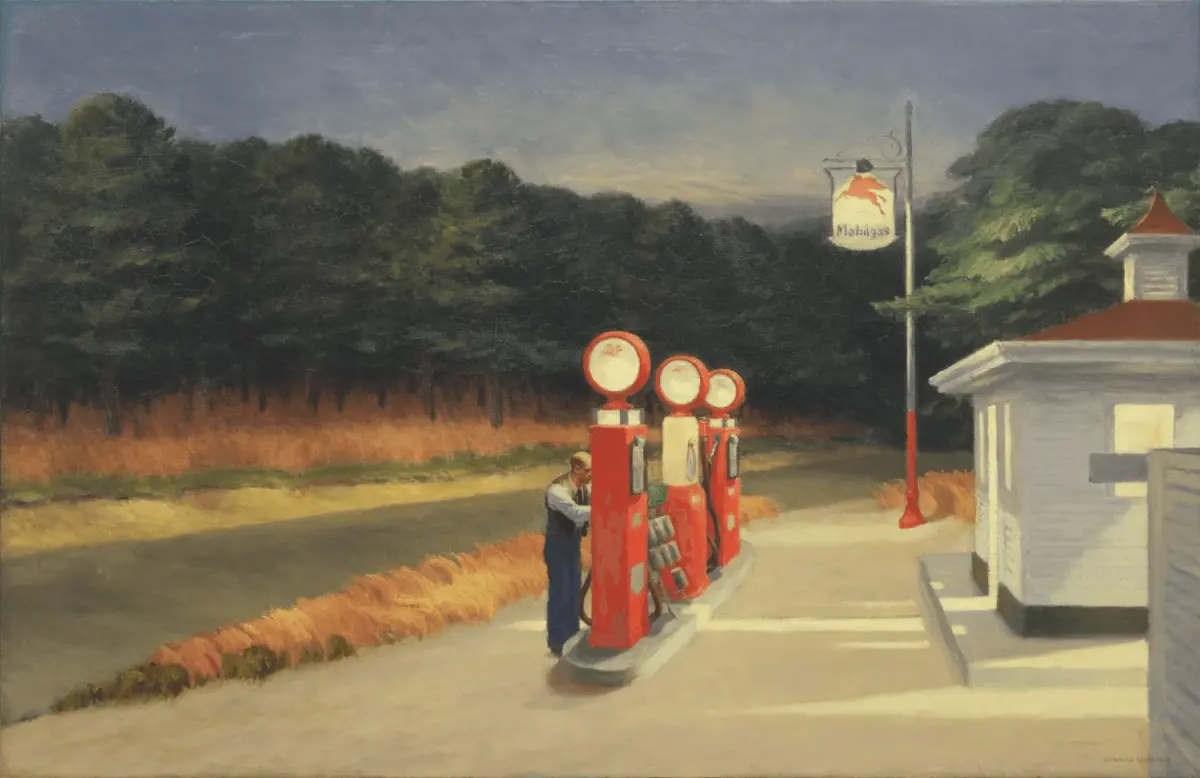
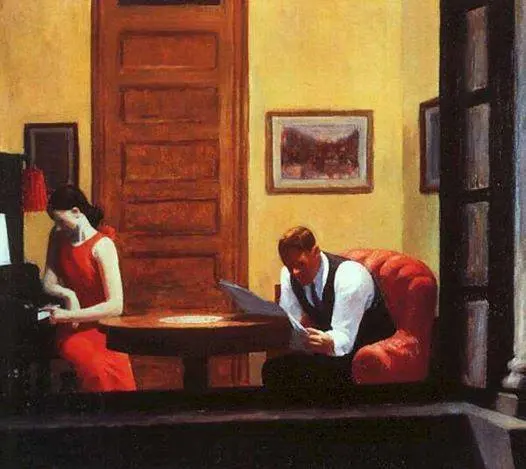
Yes, Hopper focused heavily on themes of solitude and modern urban life throughout his career. Works like Automat and Office at Night share the same cinematic lighting and sense of detached observation.
What is the significance of the red dress worn by the woman in Nighthawks?
The bright red dress serves as a visual anchor that draws the viewer’s eye toward the center of the composition. It provides a stark contrast to the muted greens and yellows of the diner’s exterior.
Was the diner in Nighthawks a real place?
Hopper stated that the painting was based on a restaurant on Greenwich Avenue, but he noted that he simplified the scene for artistic effect. No specific diner has been definitively identified as the exact model.
How did the Second World War influence the creation of Nighthawks?
Completed shortly after the attack on Pearl Harbor, the painting reflects the somber, anxious mood of wartime New York. The darkened streets and the sense of vulnerability captured the collective psychological state of the era.
What is the best way to analyze a Hopper painting?
Focus on the use of light and shadow, as Hopper used these to define mood and shape. Observe the architecture and the lack of interaction between figures to understand how he creates narratives of alienation.
This answer was created with the help of AI research tools and reference sources. Spotted an error? Let us know — we correct mistakes quickly. See our editorial policy.