What is Francis Bacon known for?
Short answer
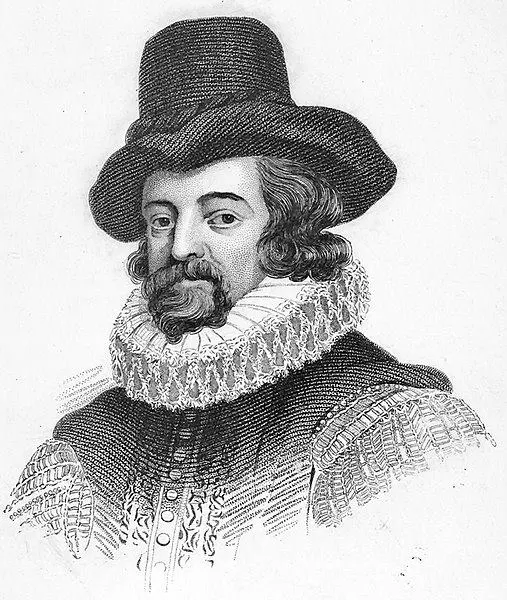
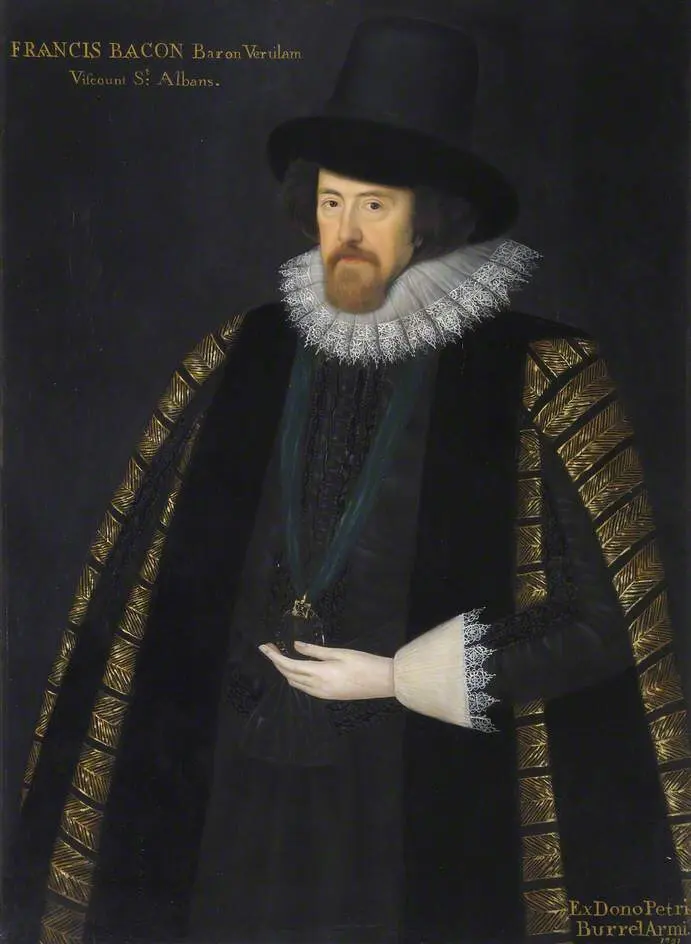
Francis Bacon (1561–1626) was an English philosopher, statesman, and scientist renowned as the father of empiricism. He pioneered the scientific method, emphasizing inductive reasoning and systematic observation over abstract theory. His influential writings, including Novum Organum, transformed how humanity approaches knowledge, advocating for practical experimentation to master nature for human benefit.
On this page
Why is Francis Bacon important to science?
Francis Bacon is primarily known for challenging the Aristotelian tradition that dominated medieval thought. Before his time, scholars often relied on deductive logic and ancient authorities to explain the natural world. Bacon argued that true knowledge should be derived from sensory experience and rigorous experimentation. He believed that by observing phenomena systematically, scientists could identify patterns and establish universal laws.
This shift toward the empirical method laid the essential groundwork for the Scientific Revolution. By insisting that researchers gather data through controlled experiments rather than relying on philosophical speculation, he provided a framework for modern scientific inquiry. His legacy persists in the standard practices of hypothesis testing and data-driven analysis used in laboratories worldwide today.
- Observe specific natural phenomena.
- Record data systematically to identify patterns.
- Formulate a general hypothesis based on evidence.
- Test the hypothesis through further experimentation.
- Refine or reject the theory based on results.
What is the Baconian method?
The Baconian method is a structured approach to scientific discovery that prioritizes inductive reasoning. Unlike deductive logic, which starts with a general rule and applies it to specific cases, the Baconian method moves from specific observations to broader generalizations. Bacon believed this process minimized human error and prevented researchers from jumping to premature conclusions.
To implement this method effectively, Bacon introduced the concept of the "tables of investigation." These tools helped researchers organize their findings into categories of presence, absence, and degree. By documenting where a phenomenon occurs, where it is absent, and how it varies in intensity, a scientist can isolate the true cause of an event with greater precision.
- Table of Essence and Presence: Lists instances where the phenomenon occurs.
- Table of Deviation or Absence: Lists instances where the phenomenon is absent.
- Table of Degrees or Comparison: Lists instances where the phenomenon varies in intensity.
What are the Idols of the Mind?
Bacon identified four "Idols of the Mind," which are cognitive biases that distort human perception and prevent objective understanding. He argued that these mental traps are inherent to human nature or acquired through social interaction. Recognizing these biases is the first step toward scientific objectivity, as they often lead individuals to see patterns where none exist or to ignore contradictory evidence.
The four idols are categorized as follows:
- Idols of the Tribe: Biases common to all humans due to our sensory limitations.
- Idols of the Cave: Individual biases resulting from personal upbringing, education, and habit.
- Idols of the Marketplace: Distortions caused by the imprecise or misleading use of language.
- Idols of the Theater: Errors arising from adherence to flawed philosophical systems or dogmas.
Common mistakes when applying Baconian principles
A frequent error when attempting to apply Bacon’s empirical approach is the failure to maintain a neutral perspective. Many researchers fall into the trap of "confirmation bias," where they only look for data that supports their initial expectations. Bacon warned against this, emphasizing that a scientist must be willing to discard a theory if the data does not support it, regardless of how elegant the theory may appear.
Another common mistake is neglecting the importance of negative instances. Scientists often focus exclusively on confirming their ideas, yet Bacon argued that the most valuable information often comes from observing when a phenomenon fails to occur. By ignoring these "absent" cases, researchers miss critical opportunities to understand the boundaries and limitations of their discoveries. Always document what does not happen as carefully as what does.
How to study Francis Bacon today
For those interested in exploring Bacon’s work, starting with Novum Organum is essential. This text serves as the core of his philosophy, detailing his critique of traditional logic and his proposal for a new scientific instrument. Readers should approach the text with an understanding of the historical context, as Bacon was writing during a time when the transition from alchemy to modern chemistry was just beginning.
When studying his life, it is also useful to look at his political career as the Lord Chancellor of England. His professional life often intersected with his philosophical goals, as he sought to reform the legal and educational systems of his era. By examining the synergy between his public service and his intellectual pursuits, one gains a holistic view of a man who believed that knowledge should be a practical tool for the improvement of the human condition.
Key facts
- Francis Bacon (1561–1626) was an English philosopher, statesman, and scientist who served as Lord Chancellor of England.
- He is widely recognized as the father of empiricism for his insistence that knowledge must be derived from observation and experimentation.
- His most influential work, Novum Organum (1620), introduced the inductive method, a systematic approach to scientific inquiry.
- Bacon identified the "Idols of the Mind," which are four categories of cognitive biases that distort human perception and objective reasoning.
- He advocated for the "Great Instauration," an ambitious project intended to reorganize the sciences and improve human life through technology.
- To apply his method, always define your hypothesis, gather data through controlled observation, and refine your conclusions based on empirical evidence.
The bottom line
Francis Bacon remains a pivotal figure in history for shifting the focus of intellectual inquiry toward empirical evidence. By championing the inductive method and identifying the cognitive biases that cloud human judgment, he laid the essential groundwork for modern scientific practice. His legacy serves as a reminder that objective observation and critical skepticism are the most powerful tools for understanding the world and achieving technological progress.
People also ask
Did Francis Bacon write the plays attributed to William Shakespeare?
The theory that Bacon authored Shakespeare’s plays is a fringe belief known as the Baconian hypothesis. Most historians and literary scholars reject this claim, citing a lack of credible evidence and significant differences in the writing styles of the two men.
What are the four Idols of the Mind?
Bacon categorized these as Idols of the Tribe (human nature), the Cave (individual bias), the Marketplace (language confusion), and the Theater (dogmatic philosophy). Recognizing these biases helps researchers maintain objectivity when analyzing data.
Why was Bacon’s inductive method revolutionary?
Before Bacon, science relied heavily on Aristotelian deduction, which often started with abstract assumptions. His inductive method prioritized gathering specific facts first to build broader, more reliable scientific laws.
What was Bacon’s role in the Scientific Revolution?
He provided the philosophical framework that encouraged scientists to move away from ancient authority. By promoting the idea that "knowledge is power," he inspired the formation of the Royal Society and the modern scientific method.
How did Bacon die?
Bacon died in 1626 from pneumonia, which he reportedly contracted while experimenting with the effects of freezing on the preservation of a chicken. This illustrates his lifelong commitment to empirical testing, even at the cost of his health.
What is the primary goal of the Baconian method?
The main goal is to eliminate human error and superstition through rigorous, repeatable observation. By systematically testing variables, one can uncover the underlying laws of nature and apply them to practical human advancement.
This answer was created with the help of AI research tools and reference sources. Spotted an error? Let us know — we correct mistakes quickly. See our editorial policy.