What does a tree tattoo mean?
Short answer
Tree tattoos symbolize growth, resilience, and the interconnectedness of life. They often represent personal history, family heritage, or a deep connection to nature. Because trees cycle through seasons, these designs frequently signify rebirth, endurance, and the passage of time, serving as a permanent reminder of one's roots and evolving identity.
On this page
What do tree tattoos symbolize?
Tree tattoos are rich in cultural and personal symbolism, often serving as a visual representation of the wearer's life journey. The most common interpretation is the "Tree of Life," a motif found in various ancient mythologies, which represents the connection between the heavens, the earth, and the underworld. This design emphasizes unity, wisdom, and the cycle of existence.
Beyond universal archetypes, specific tree species carry distinct meanings that allow for personalized expression. For instance, the oak tree is widely recognized as a symbol of strength, stability, and endurance due to its longevity and deep root systems. Conversely, the willow tree often represents flexibility, grace, and the ability to withstand adversity by bending rather than breaking. By choosing a specific tree, individuals often highlight traits they either possess or aspire to embody in their own lives.
How to choose a tree tattoo design
Selecting the right design requires balancing aesthetic preferences with the intended meaning. Many people opt for minimalist line work, which focuses on the silhouette and structural beauty of the tree. Others prefer hyper-realistic styles that capture the texture of bark, the delicacy of leaves, or the complexity of root systems. Consider how the shape of the tree will fit the anatomy of your chosen body part.
When planning your design, consider these common stylistic choices:
- Geometric trees: Features sharp lines and patterns, often representing order and mathematical beauty.
- Watercolor trees: Utilizes soft, bleeding colors to evoke an ethereal or dreamlike atmosphere.
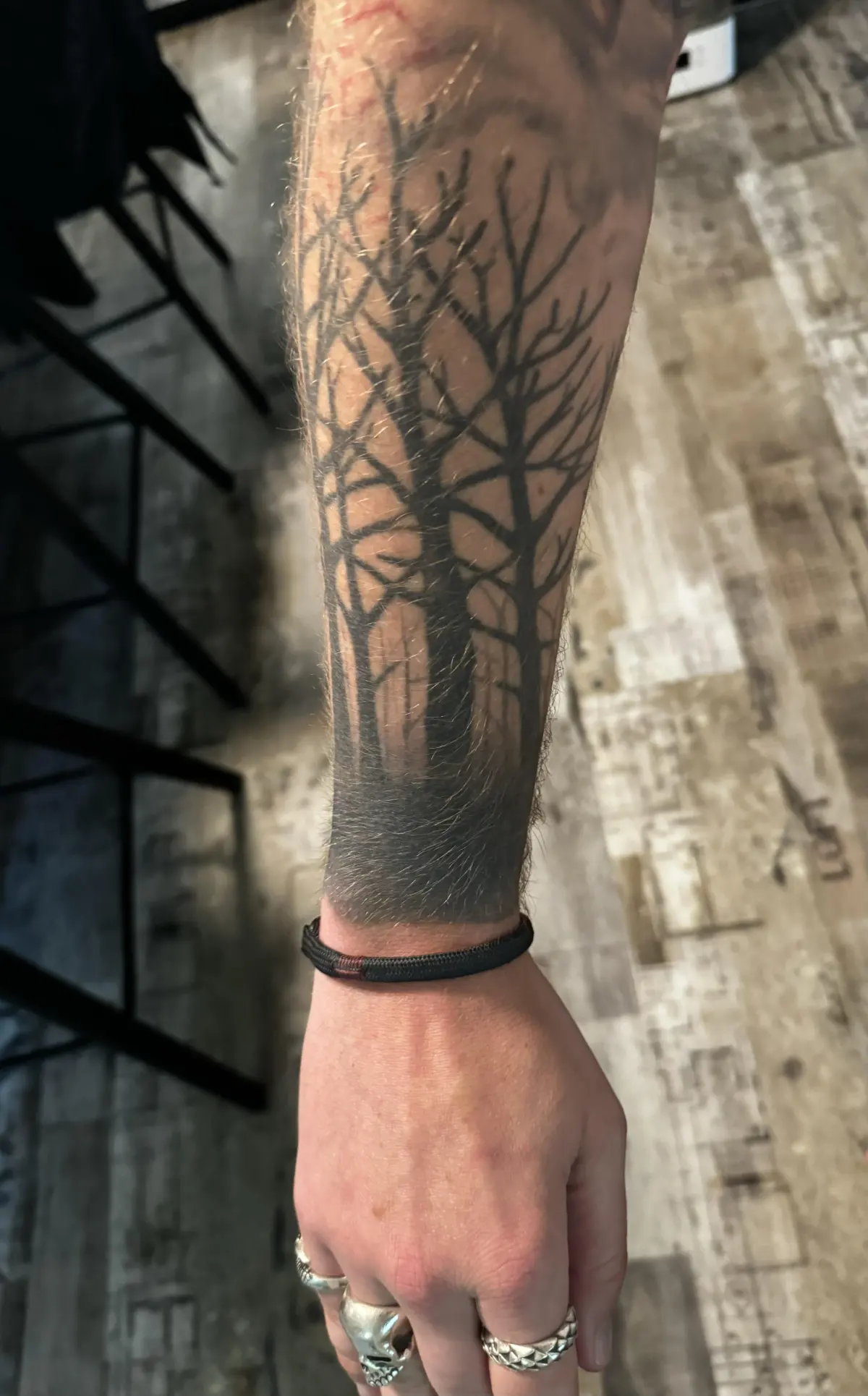
- Silhouette trees: Uses solid black ink to create a stark, high-contrast image that is timeless and bold.
- Ancestral trees: Incorporates names or dates within the branches to honor family lineage and heritage.
What are the best placements for a tree tattoo?
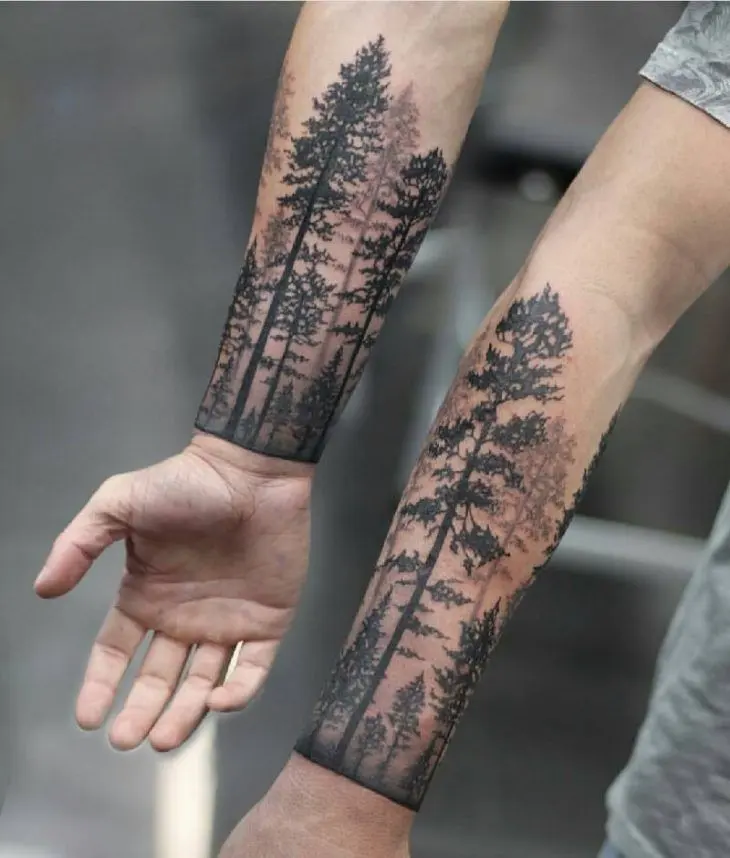
The placement of a tree tattoo significantly influences its visual impact and longevity. Vertical designs, such as a tall pine or a slender willow, are ideal for areas with length, such as the forearm, calf, or spine. These placements allow the tree to follow the natural lines of the body, creating a sense of movement and height that complements the anatomy.
For more expansive designs, such as a sprawling oak or a forest scene, wider areas like the back, chest, or thigh are preferable. These surfaces provide the necessary "canvas" for intricate root details and wide-reaching branches. Before finalizing your placement, consult with your artist about the following factors:
- Skin elasticity: Areas like the stomach or joints may distort the image as you age or gain weight.
- Visibility: Decide if you want the design to be easily concealed for professional settings or prominently displayed.
- Pain tolerance: Areas with less muscle and fat, such as the ribs or collarbone, are generally more sensitive during the tattooing process.
Common mistakes when getting a tree tattoo
A common error is failing to account for how ink spreads over time. Fine, intricate details, such as tiny leaves or thin, overlapping branches, can blur as the skin ages. To prevent this, ensure your artist uses appropriate spacing and bold enough lines to maintain the design's integrity for years to come. Always ask to see healed examples of their work to gauge how their style holds up.
Another mistake is neglecting the importance of scale. A design that is too small for the amount of detail requested will inevitably result in a muddy, illegible image. Furthermore, failing to research the symbolic meaning of a specific tree can lead to unintended connotations. For example, some cultures associate certain trees with mourning or death, which may not align with your intended message of growth or life. Always perform thorough research before committing to a permanent piece.
How to care for a tree tattoo
Proper aftercare is essential to ensure your tree tattoo heals with vibrant detail and sharp lines. Immediately following your appointment, keep the area clean and protected from direct sunlight. Most artists recommend a gentle, fragrance-free cleanser and a thin layer of specialized tattoo ointment or unscented lotion to keep the skin hydrated without clogging the pores. Avoid submerging the tattoo in water, such as swimming pools or hot tubs, during the initial two-week healing phase.
Follow these steps to ensure optimal healing:
- Wash the tattoo gently with lukewarm water and mild soap twice daily.
- Pat the area dry with a clean paper towel; do not rub the skin.
- Apply a very thin layer of moisturizer to prevent scabbing and itching.
- Wear loose-fitting clothing to avoid friction against the healing skin.
- Apply high-SPF sunscreen once the tattoo is fully healed to prevent fading from ultraviolet rays.
By adhering to these professional guidelines, you protect the longevity of your artwork and ensure that your chosen symbol of nature remains a clear and meaningful part of your personal history for the rest of your life.
Key facts
- Tree tattoos often symbolize growth, resilience, and the cycle of life due to the tree's deep roots and reaching branches.
- The "Tree of Life" is a cross-cultural motif representing the connection between heaven, earth, and the underworld.
- Deciduous trees, which lose their leaves, are frequently chosen to represent rebirth, transformation, and the passage of time.
- Evergreen trees, such as pines or cedars, are commonly used to symbolize immortality, endurance, and strength through harsh seasons.
- Placement on the body significantly affects the design; vertical designs like trunks work well on forearms or spines, while circular canopies fit shoulders.
- When choosing a design, ensure the artist has experience with fine-line work or dot-work, as intricate bark textures require high precision.
The bottom line
A tree tattoo serves as a powerful, versatile emblem of personal history and endurance. By selecting a species that aligns with your values—whether it be the steadfast oak or the adaptable willow—you create a meaningful narrative on your skin. Prioritize a professional artist skilled in botanical illustration to ensure the intricate textures of bark and foliage remain clear and vibrant for years to come.
People also ask
Does the type of tree change the meaning of the tattoo?
Yes, specific trees carry distinct cultural associations. For example, an oak often represents wisdom and endurance, while a willow is frequently associated with grace, healing, and mourning.
What is the best placement for a tree tattoo?
Long, slender trees are best suited for the forearm, calf, or spine to accommodate their natural vertical shape. Wider, circular designs like a full canopy are better placed on the chest, shoulder blade, or thigh.
Are tree tattoos usually done in black and grey or color?
Both styles are popular, though black and grey is standard for emphasizing the texture of bark and the complexity of branches. Color is often used to denote seasonal changes, such as autumn leaves or cherry blossoms.
How do I avoid a generic-looking tree tattoo?
To avoid a cliché design, incorporate personal elements such as specific root structures, hidden symbols within the leaves, or a style that mimics a specific art movement like watercolor or geometric abstraction.
Do tree tattoos fade quickly?
Fine-line tree tattoos can lose detail over time if the lines are too thin or placed in high-friction areas. Choosing a slightly bolder line weight for the main trunk helps the tattoo maintain its structure as it ages.
Can I combine a tree tattoo with other symbols?
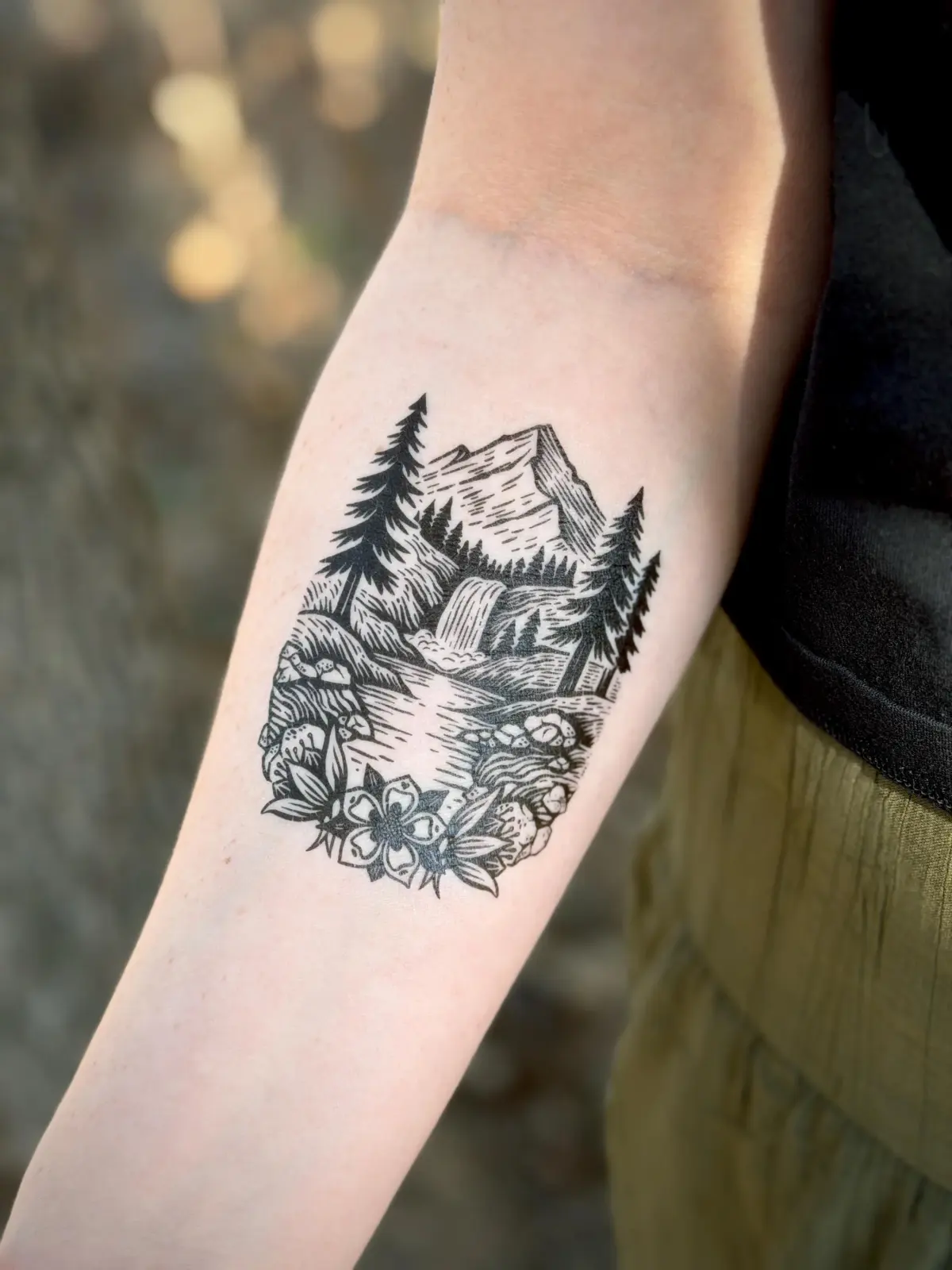
Many people integrate animals, mountains, or celestial bodies like the moon to add layers of meaning. Ensure the composition remains balanced so the tree does not become visually overwhelmed by secondary elements.
This answer was created with the help of AI research tools and reference sources. Spotted an error? Let us know — we correct mistakes quickly. See our editorial policy.