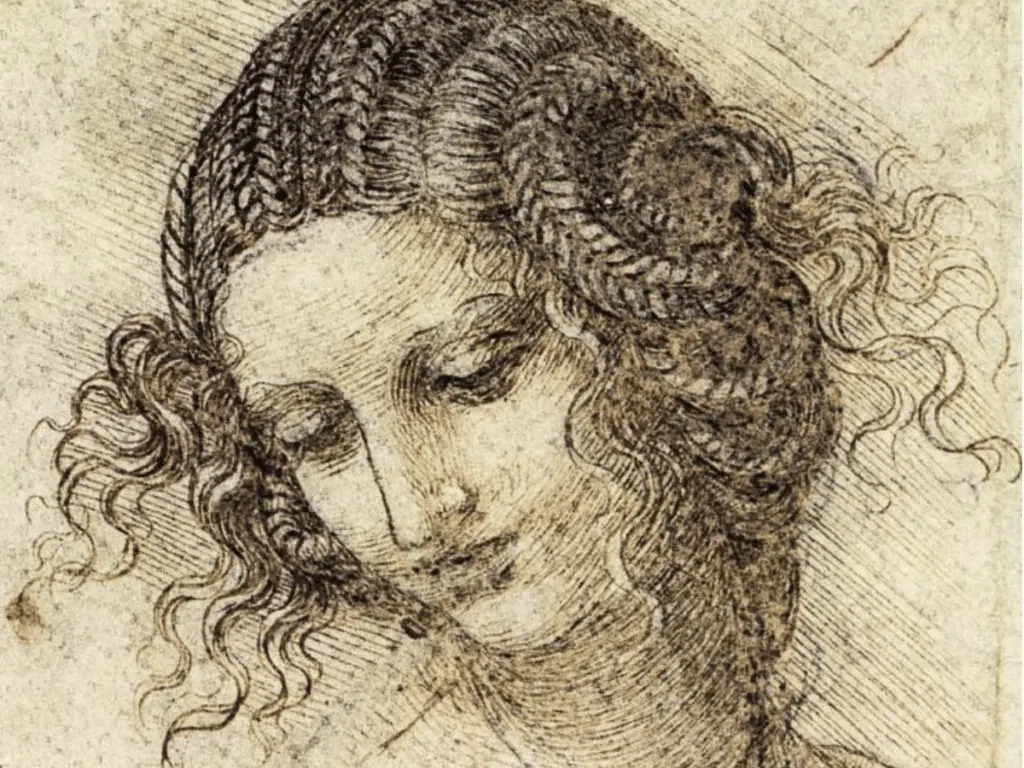
What is memory drawing?
Short answer
Memory drawing is a pedagogical method of training the mind to observe, retain, and accurately reproduce visual information from recall rather than direct observation. By analyzing a subject and then drawing it from mental imagery, artists strengthen their visual memory, spatial reasoning, and ability to distill complex forms into essential structural components.
On this page
What is the history of memory drawing?
Memory drawing gained prominence in the 19th century as a cornerstone of formal art education, most notably through the teachings of Horace Lecoq de Boisbaudran in Paris. Lecoq de Boisbaudran, an influential instructor at the École Impériale de Dessin, argued that students relied too heavily on copying models in front of them, which stifled their creative independence. He developed a rigorous system where pupils would observe a live model or a still life for a set period before the subject was hidden, forcing the student to rely entirely on their internal mental image.
This method was designed to bridge the gap between technical skill and artistic vision. By forcing the brain to encode visual data quickly, students learned to perceive the underlying geometry and relationships of a subject rather than merely transcribing surface details. Many renowned artists, including Edgar Degas and Henri Fantin-Latour, were products of this training. Their work often reflects the ability to capture fleeting gestures and complex compositions that would be impossible to execute through slow, observational copying alone.
How to practice memory drawing effectively
To begin practicing, you must focus on the process of active observation followed by a period of deliberate recall. Start with simple objects rather than complex human figures to avoid being overwhelmed by detail. The goal is to build your "visual library" by breaking down subjects into their most basic, manageable parts.
- Select a simple object, such as a piece of fruit or a geometric block.
- Observe the object closely for 60 seconds, noting its proportions, light source, and shadow shapes.
- Remove the object from your sight or turn away completely.
- Draw the object from memory, focusing on the structural relationships you just analyzed.
- Compare your drawing to the original object to identify which areas you missed or distorted.
- Repeat the process, adjusting your focus to correct the inaccuracies you discovered in the previous attempt.
Why memory drawing improves artistic skill
The primary benefit of memory drawing is the development of "visual shorthand," a mental catalog of forms that an artist can access at will. When you draw from life, you are often distracted by the sheer volume of information present in the scene. Memory drawing forces you to prioritize what is essential, teaching you to filter out noise and focus on the fundamental structure, such as the tilt of an axis or the specific curve of a contour.
Furthermore, this practice enhances your spatial reasoning and understanding of perspective. Because you cannot rely on the subject to provide constant feedback, you must develop a deeper internal logic for how objects occupy three-dimensional space. This leads to a more confident line quality and a better grasp of anatomy and composition. Over time, you will find that your ability to imagine complex scenes and translate them onto paper becomes significantly more fluid, as your brain becomes adept at reconstructing visual information from abstract concepts.
Common mistakes when learning memory drawing
One of the most frequent errors beginners make is attempting to memorize too much detail too quickly. If you try to capture every texture or highlight during your observation phase, your brain will become overloaded, and you will likely fail to capture the overall proportions. It is much more effective to prioritize the "big shapes" and the main gesture of the subject before worrying about fine details.
- Trying to memorize surface textures instead of structural proportions.
- Spending too much time observing and not enough time drawing.
- Getting discouraged by early inaccuracies instead of using them as diagnostic tools.
- Failing to compare the final drawing against the original to learn from mistakes.
- Moving to complex subjects, like portraits or cityscapes, before mastering simple geometric forms.
By avoiding these pitfalls, you maintain a steady pace of improvement. Remember that the purpose of the exercise is not to produce a perfect drawing every time, but to train the neural pathways involved in visual retention and recall.
Best tools for memory drawing practice
For memory drawing, you need materials that allow for quick, decisive marks rather than tools that encourage slow, meticulous shading. Graphite pencils, charcoal, or even a simple ballpoint pen are ideal because they allow you to sketch rapidly without the need for constant sharpening or complex equipment. Using a sketchbook with a moderate tooth is recommended, as it provides enough friction for control while allowing your hand to move across the page with speed and fluidity.
When you are ready to advance, consider using a timer to enforce strict observation and drawing intervals. Using a digital timer or a simple stopwatch helps you maintain discipline, ensuring you do not cheat by sneaking extra looks at the subject. Keep your drawings small initially; a smaller format makes it easier to manage the entire composition within your field of vision. As your proficiency grows, you can increase the complexity of your subjects and the duration of your memory sessions, eventually moving toward capturing entire scenes or complex human figures in motion.
Key facts
- Memory drawing is the practice of observing an object, removing it from sight, and then attempting to draw it from mental recall.
- The method was popularized in the 19th century by Horace Lecoq de Boisbaudran at the École Impériale de Dessin in Paris.
- It strengthens visual memory by forcing the brain to convert transient retinal images into structured, stored information.
- A common training exercise involves observing a subject for 30 seconds, hiding it, drawing for two minutes, and then comparing the result to the original.
- The technique improves "visual literacy," allowing artists to understand the essential proportions and structural logic of a subject rather than just copying lines.
- Beginners should start with simple geometric shapes or silhouettes before attempting complex objects like human figures or architecture.
The bottom line
Memory drawing is a disciplined practice that bridges the gap between observation and creative expression. By training the mind to retain and reconstruct visual information, you develop a deeper understanding of structure, proportion, and light. This method moves beyond rote copying, fostering an internal visual vocabulary that empowers you to draw with greater confidence, speed, and accuracy, whether you are working from life or your imagination.
People also ask
How does memory drawing differ from life drawing?
Life drawing requires the artist to observe the subject while simultaneously recording it on paper. Memory drawing separates the observation and execution phases, requiring the artist to internalize the visual data before drawing.
Can memory drawing improve my ability to draw from imagination?
Yes, it builds a "visual library" of forms, textures, and lighting patterns in your mind. By practicing recall, you gain the ability to synthesize these stored images into original compositions without needing reference material.
What is the biggest mistake beginners make in memory drawing?
Many beginners try to observe the subject for too long, which creates a crutch rather than a challenge. Effective practice requires short, intense bursts of observation to force the brain to prioritize the most important structural information.
Should I use photos or real objects for this practice?
Physical objects are superior because they provide depth and parallax, which photos flatten. Viewing a 3D object helps the brain understand spatial relationships more accurately than a 2D image.
How long should I spend on a single memory drawing session?
Keep sessions short, ideally between 10 and 20 minutes total. The goal is to train the brain to capture information quickly, so long, drawn-out sessions often lead to fatigue and diminishing returns.
Is memory drawing only for professional artists?
No, it is a cognitive exercise that benefits anyone interested in improving their observational skills. It helps sharpen focus and increases the speed at which the brain processes and retains complex visual stimuli.
This answer was created with the help of AI research tools and reference sources. Spotted an error? Let us know — we correct mistakes quickly. See our editorial policy.