How can I draw a person easily?
Short answer
Drawing a person is best approached by breaking complex anatomy into simple geometric shapes like spheres, cylinders, and boxes. By establishing a solid foundation of proportions before adding details, you can accurately capture the human form. Consistent practice with basic construction lines will help you develop the muscle memory required for figurative drawing.
On this page
How to start drawing a person
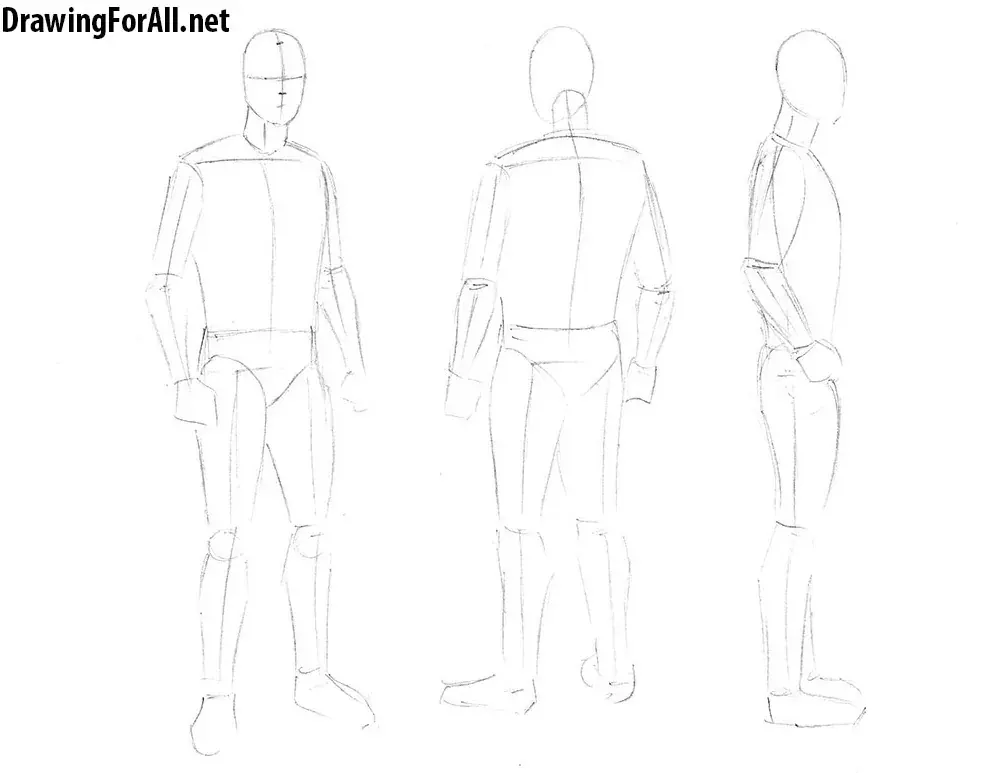
The most effective way to begin drawing a person is to utilize the "mannequin method." Instead of focusing on skin, hair, or clothing immediately, visualize the body as a collection of simple 3D forms. The head is typically an oval or sphere, the torso is a box or cylinder, and the limbs are represented by lines and joints. This structural approach ensures that your figure has correct volume and perspective before you commit to permanent marks.
To build your initial sketch, follow these foundational steps:
- Draw a light vertical line to act as the center of gravity for the body.
- Mark the head, rib cage, and pelvis as simple geometric blocks.
- Connect these blocks with lines to indicate the spine and limbs.
- Check the alignment of the joints to ensure the pose looks natural.
By prioritizing these basic shapes, you avoid the common pitfall of drawing flat, two-dimensional figures that lack a sense of physical presence.
Why proportions are important in figure drawing
Proportions serve as the blueprint for a realistic human figure. Artists typically use the "head count" method, where the total height of an average adult is measured as approximately seven to eight heads tall. By using the head as a standard unit of measurement, you can ensure that the torso, legs, and arms are sized correctly in relation to one another. Miscalculating these ratios is the primary reason why drawings often look distorted or "off" to the viewer.
When measuring proportions, keep these standard benchmarks in mind:
- The midpoint of the body is generally at the pubic bone.
- The elbows should align with the bottom of the rib cage.
- The fingertips typically reach down to the mid-thigh area.
- The width of the shoulders is usually about two to three head widths wide.
Maintaining these relationships creates a sense of harmony. If one part of the body is drawn too large or too small, it immediately breaks the illusion of a realistic human form.
Best tools for beginners to use
You do not need expensive equipment to learn how to draw people. A simple set of graphite pencils ranging from HB to 2B, a kneaded eraser, and a sketchbook with smooth paper are sufficient for most beginners. HB pencils are excellent for light construction lines because they are easy to erase, while 2B pencils provide the darker values needed for shading and defining contours. Using a kneaded eraser is particularly helpful because it can be molded into points to lift graphite from small, specific areas.
Avoid using pens or markers during the initial learning phase, as they do not allow for the correction of mistakes. Graphite allows you to build up your drawing in layers, starting with faint, ghost-like lines that you can refine as your confidence grows. As you progress, consider experimenting with charcoal or conte crayons, which offer a broader range of tonal values. However, mastering the control of a standard pencil is the most important milestone for any aspiring figurative artist.

Common mistakes when drawing people
One of the most frequent errors beginners make is focusing on fine details, such as individual eyelashes or fingernails, before the overall structure is finished. This "detail-first" approach often leads to lopsided drawings because the underlying proportions were never properly established. Another common mistake is drawing "symbolic" eyes or mouths rather than observing the actual shapes present in your reference. Symbols are what we think things look like, while observation reveals how light and shadow actually define those features.
To avoid these common pitfalls, keep the following advice in mind:
- Avoid "chicken scratching," which involves using many short, choppy lines; instead, use long, confident strokes.
- Do not forget to account for the weight of the body; if a person is leaning, their center of gravity must align with their feet.
- Resist the urge to press too hard with your pencil; keep lines light until you are certain of the placement.
- Step back from your drawing periodically to view it from a distance, which helps you spot anatomical errors more easily.
How to improve your drawing skills
Consistent practice is the only way to improve your ability to draw the human figure. Try to dedicate at least fifteen minutes each day to "gesture drawing," which is the practice of sketching a person in motion within a very short time limit, such as thirty seconds or two minutes. This exercise forces you to capture the essence and energy of a pose rather than getting bogged down in anatomy or shading. Over time, this builds an intuitive understanding of movement and flow.
In addition to gesture drawing, study the anatomy of the skeleton and major muscle groups. You do not need to be a medical expert, but understanding where the collarbone attaches or how the knee joint functions will make your drawings look more professional. Look at the works of historical masters like Leonardo da Vinci or Michelangelo to see how they utilized anatomy to create lifelike figures. By combining daily practice with the study of structural anatomy, you will steadily develop the technical skill required to draw people with accuracy and confidence.
Key facts
- The human head is roughly an oval shape, often referred to as an "egg" shape in drawing tutorials.
- Align the eyes halfway between the top of the head and the chin to maintain correct facial proportions.
- The bottom of the nose typically sits halfway between the eye line and the chin.
- Shoulders are generally about two to three head-widths wide for an average adult figure.
- Use light, sketchy lines initially to map out shapes before committing to darker, final outlines.
- Practice drawing from life or photos rather than memory to better understand how light hits three-dimensional forms.
The bottom line
Drawing a person is best approached by breaking the complex human form into simple geometric shapes like circles, ovals, and cylinders. By mastering basic proportions—such as eye placement and shoulder width—you create a reliable framework for your art. Consistent practice and careful observation of light and shadow are essential to moving from basic sketches to more realistic, lifelike representations of the human figure.
People also ask
What is the most common mistake beginners make when drawing faces?
Beginners often place the eyes too high on the head, forgetting that the cranium occupies significant space above the brow line. Always ensure there is enough room for the forehead and hairline.
Should I start with the details like eyes and lips?
Never start with details; always begin by blocking out the basic shapes and proportions of the head and body. Details should only be added once the underlying structure is accurate.
How do I make my drawings look less flat?
Focus on shading and identifying the light source to create depth. Adding shadows on the side opposite the light source helps define the volume of the facial features.
Is it better to use a pencil or a pen?
Use a graphite pencil, preferably an HB or 2B, because it allows for easy erasing and layering of tones. Pens are permanent and do not allow for the subtle shading necessary for realistic sketching.
How long does it take to learn to draw a person well?
Mastery depends on consistent practice, but most students see significant improvement after a few months of daily sketching. Focus on observational skills rather than speed to build a strong foundation.
Can I use a grid method to help with proportions?
Yes, drawing a grid over your reference image and a corresponding grid on your paper is a standard technique. This helps maintain accurate placement of features and ensures the overall shape remains balanced.
This answer was created with the help of AI research tools and reference sources. Spotted an error? Let us know — we correct mistakes quickly. See our editorial policy.