What is street photography?
Short answer
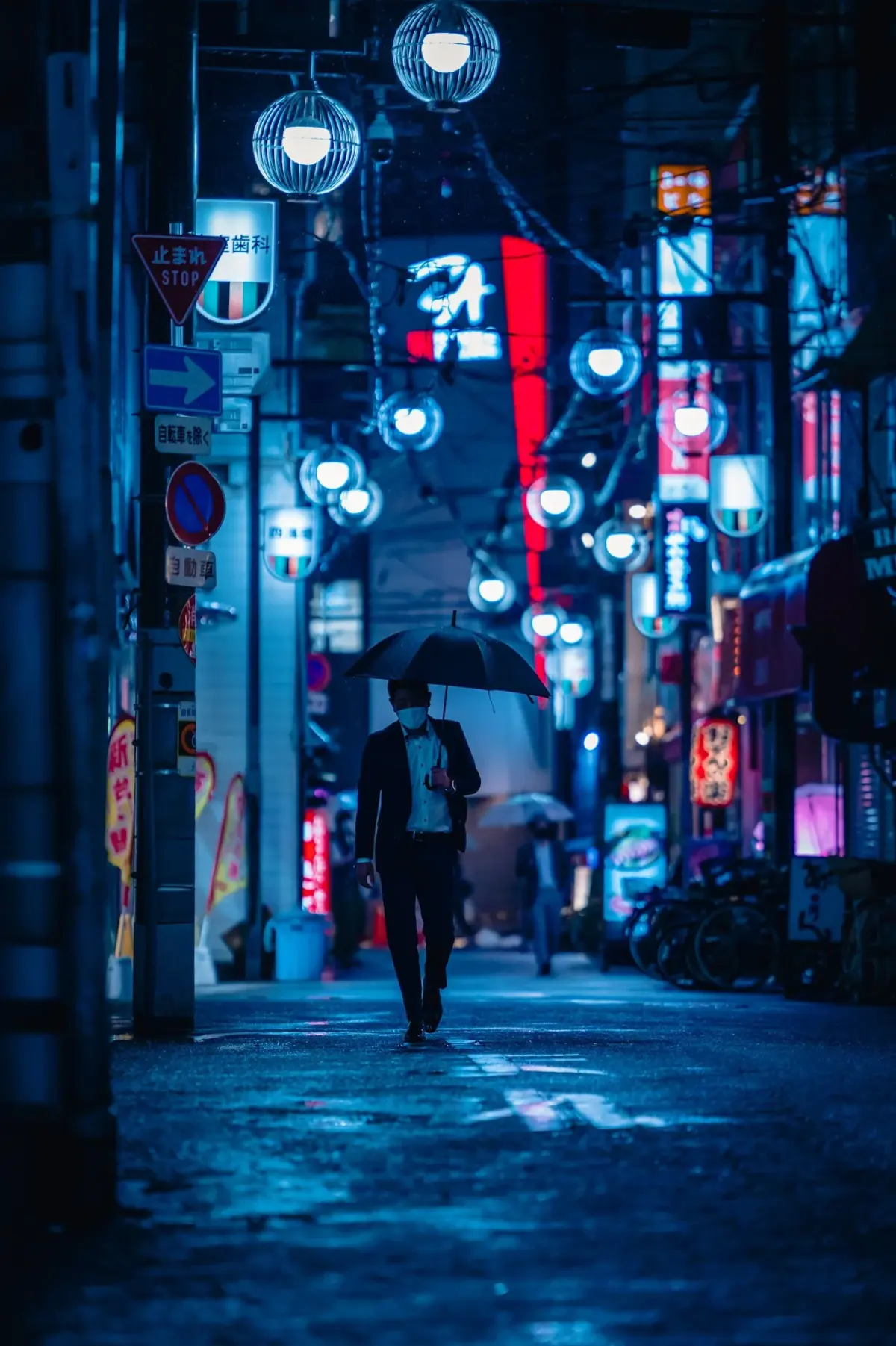
Street photography is a candid art form that captures unposed moments of everyday life in public spaces. It focuses on human behavior, social interaction, and the interplay between people and their urban environments. By documenting the mundane or unexpected, photographers create visual narratives that reflect the authentic spirit of contemporary society.
On this page
What is the history of street photography?
Street photography emerged in the early 20th century, facilitated by the invention of portable, high-quality cameras like the Leica I, introduced in 1925. Before this, heavy equipment made candid photography nearly impossible. Pioneers such as Henri Cartier-Bresson, often considered the father of the genre, championed the concept of the "decisive moment." This philosophy suggests that there is a split-second window where the elements of a scene align perfectly to reveal the essence of a situation.
During the mid-20th century, photographers like Robert Frank and Vivian Maier expanded the genre’s reach. Frank’s influential 1958 book, The Americans, moved away from traditional aesthetics to capture the raw, gritty reality of life across the United States. Meanwhile, Maier’s extensive archive, discovered decades later, showcased a masterful eye for urban solitude and social observation. Today, the genre continues to evolve, blending historical documentary techniques with modern perspectives on global culture and public life.
Best camera settings for street photography
Mastering your camera settings is essential for capturing fleeting moments without fumbling with menus. Most street photographers prefer a "set it and forget it" approach to ensure they are always ready. A fast shutter speed is the most critical factor, as it freezes motion and minimizes blur caused by walking or moving subjects. Aim for at least 1/500th of a second, or faster if the light allows, to ensure crisp images.
Aperture priority mode is widely used, allowing the photographer to control depth of field while the camera manages the shutter speed. For street work, a moderate aperture like f/8 or f/11 is recommended. This provides a deep depth of field, meaning more of the scene remains in focus even if you miss your precise point of focus. Consider these practical steps for your setup:
- Set your ISO to "Auto" with a maximum limit to prevent excessive noise in low light.
- Use a wide-angle lens, typically between 28mm and 35mm, to capture the context of the environment.
- Practice zone focusing by pre-setting your lens to a specific distance, such as two meters, so you can shoot instantly without waiting for autofocus.
How to find subjects for street photography
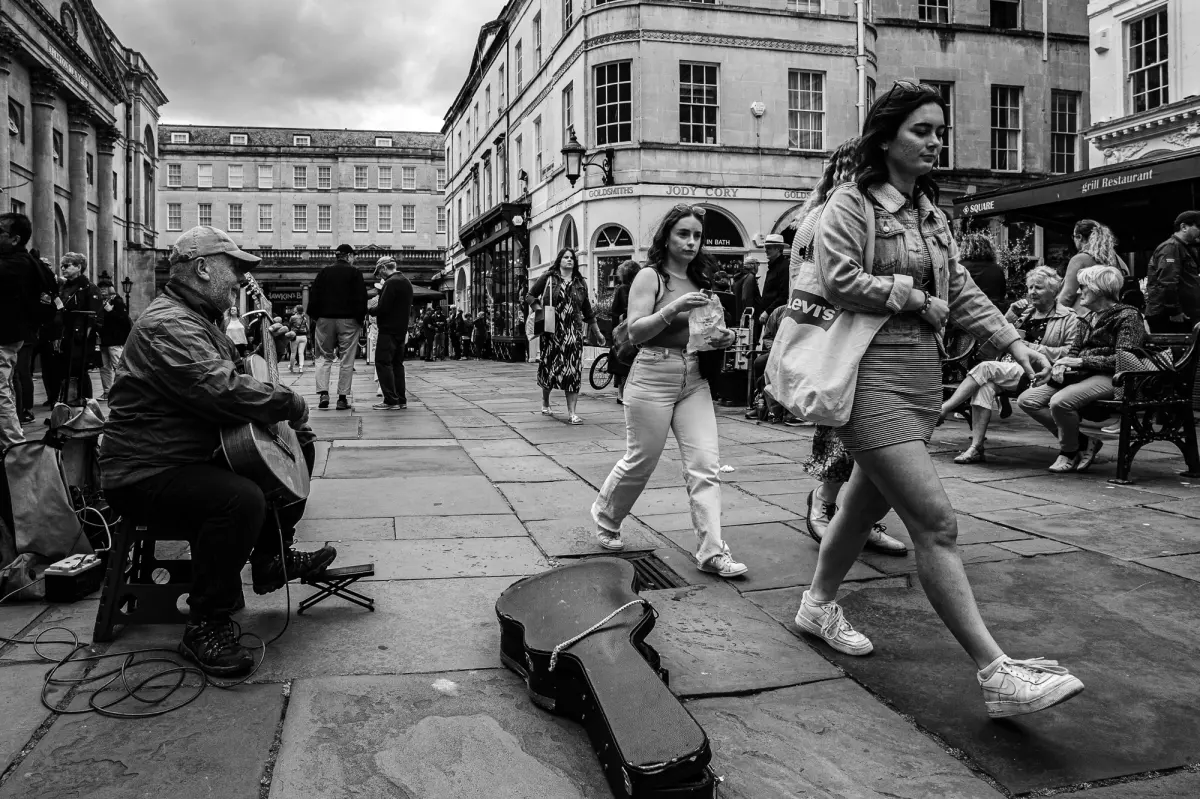
Finding compelling subjects requires patience and a heightened awareness of your surroundings. The most successful images often feature a combination of human presence and interesting light or geometry. Look for patterns, shadows, or reflections that can frame your subject in unique ways. Busy transit hubs, local markets, and public parks are excellent locations because they naturally host a diverse range of human interactions and behaviors.
Rather than hunting for a "perfect" shot, focus on observing the flow of a location. Spend time in one spot and wait for the scene to develop, rather than constantly moving. When you spot a potential subject, look for these elements to elevate your composition:
- A clear focal point, such as a person’s expression or a distinct gesture.
- An interesting background that adds context without distracting from the subject.
- A sense of narrative or mystery that leaves the viewer wondering about the story behind the frame.
Common mistakes when starting street photography
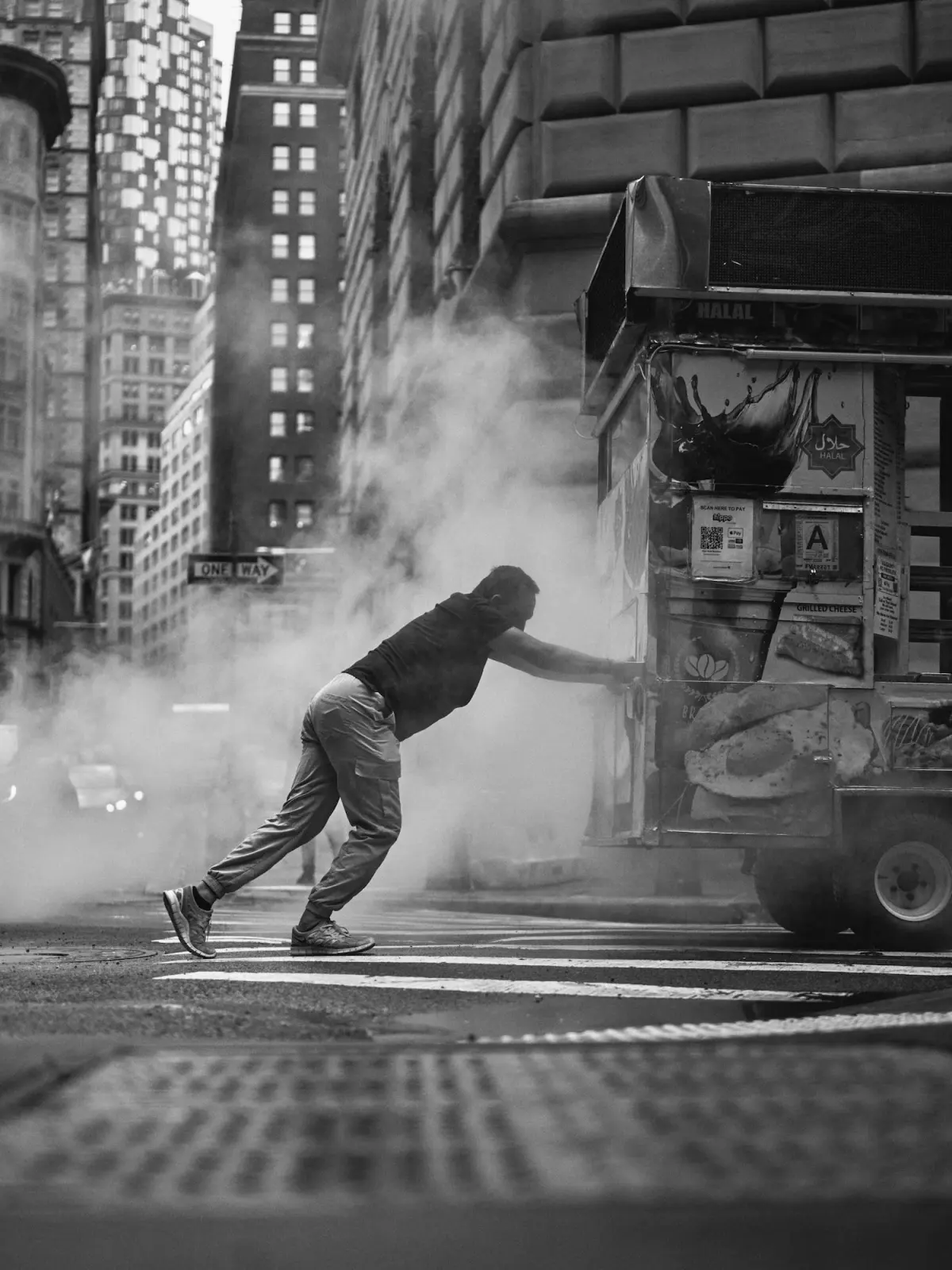
One of the most frequent errors beginners make is hesitating to approach or photograph strangers. This hesitation often results in blurry, poorly composed, or distant shots that lack emotional impact. While it is important to be respectful, remember that public spaces generally offer a degree of anonymity. If you feel nervous, try shooting from the hip or using a smaller camera that is less intimidating to passersby than a large professional DSLR.
Another common pitfall is over-editing or relying on heavy filtering to "fix" a weak photograph. A strong street photograph should stand on its own through its composition and content. Avoid these common traps to improve your consistency:
- Being too self-conscious, which causes you to act suspiciously or hide your camera.
- Focusing solely on the subject while ignoring the background, leading to cluttered or messy frames.
- Shooting too many frames of the same scene without waiting for the "decisive moment" to actually occur.
Why ethics matter in street photography
Ethics are a cornerstone of the genre, as you are capturing people who have not explicitly consented to be photographed. While the law in many countries permits photography in public, it is vital to maintain a sense of empathy and professional integrity. If someone notices you and expresses discomfort, the most respectful action is to smile, offer a brief nod, or simply move on. Never use your camera to mock or exploit vulnerable individuals, as this undermines the dignity of the medium.
Building a personal code of conduct will help you navigate these situations with confidence. If you feel a situation is sensitive, such as photographing children or people in distress, it is often better to prioritize human decency over the photograph. By being transparent and approachable, you can often turn a potentially awkward encounter into a positive interaction. Always remember that the goal of street photography is to document the human condition, not to compromise the privacy or safety of the individuals you encounter.
Key facts
- Street photography captures candid, unposed moments of everyday life in public spaces.
- Henri Cartier-Bresson, a pioneer of the genre, coined the term "the decisive moment" to describe perfect timing.
- Use a prime lens, typically 35mm or 50mm, to keep your camera setup compact and unobtrusive.
- Always be aware of local privacy laws, as photography rules in public spaces vary significantly by country.
- Set your camera to a high shutter speed, at least 1/500th of a second, to freeze motion and avoid blur.
- Avoid "shooting from the hip"; framing your shots through the viewfinder ensures better composition and intentionality.
The bottom line
Street photography is the art of documenting the human experience within public environments. By mastering timing, composition, and a subtle approach, you can transform ordinary daily interactions into powerful visual stories. Focus on observing the world around you with patience and curiosity. Remember that the most memorable images are often found in the quiet, fleeting details of life that many people simply walk past every day.
People also ask
Do I need an expensive camera to practice street photography?
You do not need professional gear; many iconic street photos were taken with simple point-and-shoot cameras. A discreet camera that you are comfortable using quickly is far more important than high-end specifications.
Is it legal to photograph strangers in public?
In most democratic countries, you have a legal right to photograph people in public spaces where there is no reasonable expectation of privacy. However, you should always be respectful and stop if someone clearly expresses discomfort.
Should I ask for permission before taking a photo?
While asking for permission can lead to great portraits, it often destroys the candid nature of street photography. Many photographers prefer to capture the scene first and then offer a friendly smile or explanation afterward if noticed.
How do I overcome the fear of photographing strangers?
Start by photographing scenes or architecture without people to build your confidence. As you get more comfortable, try to photograph people from a distance before moving closer to your subjects.
What are the best settings for street photography?
Aperture priority mode is common, allowing you to control depth of field while the camera handles exposure. Alternatively, using manual mode with a fixed shutter speed helps ensure consistency when light changes rapidly.
What makes a street photograph "good"?
A compelling street photograph often features strong composition, interesting light, and a narrative element. It should tell a story or capture an emotion that resonates with the viewer beyond the immediate subject.
This answer was created with the help of AI research tools and reference sources. Spotted an error? Let us know — we correct mistakes quickly. See our editorial policy.