What is Max Ernst known for?
Short answer
Max Ernst was a pioneering German-born artist and a central figure in the Dada and Surrealist movements. He is renowned for inventing innovative techniques like frottage, grattage, and collage, which allowed him to explore the subconscious mind. His dreamlike, often unsettling paintings and sculptures challenged traditional artistic conventions throughout the 20th century.
On this page
How did Max Ernst influence Surrealism?
Max Ernst was instrumental in transitioning the anti-art sentiments of Dada into the more structured, psychologically driven exploration of Surrealism. After moving to Paris in 1922, he became a founding member of the movement, applying his interest in Freudian psychoanalysis to visual art. He sought to bypass conscious control, believing that true creativity emerged from the depths of the unconscious, dreams, and hallucinations.
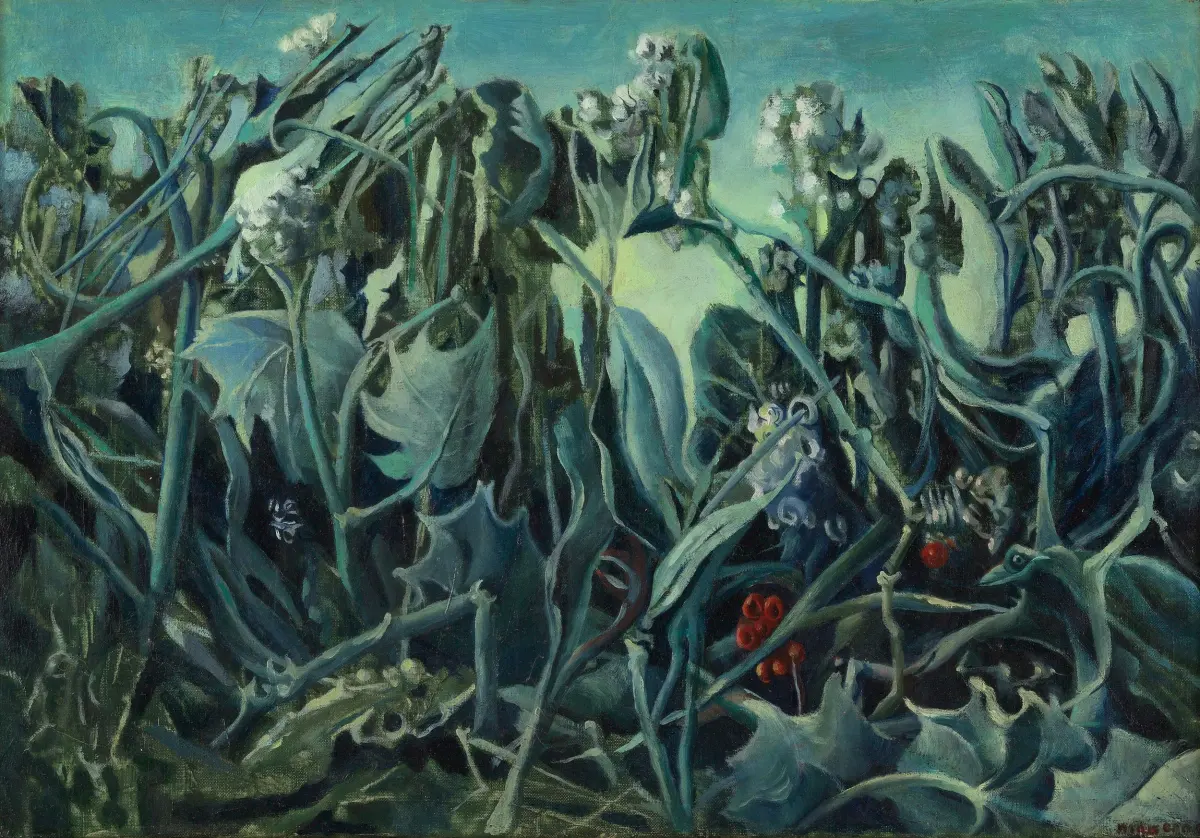
His work often juxtaposed disparate, realistic objects in impossible settings to create a sense of "uncanny" reality. By placing familiar items in strange contexts, he forced viewers to question their perception of the physical world. This approach defined the Surrealist aesthetic and influenced generations of artists who followed. Key characteristics of his Surrealist methodology included:
- The use of irrational imagery to provoke emotional responses.
- A rejection of rational logic in favor of dream-like narratives.
- The integration of scientific curiosity with poetic, symbolic themes.
- A focus on the "metamorphosis" of figures, often blending human, animal, and mechanical forms.
What techniques did Max Ernst invent?
Ernst is celebrated for developing several groundbreaking technical processes that introduced elements of chance into his work. In 1925, he discovered "frottage," a method of taking rubbings from textured surfaces like floorboards or leaves. By placing paper over these surfaces and rubbing with a pencil or crayon, he generated complex, organic patterns that served as the base for his imagery.
He later expanded this into "grattage," a technique where he applied layers of paint to a canvas and scraped it away to reveal the texture of objects placed underneath. These methods allowed him to act as a spectator to his own creative process, letting the materials dictate the initial forms. This reduction of conscious intention was a hallmark of his objective to capture the "automatic" nature of the subconscious. His primary technical innovations include:
- Frottage: Rubbing textures onto paper to create spontaneous patterns.
- Grattage: Scraping paint over textured surfaces to reveal underlying forms.
- Collage: Cutting and pasting engravings to create surreal, narrative montages.
- Oscillation: Swinging a paint-filled can over a canvas to create drip patterns.
Why are Max Ernst's collages famous?
Ernst revolutionized the medium of collage by repurposing 19th-century woodcut illustrations from scientific journals and pulp novels. Unlike traditional collage, which often used photographs or colored paper, his work focused on seamless, black-and-white narrative compositions. He meticulously cut and reassembled these Victorian-era images to create bizarre, dreamlike scenarios that felt both nostalgic and deeply disturbing.
His most famous project in this medium is the "collage novel," most notably La Femme 100 têtes (The Hundred Headless Woman), published in 1929. These books presented a series of images that told a cryptic story without the need for text, relying entirely on the viewer's interpretation of the visual symbols. By stripping the original illustrations of their scientific or instructional context, he transformed them into vessels for dark, poetic, and often satirical commentary on society and human nature.
How to appreciate Max Ernst's sculptures?
While primarily known as a painter, Ernst created significant bronze sculptures that mirror the themes found in his two-dimensional work. His sculptures often feature totemic, bird-like figures, reflecting his lifelong obsession with the persona of "Loplop," his avian alter ego. These figures bridge the gap between the natural world and the mechanical, often appearing as ancient, mythical deities.
When viewing his sculptures, it is helpful to look for the tactile textures he incorporated, which often echo his frottage experiments. He frequently used found objects—such as shells, stones, or household items—to create the original molds for his bronzes. This process of "casting" allowed him to preserve the organic detail of the objects while transforming them into permanent, imposing monuments. To better understand his sculptural approach, consider these points:
- Observe the balance between the organic, fluid shapes and rigid, geometric lines.
- Look for the recurring bird motifs that symbolize his personal mythology.
- Consider how the scale of the sculpture interacts with the surrounding physical space.
Common mistakes when studying Max Ernst?
A common error when interpreting Ernst’s work is attempting to find a single, definitive meaning for his complex symbols. Because his art was intentionally rooted in the subconscious and the irrational, it is designed to be ambiguous rather than didactic. Viewers often struggle by trying to decode his paintings like a puzzle, expecting a specific narrative solution that the artist never intended to provide.
Another mistake is ignoring the historical context of his life, particularly his experiences during the two World Wars. His work is deeply marked by the trauma of conflict, the rise of fascism, and his status as a refugee in both France and the United States. To truly grasp his output, one must acknowledge that his "dreamscapes" were often reflections of a fractured, violent reality. Avoid these pitfalls by:
- Accepting that ambiguity is a feature, not a failure, of the work.
- Researching his displacement during World War II to understand his darker themes.
- Recognizing the influence of his early training in philosophy and psychology on his visual choices.
Key facts
- Max Ernst was a pioneering German painter, sculptor, and poet who helped found the Dada movement in Cologne during the early 1920s.
- He is credited with inventing the technique of frottage, which involves placing paper over a textured surface and rubbing it with graphite to create suggestive patterns.
- Ernst was a central figure in Surrealism, a movement that sought to release the creative potential of the unconscious mind through dreamlike imagery.
- He utilized grattage, a process of scraping wet paint off a canvas, to reveal textures and imagery hidden beneath the surface layers.
- In 1941, he fled Nazi-occupied Europe for the United States, where he settled in New York and later Arizona, significantly influencing the American Abstract Expressionist movement.
- His iconic 1934 collage novel, Une Semaine de Bonté, demonstrates his mastery of transforming Victorian-era engravings into unsettling, surreal narratives.
The bottom line
Max Ernst remains a titan of 20th-century art, celebrated for his relentless innovation and mastery of the irrational. By bridging the gap between the chaotic rebellion of Dada and the introspective depth of Surrealism, he fundamentally changed how artists engage with the subconscious. Whether through his pioneering textural techniques or his haunting, dreamlike canvases, Ernst challenged viewers to look beyond reality and explore the hidden layers of experience.
People also ask
What is the primary difference between Dada and Surrealism in Ernst's work?
Dada was characterized by an anti-art, nihilistic response to the horrors of World War I, while Surrealism focused on exploring the psyche and dream states. Ernst transitioned from the chaotic rebellion of Dada to the more structured, symbolic exploration of the subconscious found in Surrealism.
How can I try the frottage technique at home?
Place a thin sheet of paper over a textured object like a leaf, wood grain, or coin. Gently rub a soft pencil or charcoal stick over the paper until the texture appears. Avoid pressing too hard, as this can tear the paper or muddy the details.
What are Ernst's most famous paintings?
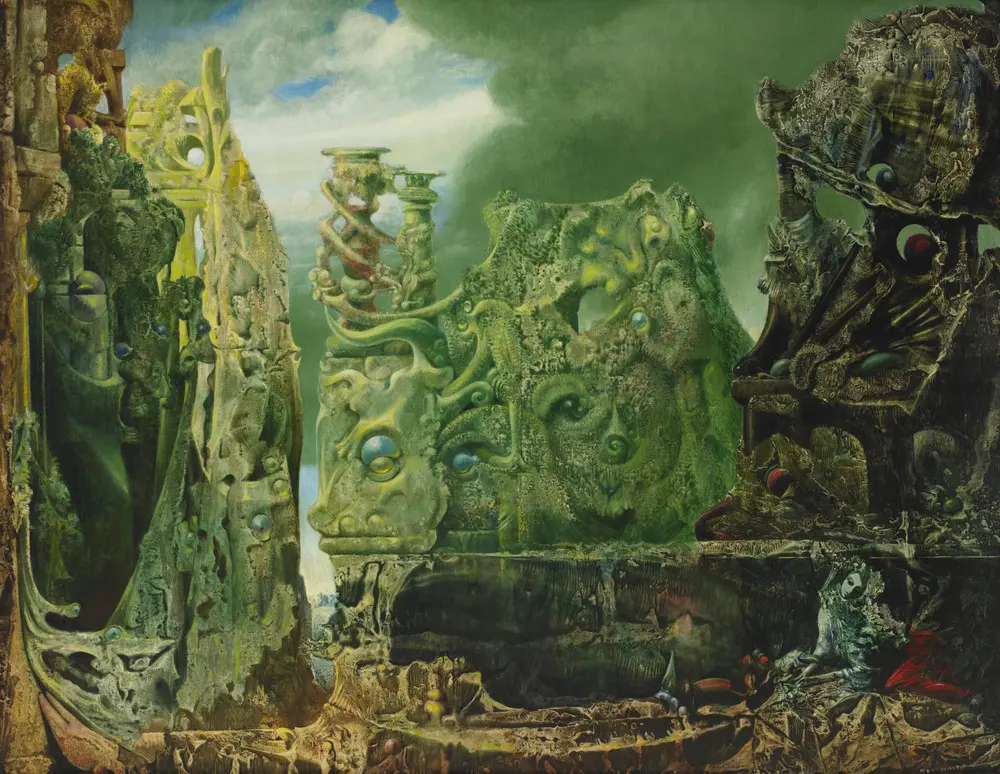
His most recognized works include The Elephant Celebes (1921), Two Children Are Threatened by a Nightingale (1924), and The Eye of Silence (1943-44). These pieces are celebrated for their bizarre juxtapositions and technical innovation.
Did Max Ernst have any formal art training?
Ernst was largely self-taught in painting, though he studied philosophy, psychology, and art history at the University of Bonn. This academic background heavily influenced his interest in the irrational and the workings of the human mind.
Why did Max Ernst move to the United States?
As a German artist labeled a "degenerate" by the Nazi regime, Ernst faced severe persecution. He was interned in French camps before escaping to the United States in 1941 with the help of his future wife, Peggy Guggenheim.
What is a collage novel?
A collage novel is a narrative told entirely through a series of images rather than text. Ernst created these by cutting up and rearranging illustrations from 19th-century books to form strange, dreamlike stories.
This answer was created with the help of AI research tools and reference sources. Spotted an error? Let us know — we correct mistakes quickly. See our editorial policy.