Where is The Night Watch displayed?
Short answer
The Night Watch is permanently displayed in the Gallery of Honour at the Rijksmuseum in Amsterdam, Netherlands. Painted by Rembrandt van Rijn in 1642, this monumental masterpiece occupies a dedicated space specifically designed to showcase its scale and intricate lighting, serving as the museum’s most prominent and celebrated artistic attraction.
On this page
Where is The Night Watch located?
The Night Watch is housed within the Rijksmuseum, the national museum of the Netherlands located in the Museum Square in Amsterdam. Specifically, the painting hangs in the Gallery of Honour, a long, cathedral-like hallway designed by architect Pierre Cuypers in the late 19th century to echo the grandeur of a church. This central axis of the museum was intended to display the most significant works of the Dutch Golden Age.
Visitors entering the museum should head directly to the second floor to reach the Gallery of Honour. Because the painting is massive—measuring approximately 3.79 meters by 4.53 meters—it is displayed on a wall that allows viewers to stand back and appreciate its composition. The museum has positioned the painting as the focal point of the entire collection, ensuring that it remains the primary destination for art lovers visiting the city.
How to visit The Night Watch
Planning a visit requires some preparation, as the Rijksmuseum is one of the most popular tourist destinations in Europe. To ensure entry and avoid long queues, follow these steps:
- Purchase an e-ticket online through the official Rijksmuseum website at least several days in advance.
- Select a specific time slot for your entry, as the museum strictly manages visitor flow.
- Arrive at the museum entrance at your designated time to scan your ticket.
- Follow the clear signage directed toward the Gallery of Honour upon entering the building.
If you are traveling during peak tourist seasons or on weekends, it is highly recommended to book your tickets weeks ahead of time. The museum often sells out, and walk-up tickets are rarely available during busy periods. Checking the museum’s official calendar for any temporary closures or special events is also a wise precaution before finalizing your travel plans.
What to know about the painting
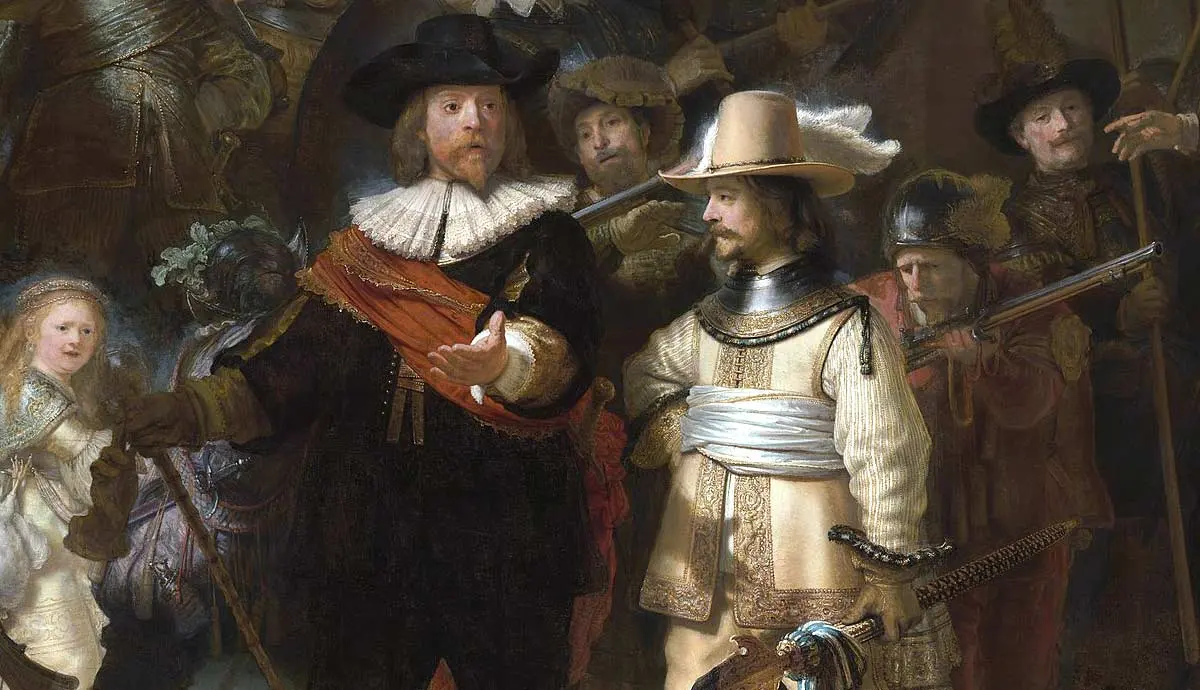
Rembrandt van Rijn completed this work, officially titled Militia Company of District II under the Command of Captain Frans Banninck Cocq, in 1642. It is famous for its revolutionary use of light and shadow, known as chiaroscuro, and its sense of motion, which departed from the static group portraits common at the time. The painting depicts a city guard moving out, led by Captain Cocq and his lieutenant, Willem van Ruytenburch.
The painting has survived a tumultuous history, including being cut down in size in 1715 to fit between two doors in the Amsterdam Town Hall. It has also been moved multiple times for safety, most notably during World War II when it was hidden in a bunker in the dunes near Heemskerk. Today, it undergoes regular conservation efforts to ensure its colors remain vibrant and the canvas remains stable for future generations.
Common mistakes when visiting
Many visitors underestimate the time required to navigate the museum or the popularity of the painting itself. One common mistake is arriving without a pre-booked ticket, which often results in being turned away or waiting in line for hours. Another frequent error is rushing through the rest of the museum to reach the Gallery of Honour, thereby missing the equally impressive works by Johannes Vermeer and Frans Hals that surround the masterpiece.
- Do not attempt to take flash photography, as it is strictly prohibited to protect the pigments.
- Avoid visiting during the middle of the day, as this is when the museum is most crowded.
- Do not touch the walls or the barrier ropes, as the museum maintains high security to protect the artwork.
- Avoid bringing large backpacks or suitcases, as these must be stored in lockers and cannot be taken into the gallery spaces.
Why the display is unique
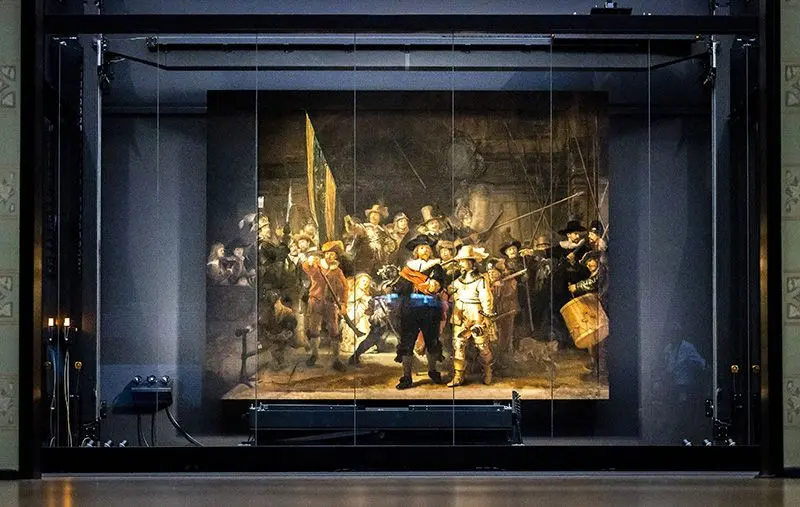
The current display of The Night Watch is the result of years of research and architectural planning. The lighting in the Gallery of Honour is carefully calibrated to highlight the dramatic contrast between the light hitting the captain’s uniform and the dark, moody background of the scene. This environment allows the viewer to experience the painting as Rembrandt intended, emphasizing the depth and the three-dimensional quality of the figures.
The Rijksmuseum also utilizes high-resolution digital imaging and ongoing research projects, such as Operation Night Watch, to study the painting in situ. This means that even when the painting is undergoing minor conservation or analysis, it often remains visible to the public behind a glass partition. This transparency allows visitors to witness the scientific process of art preservation in real time, adding an educational layer to the viewing experience that few other museums in the world can offer.
Key facts
- The Night Watch is displayed in the Gallery of Honour at the Rijksmuseum in Amsterdam.
- It is the only painting in the museum that remains in its original location within the building's architecture.
- The painting measures approximately 363 centimeters by 437 centimeters, making it one of the largest works in the collection.
- Visitors should book a time slot online in advance to ensure entry, as the museum is highly popular.
- Do not use flash photography, as the intense light can damage the pigments of the 17th-century oil painting.
- The best time to view the masterpiece with fewer crowds is typically early in the morning or during late Friday evening hours.
The bottom line
To view Rembrandt’s masterpiece, The Night Watch, visit the Rijksmuseum in Amsterdam, where it hangs prominently in the Gallery of Honour. As one of the world's most iconic paintings, it draws significant crowds daily. Planning your visit by booking tickets online and arriving during off-peak hours will provide the best viewing experience. Remember to respect the museum’s preservation rules to ensure this historic treasure remains protected for future generations.
People also ask
Who painted The Night Watch?
The painting was created by the Dutch Golden Age master Rembrandt van Rijn in 1642. It is considered his most famous work and a pinnacle of Baroque art.
Why is the painting called The Night Watch?
The title is actually a misnomer that emerged in the late 18th century. Because the varnish had darkened significantly over time, people mistakenly believed the scene took place at night, though it actually depicts a daytime event.
What is the official title of the painting?
The original, much longer title is "Militia Company of District II under the Command of Captain Frans Banninck Cocq." This reflects the true nature of the work as a group portrait for a civic guard company.
Was the painting ever cut down in size?
Yes, in 1715, the canvas was trimmed on all four sides to fit between two doors in the Amsterdam Town Hall. These missing sections were never recovered, though a smaller contemporary copy exists that shows the original composition.
How often is the painting cleaned or restored?
The museum monitors the condition of the painting constantly. A major research and restoration project, known as Operation Night Watch, began in 2019 to preserve the work using advanced imaging and scanning technology.
Can I touch the painting?
No, touching the artwork is strictly prohibited to protect the delicate surface from oils and dirt. Security guards and barriers are in place to maintain a safe distance between visitors and the canvas.
This answer was created with the help of AI research tools and reference sources. Spotted an error? Let us know — we correct mistakes quickly. See our editorial policy.