What is Henri Matisse known for?
Short answer
Henri Matisse was a French artist celebrated for his revolutionary use of expressive color and fluid draftsmanship. As a leader of the Fauvist movement, he transformed modern art by liberating color from its descriptive function. His prolific career spanned painting, sculpture, and his iconic late-life paper cutouts, which redefined twentieth-century abstraction.
On this page
Why is Henri Matisse famous in art history?
Matisse is primarily recognized as the pioneer of Fauvism, a short-lived but explosive movement that emerged in Paris around 1905. The term "Fauves," or "wild beasts," was coined by a critic who was shocked by the artists' use of intense, non-naturalistic colors. Matisse believed that color should express the artist's emotional response to a subject rather than simply mimic reality. This shift laid the groundwork for modern expressionism and abstraction, influencing generations of painters who followed.
Beyond his role in Fauvism, Matisse maintained a lifelong obsession with harmony and balance. He famously stated that he wanted his art to be "a soothing, calming influence on the mind, something like a good armchair." His works often feature domestic interiors, reclining figures, and lush patterns, all rendered with a sense of rhythmic vitality. By stripping away unnecessary detail, he focused on the essential essence of form and color, creating a visual language that remains accessible yet profoundly sophisticated.
How did Matisse develop his paper cutouts?
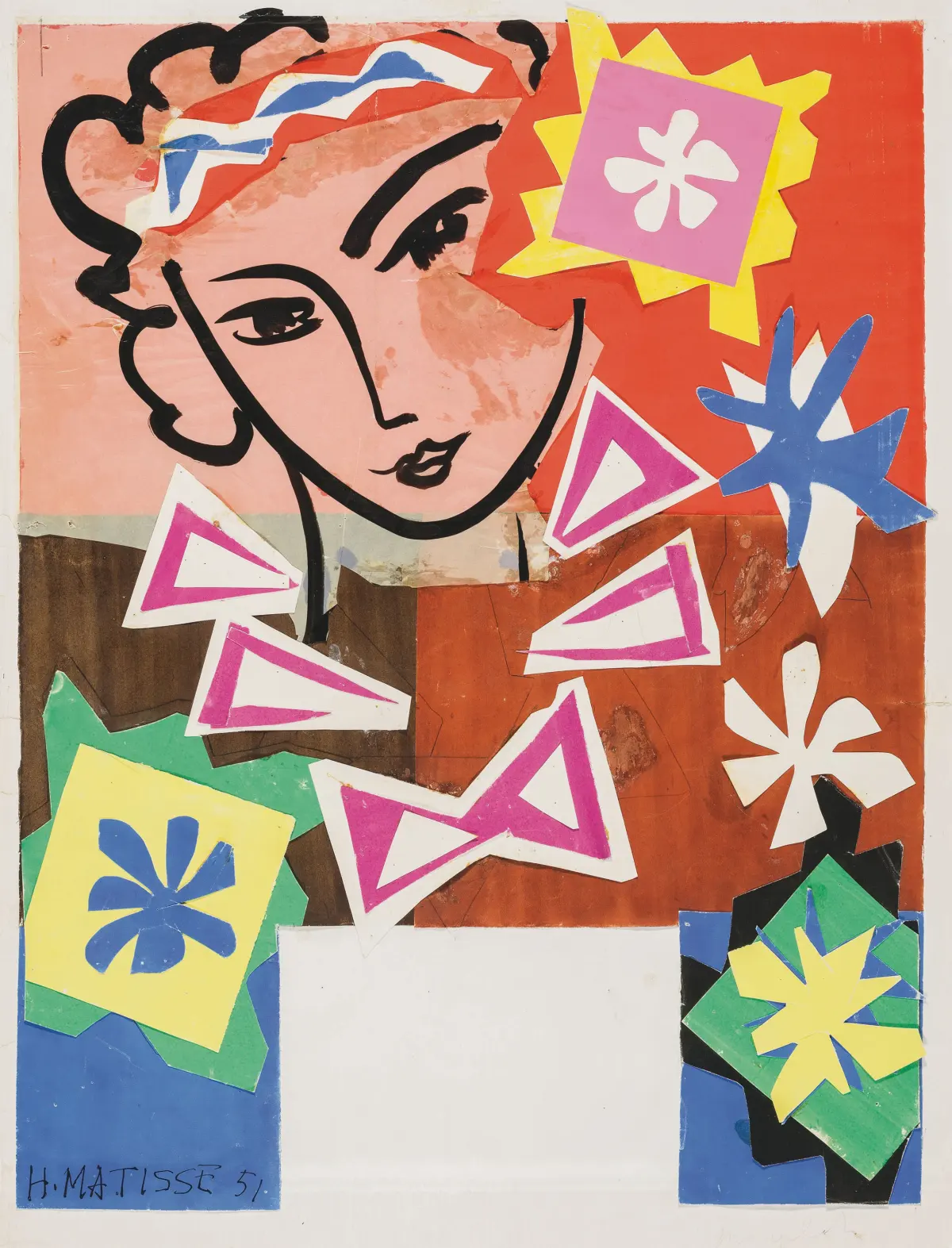
In the final decade of his life, Matisse faced declining health that made standing at an easel difficult. He turned to a new medium: "drawing with scissors." By cutting shapes directly from sheets of paper painted with gouache, he achieved a unique synthesis of color and line. This technique allowed him to manipulate compositions with unprecedented freedom, resulting in large-scale, vibrant works that felt both spontaneous and meticulously planned.
These cutouts, such as the famous Jazz series, represent a culmination of his lifelong exploration of color. He would arrange these paper shapes on his studio walls, constantly shifting them until the balance of positive and negative space felt perfect. This process allowed him to bypass the traditional constraints of painting, focusing instead on the purity of silhouette and the emotional resonance of color blocks.
- Prepare heavy paper by coating it with vibrant gouache paint.
- Use large tailor's shears to cut organic, fluid shapes directly into the paper.
- Pin the cutouts onto a larger backing board to experiment with spatial relationships.
- Adjust the composition by moving the pieces until the visual rhythm is balanced.
- Secure the final arrangement using adhesive once the desired effect is achieved.
What are the most famous works by Matisse?
Matisse produced thousands of works, but several stand out as definitive markers of his stylistic evolution. These pieces are frequently cited for their bold palettes and innovative compositions. Understanding these works provides a clear window into how he viewed the relationship between the viewer and the canvas.
- Woman with a Hat (1905): A portrait of his wife, Amélie, which caused a scandal due to its arbitrary, vibrant color choices.
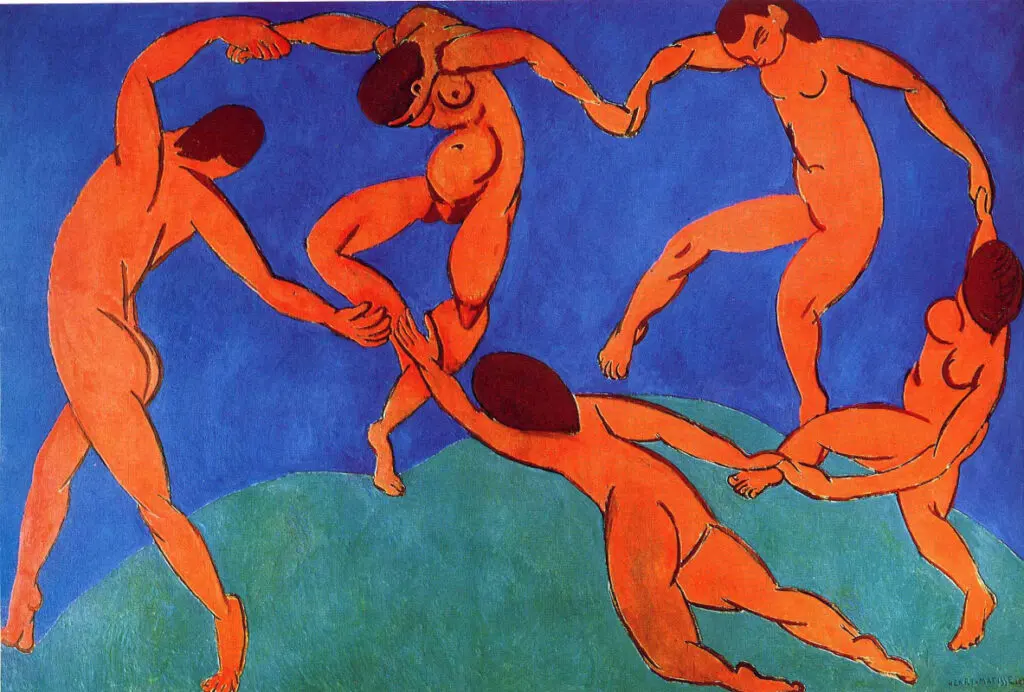
- The Dance (1910): A monumental mural featuring simplified, rhythmic figures that emphasize movement and joy.
- The Snail (1953): A quintessential example of his late-life paper cutouts, showcasing his mastery of color balance.
- Blue Nude II (1952): A striking, minimalist representation of the human form that demonstrates his ability to convey volume through simple shapes.
These works are held in major institutions like the Museum of Modern Art in New York and the Centre Pompidou in Paris. They serve as primary examples of his transition from traditional representation to the simplified, emotive forms that characterize his mature style.
Common mistakes when analyzing Matisse’s art
Many viewers make the mistake of assuming that Matisse’s simplified forms were the result of a lack of technical skill. In reality, Matisse was a highly trained academic artist who mastered traditional drawing and perspective early in his career. His decision to abandon realism was a deliberate, intellectual choice intended to prioritize emotional impact over technical accuracy. Ignoring his rigorous training leads to a misunderstanding of his true artistic intent.
Another common error is viewing his work as purely decorative or superficial. While Matisse often spoke about the "decorative" quality of his art, he used the word to describe a complex, integrated system where every element serves the whole. He spent weeks or months refining the placement of a single line or color patch to ensure it contributed to the overall harmony. Dismissing his work as merely "pretty" ignores the intense labor and structural rigor required to achieve such effortless-looking results.
How to appreciate Matisse’s style today
To truly appreciate Matisse, one must look at how his colors interact rather than focusing on the subject matter. When viewing his paintings, notice how he places complementary colors side-by-side to create vibration and energy. Do not worry about whether a face is painted green or a wall is painted red; instead, ask how those colors make you feel. His work is designed to be experienced as a total environment of color and light.
If you are interested in exploring his influence, look for how contemporary graphic designers and abstract painters use flat, bold shapes. Matisse’s legacy is visible everywhere from modern textile design to digital illustration. By focusing on the interplay of shape and hue, you can better understand why his work remains a cornerstone of modern art. Whether you are visiting a gallery or looking at prints, try to see the world with the same sense of wonder and simplification that defined his long, innovative career.
Key facts
- Henri Matisse was a leader of Fauvism, an early 20th-century movement characterized by vivid, non-naturalistic colors.
- He was born in 1869 in Le Cateau-Cambrésis, France, and died in 1954 in Nice.
- His 1905 painting Woman with a Hat caused a scandal for its shocking, arbitrary use of color.
- Later in his life, confined to a wheelchair, he pioneered the "cut-out" technique using painted paper shapes.
- He emphasized the importance of simplicity, famously stating he wanted his art to be "a soothing, calming influence on the mind."
- To study his work, visit the Musée Matisse in Nice or the Baltimore Museum of Art, which holds a vast collection.
The bottom line
Henri Matisse remains a titan of modern art, celebrated for his revolutionary approach to color and form. By liberating color from its descriptive role, he transformed how artists perceive the canvas. Whether through his early, explosive Fauvist paintings or his later, elegant paper cut-outs, Matisse prioritized emotional resonance and structural simplicity, forever changing the trajectory of 20th-century visual expression and design.
People also ask
What was the Fauvist movement?
Fauvism was a short-lived style active from roughly 1904 to 1908. Artists used intense, bold colors straight from the tube to express emotion rather than describe reality.
How did Matisse create his famous paper cut-outs?
He painted sheets of paper with gouache, then cut them into organic shapes with scissors. He arranged these pieces on large canvases to create vibrant, rhythmic compositions like The Snail.
What is the significance of the painting The Dance?
Created in 1910, this monumental work features five figures dancing in a circle against a blue sky and green earth. It is considered a defining masterpiece of modern art.
Did Matisse work in mediums other than painting?
Yes, he was a prolific sculptor, printmaker, and designer. He notably designed the entire interior, stained glass, and vestments for the Chapelle du Rosaire in Vence.
What are common mistakes when trying to emulate Matisse's style?
Beginners often try to use too many colors at once, leading to visual chaos. Instead, focus on balancing strong, flat areas of color with simple, expressive lines.
Why is Matisse considered a pioneer of modern art?
He broke away from traditional perspective and realistic shading. By prioritizing color and decorative pattern, he paved the way for abstract art and minimalism.
This answer was created with the help of AI research tools and reference sources. Spotted an error? Let us know — we correct mistakes quickly. See our editorial policy.