Why is The Hay Wain so famous?
Short answer
John Constable’s The Hay Wain is famous for its revolutionary approach to landscape painting, capturing the English countryside with unprecedented naturalism and emotional depth. Its success at the 1824 Paris Salon elevated British art, influencing the French Romantic movement and inspiring the Barbizon school of painters to embrace plein air techniques.
On this page
Why is The Hay Wain so famous?
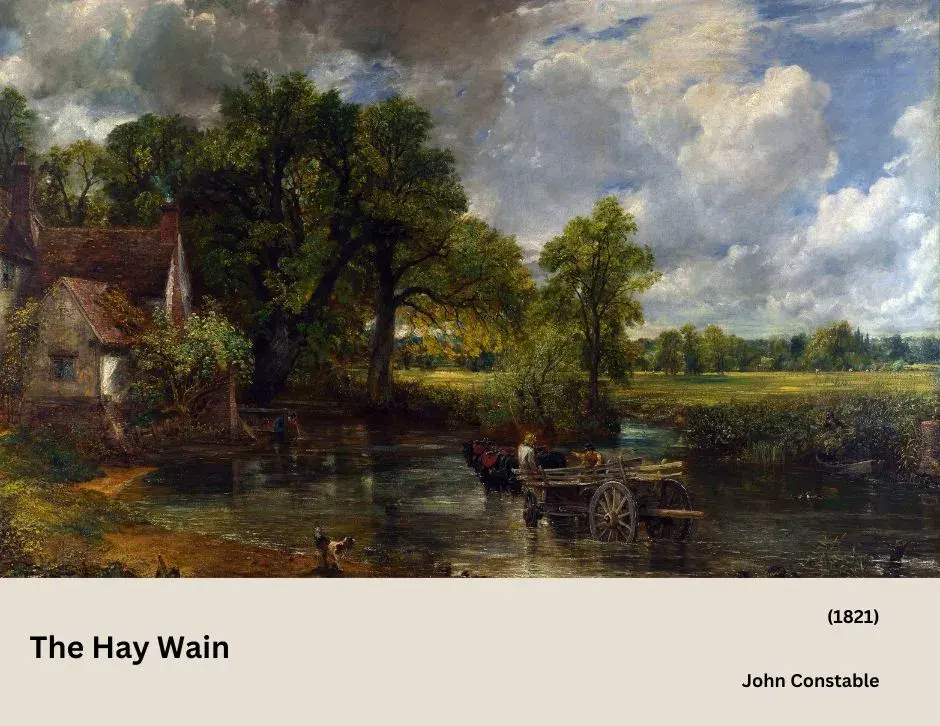
Painted in 1821, The Hay Wain depicts a rural scene on the River Stour, separating the English counties of Suffolk and Essex. At the time, landscape painting was considered a lesser genre compared to historical or religious themes. Constable challenged this hierarchy by elevating a humble, working-class view of his home region into a monumental six-foot canvas, a format typically reserved for grand historical subjects.
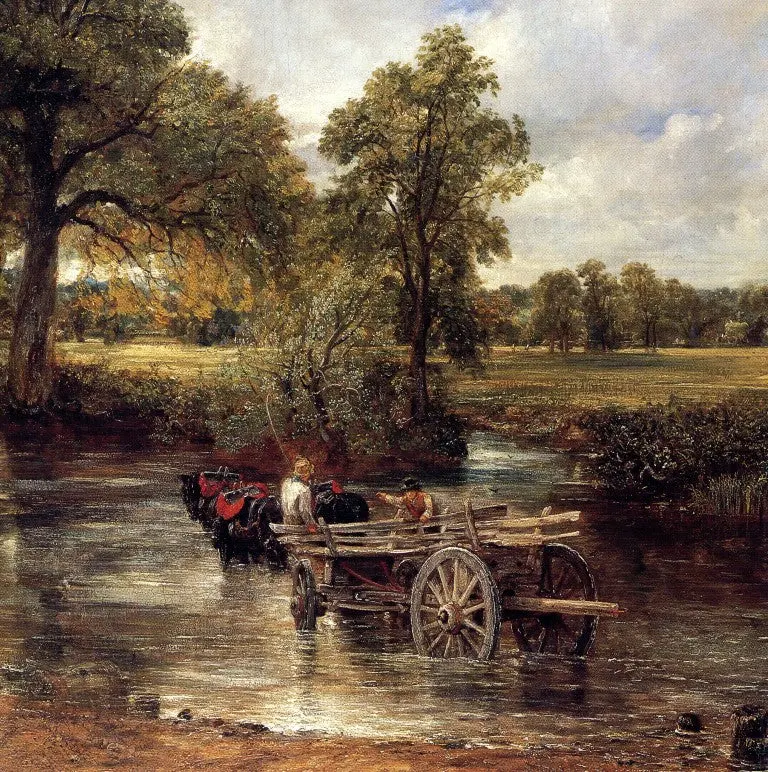
The painting’s fame stems from its technical brilliance and its departure from idealized, classical landscapes. Constable utilized a technique known as "skying," where he observed and recorded the movement of clouds with scientific precision. By applying small, light-catching dabs of white paint—often called "Constable’s snow"—he simulated the shimmering effect of sunlight on foliage and water. This dedication to capturing the transient nature of light and weather transformed the landscape into a living, breathing subject.
How did it influence French art?
When The Hay Wain was exhibited at the Paris Salon in 1824, it caused a sensation among French artists. King Charles X awarded Constable a gold medal for the work, which had a profound impact on the emerging Romantic movement. French painters were struck by the vibrancy of his colors and the loose, expressive brushwork, which felt remarkably modern compared to the rigid academic styles of the era.
This admiration directly influenced the Barbizon school, a group of artists who retreated to the Forest of Fontainebleau to paint directly from nature. These painters adopted Constable’s commitment to observation and his rejection of studio-bound artifice. The ripple effect of this influence can be summarized by the following historical shifts:
- The transition from formal, studio-based compositions to spontaneous, outdoor observation.
- The legitimization of the landscape as a primary subject for serious artistic inquiry.
- The eventual bridge between Romanticism and the early stages of Impressionism.
What is the history of the painting?
The scene captures a specific location near Flatford Mill, which was owned by Constable’s father. The "hay wain"—a large, horse-drawn wagon—is shown crossing the river to avoid paying a toll for the bridge. While the painting appears to be a snapshot of a peaceful moment, it was actually a carefully constructed studio composition built upon years of sketches and oil studies.
Constable spent months refining the canvas to ensure the composition felt both balanced and authentic. He wanted to evoke the nostalgia of his childhood while showcasing the dignity of rural labor. The painting was not an immediate commercial success in England, but its international recognition eventually cemented its status as a masterpiece. Today, it is held in the National Gallery in London, where it remains one of the most recognizable images in Western art.
How to appreciate the details in the painting?
To fully understand why this work stands out, one should look beyond the central wagon and examine the surrounding environment. Constable used a complex layering process to build depth, starting with dark underpainting and finishing with bright, textured highlights. When viewing the work, consider these elements to better grasp his technique:
- Observe the sky: Notice how the clouds are not static but seem to be drifting across the top of the frame.
- Examine the foliage: Look for the "snow" highlights that indicate the direction of the sun.
- Study the water: Observe how the reflections are broken by ripples, suggesting movement and depth.
By focusing on these specific details, you can see how Constable moved away from the "brown landscapes" popular in the 18th century. He insisted that the green of the English countryside was not a single, dull tone but a vibrant spectrum of colors that changed depending on the time of day and the moisture in the air.
Common mistakes when analyzing landscape art
A common error when viewing The Hay Wain is assuming it is a purely realistic document of a specific day. While Constable was a master of observation, he was also a master of arrangement. He frequently moved trees, buildings, and figures within his compositions to create a more harmonious image. Viewing the painting as a photograph rather than a constructed artistic statement misses the intentionality behind his work.
Another mistake is ignoring the social context of the time. The early 19th century was a period of rapid industrialization in England, and Constable’s work was a deliberate attempt to preserve the image of a disappearing agrarian way of life. When you study this painting, remember that it is as much about the artist’s emotional connection to his home as it is about the physical geography of the Stour Valley. By recognizing the balance between observation and sentiment, you gain a deeper appreciation for why this piece remains a cornerstone of art history.
Key facts
- John Constable painted The Hay Wain in 1821, representing the English Romantic movement.
- The painting depicts a rural scene on the River Stour, which marks the border between Suffolk and Essex.
- It measures approximately 4.3 feet by 6.2 feet, making it a notably large canvas for a landscape at that time.
- The work famously failed to sell in England but won a gold medal at the 1824 Paris Salon.
- Its influence was so significant that it is widely credited with inspiring the French Barbizon school of painters.
- To appreciate the detail, look for the subtle light reflections on the water and the textures of the clouds.
The bottom line
The Hay Wain remains a masterpiece because it transformed landscape painting from a minor genre into a powerful expression of emotion and light. By elevating a humble, everyday scene in the English countryside to a monumental scale, John Constable bridged the gap between traditional realism and modern artistic freedom. It stands as a timeless testament to the beauty of nature and the evolution of European art history.
People also ask
Where is The Hay Wain currently located?
The painting is part of the permanent collection at the National Gallery in London. It has been held there since it was donated by Henry Vaughan in 1886.
What does the title "The Hay Wain" actually mean?
A "wain" is an archaic term for a large, heavy horse-drawn wagon used for hauling farm produce. The painting shows the wagon being pulled across the shallow river to reach a hay field.
Why was the painting more successful in France than in England?
French critics were captivated by Constable’s bold, innovative use of color and light, which felt fresh compared to traditional academic styles. His work challenged the rigid conventions of the time and paved the way for Impressionism.
Did Constable paint this scene from memory?
Constable made numerous sketches and oil studies of the landscape on-site to ensure accuracy. He then assembled the final composition in his studio to achieve the desired emotional and visual impact.
What is the significance of the cottage shown in the painting?
The cottage belonged to a tenant farmer named Willy Lott and was a frequent subject for Constable. It serves as a symbol of the enduring, unchanging nature of rural English life.
Should I look for specific techniques when viewing the painting?
Observe the "Constable’s snow," which refers to his signature use of small, white paint flecks to create the appearance of shimmering light. Avoid viewing the painting from too far away, as these textures are best seen up close.
This answer was created with the help of AI research tools and reference sources. Spotted an error? Let us know — we correct mistakes quickly. See our editorial policy.